
Quick Take
- Experts were convinced this species had vanished forever, but then something unexpected changed everything. Discover the rediscovery →
- A mouse so small it fits on your thumb somehow plays an outsized role in keeping California's coastal ecosystem alive. But how? See the ecological role →
- The military base connection to saving an endangered mouse is stranger than it sounds. Explore the Camp Pendleton site →
- What does it actually take to pull a species back from extinction, and why does the process take 20 years? Follow the recovery timeline →
The unparalleled growth of human civilization has led to the extinction of countless species. We simply move too fast, with too much excess, leading to consequences for animals. This is certainly true in California. The Golden State is, in many ways, a country of its own, with the population and wealth to match. Over the past century, several animals that were once native to the state went extinct, including the California grizzly bear and the Xerces blue butterfly. Another species presumed extinct was the Pacific pocket mouse. That is, however, until scientists found an isolated population of these rodents alive and well in Orange County.
Recognizing the fragility of this dwindling species, conservationists sprang into action back in 2006. This sparked a 20-year conservation program to bring the pocket mouse back from the brink of extinction. It involved a combination of habitat restoration, managed releases, and captive breeding. Now, this thumb-sized mouse has gained a third location, with 90 individuals released at Wire Mountain within Marine Corps Base Camp Pendleton near San Diego. Let’s learn more about this small and rare mouse, how it serves an integral role in the California coastal ecosystem, and what conservationists are doing to ensure it lives into the next century.
Pacific Pocket Mouse
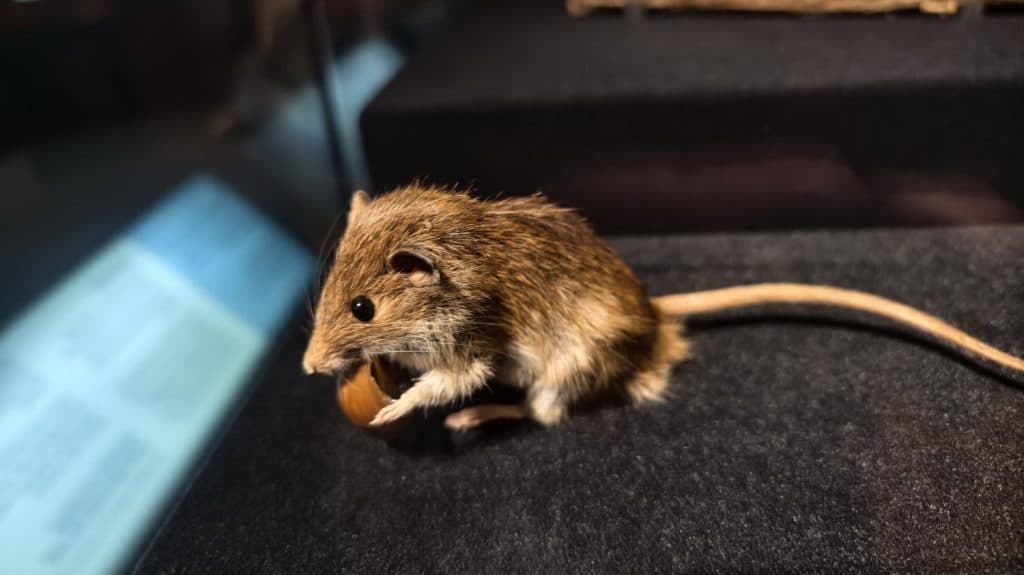
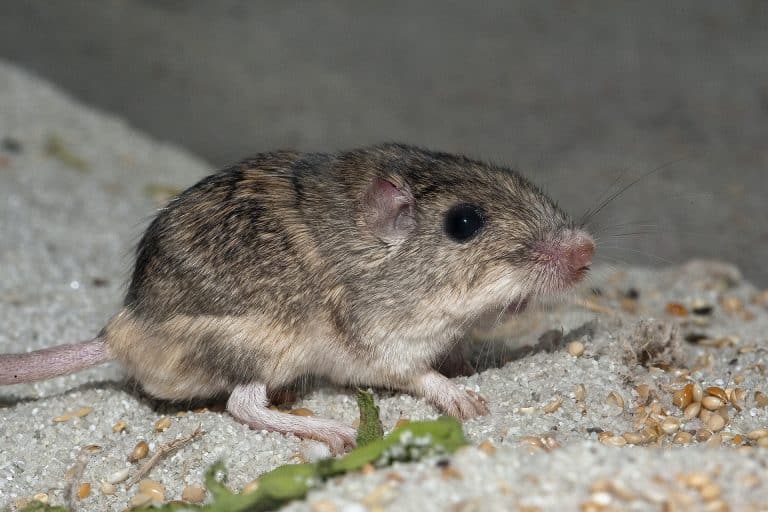
The tiny Pacific pocket mouse, once presumed to be extinct, was found in an isolated Orange County, California population in 1993.
©muh_di/Shutterstock.com
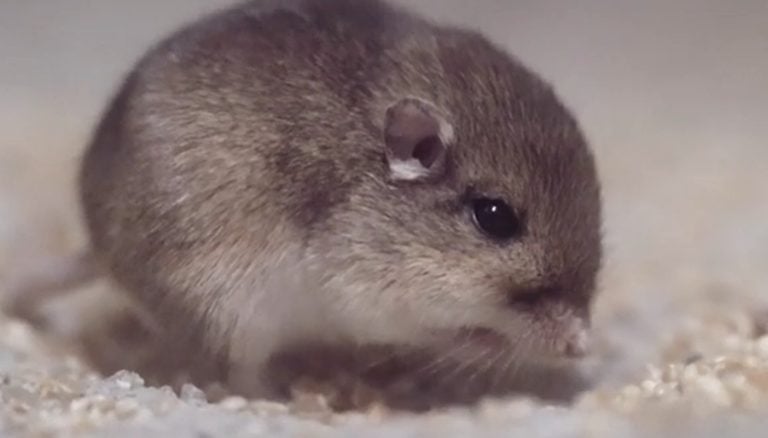
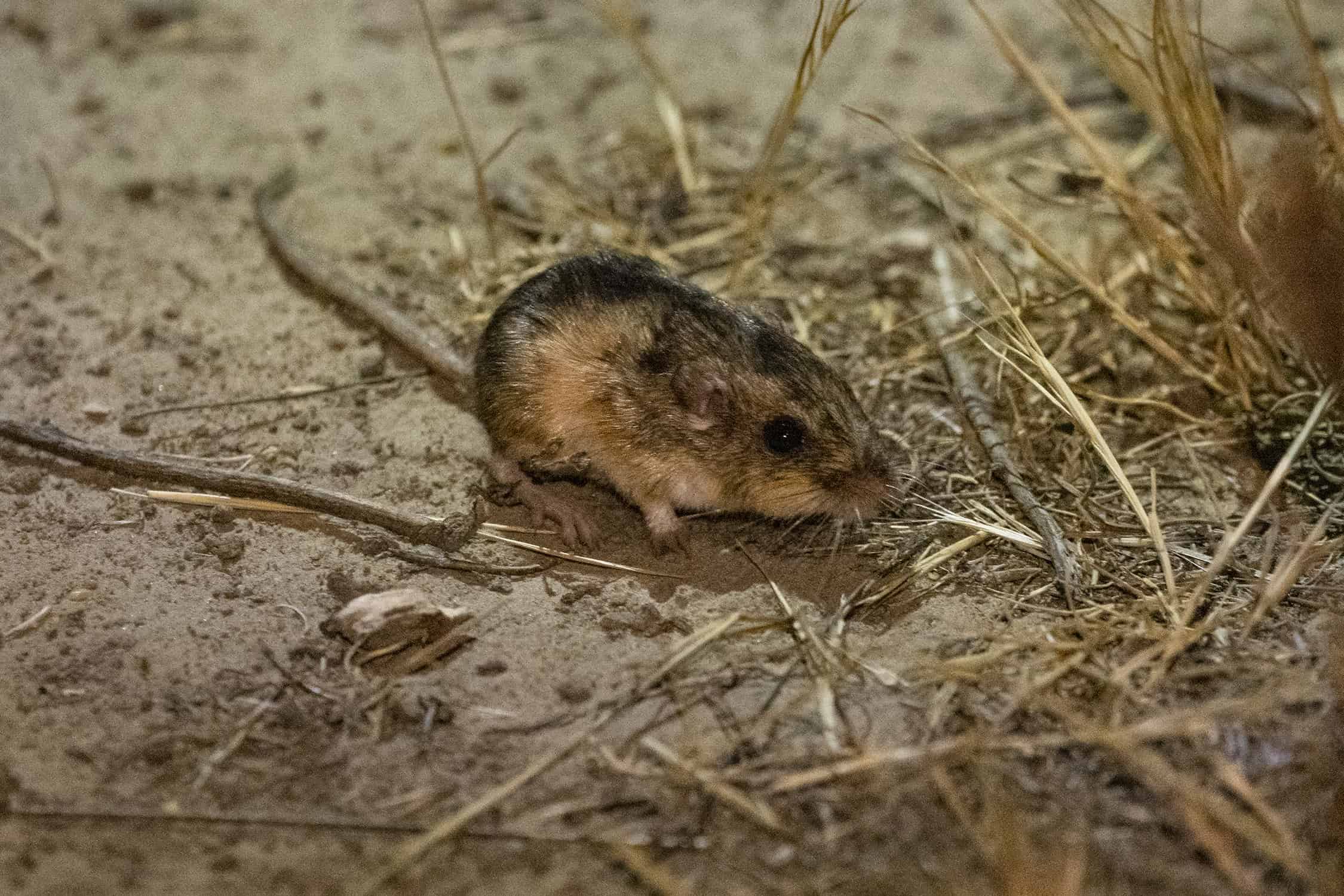
The Pacific pocket mouse (Perognathus longimembris pacificus) is one of the smallest mammals in North America. A thumb-sized rodent weighing between six and ten grams, the pocket mouse has soft, spineless fur with sandy to pinkish-brown coloration and white belly fur. These tiny mammals are heteromyid rodents, meaning they have fur-lined pouches in their cheeks that store harvested seeds.
Endemic to Southern California, Pacific pocket mice easily blend in with the dunes, sage scrub, and sandy soil habitats along the California coast. Indeed, they hardly ever venture more than a few miles from the ocean. Even so, they can be hard to spot, as pocket mice are nocturnal and solitary. They subsist on seeds and the occasional insect. When cold weather hits the coast, these mice hibernate in underground burrows, surviving thanks to large reserves of food. Remarkably, they need little water as they metabolize it directly from food sources.
Despite these adaptive advantages, Pacific pocket mice have faced significant challenges. Near-exponential human population growth along the Southern California coast caused habitat fragmentation and introduced invasive species. In turn, even experts thought this species was extinct. That is, however, until an isolated population was discovered in 1993 in Orange County. Sensing an opportunity to save a dwindling species, conservationists sprang into action.
Back from the Brink
Upon rediscovery, the Pacific pocket mouse received an emergency listing under the federal Endangered Species Act. In short order, conservationists began formulating strategies to ensure the species’ survival. In 2006, the San Diego Zoo Wildlife Alliance launched its Pacific Pocket Mouse Conservation Program.
At first, the program focused on developing conservation strategies and advancing scientific understanding of the species. In 2012, however, the program put those strategies into practice by adding a conservation breeding effort with the ultimate goal of releasing mice back into their native habitat.
Four years later, in 2016, conservationists reintroduced the first population in Laguna Coast Wilderness Park in Orange County. In 2024, a second population was introduced at Marine Corps Base Camp Pendleton’s Wire Mountain area in San Diego. Now, a third population has been reintroduced.
Third Population Reintroduction
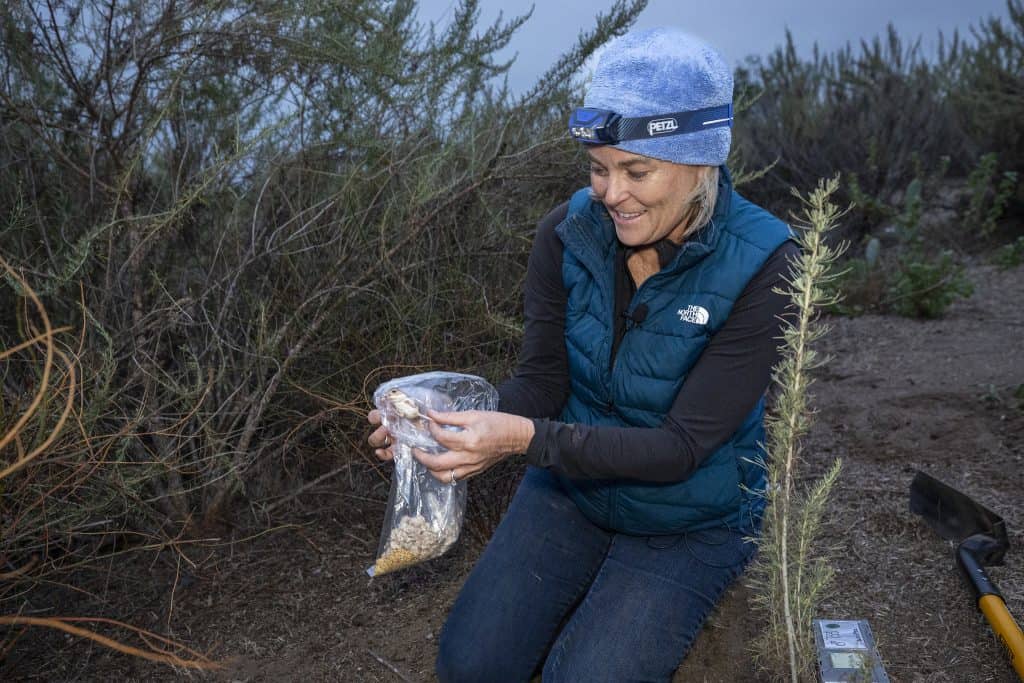
The Pacific Pocket Mouse Conservation Program has reintroduced over 500 mice back into their native habitats, including the North San Mateo training area within Marine Corps Base Camp Pendleton in San Diego.
©Courtesy of Meghan Breen, San Diego Zoo – Original / License
The newest population, introduced at the North San Mateo training area within Marine Corps Base Camp Pendleton, represents the third and latest success of the Pacific pocket mouse breeding program. A collaborative partnership between San Diego Zoo Wildlife Alliance, the U.S. Fish and Wildlife Service, the U.S. Geological Survey, and others, the program has now introduced over 500 individual mice back into their native habitats. It’s a big win for a tiny species, one that points to the potential for additional reintroduction efforts in the future.
Saving any species is important, but Pacific pocket mice play a vital role in the California coastal ecosystem. Their relentless burrowing not only improves soil hydrology and nutrient cycling but also provides refuge for other creatures.
As Director of Recovery Ecology at San Diego Zoo Wildlife Alliance, Debra Shier explained in a press release, “Establishing this new population of Pacific pocket mice at Camp Pendleton is an exciting step toward the species’ recovery… [This] helps bring these important ecological functions back to the coastal ecosystems where Pacific pocket mice naturally occur.”