
Quick Take
- One tiny bat pulled off a jaw-dropping feat that researchers never anticipated, a conclusion the data from its tag went on to prove. See the tracking findings →
- Your phone could be tracking endangered bats right now, and scientists are counting on it. Help scientists track bats →
- Where these bats disappear to every night has stumped scientists for years, and a tiny glued-on tag is finally cracking the mystery. See how tags work →
- A silent killer has been decimating bat populations since 2006, and most people have never heard of it. Learn about White-Nose Syndrome →
A massive research project is underway in New River Gorge National Park and Preserve. Researchers are tagging endangered bats to track their movements throughout the park. Data coming back have been incredible, including records of one tiny bat’s astonishing 130-mile journey.
Scientists Track Endangered Bats with Tiny Tags
It is no secret that Virginia big-eared bats and Indiana bats are endangered. Exactly what these bats need to survive, however, is a bit of a mystery. To shed light on this issue, scientists with the West Virginia Division of Natural Resources have teamed up with graduate students at Virginia Tech to determine which conservation efforts would benefit the bats.
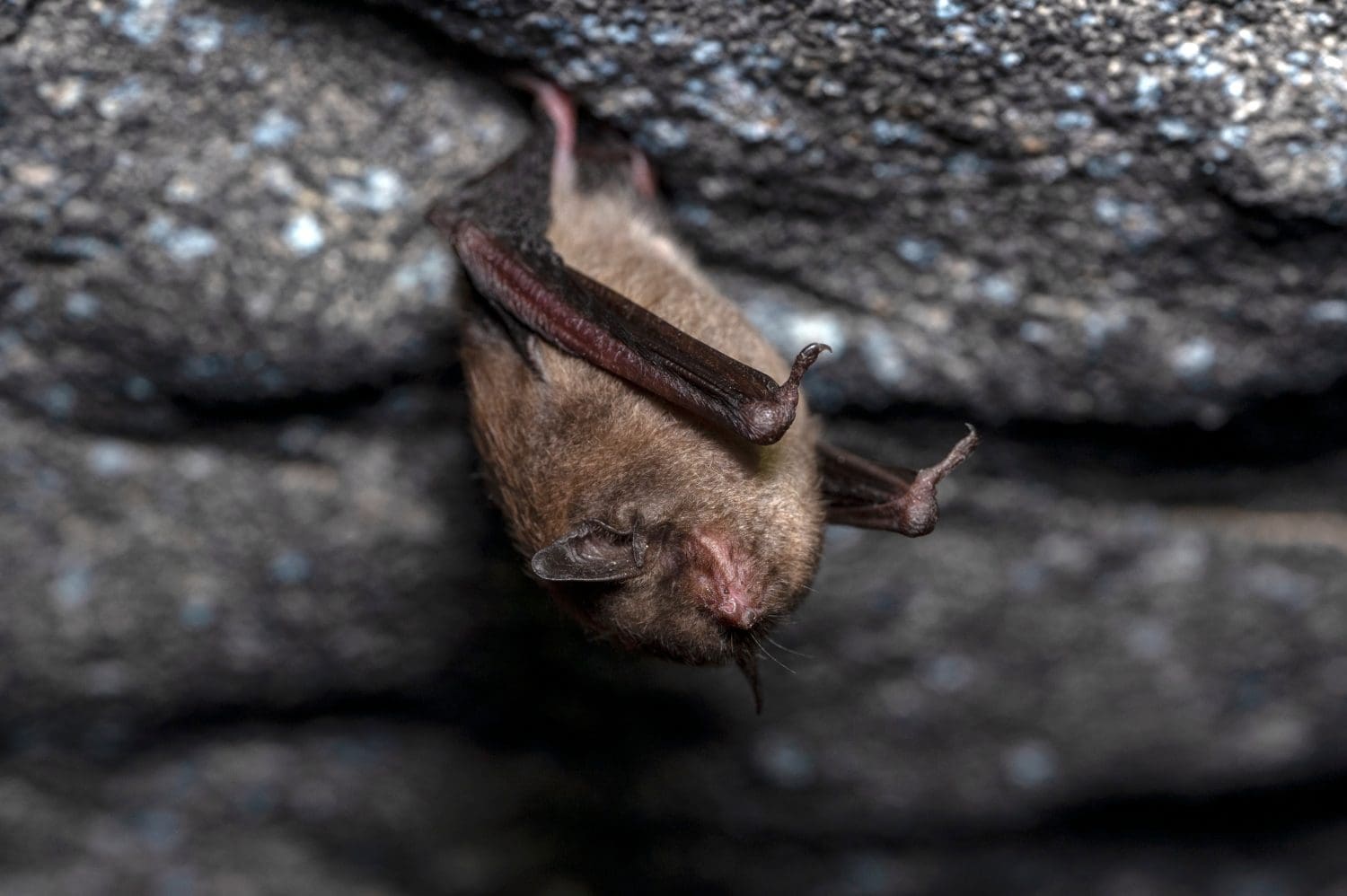
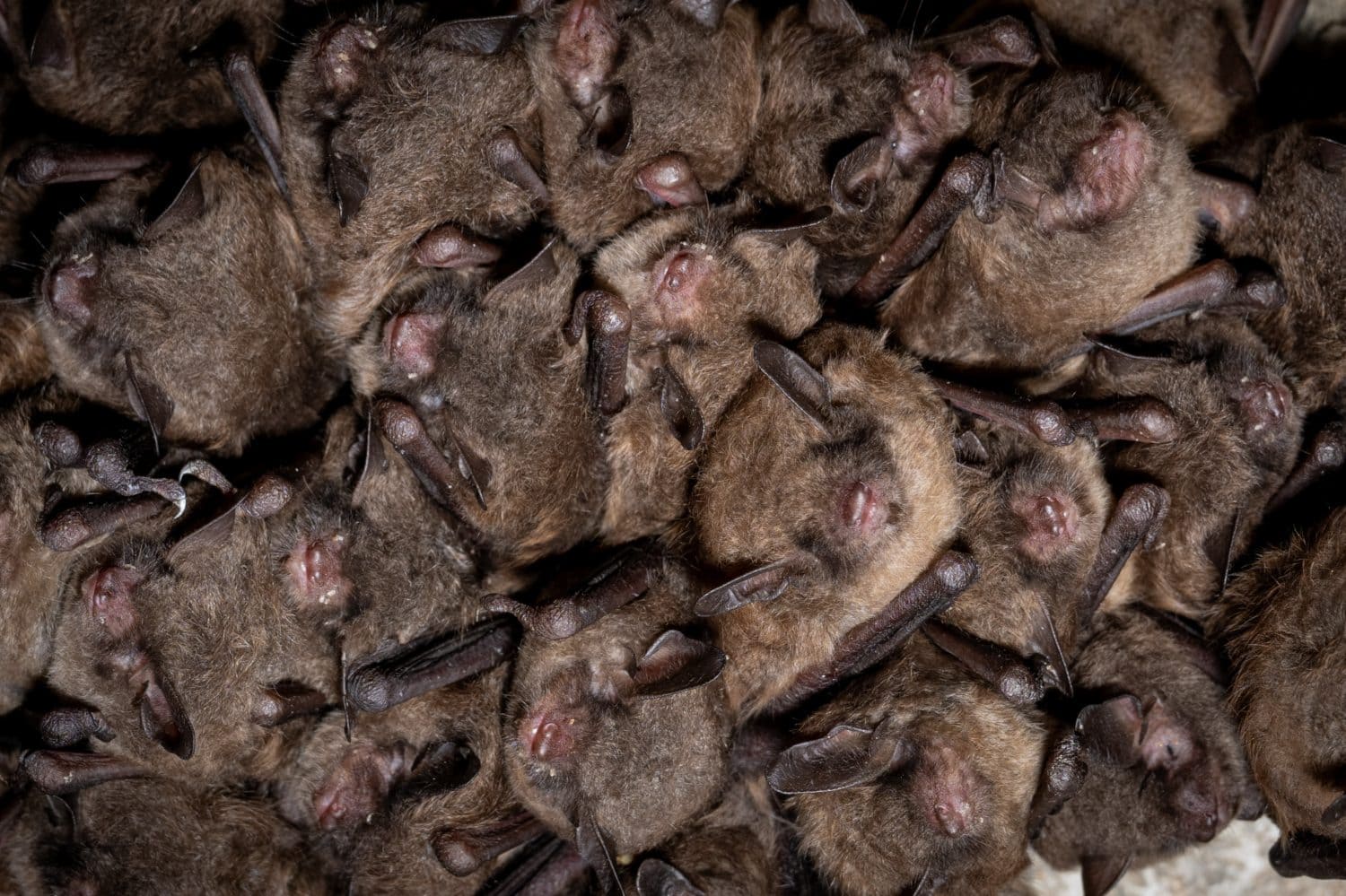
Indiana bats are being tagged for better conservation.
©Daniel Istvanko/Shutterstock.com
Before developing conservation plans, understanding bats’ activity is crucial. However, because bats are nocturnal, this poses a challenge. To address this, researchers have tagged the bats with cellular transmitters that show their location throughout the New River Gorge National Park and Preserve in West Virginia.
The tags are 1.5 inches long and weigh 0.21 grams. They are glued to the bats’ backs and stay in place for one to two weeks before falling off. During this time, the bats transmit their locations. To date, researchers have collected incredible information, including details of one bat flying 130 miles from where it was originally tagged.
Why Researchers Want to Track New River Gorge National Park and Preserve Bats
As the Virginia big-eared bat and Indiana bat populations continue to decline, scientists are working to determine what more they can do to protect them. By fitting these bats with transmitters, scientists hope to open a window into their lives and provide the conservation they need.
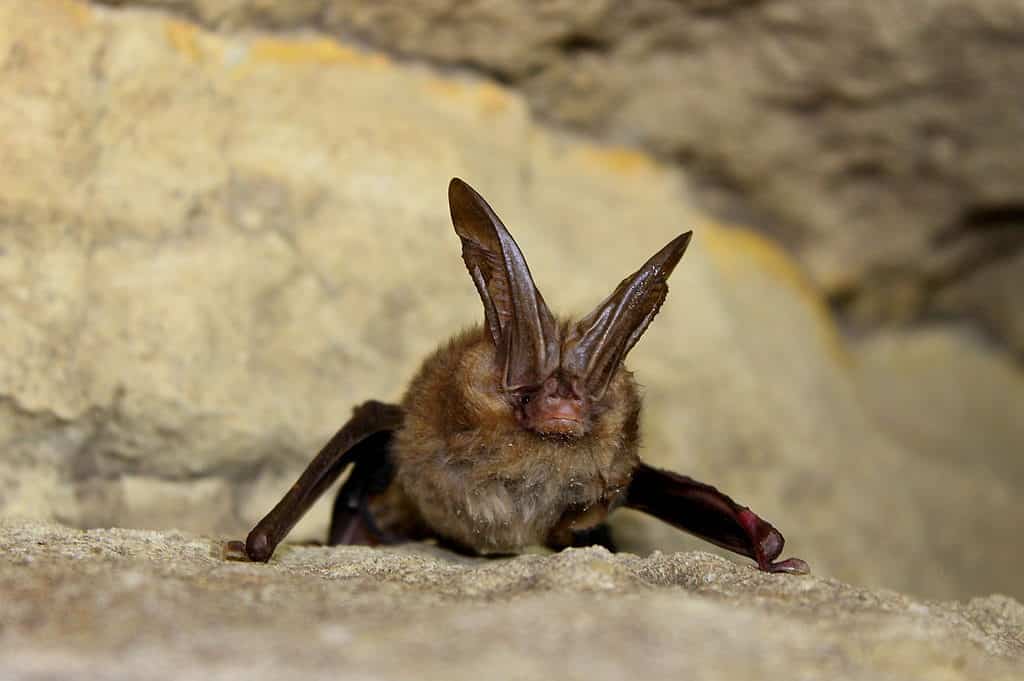
Tagging Virginia big-eared bats helps researchers better understand nighttime activities.
Currently, it is a mystery as to where the bats in New River Gorge National Park and Preserve go at night. Tracking them helps scientists better understand their movements. Once they know where the bats forage and roost, they can work to protect these areas.
Additionally, scientists can learn the bats’ migration routes. When scientists know where the migration corridors are, they can reduce disturbances in those areas. The less human activity there is and the stronger the protections are within the bats’ habitats, the better their chances of survival become.
How Can the Public Get Involved?
The tags on the back of the bats act like cellular transmitters. They ping at regular intervals. This means anyone with a Bluetooth-enabled device, including an iPhone, can track the bats. Because of this, scientists have asked the public to help track the bats when visiting New River Gorge National Park and Preserve.
The public simply needs to turn their Bluetooth and Location Services on to help track bats within the national park.
©IrinaK/Shutterstock.com
Throughout New River Gorge National Park and Preserve, designated areas will collect data on bat activity. For park visitors to participate, they simply need to do the following:
- Be in the park between 8:00 PM and 11:00 PM
- Have Bluetooth and Location Services on, on an iPhone or other device
- Drive on designated roads from the northern to the central regions of the park
Any nearby tagged bats will ping the iPhone or other device, and their information will be uploaded to the researchers. With a little effort, visitors can play a big role in solving the mystery of where bats go during the evening hours in New River Gorge National Park and Preserve.
What Caused the Bats to Become Endangered
Both the Indiana bat and the Virginia big-eared bat have declined in population in recent decades. As a result, they are federally listed as endangered.
More than one event caused these bat species to become endangered. A series of circumstances led the government to step in to protect the bats, with the goal of keeping both species from going extinct.
One of the biggest threats to both the Indiana and Virginia big-eared bats is White-Nose Syndrome (WNS). WNS is a fungus that thrives in temperatures below 70F. The fungus grows on the bats’ muzzles and wings while they are hibernating, eventually causing damage to the skin and wings.
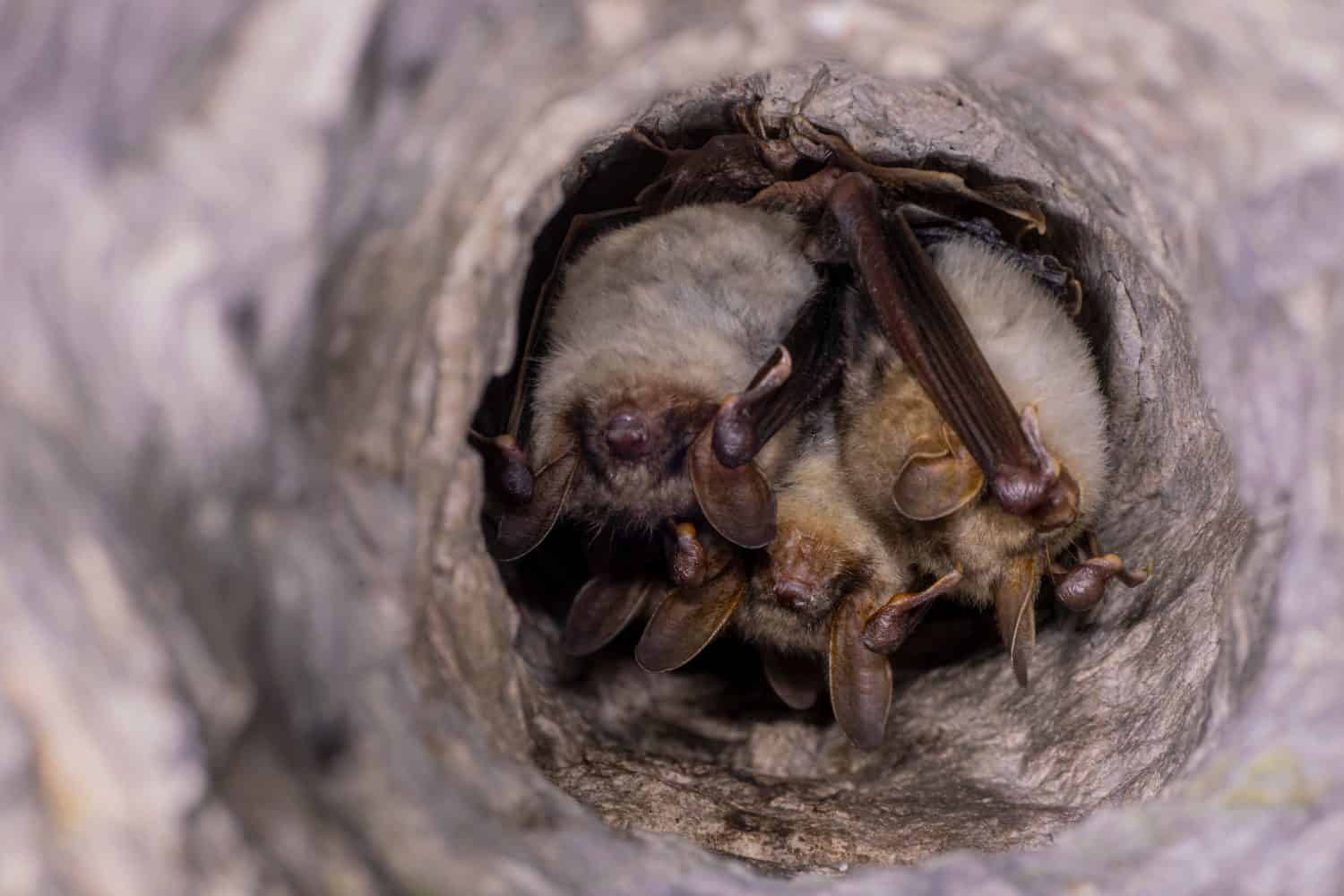
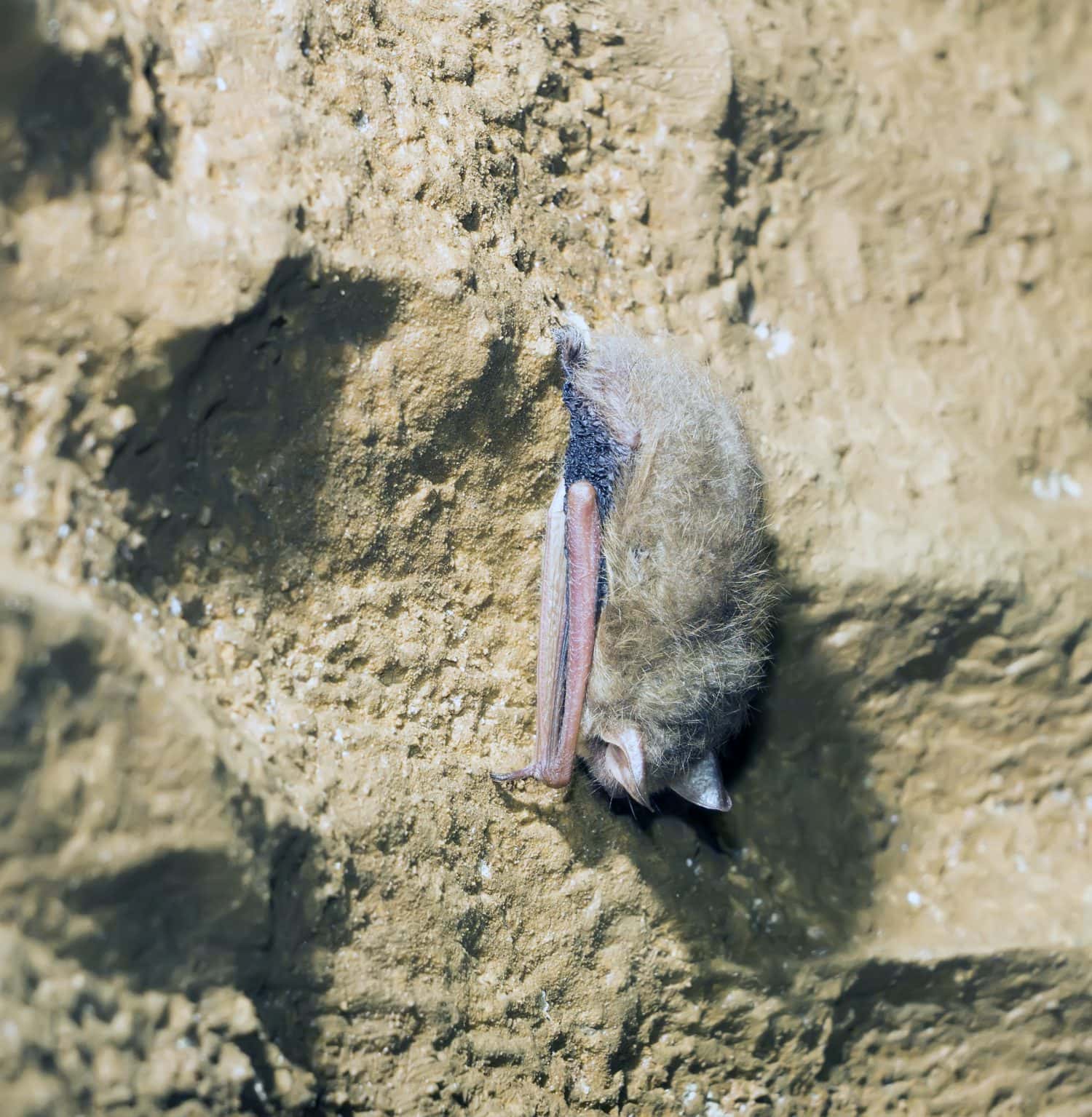
White-nose syndrome, as seen on these bats, is one of the factors that led Indiana and Virginia big-eared bats to become endangered.
©Martin Janca/Shutterstock.com
Additionally, WNS wakes bats during the time they should be hibernating. This forces them to use energy stores they need to make it through the winter. Consequently, due to physical damage, dehydration, weight loss, and electrolyte imbalance, the bats die. This has happened at alarming rates since WNS was first identified in 2006.
WNS is not the only culprit behind population loss. Another reason bat populations have declined is human disturbance in caves. To address this, the old mining caves that the bats frequent have been closed to the public.
Tracking the bats will not only solve the mystery of where they go at night but also provide both the Indiana and Virginia big-eared bats with more protections, allowing their populations to rebound rather than face continued decline.