
Quick Take
- Your hamster's species determines whether banana is a harmless treat or a genuinely dangerous food, yet most owners have no idea which side their pet falls on. Check your hamster's species →
- Bananas pose a hidden risk that has nothing to do with sugar, and this risk stems from one of a hamster's most instinctive behaviors. See the hidden banana risk →
- Several fruits most people consider harmless can actually be lethal to hamsters, and the reason involves a compound your body produces naturally. See which fruits are toxic →
- Fruit isn't necessary in a hamster's diet at all, and if you're offering it, you need to know the strict limits that keep it from doing harm. See safe fruit and limits →
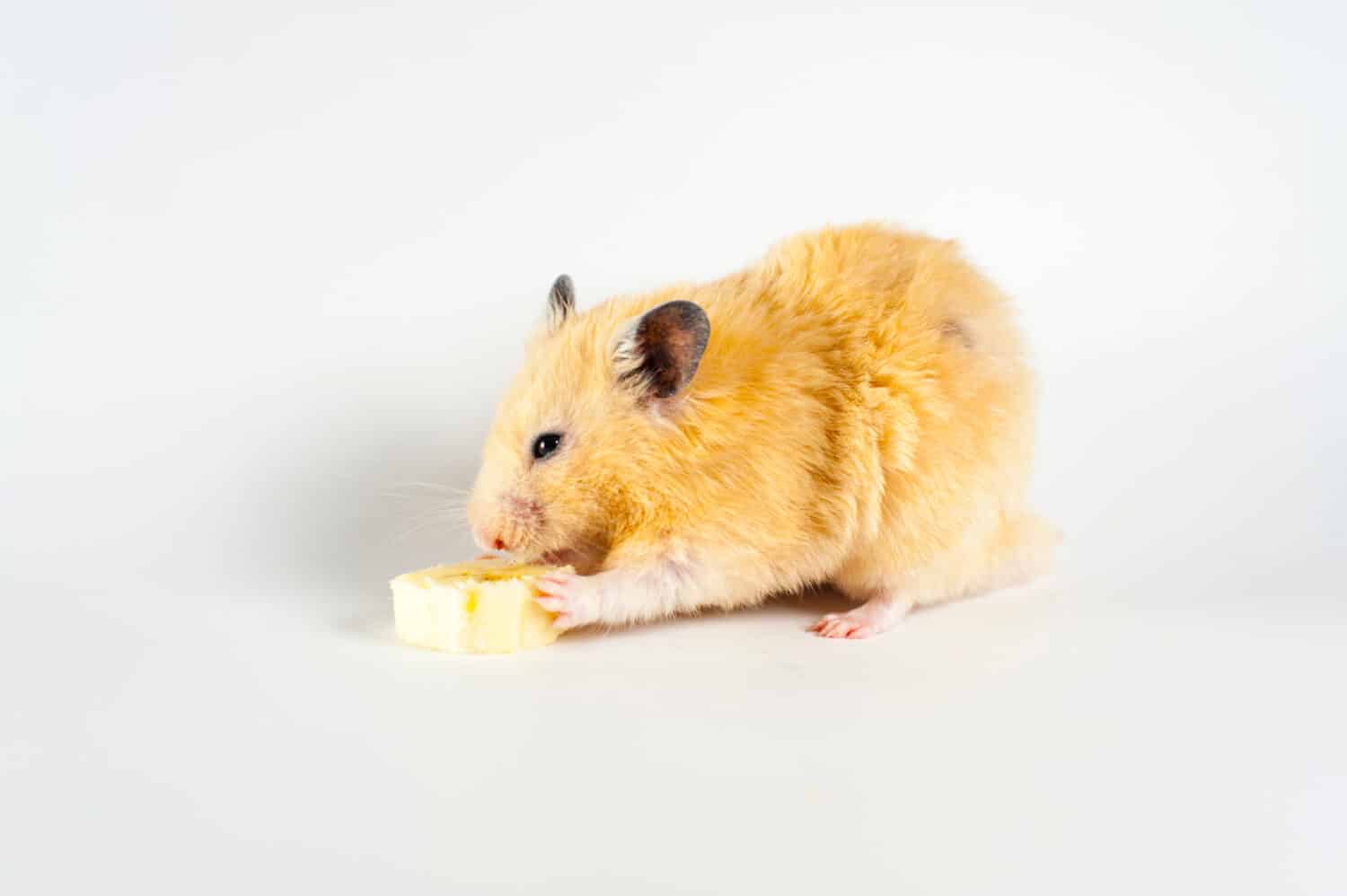
Hamsters are popular, solitary pets known for their entertaining, nocturnal antics and manageable space requirements. There are five species of hamsters kept as pets: the large, solitary Syrian hamster (Mesocricetus auratus) and four smaller varieties, which include the Campbell’s Dwarf (Phodopus campbelli), Winter White Dwarf (P. sungorus), Roborovski Dwarf (P. roborovskii), and the mouse-like Chinese hamster (Cricetulus griseus). While all five species share a vulnerability to respiratory issues and skin mites, they differ significantly in other health risks. Syrian hamsters are most at risk for life-threatening bacterial wet tail and cheek pouch abscesses, while dwarf and Chinese hamsters are genetically prone to tumors and highly susceptible to diabetes. For this reason, sugary foods are strictly off-limits for dwarf and Chinese hamsters.
Can Hamsters Eat Bananas?
Bananas are not toxic to hamsters, but among the five pet species, only Syrian hamsters should be given bananas. Syrian hamsters can eat bananas safely, but they contain a lot of sugar that isn’t good for them in excess. So, Syrian hamsters should only eat a tiny bite of banana once or twice a week at most.
A tiny bite should never exceed 1/4 of a teaspoon (roughly the size of the hamster’s ear) per serving, and should be given no more than twice per week.
Fruit isn’t a necessary part of a hamster’s diet and should be used as an occasional treat. The majority of your hamster’s diet should consist of a dry food mix, insects, and dark, leafy greens.
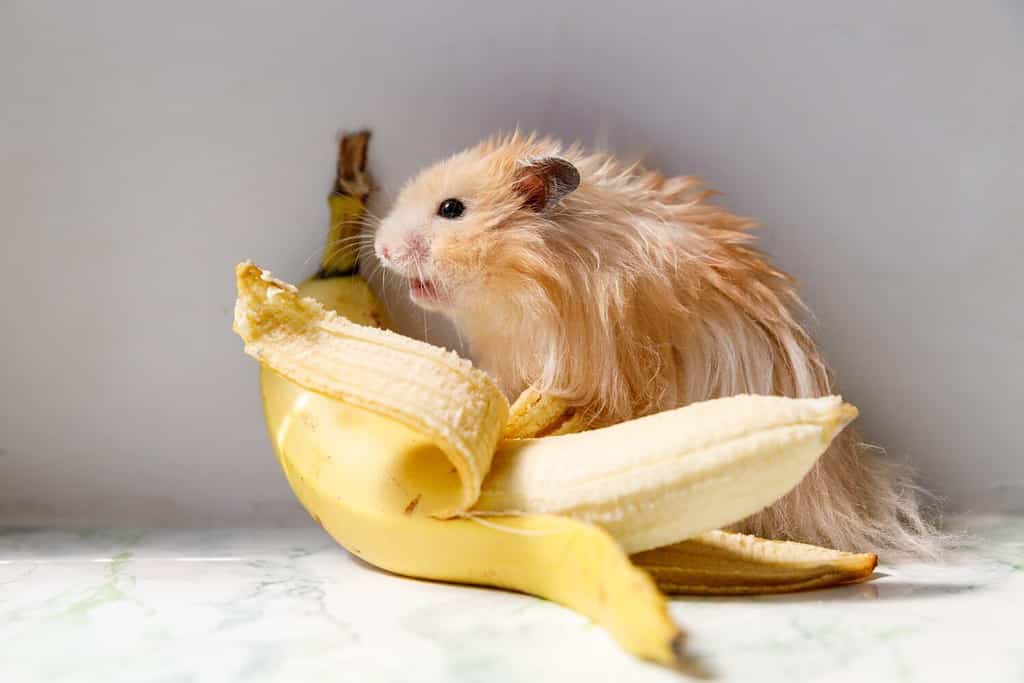
Syrian hamsters are the best candidates for occasional banana treats, as dwarf and Chinese hamsters are much more sensitive to sugar and at higher risk for diabetes. For these smaller species, it is generally safest to avoid sugary fruits like bananas altogether.
©Vladfotograf/Shutterstock.com
Bananas have a very soft, mushy, and sticky texture. If a hamster stuffs the banana into its cheek pouches rather than eating it immediately, the fruit can get stuck, rot, and cause painful pouch infections.
Hamsters also love to hoard food. If your hamster takes a piece of banana and buries it in its bedding, be sure to check the cage and remove any uneaten banana within a few hours to prevent mold.
Dwarf hamsters and Chinese hamsters tend to be more sensitive to sugar than Syrian hamsters.
You should never feed any banana whatsoever to Chinese or dwarf hamsters.
Bananas are exceptionally high in natural sugars and carbohydrates, which trigger rapid glucose spikes in diabetes-prone dwarf and Chinese hamsters. Sugary foods like bananas can increase the risk of diabetes in dwarf and Chinese hamsters, so it is best to avoid feeding them bananas entirely. If you wish to give a Chinese or a dwarf hamster a treat, try a single flaked oat, a raw pumpkin seed, a tiny piece of fresh broccoli floret, or a small slice of cucumber.
Which Fruits Can’t Hamsters Eat?
Hamsters should never eat eggplant since it’s toxic to them. Raw eggplant contains solanine, a toxic chemical that can cause severe digestive issues, throat swelling, and breathing problems in hamsters.
Tomato leaves and unripe tomato fruits are also toxic. Like eggplant, tomatoes belong to the nightshade family. The leaves, stems, and unripe (green) fruits contain solanine and tomatine. These are natural alkaloids that protect the plant from pests, but they are poisonous to hamsters.
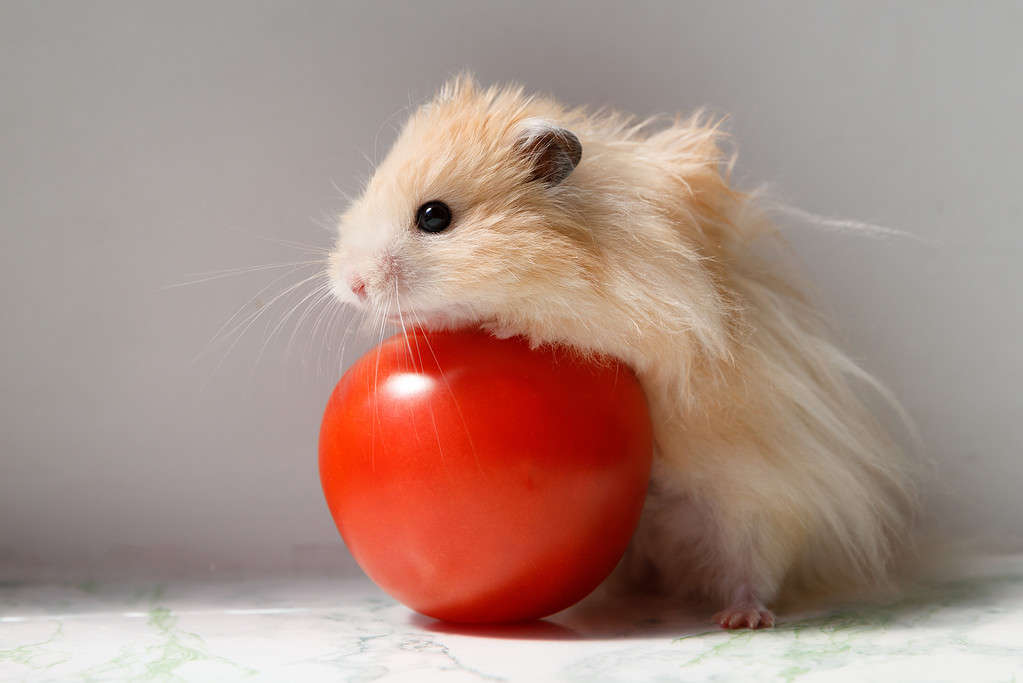
If you must feed your hamster a tomato, make sure it is ripe.
©Vladimir18/iStock via Getty Images
Eating them can cause severe gastrointestinal distress, lethargy, heart problems, and death. Fully ripe, red tomatoes have very low levels of these toxins. However, they are highly acidic and contain a lot of water.
Feeding a hamster ripe tomatoes can cause severe diarrhea (which can lead to a dangerous condition called wet tail) and stomach ulcers. If you choose to feed ripe tomatoes to your hamster, always remove the seeds, ensure no green bits remain, and limit it to a tiny, pea-sized piece once a week at most.
Also, avoid cherry pits, apple seeds, pear seeds, and stems. The seeds, pits, and stems of apples, cherries, pears, and many other stone fruits contain amygdalin, which releases cyanide when chewed. Due to a hamster’s tiny body weight, even very small amounts of these compounds can be fatal.
What Fruits are Safe for Hamsters?
Most fruits are safe for hamsters as long as you feed them infrequently and in small amounts. Some other great fruits for your hamster to try include:
- Raspberry
- Watermelon
- Kiwi
- Apple
- Strawberry