
Despite misinformation to the contrary, the coyote is a shy, cautious animal that prefers to avoid contact with people. Filling an important hole in the ecosystem, coyotes are highly adaptable and can be found across Central and North America, from Panama to Alaska. While they originated in the open plains of western North America, their range has expanded across the continent to a variety of habitats (including urban settings).
This means that coyotes are becoming a more common sight in backyards and neighborhoods. But how long will they be your neighbor? Let’s take a look at the coyote’s lifespan and how long coyotes live.
How Long Do They Live?
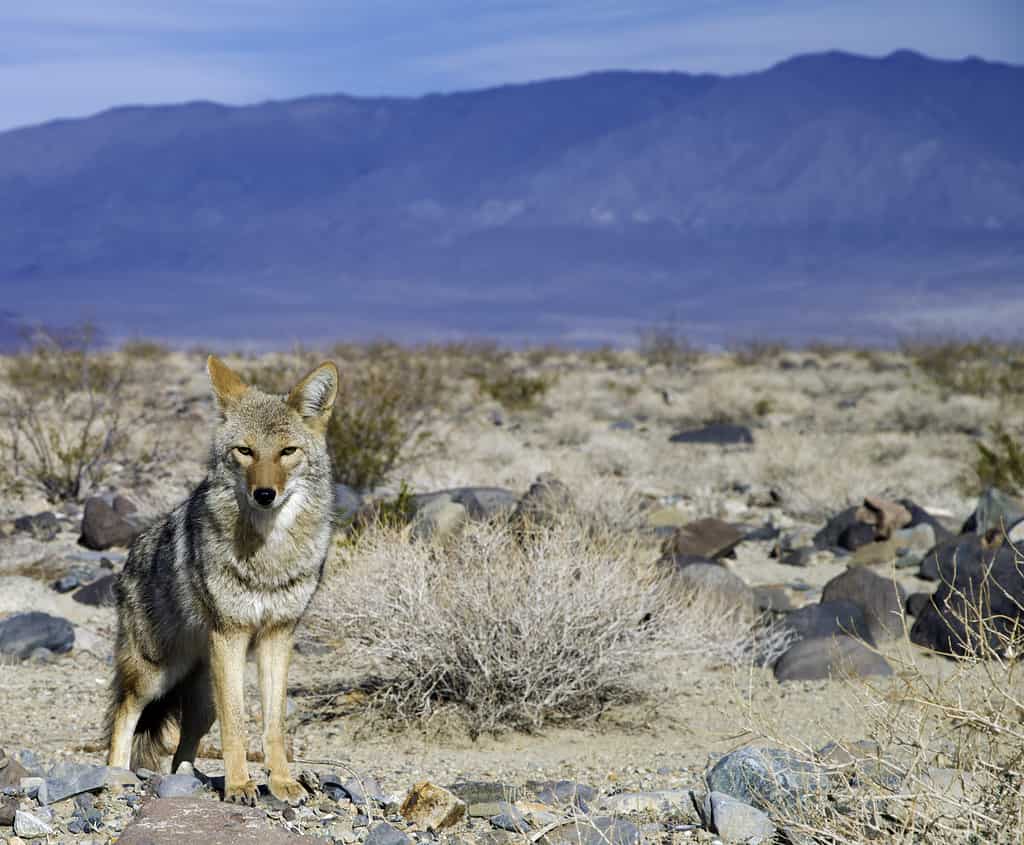
Coyotes live in a variety of habitats, including grasslands, mountains, woodlands, and urban areas.
©hpzima/ via Getty Images
In captivity, coyotes live up to 20 years. In the wild, coyotes can naturally reach 13-15 years of age. However, hitting this age is rare. According to the Urban Coyote Research Project (UCRP), most wild coyotes die before they are three years old. In fact, researchers for UCRP found that coyotes in the Chicago area only have a 60% chance of reaching their first birthdays. Juvenile coyotes in surrounding rural areas fair even worse: Only around 13% make it through their first year.
What causes the difference in survival rates? While coyotes in urban areas as more susceptible to automobile strikes (the highest cause of death for urban coyotes at 40-70%), intensive coyote hunting and trapping plague more rural, agricultural regions. Year-round hunting of coyotes is allowed with no bag limits or other regulatory constraints. Across the United States, over 500,000 coyotes are slaughtered annually. Trapping, shooting, poisoning, and aerial gunning are all implemented in attempt to eradicate coyotes. Interactions with people have increased as coyote populations moved into more populous areas.
Life Cycles of Coyotes
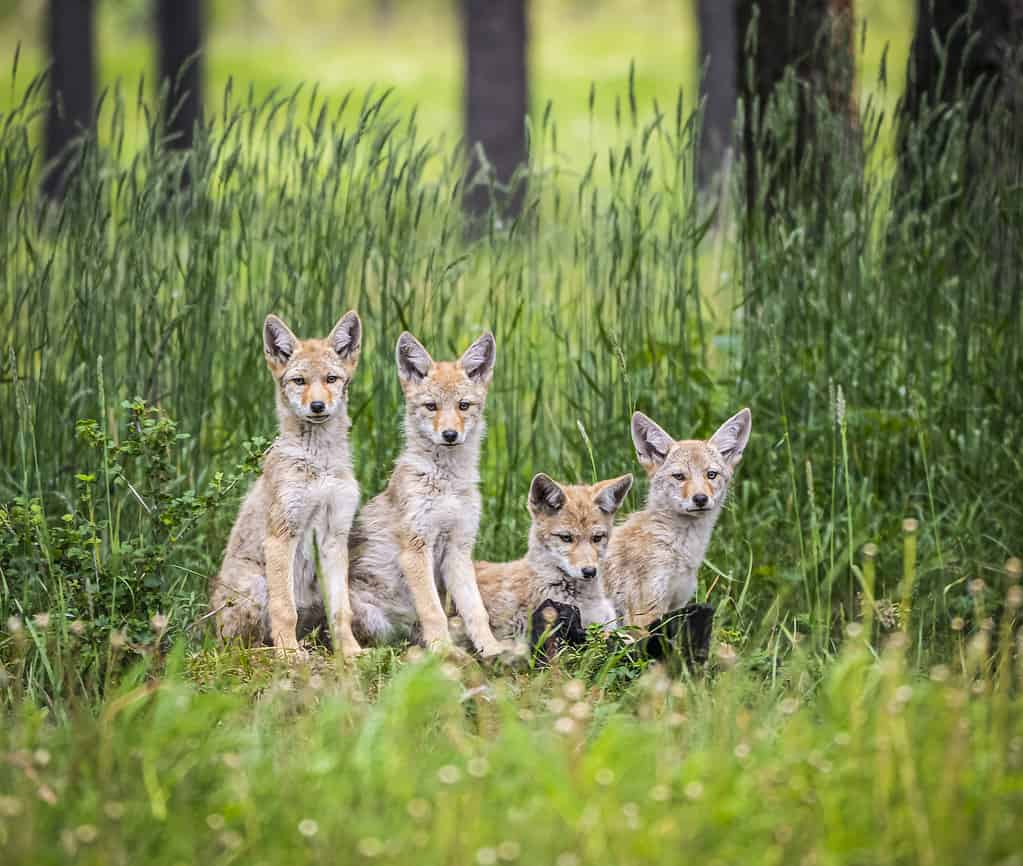
On average, coyotes have four to seven pups per litter, with one litter per year.
©Annie Hewitt/iStock via Getty Images
Coyotes are social animals that often form packs, though they sometimes live as solitary animals. Genetic research has shown that members of a pack are almost always close relatives, except for the alpha male and female. Solitary coyotes are generally under two years old. These animals are looking to join a new pack or create their own.
Within a pack, only the alpha pair mates. These pairs are predominantly monogamous and stay together unless one mate dies. The subordinate members of the pack do not mate but assist in raising the young.
Coyotes typically mate in February and give birth in April after a 62-65-day gestation period. For most of the year, coyotes do not have dens. However, when the baby season rolls around, they need a place to raise the pups. At this time of year, coyotes select a den site. They create a den by digging a hole, or by using a hollow stump or rock ledge as cover. They will also take over existing dens or burrows made by other animals. Coyotes often utilize multiple den sites so that they can move the pups between sites for safety.
Coyote Development
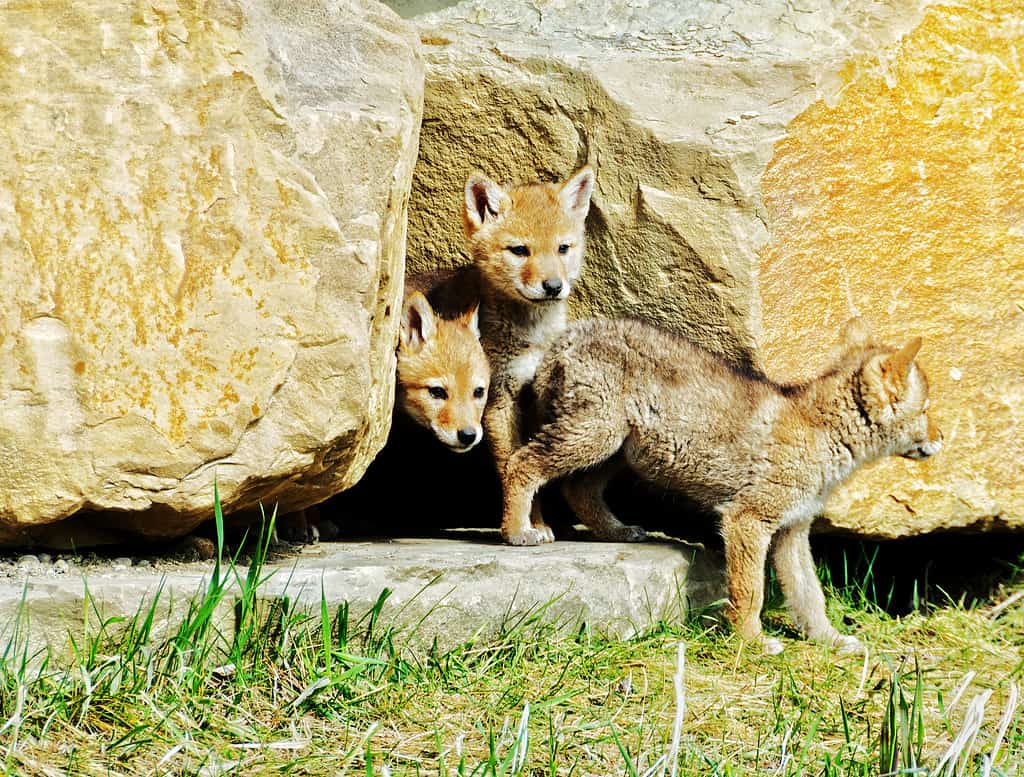
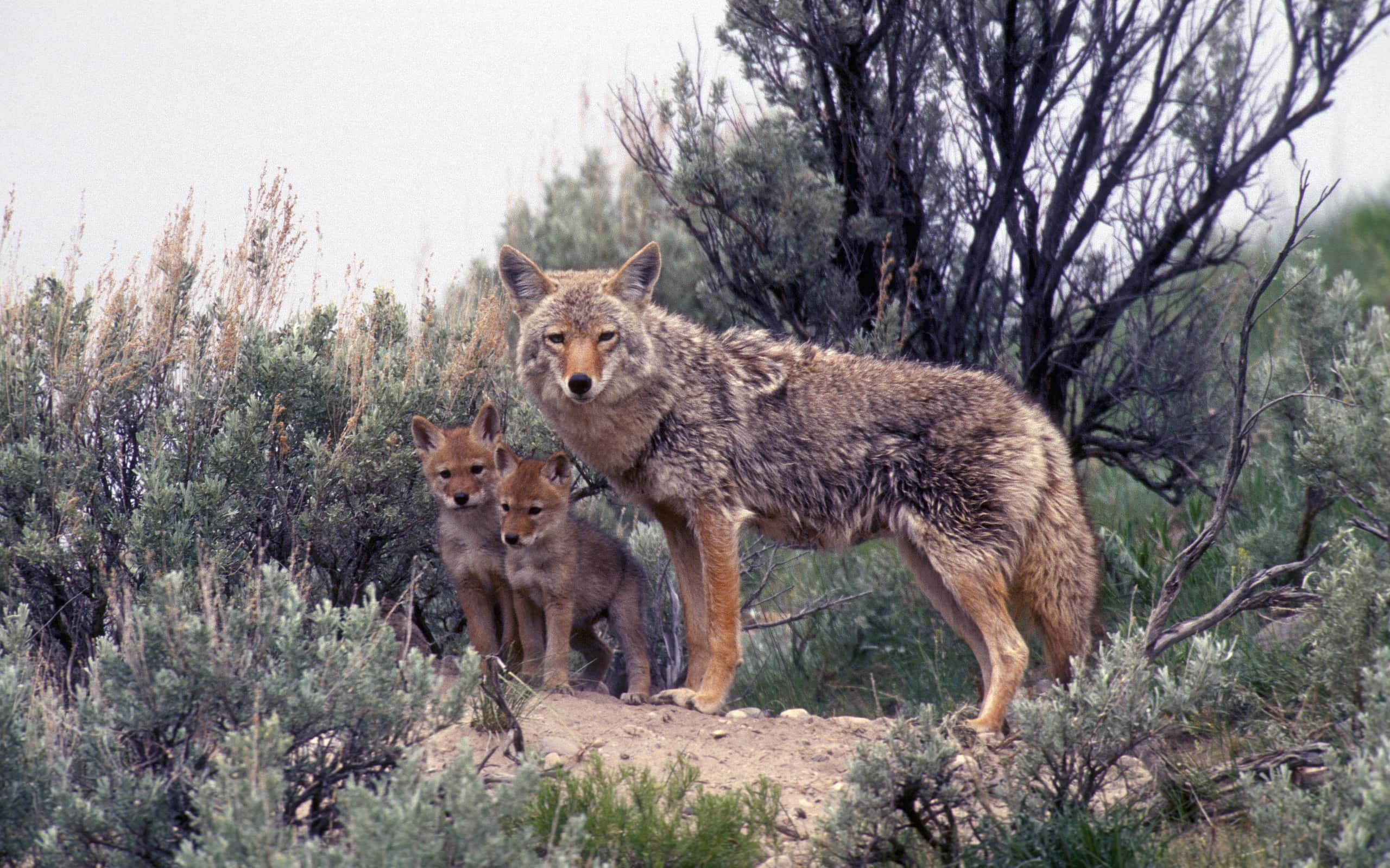
Pups begin accompanying their parents outside of the den at about six weeks old.
©jeu/iStock via Getty Images
Coyote litters usually consist of four to seven pups, though litters of up to 11 have been recorded. Remarkably, a coyote’s litter size varies based on population density and food abundance. If the population drops, the coyote has more babies. This is one reason that coyote culling is senseless: The more coyotes that are killed, the quicker they are replaced.
Pups stay in the den for about six weeks before they begin accompanying the adults on short outings. They are weaned at about one month old, though the parents continue to feed them by regurgitating food. By four or five months old, pups begin venturing out without their parents. At this point, they begin searching for food on their own. At six to nine months old, male juveniles leave the pack in search of a new one, while females stay with the existing pack.