
Coyotes are top-of-the-food-chain canines found in every U.S. state aside from Alaska. They are adaptable predators that thrive in the many different environments found in Oregon, making an encounter possible (or even likely). Although for the most part coyotes take to minding their own business, there are times they might act as a nuisance to humans, animals, or property. Fortunately, Oregon has guidelines and rules put into place to reduce potential conflicts between coyotes and people. Continue reading to learn more about coyote behaviors, hunting rules, and how to avoid problems with these dogs.
Common Locations

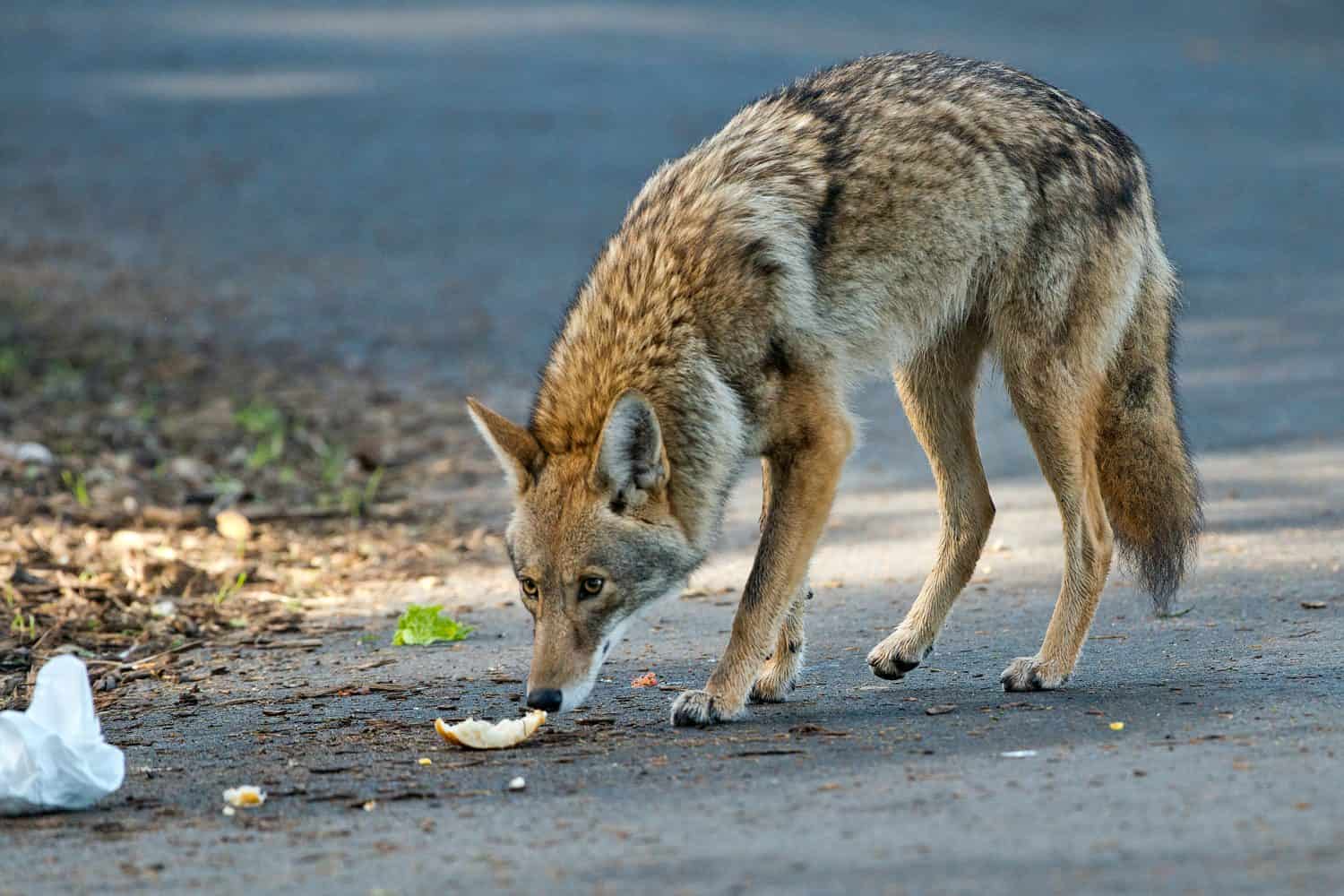
Coyotes don’t shy from urban areas and are as comfortable exploring a city as they are the wilderness.
©Sean Pavone/iStock via Getty Images
Oregon has roughly 300,000 coyotes present throughout the state. Since coyotes are pretty well-distributed throughout Oregon, there’s not an area where you’re guaranteed you won’t ever come across one. They are adapted to living in urban areas as well as deep within forests, open prairies, and even grasslands. The mountainous terrain of Oregon provides a great many habitats where coyotes can live, hunt, and breed. However, a coyote’s preferred habitat would be brushy areas and edges of forests or agricultural lands.
Due to their adaptability, coyotes can congregate anywhere there is a source of food. They are omnivorous so very few things are off the menu for these dogs, making finding food anywhere very easy. Coyotes aren’t the dumpster divers that raccoons and other smaller animals are made out to be, but they’re also not above taking some food out of trash cans if other sources are scarce.
The bottom line is that common places for coyotes can be anywhere in Oregon. It’s best to be ready to encounter a coyote and know what to do when, or if, that happens.
Hunting Rules
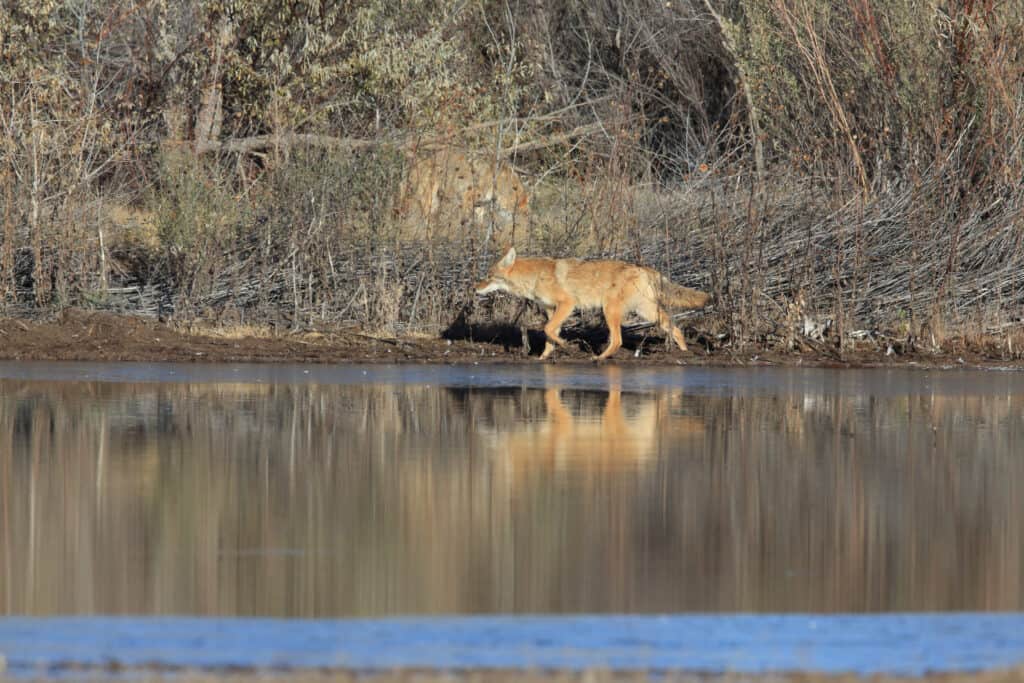
©Frank Fichtmueller/Shutterstock.com
Coyotes are available for hunting and trapping in Oregon as long as you use the correct methods, follow hunting rules, and have a hunting license and the appropriate permits. They are an “unprotected animal” by Oregon law. However, you cannot legally capture or relocate a wild coyote.
Despite the fear surrounding these animals, they don’t often actively pursue humans or even their pets. Unless the coyote is an active threat and is not backing off using the appropriate scare tactics, the best thing to do is avoid conflict with the animal. Coyotes are essential parts of the ecosystem to keep other populations of animals in check. Overhunting them can have detrimental effects on the overall function of the ecosystem and might backfire in the long run.
When Are Coyotes Most Active?
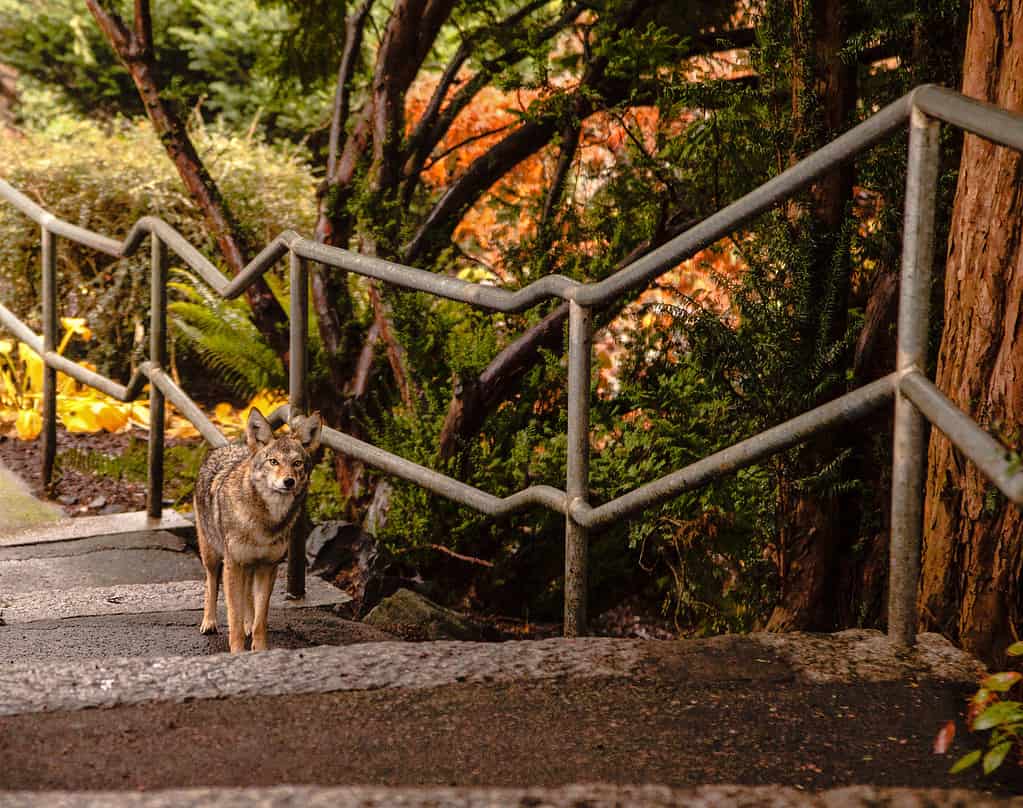
The time a coyote is active depends on location, time of season, or possibly food availability.
©northohana/iStock via Getty Images
Coyotes are most active during dusk and dawn, as these are prime hunting hours for their preferred prey. However, coyotes will often walk around during the daytime as a normal part of their behavior. Some nocturnal animals that make daytime appearances are possibly at a higher risk of carrying rabies and should be avoided. While you should avoid contact with any wild animal, the risk of a coyote having rabies in Oregon is relatively low.
True signs of aggression, such as running after people, biting, or other strange behavior might be signs of rabies in a coyote. If you suspect a coyote might have rabies, call the appropriate animal control or a local wildlife helpline. This can prevent potentially deadly encounters with the animal and possibly limit the spread of the disease.
How to Avoid Coyotes

Securing your trash is a good way to keep coyotes out, but also to avoid attracting other animals.
©James Andrews/ via Getty Images
Do Not Feed Coyotes
This is the easiest way to avoid having coyotes around. By not feeding them, you’re not associating your location (or yourself) with food. Additionally, like with any wildlife, feeding them can create dependence and later endanger the animals. Feeding coyotes can be either directly feeding them or indirectly, leading to the next point.
Do Not Leave Food Sources Out
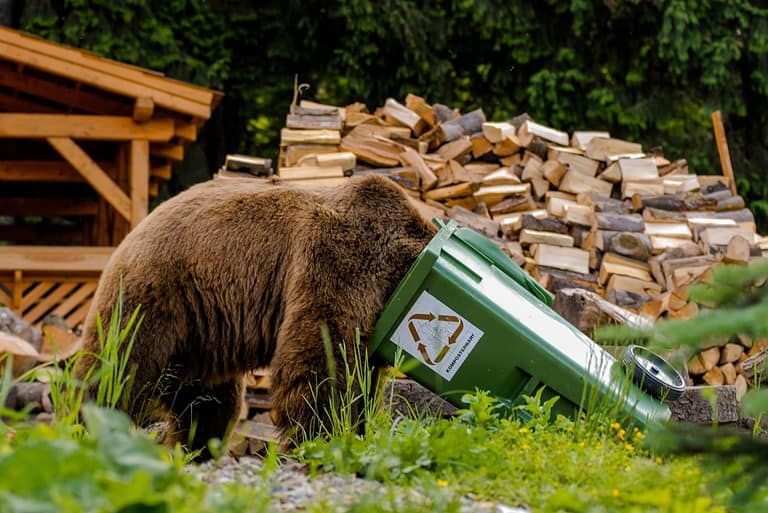
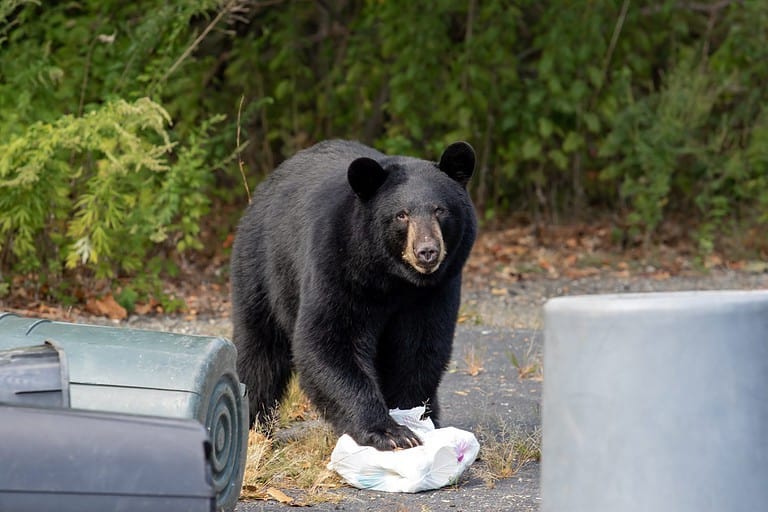
Trash cans without lids or with lids haphazardly balanced on top of an overflowing bin can have the potential to be a buffet for wandering coyotes. The same goes for compost bins and even fallen fruit from trees. Be sure you have tight-fitting lids for all trash and compost bins. Regularly clean up any fallen or rotten fruits from nearby trees. Harvest your garden crops regularly or as soon as you can.
Even large bird feeders can attract coyotes because of the animals that feed on the bird seed, like squirrels. Consider downsizing large feeders and refilling regularly instead of having a large portion of seeds always available. If coyotes are a problem in your area, you might consider forgoing the bird feeder altogether.
Avoid Leaving Pets Outside Unattended
Unfortunately, roaming cats and small dogs can attract coyotes and your pet could be their next meal. To avoid the potential heartbreak of this, don’t let your small animals roam freely, especially if someone to watch them is not around. Having a protected area, either fully enclosed or with a tall fence, can deter these animals. However, coyotes can jump over 8 feet tall, so fences might not be enough to keep a determined canine out of your yard.
Another possible issue is small farm animals like chickens. These animals should be in a secure coop during the hours coyotes are most active. As always, since coyotes can prowl any time of the day, some type of surveillance is recommended to avoid (or limit) fatal encounters.
Put Up Fencing
Fencing might not be 100% coyote proof but it’s a step towards security. Fences that are over 8 feet tall with a roll bar on top are one way to prevent coyotes. Other repellents such as motion-activated lights or sound-making devices are also good deterrents when combined with a fence.
Scare Them Away
Most coyotes will run from humans or avoid them entirely. If one approaches you, don’t run. Attempt to scare them by making loud noises or throwing something in their direction. However, it’s important to avoid antagonizing them for simply existing in your area. You should only attempt to scare them away if they threaten you or your pets.