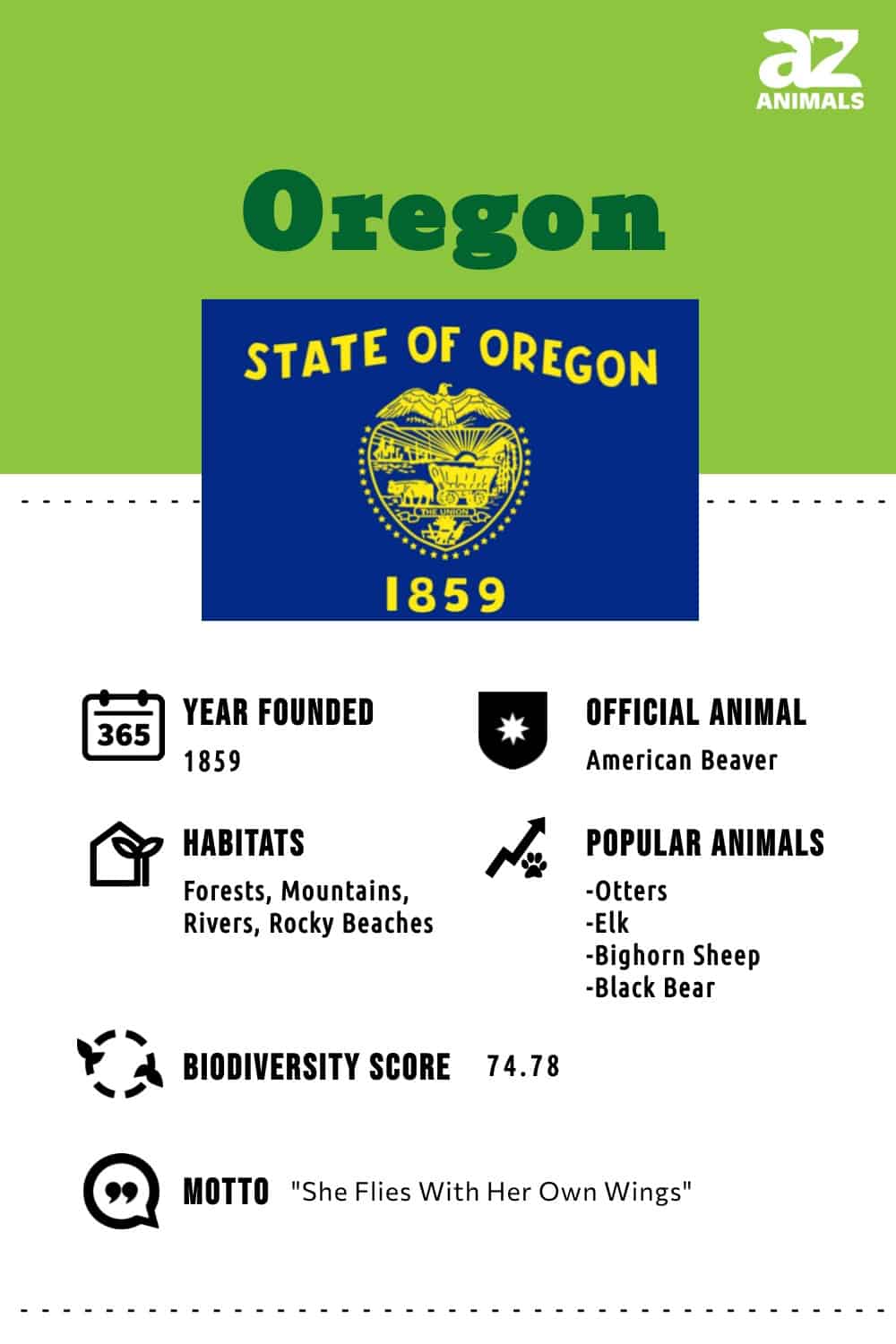
N S W E
Wildlife Expeditions

Wildlife of
Oregon

From kelp-rich Pacific shores to Cascade volcanoes and high desert basins, Oregon packs extraordinary habitat diversity-and wildlife-into one state.
214 Species
248,608 km² Land Area
Overview

About Oregon

Oregon's wildlife is shaped by sharp changes: misty coastal forests and estuaries give way to the snowy Cascade Range, then drop into sagebrush steppe, rimrock canyons, and alkaline lakes. Fire, volcanoes, and ocean upwelling keep these habitats changing and productive. Visitors can see marine mammals, old-growth forest specialists, and desert-adapted animals on the same trip. Key ecosystems include the Pacific coastline and estuaries (nurseries for fish, shorebirds, and migrating waterfowl); the Coast Range and western lowland forests (conifer forests that support species tied to complex, mature structure); the Cascade Range (a north–south spine of alpine and subalpine habitat); and the Columbia Plateau and Great Basin–influenced high desert (sagebrush, grasslands, and seasonal wetlands used by raptors and migratory birds). Oregon stands out for its quick west-to-east change and stronger ocean influence, with rich estuary-to-offshore wildlife viewing.

Physical Features

Geography

Oregon has a big wet-to-dry change from west to east and distinct elevation zones. Wet Pacific coasts and temperate rainforests cross the Cascade Range into drier sagebrush steppe and high desert. Rivers and valleys make migration paths and rich river-edge (riparian) areas, while alpine peaks, volcanic plateaus, and basins add homes for seabirds, marine mammals, forest, and desert species.

248,608 km² (land area) Land Area
9th largest U.S. state by area Size Rank
State Type
Elevation Range

Sea level to 3,428 m (Mount Hood)

Coastline

Pacific Ocean coastline (~584 km / ~363 mi) with numerous estuaries and a major river mouth at the Columbia River

Key Landscapes

Pacific Ocean coastline with sandy beaches, rocky headlands, sea stacks, and coastal dunes (important for seabirds, pinnipeds, and shorebirds) Coastal estuaries and bays (e.g., Columbia River estuary, Tillamook Bay, Yaquina Bay, Coos Bay) that support salmonids, waterfowl, and nursery habitats Coast Range temperate forests and coastal rainforests (high-precipitation conifer forests, amphibian-rich streams) Willamette Valley lowlands and floodplains (oak savanna remnants, wetlands, agricultural mosaic influencing grassland and riparian wildlife) Cascade Range (volcanic arc with extensive conifer forests, subalpine meadows, and alpine habitats; major north-south barrier and elevational refugia) Columbia River and Columbia River Gorge (major migration corridor and riparian system; gorge creates sharp habitat transitions and wind-influenced microclimates) incl. major tributaries like the Willamette, Deschutes, John Day, and Hood rivers and the Snake River along the far east border segment in places near Hells Canyon region influence (via regional watershed connections)
State Symbols

Official Wildlife Symbols

animal

Beaver

Designated 1969

bird

Western meadowlark

Designated 1927

fish

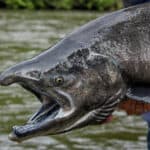
Chinook salmon

Designated 1961

insect

Oregon swallowtail (butterfly)

Designated 1979

reptile

Western painted turtle

Designated 2009

marine

Gray whale

Designated 1975

wildflower

Oregon grape

Designated 1899

tree

Douglas-fir

Designated 1939

Parks & Reserves

Protected Areas

Oregon’s protected areas include federal and state lands—parks, National Monuments, National Forests/BLM landscapes, Wilderness, and National Wildlife Refuges. They protect coastal estuaries and dunes, temperate rainforests and old-growth conifers in the Coast Range and Cascades, and eastern high-desert basins, sagebrush steppe, and wetlands, supporting bird flyways, salmon watersheds and transition zones like the Klamath-Siskiyou.

Protected Coverage

≈35-40% of Oregon is in public conservation/managed natural lands (federal/state parks, refuges, monuments, wilderness, and other public lands managed primarily for natural values); the exact figure varies by definition.

National Parks & Preserves

Crater Lake National Park

≈183,000 acres (≈286 sq mi)

High-elevation Cascade ecosystems surrounding the deepest lake in the U.S.; notable for intact montane forests, subalpine habitats, and excellent raptor and mammal viewing around rim forests and meadows.

American black bear Mule deer Bald eagle Peregrine falcon Clark's nutcracker

Oregon Caves National Monument and Preserve

≈4,500 acres

A biodiversity-rich slice of the Klamath-Siskiyou region with complex geology, old forests, and cool canyon microclimates-important for forest carnivores, bats, and late-successional species.

Northern spotted owl Pacific fisher Roosevelt elk American black bear Townsend's big-eared bat

John Day Fossil Beds National Monument

≈14,000 acres

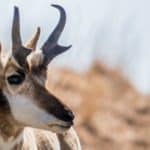
Beyond fossils, the monument protects river corridors, shrub-steppe, and juniper woodlands that support raptors, grassland/shrubland birds, and pronghorn country in the arid interior.

Pronghorn Mule deer Golden eagle Prairie falcon Great horned owl

Oregon Dunes National Recreation Area (Siuslaw National Forest)

≈31,500 acres

One of the largest coastal dune systems in North America, with a mosaic of dunes, wetlands, forests, and beaches-especially important for coastal birds and sensitive dune-nesting species.

Western snowy plover Bald eagle Peregrine falcon Roosevelt elk River otter

State & Provincial Parks

Fort Stevens State Park

≈4,300 acres

Protects a major estuary and nearshore coastal zone at the mouth of the Columbia River; outstanding for waterfowl, shorebirds, raptors, and pinniped viewing.

Bald eagle Great blue heron Harbor seal California sea lion Dunlin

Cape Lookout State Park

≈2,300 acres

A prominent headland and coastal forest/shoreline complex with strong seabird viewing and frequent gray whale sightings during migration close to shore.

Gray whale Tufted puffin Common murre Harbor seal Black-tailed deer

Harris Beach State Park

≈1,000 acres

Rocky shore and island-studded coastal habitat near Brookings with excellent tidepool biodiversity and seabird/pinniped viewing.

Black oystercatcher Harbor seal Steller sea lion Peregrine falcon Gray whale

Wildlife Refuges

Malheur National Wildlife Refuge

≈187,000 acres

A premier Great Basin wetland complex (marshes, rivers, and uplands) critical for breeding, staging, and migrating waterbirds; among Oregon's best birding and conservation landscapes.

Sandhill crane Trumpeter swan American white pelican Greater sage-grouse Pronghorn

Klamath Marsh National Wildlife Refuge

≈40,000 acres

Large montane marsh and wet meadow system that supports cranes, raptors, and a high diversity of wetland birds during breeding and migration.

Sandhill crane Bald eagle Osprey American bittern Mule deer

William L. Finley National Wildlife Refuge

≈5,300 acres

Willamette Valley prairies, wetlands, and oak savannas managed for native grasslands and wintering geese; strong for wildlife viewing close to population centers.

Dusky Canada goose Northern harrier Red fox Western pond turtle Black-tailed deer

Bandon Marsh National Wildlife Refuge

≈900 acres

A compact but highly productive coastal estuary/mudflat refuge that is exceptional for shorebird and waterfowl concentrations during migration and winter.

Brant Black-bellied plover Dunlin Great blue heron Bald eagle

Wilderness Areas

  • Eagle Cap Wilderness (Wallowa Mountains)
  • Three Sisters Wilderness (Central Cascades)
  • Mount Jefferson Wilderness (Central Cascades)
  • Mount Hood Wilderness (Oregon Cascade Range)
  • Kalmiopsis Wilderness (Siskiyou Mountains)
  • Strawberry Mountain Wilderness (Blue Mountains)
  • Hells Canyon Wilderness (shared with Idaho)
  • Mount Washington Wilderness (Central Cascades)
Animals

Wildlife

Oregon's wildlife diversity is driven by a sharp west-east climate gradient: temperate rainforests and rocky Pacific shores, the Cascade Range and its montane forests, the oak savannas/valleys of the Willamette, and the sagebrush steppe and high desert of the Great Basin. This mix supports classic Pacific Northwest forest fauna (elk, bears, owls), world-class seabird and marine-mammal viewing on the coast, and distinctive arid-land species in eastern Oregon (pronghorn, sage-steppe birds). Migratory birds are especially prominent because Oregon sits on the Pacific Flyway and contains major wetland complexes.

~130-150 species (including bats and marine mammals along the coast) Mammals
~480-520 species recorded (many are migrants) Birds
~25-30 species Reptiles
~25-30 species Amphibians
~250-300+ species (freshwater plus coastal/marine fishes; diversity varies by accounting method) Fish

Endemic & Rare Species

Northern Spotted Owl

Strix occidentalis caurina

U.S. ESA: Threatened

A defining old-growth-associated raptor of western Oregon forests; its decline and ongoing management shape conservation and forest policy across the region.

Marbled Murrelet

Brachyramphus marmoratus

U.S. ESA: Threatened (in WA/OR/CA DPS)

An unusual seabird that nests in older coastal forests but forages at sea; Oregon is an important part of its southern range where habitat loss and ocean conditions affect numbers.

Oregon Spotted Frog

Rana pretiosa

U.S. ESA: Threatened

A wetland specialist of lowland marshes and slow waters; Oregon populations are conservation priorities due to habitat loss, altered hydrology, and invasive predators.

Western Snowy Plover (Pacific Coast population)

Charadrius nivosus nivosus

U.S. ESA: Threatened (Pacific Coast population)

A dune and open-beach nester; Oregon's coast supports managed breeding areas where recreation pressure and predators make recovery work highly visible.

Lost River Sucker

Deltistes luxatus

U.S. ESA: Endangered

A large, long-lived fish largely endemic to the Klamath Basin; it is a focal species for water management, wetland restoration, and fish-passage efforts in southern Oregon.

Shortnose Sucker

Chasmistes brevirostris

U.S. ESA: Endangered

Another Klamath Basin endemic central to regional aquatic conservation; sensitive to water quality, habitat connectivity, and drought/low-water conditions.

Oregon Silverspot Butterfly

Speyeria zerene hippolyta

U.S. ESA: Threatened

A coastal grassland/dune butterfly tied to native violet host plants; Oregon's remaining habitats are limited and actively managed.

Larch Mountain Salamander

Plethodon larselli

Range-restricted; conservation concern (sensitive/rare in parts of its range)

A small, lungless salamander with a limited distribution around the Columbia River Gorge region; important as an indicator of cool, moist microhabitats and intact forest talus slopes.

Notable Populations

  • Major Pacific Flyway wetlands and staging/stopover areas (e.g., Klamath Basin and Malheur wetland complexes) supporting huge seasonal concentrations of waterfowl and shorebirds.
  • Important seabird breeding concentrations on offshore rocks and island refuges (notably within the Oregon Islands National Wildlife Refuge complex), including auklets, murres, cormorants, and puffins.
  • Key West Coast salmonid watersheds (Columbia tributaries and coastal rivers) that underpin regional food webs for birds, mammals, and marine species; many runs are conservation-managed.
  • Coastal nearshore whale-watching corridor with predictable seasonal gray whale migration and periodic localized feeding aggregations.
  • One of the best areas in the lower 48 to see Roosevelt elk in coastal temperate forest settings, with readily viewable herds in multiple regions.
  • Southeast Oregon's sagebrush-steppe landscapes supporting notable pronghorn and other high-desert wildlife assemblages.

Recent Changes

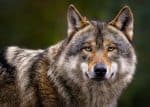
  • Gray wolves have expanded and established packs in eastern Oregon since natural recolonization in the 2000s, with ongoing range shifts and management changes over time.
  • Fishers (Pekania pennanti) have been reintroduced/augmented in parts of Oregon, with evidence of continued spread in some forested regions.
  • Coastal Western Snowy Plover numbers have responded to intensive management (nest protection, habitat work, predator control), though vulnerability remains.
  • Many native salmon and steelhead populations have experienced long-term declines from habitat change, hydrology shifts, and ocean conditions; restoration and passage projects continue statewide.
  • Drought, warming temperatures, and altered fire regimes have increased stress on high-desert wetlands and cold-water species, contributing to heightened conservation concern for Klamath Basin fishes and some amphibians.
  • Some seabird colonies (including puffins in parts of the Pacific Northwest) show sensitivity to marine heatwaves and prey shifts, leading to variable breeding success year to year along the Oregon coast.
Visit

Wildlife Viewing

Oregon has Pacific shoreline, temperate rainforests, Cascade volcanoes, fertile valleys, and high desert basins, making it great for wildlife watching year-round: gray whales migrate, seabirds nest on headlands, Roosevelt elk roam meadows, raptors hunt, and desert wetlands hold many birds. Many sites are reachable by scenic drives, short trails, viewpoints, kayak, boat, and guided tours.

Best Seasons

Spring (Mar-May)

Peak coastal whale migration (gray whales) with frequent shore-based viewing; waterfalls and wildflower bloom improve hiking-based wildlife spotting. Migratory birds return to wetlands and estuaries (shorebirds, waterfowl, songbirds). Good time for amphibians in forested areas and raptor activity in open country.

Summer (Jun-Aug)

Seabird nesting and bustling coastal colonies (murres, puffins, cormorants) plus tidepool life on calm days. High-elevation Cascades open up for marmots, pikas, and summer birding. Eastern Oregon's high desert is great for pronghorn, sagebrush birds, and early-morning/late-evening viewing to avoid heat.

Fall (Sep-Nov)

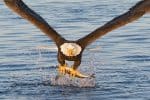
Salmon runs draw bald eagles, river otters, and other predators; elk begin rut activity (especially in coastal ranges). Bird migration ramps up again-raptors and waterfowl increase at refuges and bays. Cooler weather improves comfort for desert and canyon wildlife drives.

Winter (Dec-Feb)

Excellent storm-watching and reliable gray whale "resident" sightings along the coast; big wintering flocks of ducks, geese, and swans in valleys and refuges. Bald eagles are easier to spot near rivers and reservoirs. Snow pushes some wildlife to lower elevations, improving viewing from roads and valley trails.

Top Wildlife Experiences

  • Watch gray whales from shore at Depoe Bay (Whale Watching Center) and Boiler Bay State Scenic Viewpoint-bring binoculars and scan during calm seas and changing tides.
  • Visit Yaquina Head Outstanding Natural Area (Newport) for seabird colonies (including tufted puffins in season), harbor seals below the lighthouse, and outstanding tidepooling during minus tides.
  • Spend a day at Malheur National Wildlife Refuge (Harney Basin) for world-class birding: spring/summer marsh birds and waterfowl, plus broad wetland vistas ideal for photography from pullouts and short walks.
  • Look for Roosevelt elk at dawn/dusk in the Coast Range-especially Jewell Meadows Wildlife Area and along the Wilson River corridor near Tillamook State Forest (view from safe distances and stay in your vehicle where appropriate).
  • Take a jet-boat or drift-boat wildlife cruise on the Rogue River near Gold Beach to spot bald eagles, ospreys, river otters, and seasonal harbor seals; combine with a stop at nearby coastal overlooks.
  • Explore the Columbia River Gorge for raptors and river wildlife-watch for bald eagles and peregrine falcons from viewpoints around Hood River and The Dalles, and check riparian parks for songbirds.
  • Go on a high-desert wildlife drive in Hart Mountain National Antelope Refuge to look for pronghorn, bighorn sheep, sage-grouse habitat (viewing varies), and wide-open night skies for an added stargazing bonus.
  • Paddle or quietly walk the shorelines of Yaquina Bay or Netarts Bay for estuary birds (herons, egrets, shorebirds) and occasional harbor seals-timing your outing around tide changes increases sightings.

Wildlife Watching Types

Coastal whale watching (shore-based viewpoints and boat trips) Seabird colony viewing (murres, cormorants, puffins in season) Tidepooling for marine invertebrates and intertidal ecology Estuary and wetland birding (shorebirds, waterfowl, herons/egrets) Raptor watching (bald eagles, ospreys, peregrine falcons, hawks) Elk and deer viewing (Roosevelt elk on the coast; mule deer east of the Cascades) High-desert wildlife drives (pronghorn, bighorn sheep, sagebrush birds) River wildlife viewing (otters, beavers, salmon-run predator activity) Forest wildlife tracking and listening walks (songbirds, amphibians, signs of mammals) Night-sky and nocturnal wildlife outings (owls, bats-best with guides)

Guided Options

  • Oregon State Parks Whale Watching Spoken-Word Interpretive Programs (seasonal at multiple coastal sites; great for first-timers).
  • Boat-based whale watching and marine wildlife cruises out of Depoe Bay, Newport, and Port Orford (operators vary by season and sea conditions).
  • Rogue River jet-boat wildlife and scenic tours from Gold Beach (commonly focused on eagles, otters, and river ecology).
  • Bird Alliance of Oregon (formerly Audubon Society of Portland) and local Audubon chapters: guided bird walks, field trips, and birding workshops (offerings vary through the year).
  • U.S. Fish & Wildlife Service programs at Malheur National Wildlife Refuge (visitor center info, auto routes, and occasional ranger-led events depending on season/staffing).
  • Yaquina Head Outstanding Natural Area (BLM) interpretive programs and guided tidepool talks (seasonal; check tide charts and program schedules).
  • Local naturalist-led kayaking and estuary tours in bays such as Netarts and Yaquina (often focused on birds, marine mammals, and ecology; availability varies by outfitter).
Habitats

Ecosystems

Oregon has a sharp west-to-east climate shift: foggy coastal forests and temperate rainforests give way to the volcanic Cascade Range, then dry interior basins and plateaus with shrub-steppe and cold desert. Major rivers (Columbia, Willamette, Rogue, Deschutes, Klamath tributaries), estuaries, wetlands and nearshore marine habitats link freshwater and ocean, supporting salmonid networks, montane conifer forests and Great Basin sagebrush communities.

Biomes

Temperate Rainforest

Moist, foggy coastal belt and windward Coast Range/Cascades margins with very high biomass conifer forests (Sitka spruce-western hemlock, Douglas-fir) and lush understories of ferns and mosses.

Narrow but continuous strip along the coast and adjacent Coast Range; locally extensive in the west, especially north and central coast.

Temperate Forest

Dominant forest biome across western lowlands and mountains: Douglas-fir-western hemlock forests, mixed conifer/hardwood valleys, and drier mixed conifer zones on leeward slopes; includes oak woodlands in some valleys and SW foothills.

Large share of western Oregon and much of the Cascades/Blue Mountains at mid elevations.

Temperate Grassland

Prairie and grassland systems, including remnant Willamette Valley prairies and interior bunchgrass communities on plateaus and foothills (often intergrading with shrub-steppe).

Patchy and fragmented in the Willamette Valley; broader but still discontinuous across parts of the Columbia Plateau and eastern foothills.

Cold Desert

High desert and semi-arid basins with sagebrush, saltbush, juniper expansion zones, lava plains, and cold-winter steppe; strong rain-shadow effects east of the Cascades.

Extensive across eastern and southeastern Oregon (basins, plateaus, and parts of the Great Basin).

Alpine

High-elevation environments on the Cascade volcanoes and Wallowa Mountains featuring alpine meadows, talus, and persistent snowfields with short growing seasons.

Limited to highest elevations; scattered but prominent on major peaks and ridgelines.

Freshwater

Large river corridors (Columbia, Willamette, Snake-border reaches) and coldwater mountain streams supporting salmonids; numerous natural lakes (e.g., Crater Lake) and reservoirs.

Statewide network concentrated in major basins; high density in mountainous headwaters and valley rivers.

Marine

Pacific coastal waters with strong upwelling driving productive nearshore food webs; includes continental shelf habitats important for seabirds, marine mammals, and fisheries.

Along the entire Oregon coastline and offshore waters.

Wetland

Coastal estuaries (e.g., Columbia River estuary, Tillamook, Yaquina, Coos), valley floodplain wetlands, peatlands/bogs in cool wet areas, and interior marshes around lakes and reservoirs.

Patchy statewide; concentrated along the coast, major river floodplains, and select high-elevation/interior basins.

Mediterranean

Localized summer-dry woodland/shrubland tendencies in southwestern Oregon (Klamath-Siskiyou region), with oak woodlands and fire-adapted shrub communities in the warmest, driest low-to-mid elevations.

Small, localized pockets in far SW Oregon and some interior foothill exposures.

Habitats

Rainforest

Coastal temperate rainforests with Sitka spruce, western hemlock, and dense moss/fern layers; notable in the Coast Range and coastal headlands/river valleys.

Forest

Statewide forest cover ranging from coastal conifer forests to interior mixed forests and montane stands; major public lands in the Cascades and Coast Range.

Coniferous Forest

Douglas-fir-hemlock forests in the west; true fir, mountain hemlock, lodgepole pine, ponderosa pine, and western larch communities across Cascades and eastern mountains.

Deciduous Forest

Hardwood riparian forests (cottonwood, willow, alder) and valley/foothill oak stands (Oregon white oak) especially in the Willamette Valley and SW Oregon.

Woodland

Oregon white oak woodlands in western valleys/foothills and western juniper woodlands expanding across parts of central/eastern Oregon.

Grassland

Bunchgrass and valley grasslands, including conservation remnants of native prairie and interior grass-dominated slopes/plateaus.

Prairie

Willamette Valley prairie and oak savanna remnants with strong seasonal wet-dry dynamics; many sites are restoration-dependent due to historical conversion.

Steppe

Shrub-steppe mosaics (sagebrush with bunchgrasses) across the Columbia Plateau and high desert basins, often shaped by fire and grazing history.

Shrubland

Sagebrush, bitterbrush, rabbitbrush, and chaparral-like shrub communities in dry interior regions and parts of the Klamath-Siskiyou.

Desert

Cold high desert landscapes (sagebrush flats, volcanic/lava features, playas) in southeast Oregon (Great Basin influence).

Alpine Meadow

Short-season wildflower meadows and turf above treeline in the Cascades and Wallowas; important summer forage and pollinator habitat.

Mountain

Cascade Range volcanic peaks and plateaus, Coast Range uplands, and the Blue/Wallowa Mountains with strong elevation-driven habitat zonation.

Cliff/Rocky Outcrop

Basalt gorge cliffs (e.g., Columbia River Gorge) and coastal headland cliffs providing nesting habitat for raptors and seabirds.

Cave

Volcanic lava tubes and karst/limestone caves in select areas (notably parts of central and southern Oregon), supporting bats and specialized invertebrates.

River/Stream

Major salmon-bearing rivers and tributaries (Columbia system, Willamette, Rogue, Deschutes, Umpqua) with riparian corridors and floodplains.

Lake

Iconic deep volcanic lakes (Crater Lake), large natural lakes and reservoirs, and interior basin lakes supporting waterfowl and marsh complexes.

Pond

Seasonal ponds and irrigation/stock ponds in valleys and rangelands; important for amphibians where hydroperiods persist.

Wetland

Floodplain wetlands, interior marshes, and forested wetlands; key for migratory birds along the Pacific Flyway.

Swamp

Forested wetlands and wet bottomlands (alder, ash where present, willow) mainly in lowland floodplains and coastal river valleys.

Marsh

Freshwater and brackish marshes in coastal estuaries and interior lake margins (cattail/bulrush communities).

Bog

Peat-accumulating wetlands in cool, wet settings (coastal and montane pockets), with sphagnum-dominated or peatland characteristics where conditions allow.

Estuary

Productive river-ocean mixing zones (Columbia River estuary; Tillamook, Yaquina, Coos, Netarts) with eelgrass beds, mudflats, and tidal channels.

Coastal

Dune systems, headlands, coastal forests, and nearshore waters shaped by strong winds, surf, and upwelling.

Beach

Sandy beaches and dune-backed shorelines along much of the coast, important for shorebirds and dune-specialist vegetation.

Rocky Shore

Wave-battered intertidal benches and tidepools on headlands with sea stars, anemones, mussel beds, and kelp-influenced nearshore ecology.

Kelp Forest

Nearshore kelp beds and associated rocky reefs supporting high productivity and diverse fish/invertebrate communities.

Open Ocean

Offshore pelagic habitats influenced by seasonal upwelling; supports migratory seabirds, whales, and fisheries.

Deep Sea

Deeper offshore waters beyond the continental shelf margin with cold, low-light ecosystems and slope-associated communities.

Seabed/Benthic

Continental shelf and slope benthic habitats (sand/mud flats and rocky reefs) that underpin groundfish and invertebrate food webs.

Agricultural/Farmland

Extensive in the Willamette Valley (grass seed, berries, vineyards), irrigated farming in central/eastern basins, and rangelands across the interior.

Urban

Major urban centers (Portland metro, Eugene-Springfield, Salem, Bend, Medford) with modified waterways and fragmented habitats.

Suburban

Expanding low-density development around major metros and smaller cities, often interfacing with forests and wildfire-prone landscapes.

Ecoregions

EPA Level III: Coast Range EPA Level III: Willamette Valley EPA Level III: Cascades EPA Level III: Klamath Mountains EPA Level III: Columbia Plateau EPA Level III: Blue Mountains EPA Level III: Eastern Cascades Slopes and Foothills EPA Level III: Northern Basin and Range EPA Level III: Snake River Plain (small portion along the Idaho border) WWF: Oregon Coast Range forests WWF: Cascades forests WWF: Eastern Cascades forests WWF: Willamette Valley forests (incl. prairie-oak mosaic remnants) WWF: Klamath-Siskiyou forests WWF: Blue Mountains forests WWF: Columbia Plateau shrublands and grasslands WWF: Northern Basin and Range ecoregion (sagebrush steppe/high desert components)
Protection

Conservation

Primary Threats

  • Warmer temperatures reduce snowpack and shift runoff timing in the Cascades, lowering late-summer flows critical for salmonids; marine heatwaves (e.g., "the Blob") and ocean acidification affect coastal food webs and shell-forming organisms; increased drought and heat amplify wildfire size/severity in eastern Oregon and the Cascades, stressing forests, sagebrush, and wetlands.
  • Conversion and fragmentation are concentrated in the Willamette Valley (prairies, wetlands, oak savanna), coastal lowlands, and around fast-growing metros (Portland, Eugene-Springfield, Bend). Riparian corridors are narrowed by development and agriculture, reducing shade, large wood, and floodplain connectivity needed for fish and amphibians.
  • Legacy fire suppression and dense forest conditions contribute to uncharacteristically severe fires in dry forests (ponderosa pine/Douglas-fir east of the Cascades). Flow regulation, diking, and floodplain disconnection in the Willamette and Columbia tributaries reduce side-channel habitat for juvenile salmon and simplify river processes.
  • While much harvest is regulated, loss/alteration of structurally complex older forests and reduced recruitment of large wood can affect species tied to late-successional habitat (e.g., northern spotted owl, marbled murrelet). Post-fire salvage and road networks can further fragment habitats and increase sediment delivery to streams.
  • Dams and road crossings impede fish passage and alter thermal regimes in many basins (e.g., Willamette tributaries, coastal rivers). Expanding transportation networks and energy corridors fragment sagebrush and forest habitats; culverts and undersized bridges can block upstream movement of salmonids and amphibians.
  • Nutrient loading and pesticides from agricultural areas (notably the Willamette Valley) degrade water quality and contribute to harmful algal blooms in some waterbodies. Urban stormwater (metals, hydrocarbons, tire-wear chemicals) affects salmon-bearing streams in metro areas; legacy mining and forestry road sediment can impair spawning gravels.
  • Irrigated agriculture and pasture expansion in interior valleys/basins (e.g., Klamath, Harney) and intensive farming in the Willamette Valley reduce wetlands and native prairie, increase water withdrawals, and simplify riparian zones-affecting waterfowl, native fish, and prairie-dependent species.
  • Water allocation conflicts and heavy withdrawals during drought in basins like the Klamath reduce instream flows and wetland availability for fish and migratory birds. In some areas, groundwater pumping for irrigation and municipal use contributes to declining aquifers and reduced spring/stream inputs.
  • Ocean and river fisheries are tightly managed, but depressed runs of some salmon and steelhead stocks mean any additional mortality can be consequential. Bycatch and changing ocean productivity can compound stress on vulnerable ESA-listed salmonids, and poor ocean conditions can reduce survival regardless of freshwater actions.
  • Aquatic invasives (e.g., New Zealand mudsnail; invasive warmwater fishes in reservoirs; invasive crayfish in some waters) alter food webs and compete with natives. Terrestrial invaders such as cheatgrass increase fire frequency in sagebrush steppe; invasive plants (e.g., knotweed, reed canarygrass) degrade riparian and wetland habitats.
  • Amphibians are threatened by chytrid fungus in suitable habitats; fish diseases/parasites can intensify in warmer, lower flows. In High Desert and wetland systems, avian diseases (e.g., botulism outbreaks during hot, low-water conditions) can cause episodic die-offs of waterbirds.
  • Recreation growth (especially around Bend, the Columbia Gorge, and the coast) increases disturbance to nesting seabirds, sensitive shorebirds, and wintering waterfowl; off-highway vehicles can damage dunes and fragile desert soils. Increased backcountry use can displace wildlife and exacerbate invasive spread along trails.
  • Wolf recolonization in eastern Oregon brings livestock depredation conflicts, leading to management removals and social controversy. Elk and deer conflicts with agriculture and suburban landscaping, and beaver-related flooding concerns, can lead to lethal control or habitat alteration.
  • Localized impacts from aggregate mining, legacy hard-rock sites, and exploration can fragment habitats and contribute metals/sediment to streams. In parts of southern/eastern Oregon, proposed or active projects can affect sagebrush, headwater systems, and connectivity if not carefully mitigated.
  • Rapid growth in the Willamette Valley corridor and Central Oregon increases habitat fragmentation, light/noise impacts, and demands on water supplies. Urban expansion commonly impacts low-elevation wetlands, oak woodlands, and riparian areas that are already among Oregon's most altered ecosystems.
Fun Facts

Did You Know?

Marbled murrelets on the Oregon coast are "seabirds that nest in trees": they fly inland to lay a single egg on large, mossy branches of old-growth forests in the Coast Range, then commute back to the ocean to feed.

Rough-skinned newts in western Oregon carry tetrodotoxin (the same potent neurotoxin associated with pufferfish), and Oregon populations are part of a well-known evolutionary arms race: local garter snakes have evolved varying levels of toxin resistance.

Oregon has gray whales you can watch feeding close to shore. Some from the Pacific Coast Feeding Group often feed in shallow water near places like Depoe Bay and Cape Perpetua, sometimes just a few hundred yards off.

Oregon's high desert supports dramatic "lek" arenas where male greater sage-grouse display at dawn each spring (notably in southeastern Oregon's sagebrush country)-a breeding strategy more often associated with African or tropical wildlife documentaries than the Pacific Northwest.

Roosevelt elk-the big, dark coastal elk common in western Oregon-often use beach-adjacent meadows and coastal headlands (including public lands) as regular foraging areas, putting a large native ungulate in habitats many people assume are mostly for seabirds and tidepools.

The Klamath Basin (Upper and Lower Klamath/Tule Lake National Wildlife Refuges on the OR–CA border) has huge raptor gatherings; winter counts can exceed 1,000 bald eagles, one of the largest winter groups in the contiguous U.S.

The Klamath Basin National Wildlife Refuges (including Tule Lake and Lower Klamath) can host up to about 1 million migrating ducks and geese at peak fall migration-one of the biggest waterfowl concentrations on the Pacific Flyway.

Portland's Chapman Elementary School chimney is a standout Vaux's swift spectacle: late-summer roost counts can reach roughly 10,000 birds in a single urban chimney-among the largest known roosts for the species.

Southwestern Oregon's Klamath-Siskiyou region is a global conifer hotspot, with roughly 30 native conifer species recorded in the region-often cited as one of the highest conifer diversities in the world's temperate forests.

Three Arch Rocks National Wildlife Refuge (near Oceanside), established 1907, is one of the oldest U.S. refuges and protects large seabird nesting colonies on Oregon's coast, part of a dense Lower 48 nesting area.

The state of Oregon in the United States has an incredible variety of different biomes, from mountains to deserts to areas of thick forest. This is part of the reason why the state is home to such a varied collection of wildlife. Along with the 139 species of mammals in the state, there are four species of mammals native to Oregon and not found anywhere else. These four include Baird’s shrew, the Pacific shrew, Cama’s pocket gopher, and the red tree vole.

Some of the most well-known animals in Oregon include elk, black bears, burrowing owls, gray wolves, and beavers.

The Official Animal of Oregon
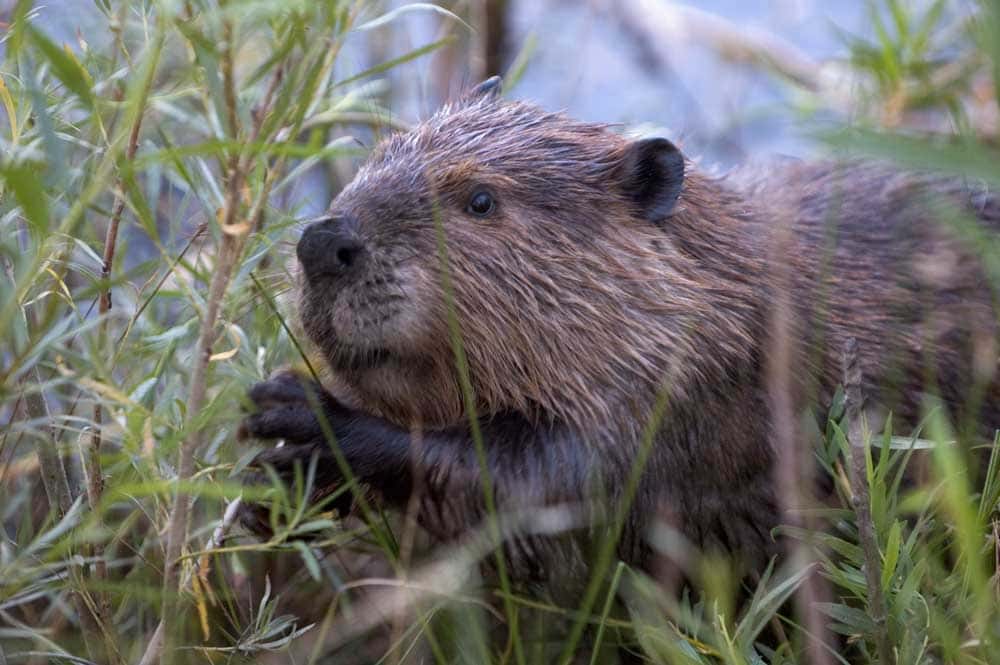
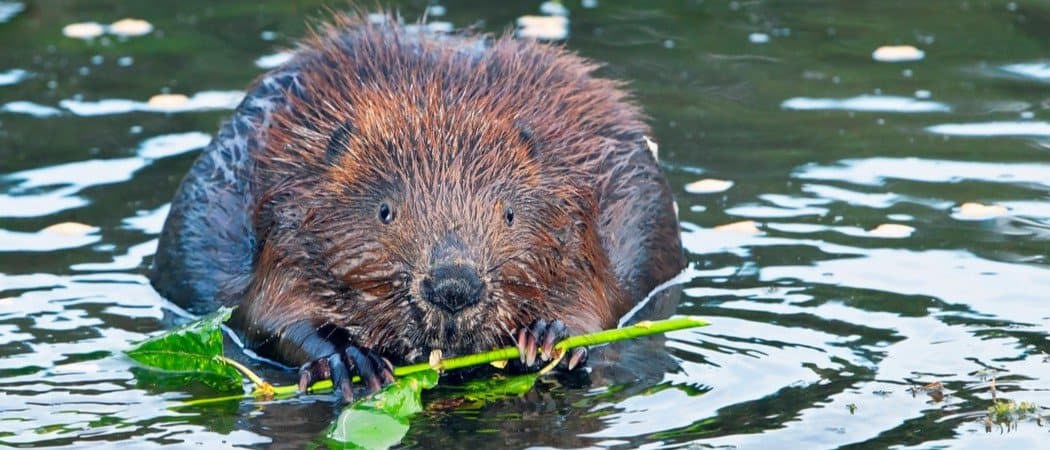
American beavers are Oregon’s state animals.

In 1969, the American beaver (Castor canadensis) became the official animal of the state of Oregon. Of course, the beaver is a common sight in the state. But these mammals also serve a specific purpose in helping the environment. Their habitat includes rivers, streams, and lakes where they build intricate dams. These dams slow down water flow which creates floodplains and ponds. These new floodplains and ponds serve as habitats for other animals. Also, beaver dams cut down on excessive soil erosion that can harm the environment.

Additionally, the official nickname for Oregon is The Beaver State, as these creatures have always been vital for the commerce and development of this territory. When Oregon was first being settled, the trade of beaver fur was the most profitable industry for the local economy. As time went on and beaver fur went out of fashion, these animals still maintain a place of importance in the Oregonian identity.

Where to Find the Top Wild Animals in Oregon
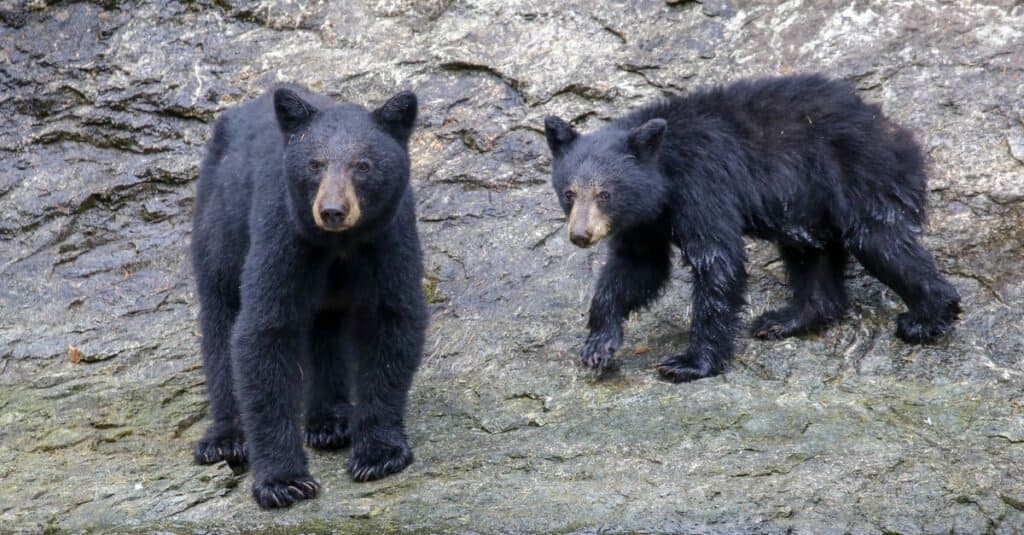
Black Bear Population by State

Black bear populations are most condensed in the Cascade region of Oregon.

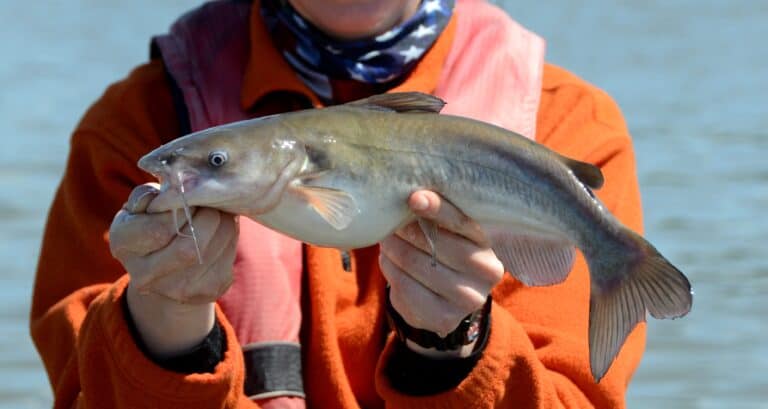
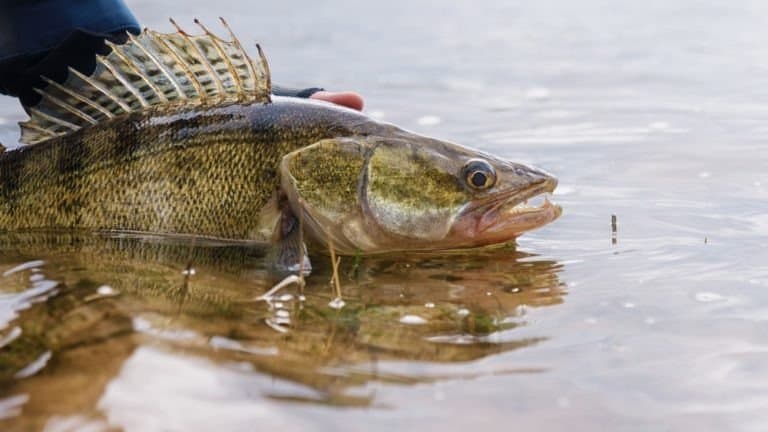
A lot of the wildlife in Oregon resides near the Willamette River. Some of the mammals visitors can see on this river include beavers, black-tailed deer, minks, and otters. A variety of fish are native to the Willamette River including rainbow trout, walleye, crappie, and catfish among many others.

The desert region of Oregon is home to a lot of well-known wild animals as well. A few of the mammals living there include mule deer, cottontail rabbits, elks, red foxes, and cougars. Some of the birds that inhabit the desert include yellow warblers, sage grouse, quail, swallows, and western meadowlarks. Desert rodents include the Ord’s kangaroo rat, canyon mouse, and the California vole.

The Oregon forests are full of wildlife such as the black bear, coyote, western toad, Douglas squirrel, mountain lion, hoary bat, western rattlesnake, and the northern spotted owl just to name a few!

You may spot some of these animals as you hike one of the many breathtaking mountains of Oregon from the Cascade mountain range. Some recommended locations in Oregon to observe wildlife include:

Where to Visit Zoos in Oregon

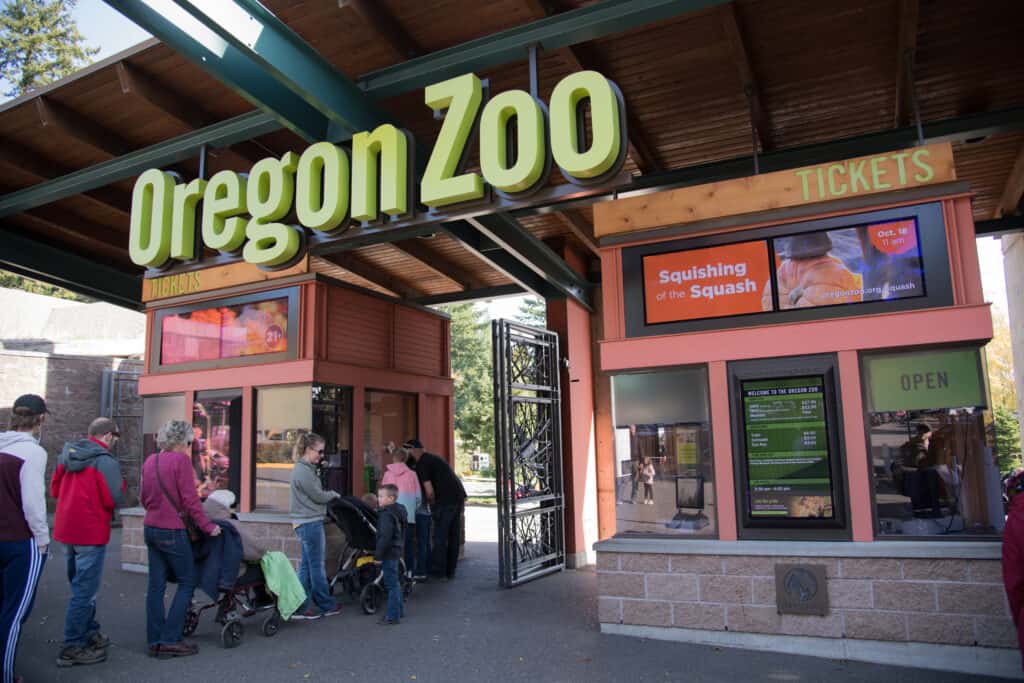
Portland, Oregon: October 11, 2019: The Oregon Zoo in the city of Portland, Oregon. The Oregon Zoo has 1,800 animals.

The Oregon Zoo is one of the best places to experience exotic wildlife while in the beaver state.

Visiting zoos in the state of Oregon is a great way to see native wildlife and other strange and interesting animals that are not native to the state. Many local species are also protected due to the destruction of their habitat by humans, so they are best encountered in a setting where they’ve been raised in captivity. Below you can find a list of all the best Oregonian zoos:

Oregon’s Largest Animal
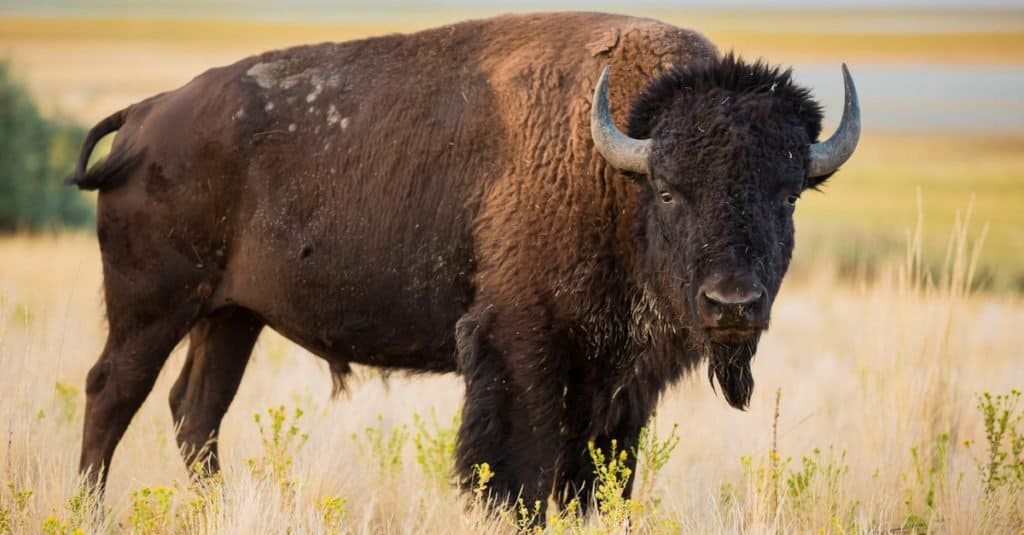
Tallest Animals: American Bison

American Bison are the largest mammal native to the United States, as well as the largest animal in Oregon.

American bison may no longer roam the plains freely in Oregon as they once did before the land was settled, but they are still a popular farm animal in the state. Bison ranches can be found all across the state of Oregon. These massive creatures are not easily contained by a fence, and some estimates claim as many as 2,000 escaped bison could be grazing throughout Oregon’s forests surrounding the base of the Wallowa mountains.

Bison can stand up to 6 feet tall and measure over 12 feet in length. On average bison weigh around 1,000 to 2,000 lbs depending on their gender, and their calves can weigh up to 70 lbs after birth. This makes them not only the biggest creatures in Oregon but the largest land mammals in the United States.

The Most Dangerous Animals in Oregon Today

Just like any other state, Oregon has its share of dangerous wildlife and fierce predators. Anyone visiting the state should be aware of them and remember to treat all animals with respect. Check out the most dangerous animals in Oregon today.
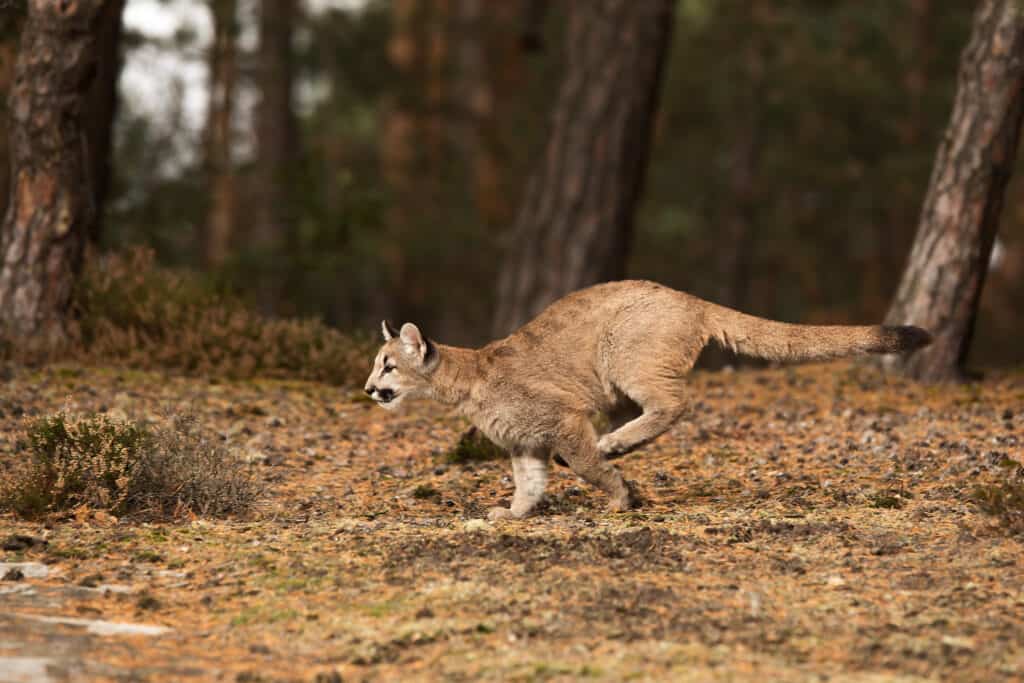
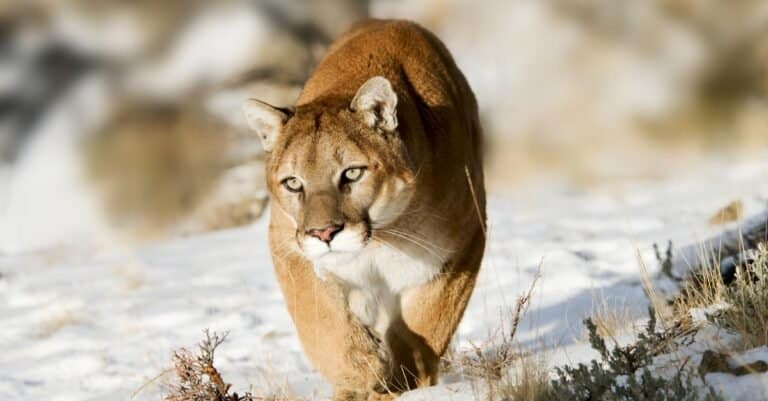
Female mountain lion chasing prey

Oregon is home to over 6,000 mountain lions.

  • Mountain lions also called cougars are found throughout the state of Oregon but are especially plentiful in the Blue Mountains. These agile predators grow to three feet tall and males can weigh up to 220 pounds. Mountain lions are apt to move away from humans and hide to avoid an encounter. But they can become aggressive especially when humans approach their cubs or their den. These are strong, fast animals with the power to seriously injure a human. However, death is the rarest result of an encounter with a mountain lion. In fact, only one death due to a mountain lion attack has been recorded in the past 20 years.
  • Western rattlesnakes are also on the list of dangerous animals living in Oregon. They are venomous and can grow as long as five feet. As predators, their venom is powerful enough to kill their prey of rodents and amphibians. But it is not deadly to most healthy humans. In some cases, the snake doesn’t release venom when it bites a human. This is a strange occurrence called a dry bite. This snake knows it can’t eat a human, so it doesn’t want to waste its venom. Makes good sense! However, this snake’s bite is painful and does require medical treatment.
  • Black widow spiders are also dangerous animals living in Oregon. These are venomous spiders that live around people in the basements or garages of homes. A bite from this spider can affect a person’s nervous system causing fever, tremors, sweating, and other symptoms. Fortunately, the amount of venom released isn’t enough to kill a human, but a black widow spider bite does require medical attention. In 2018, there were a little over 1,000 black widow spider bites reported with no resulting deaths. Bites from this spider usually occur when someone reaches into a dark corner of a basement or garage and accidentally disturbs the spider’s web. Otherwise, this arachnid stays hidden from view most of the time.

Endangered Animals in Oregon
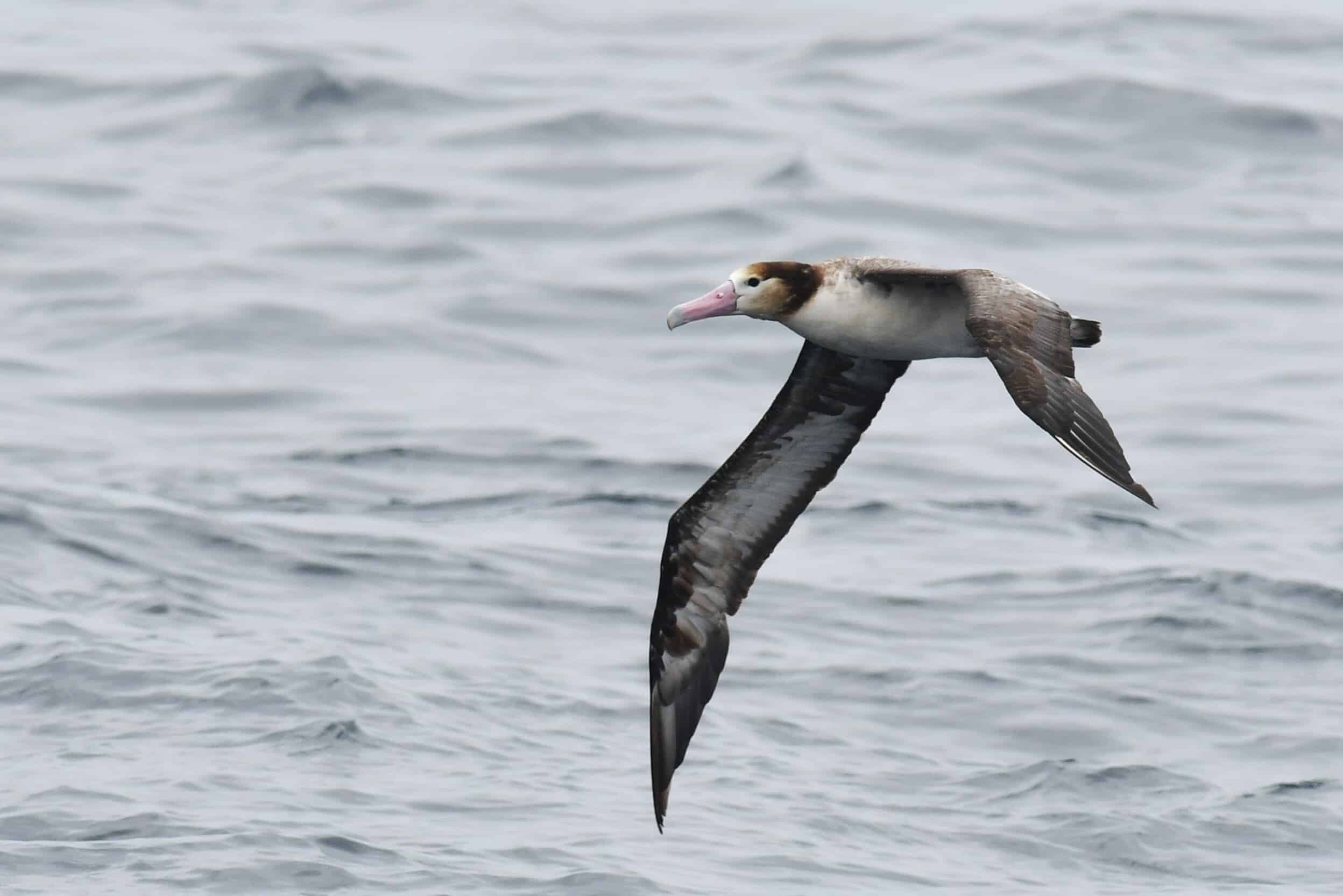
Short-tailed Albatross

The short-tailed albatross is one of Oregon’s most endangered birds.

Oregon endangered (or vulnerable) animals include:

  • Oregon silverspot butterfly – Since 1980, there’s been a decrease in the population of this rust brown butterfly with its distinctive silver spots. Its population has decreased due to habitat destruction.
  • Taylor’s checkerspot butterfly – This black butterfly has a memorable orange and white checkered pattern on its wings. Its population has been decreasing due to the loss of habitat.
  • Short-tailed Albatross (Vulnerable) – This seabird with a strange, curved beak and huge wingspan is categorized as vulnerable. These birds become entangled in commercial fishing nets and die as a result. This has greatly decreased their population.
  • Lost River Sucker – This fish was first categorized as endangered in 1988. Water pollution and loss of habitat are both reasons for the decrease in population.
  • Oregon Giant Earthworm – One of the rarest earthworms, the Oregon Giant earthworm is usually found in the Willamette Valley. Habitat loss is the reason for their decrease in population.

Rarest Animal in Oregon
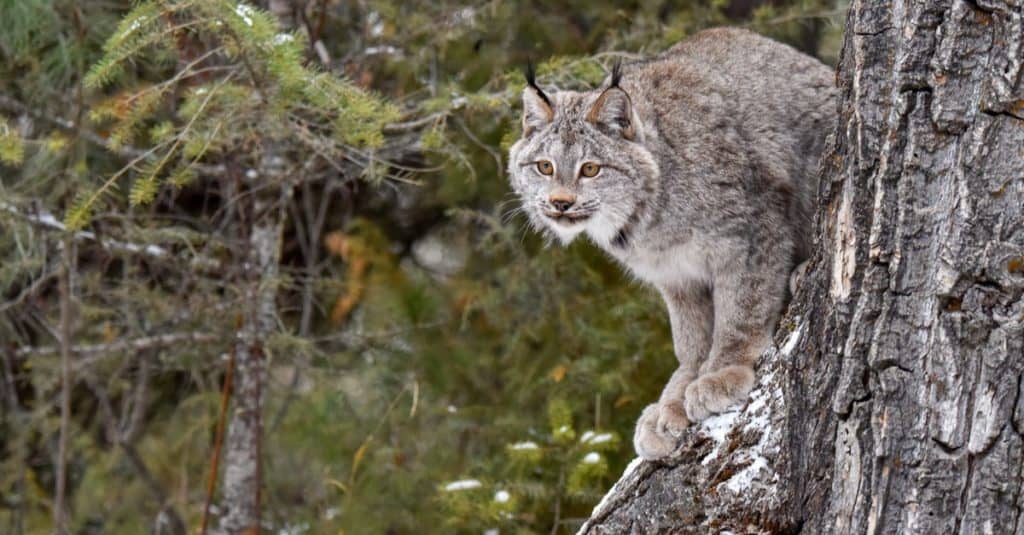
Canada Lynx perched on the side of a tree.

There have only been 72 reported Canada Lynx sightings in Oregon since 1985.

The Oregonian creature to suffer the most from the exponentially increasing human population of the region is most likely the Canada Lynx. These incredibly evasive and shy felines do all they can to avoid human interaction in the area, as their habitat in the area has been utterly devastated by the local logging industry. While their numbers are not as concerning in their namesake Canada, these lynxes have only been seen in Oregon a handful of times in the past 30 years.

Native Plants in Oregon

The state of Oregon features dense evergreen and mixed forests, semi-arid shrublands, and high deserts! The state is home to a wide variety of plants. Some native plants in Oregon include bigleaf maple, Oregon grape, and canyon gooseberry, among others.

One specialized breed of blackberry, known as the marionberry, is grown almost exclusively in Oregon. The harvesting season of July and August is a great time to taste these delicious local delicacies in the form of some famous marionberry syrup or jam.

Read about:

  • extinct animals that lived in Oregon.
  • the enchanting waterfalls in Oregon.
  • the best lakes near Bend, Oregon.
  • the best national parks in Oregon.
  • the best dog parks in Portland, Oregon.
  • the common ticks in Oregon.
  • the longest biking trail in Oregon.
  • the best bird-watching spots in Oregon.
  • the best fishing spots in Oregon in the summer.
  • the best fish to catch in Oregon in the summer.
  • the best places to camp near Portland, Oregon.

Animals Found in Oregon

214 species documented in our encyclopedia

Thank you for reading! Have some feedback for us?