
Many people would not describe bats as cute. This is likely because of bats’ associations with viruses, darkness, and evil. Granted, bats are somewhat weird animals, being the only mammals that can achieve true flight. Many bat species are nocturnal, and some of them are indeed ugly; the hammer-headed bat is one of the ugliest animals on earth and has the fitting scientific name Hypsignathus monstrosus. Vampire bats (Desmodus rotundus) drink blood, but bats also eat insects, including dangerous ones like mosquitoes, and fruit bats (Cynopterus sphinx) pollinate flowers and distribute seeds. Moreover, some bats are round, fluffy, and truly cute. Continue reading to learn about nine of these adorable nocturnal flyers.
9. Northern Ghost Bat
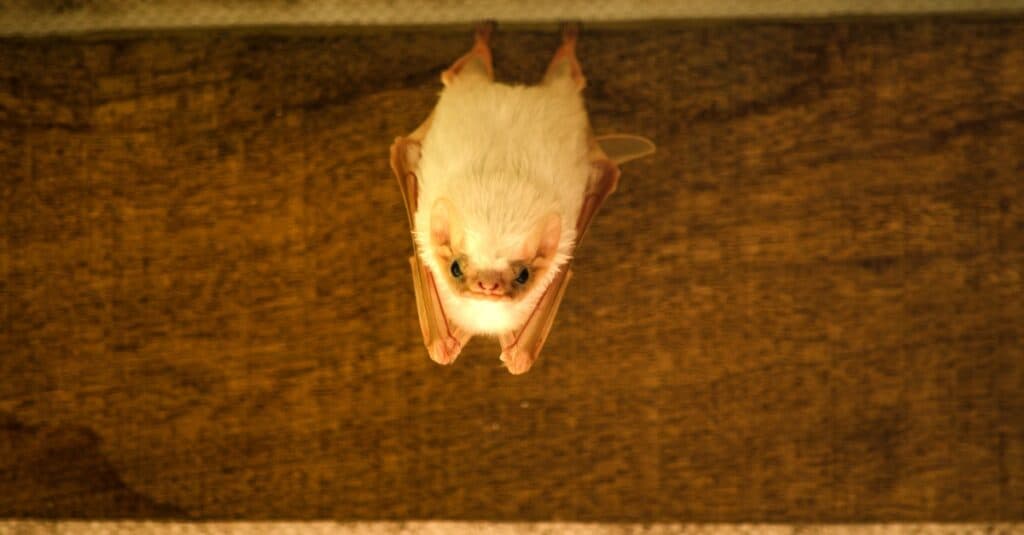
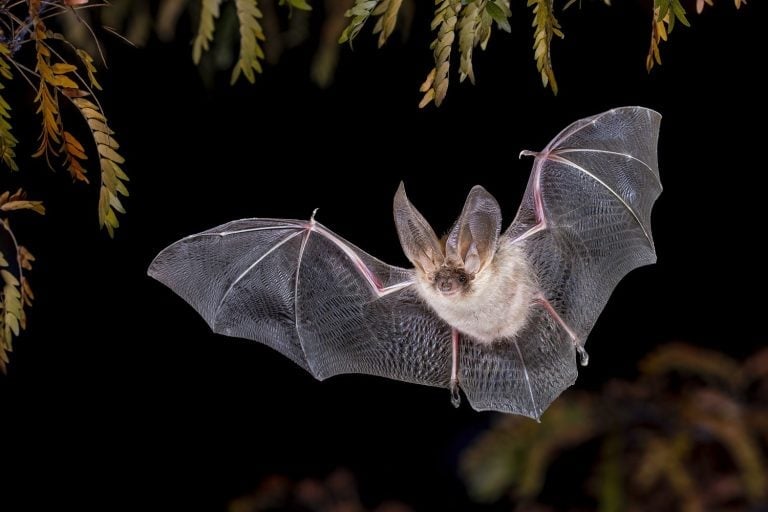
There aren’t many bats with white fur; the northern ghost bat is one of the cutest.
©iStock.com/MalgorzataDrewniak
The northern ghost bat (Diclidurus albus) is one of the few white-furred bats. This sweet little bat has long, soft fur that ranges from snowy white to pale gray and has a sac at its uropatagium. It also has a vestigial thumb, which distinguishes it from other ghost bats. Its wing membranes are pink, and its face is hairless. The eyes are big and the ears are short and yellow. It is a medium-sized bat, between 3.39 and 4.06 inches long, and females are larger than males.
The northern ghost bat is an insectivore that eats moths and sings as it hunts. It roosts in palm trees, caves, and old mines from Central America to Brazil. It breeds once a year in January and February.
8. Heart-nosed Bat
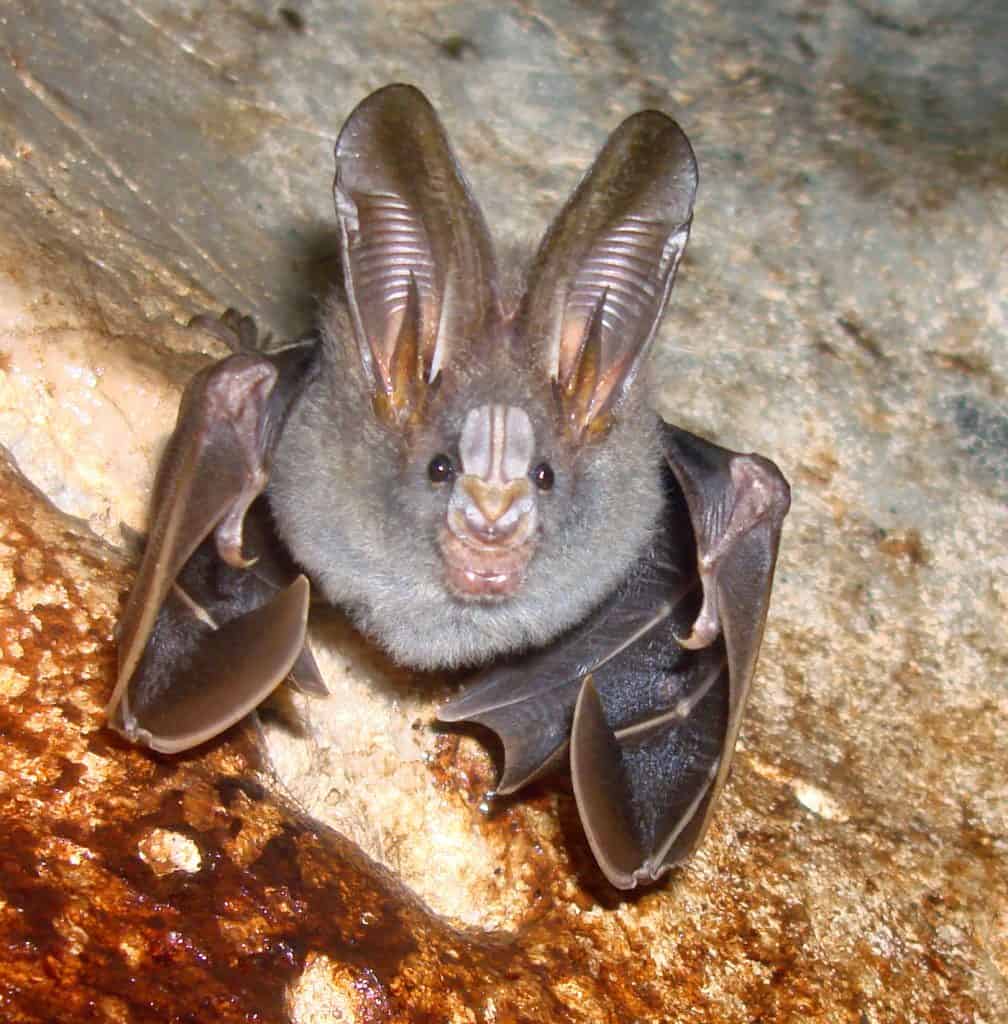
If this little critter doesn’t melt your heart, nothing will.
©Courtsey of Piekfrosch, GFDL <http://www.gnu.org/copyleft/fdl.html>, via Wikimedia Commons – Original / License
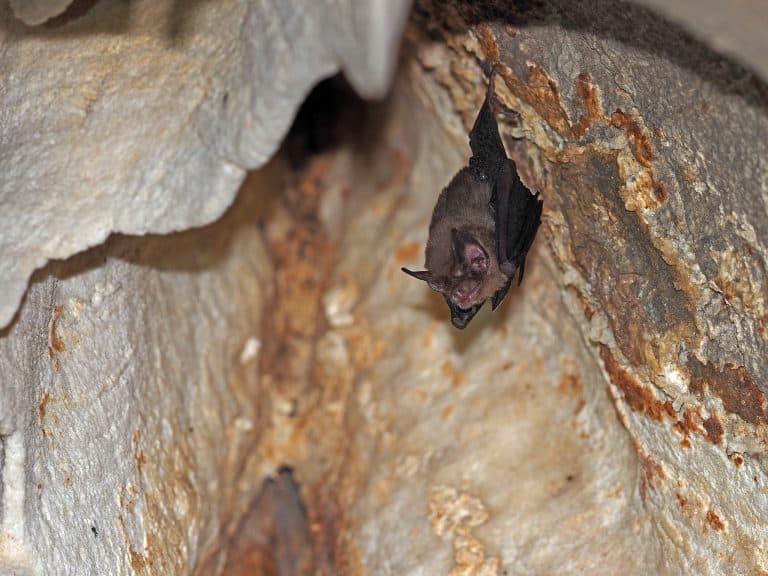
The cute heart-nosed bat (Cardioderma cor), with its long, blue-gray fur, is a serious predator. They are not large, only 2.8 to 3.0 inches long, but they have no problem preying on large lizards, frogs, and rats. It will even prey on smaller bats, grabbing them in mid-air and beating them to death with its wings. These bats are found in the dry lowlands, river valleys, and coasts of the Horn of Africa.
The heart-nosed bat sings to establish territory and, unlike other bats, is monogamous. Though the female does most of the child-rearing, the father’s singing is thought to protect the family and territory from encroachers. Heart-nosed bats start to forage earlier in the evening than other bats and will start looking for food even before sunset.
7. Lesser Horseshoe Bat
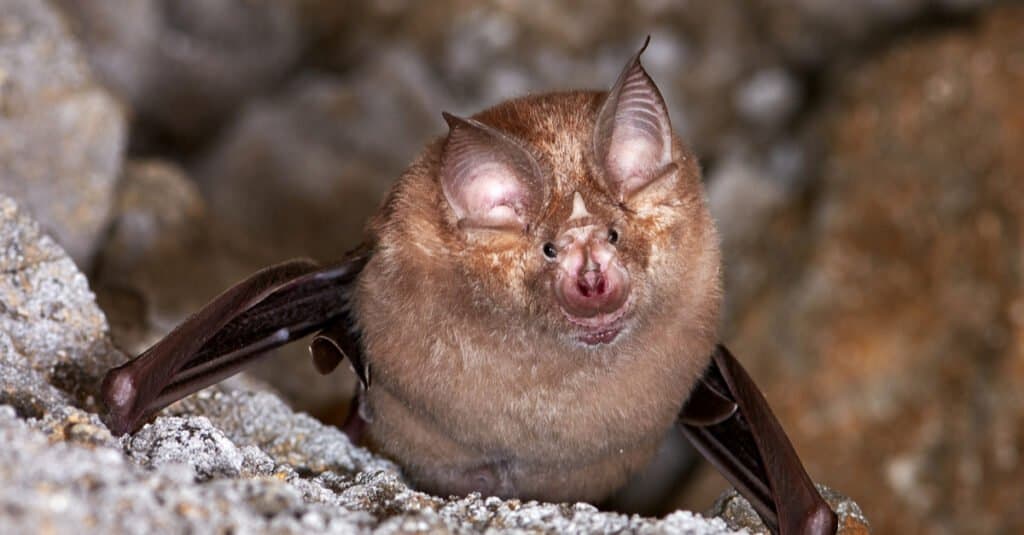
The lesser horseshoe bat is a cute bat that flies in circles.
©aaltair/Shutterstock.com
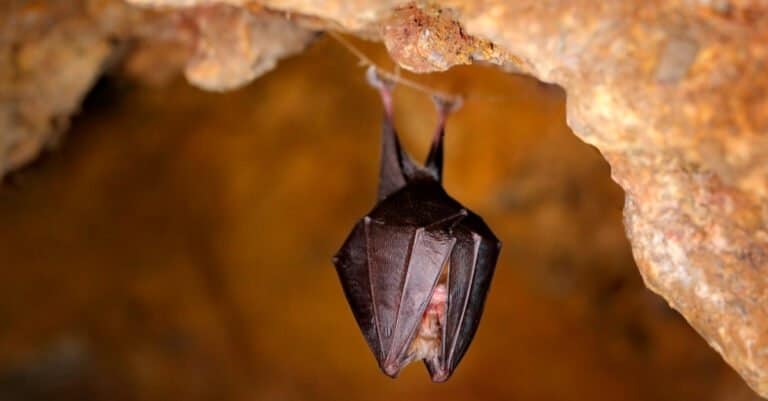
The lesser horseshoe bat (Rhinolophus hipposideros) is named because the nose leaf on its face resembles a horseshoe. This tiny bat is found in the hills and highlands of North Africa and Europe. It is only 1.4 to 1.8 inches long, with a wingspan of 7.5 to 10 inches, and it weighs only 0.18 to 0.32 ounces. This makes it the smallest of the horseshoe bats living in Europe.
Its fur is gray, fluffy, and soft, and its big, petal-shaped ears and wings are also gray-brown. It is a nimble flyer and likes to fly in circles as it preys upon insects and small arthropods from rocks, branches, and the air. Except for maternity colonies, lesser horseshoe bats are solitary.
The lesser horseshoe bat roosts during the day in trees, caves, hollow logs, and houses, where it can often be heard chattering. Its small size allows it to slip into cracks and crevices too tight for other bats. When it hangs upside down, it wraps its wings around its body like a blanket.
6. Little Yellow-Shouldered Bat
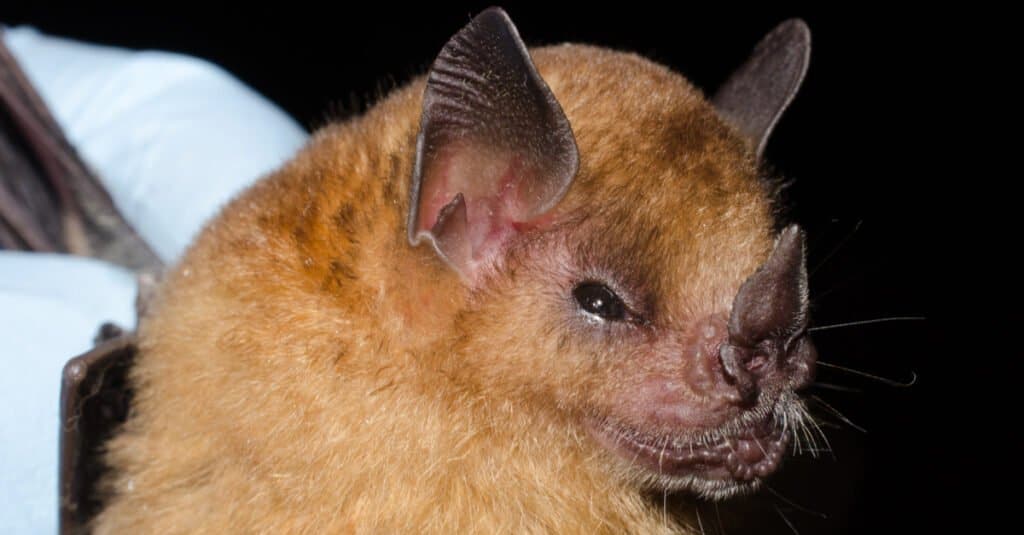
This cute bat, the little yellow-shouldered bat, measures between two and three inches.
©Mendesbio/Shutterstock.com
The little yellow-shouldered bat (Sturnira lilium) gets its name from the yellowish fur on its shoulders. It is found across Central and South America, with a population in Jamaica. It is an interesting bat because it is often solitary or forms small groups that roost in trees. This little bat, which is from 2.4 to 2.8 inches long, mostly eats the fruits of plants in the nightshade family, many of which are poisonous to humans. It is also known to drink nectar.
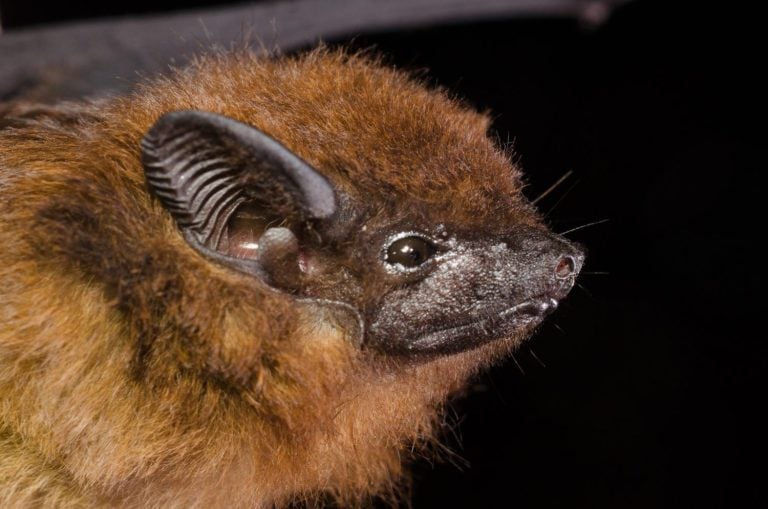
The little yellow-shouldered bat has dark gray to mahogany brown fur on top and paler fur below. The yellow fur found on the males gets its color from glandular secretions on the bat’s shoulders. It also has a nose leaf, most often lacks a tail, and has short ears. It doesn’t hibernate and breeds all year. The female gives birth to one very large (in proportion to her) precocial pup after a four- to seven-month pregnancy. The pups are independent once they are a month old.
5. Common Pipistrelle
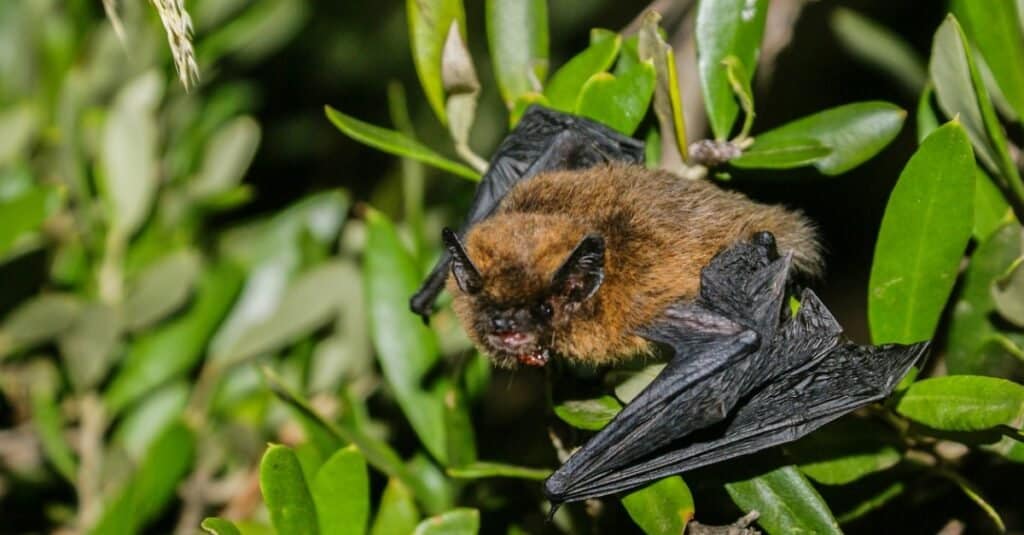
The common pipistrelle is a cute bat that likes to raise its pups on farms and in buildings.
©iStock.com/ACM1988
The common pipistrelle (Pipistrellus pipistrellus) not only has a cute look but also a cute name. Abundant in Europe and the United Kingdom, North Africa, and much of Asia, its two species were initially differentiated by the frequency of their echolocation signals. The common pipistrelle has a call of 45 kHz, and the call of the soprano pipistrelle (Pipistrellus pygmaeus) is 55 kHz.
Common pipistrelles are between 1.09 and 1.27 inches long, with a wingspan of 7 to nearly 10 inches. They have short ears, wide-set eyes, and reddish-brown fur with black wings. They are often found in the woods, on farms, and in buildings, where female bats like to raise their pups. Like many bats, pipistrelles sometimes form maternity colonies during their breeding season. The pipistrelle is also unusual because twins are fairly common in some colonies.
The common pipistrelle forages at night at the edge of woods and eats insects, including mosquitoes and gnats. They catch and eat smaller insects in flight, while they take larger insects to a perch and eat them at their leisure.
4. Little Brown Bat
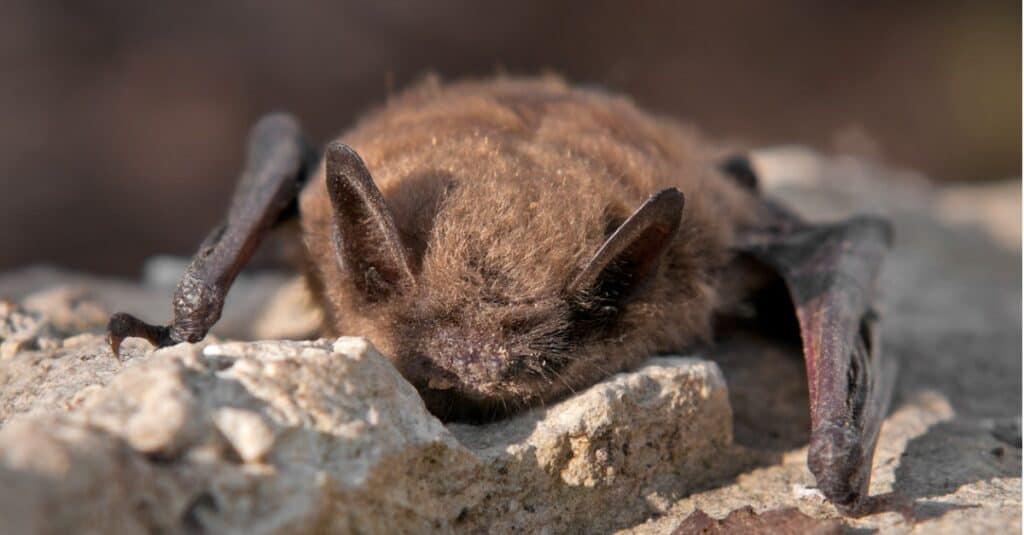
The little brown bat is listed as Endangered in Canada and some U.S. states due to white-nose syndrome, but its conservation status varies across its range.
©iStock.com/gkuchera
The cute little brown bat (Myotis lucifugus) is 3.1 to 3.7 inches long and has a wingspan of about 8.7 to 10.6 inches. It has dense, glossy fur that ranges from tan to chocolate brown. Found in North America, the little brown bat roosts in colonies that can contain tens of thousands of bats. It is fond of living in or near human habitations where it sleeps during the day and heads out at night to forage for insects and spiders. These bats prefer to prey on mosquitoes and fruit flies.
Though the little brown bat doesn’t have many predators besides owls and raccoons, it is considered endangered in parts of its range, such as Canada, due to a fungal disease called white-nose syndrome, which affects the bat as it hibernates. Despite this disease, they are among the longest-living bats, known to live for over 30 years.
3. Peter’s Dwarf Epauletted Fruit Bat
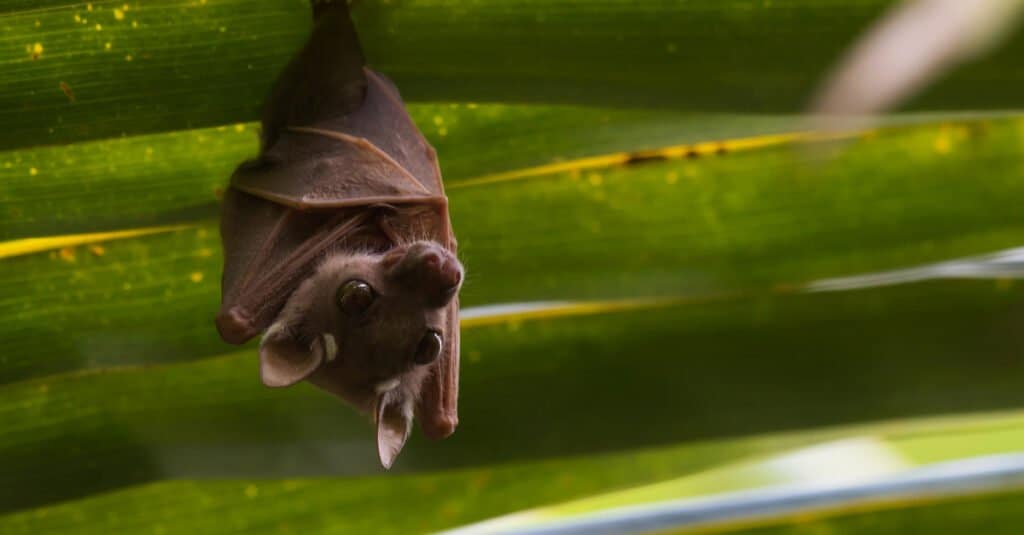
Peter’s dwarf epauletted fruit bat is one of the cutest bats in Africa.
©Dave Montreuil/Shutterstock.com
One of the cutest bats around, Peter’s dwarf epauletted fruit bat (Micropteropus pusillus) is found in the woods and tropical forests of central Africa. It is considered a megabat, despite its small size, measuring 2.64 to 4.13 inches long. It has fluffy fur that is brown on top and lighter and sparser on the bottom. The fur covers the bat’s forearms and even part of its wings. Its huge eyes, round ears, and round head make it resemble a mouse. It gets its name because the males have white hairs in their shoulder pouches that resemble epaulets. They can open them up and vibrate them to attract mates.
Peter’s dwarf epauletted fruit bat eats both fruit and nectar and helps pollinate plants, especially the sausage tree. This tree has a strong odor to humans but attracts bats. This bat typically breeds twice a year, with breeding seasons in March-May and again in November.
2. Smoky Bat
The cute little smoky bat (Amorphochilus schnablii) is native to Puna Island, Ecuador, northern Peru, and northern Chile. Found in forests, pasturelands, derelict buildings, and caves, they are only 1.5 to 2.28 inches long and weigh 0.12 ounces. Its tiny size makes it small enough to hide in crevices and other secret places.
The smoky bat gets its name from its gray to dark brown fur. It has a vestigial thumb, if it has a thumb at all, and lacks a nose leaf. It sometimes forms colonies of up to 300 bats, breeds in June, August, and October, with births occurring just before the onset of the rainy season, and, like most bats, has one baby at a time. Dietary staples are butterflies and moths.
1. Honduran White Bat
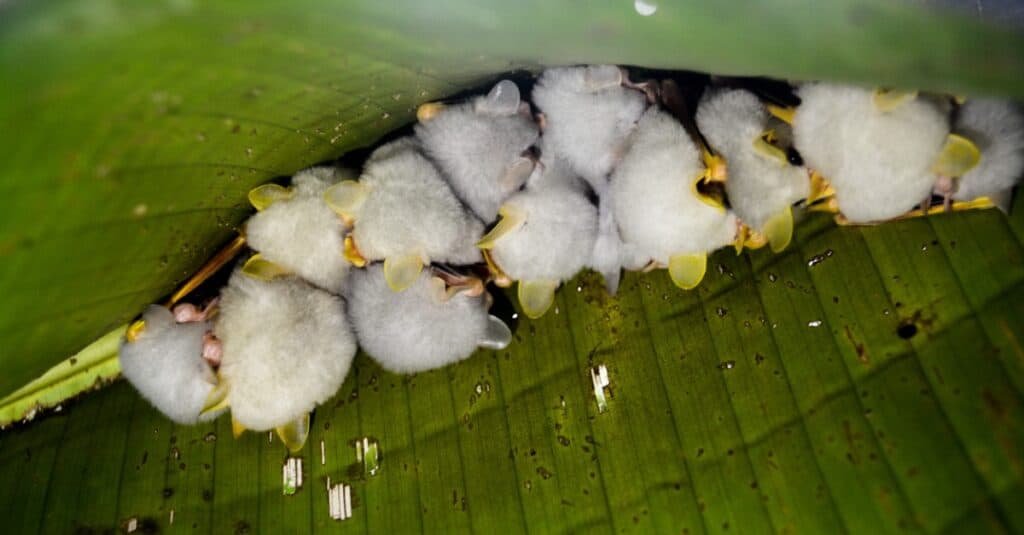
The Honduran white bat is another rare, white-furred bat.
©iStock.com/Robi_J
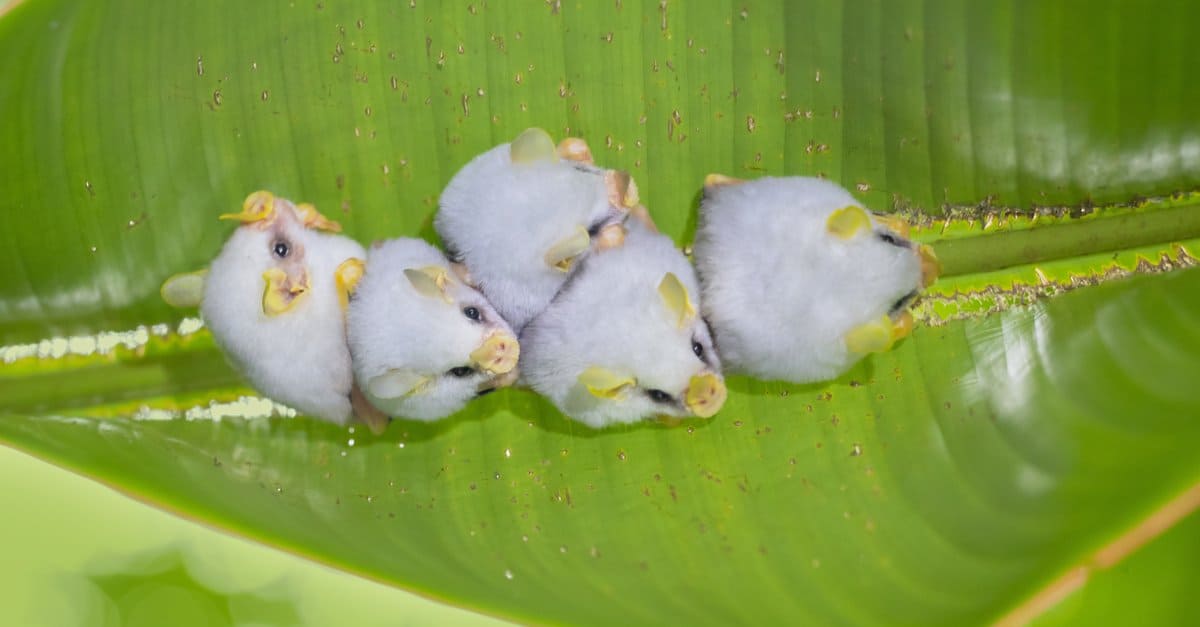
The Honduran white bat (Ectophylla alba) has lots of fluffy fur and is one of the rare types of bats with white fur. It’s only 1.46 to 1.85 inches long, with a four-inch wingspan, and males are larger than females. Besides their white fur, the outer part of their wings is yellow, while the inner part is grayish-black. Their noses and ears are also yellow or amber.
During the day, as many as 15 of these little bats sleep together in tents formed from the young leaves of heliconia plants. They come out at night to look for food, and they’re unusual for little bats because they are frugivores and are especially fond of figs. This bat is native to the rainforests of Central America.