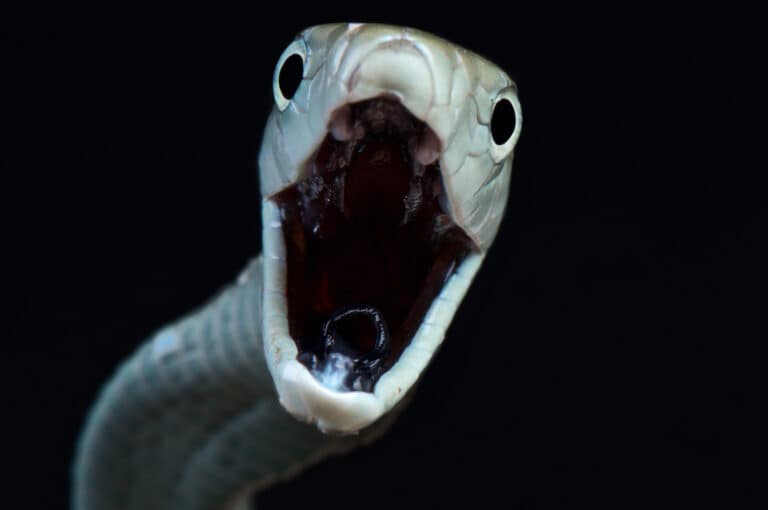

They can grow up to similar lengths, but their bodies are completely different. Their tails are powerful in different ways and while one is stronger, the other is venomous. In this deep sea battle, could the world’s largest stingray take down a killer whale?
Comparing a Stingray and a Killer Whale
| World’s Largest Stingray | Whale | |
|---|---|---|
| Size | Up to 20 feet | 20 to 33 feet |
| Speed and Movement | Three to five miles per hour | Up to 25 miles per hour in short bursts |
| Defenses | Camouflage, venomous stinger, and can create sandy clouds | Large, fast, and agile, and can intimidate predators by flapping their tails on the water |
| Offensive Capabilities | Tail slaps, and extremely sharp teeth to handle shellfish with ease | They work in groups to catch prey; they use sponges to protect their nose when foraging |
| Predatory Behavior | Sturdy, barbed tail attacks prey | They are smart and are able to ambush prey to the point they don’t know what hit them |
Key Differences Between Stingray and a Killer Whale
The shape of a stingray’s body compared to a killer whale’s body is much different. While stingrays are flat-bodied, killer whales are rounder and stockier. Both have powerful tail slaps but killer whales work in teams whereas stingrays move about alone unless they’re migrating or breeding. While one is venomous, the other is not. Stingrays don’t move nearly as fast as killer whales but have barbed tails that they use to defend themselves and launch attacks.

The river stingray is the largest type of stingray in the world.
©Danny Ye/Shutterstock.com
Key Factors in a Fight Between a Stingray and a Killer Whale
There are a few important key factors when determining which sea creature emerges victorious in a fight. The size difference is notable as is the speed and movement of each. Both stingrays and killer whales have their own defense tactics. Their predatory behavior differs as well. While one leans on strength in numbers, the other relies on its camouflaging abilities and powerful venom.
Stingray vs. Killer Whale: Size
Stingrays can grow up to 20 feet in length. There are reports that claim they can weigh up to 1,300 pounds! Killer whales measure from 20 to 26 feet, and the adult males can weigh up to 13,300 pounds whereas the females weigh about half of that.
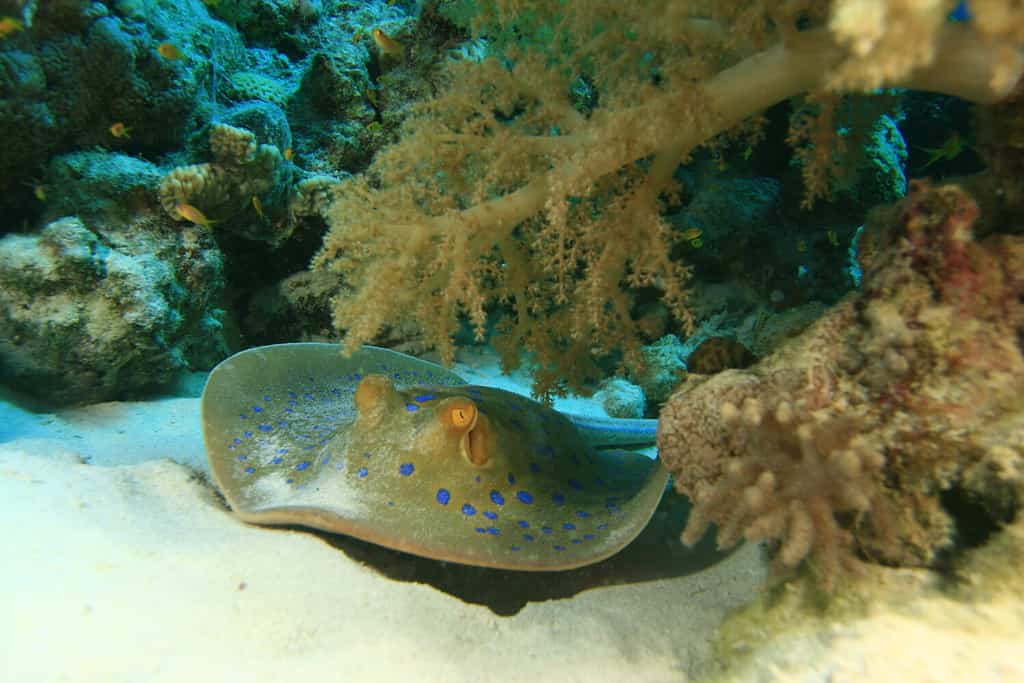
Stingrays rely on their camouflaging abilities and powerful venom.
©Greens and Blues/Shutterstock.com
Stingray vs. Killer Whale: Speed and Movement
The stingray is a slower swimmer than the killer whale. The powerful tail belongs to the killer whale as they are able to maneuver through the waters much faster and with greater ease. Killer whales have the upper hand, as they possess echolocation abilities that allow them to locate prey. This special ability also allows them to detect their surroundings in a precise way and know where everything is even in dark waters.
Stingray vs. Killer Whale: Defense
For stingrays, their greatest defense is their ability to camouflage. They use it well to hide from their predators and the venomous spines on their tails come in handy when they are harassed. They are able to bury themselves in the sand in a heartbeat, and since they have flat bodies, they do not have much to hide. Killer whales are some of the largest predators in the ocean. Their presence alone intimidates marine life. One look at their jaws and they paralyze. Killer whales work well with collective defense. They understand the power of unity and are highly intelligent, working cohesively as needed.
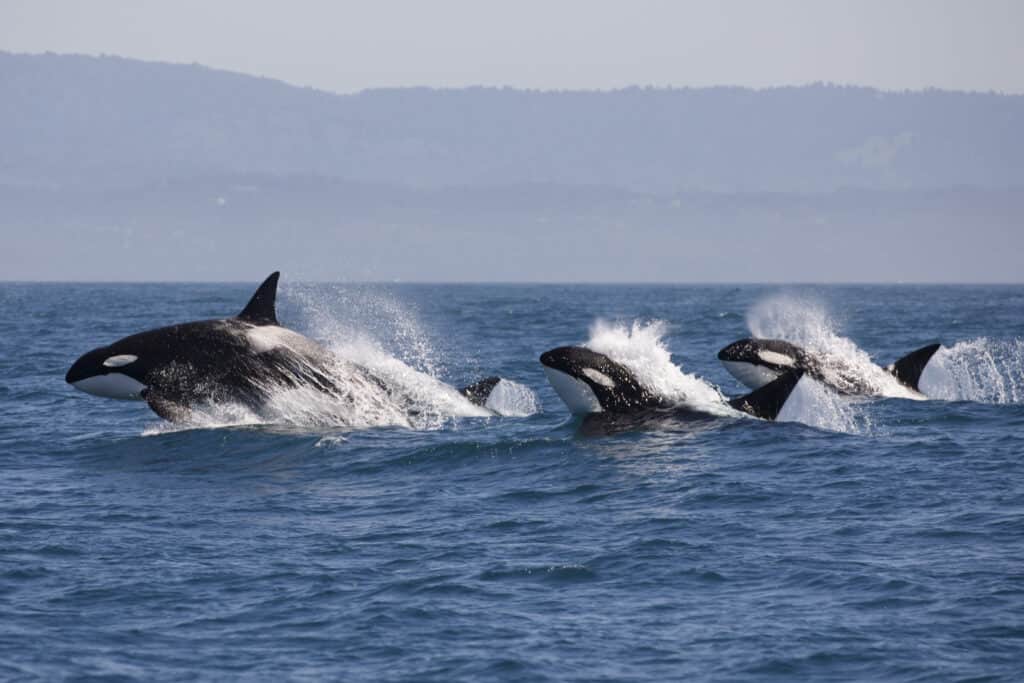
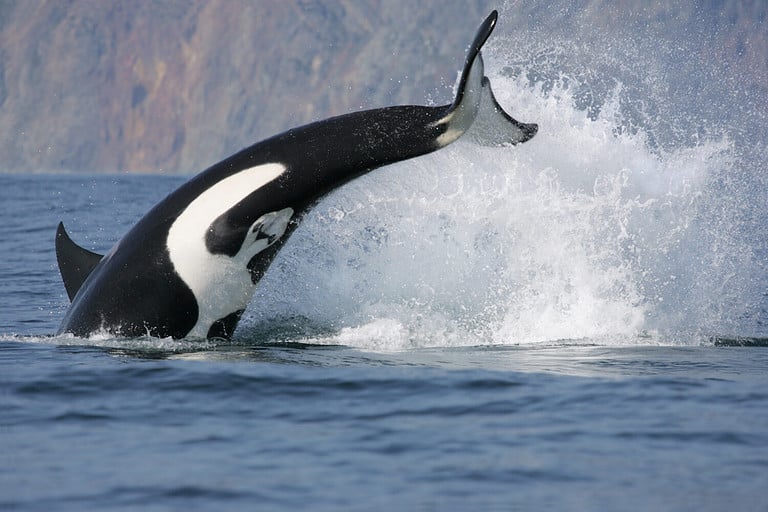
Killer whales, unlike stingrays, live and travel in pods.
©Tory Kallman/Shutterstock.com
Stingray vs. Killer Whale: Offensive Capabilities
Stingrays use ambush tactics. They lay on the sea floor well camouflaged and when prey gets near, they strike with a venomous sting. They like showing off their sharp teeth to clams, crustaceans, and mussels. They crack them open with underwater crunches and feast on the flesh inside. Killer whales use their special way of communication to protect themselves. They go after their prey until they exhaust them. Then they share the fruits of their collaborative labor.
Stingray vs. Killer Whale: Predatory Behavior
Stingrays use their sturdy, barbed tails to attack their prey. Their tails don’t just have a sharp point, but they also have serrated edges that slice through flesh. Their bite is powerful, able to get through crustacean shells. Killer whales use their speed and sheer strength to knock the senses out of their prey. There have been reports of killer whales knocking other sea creatures out cold, letting them sink to the ocean floor. They’ve done this not for food but just for entertainment.
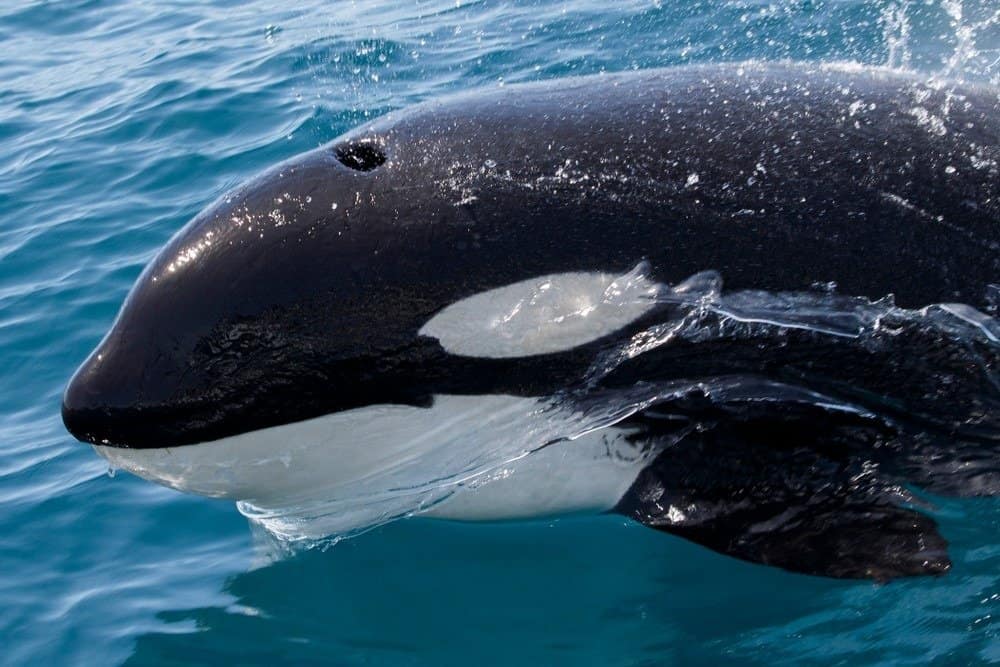
Killer whales measure from 20 to 26 feet, and the adult males can weigh up to 13,300 pounds.
©Tory Kallman/Shutterstock.com
Who Would Win in a Fight Between a Stingray vs. Killer Whale?
In a fight between a stingray and a killer whale, a killer whale would win. Even though a stingray can grow large and is equipped with venom, a single body slam or tail slap from a killer whale could render it lifeless.