
Quick Take
- One of New Mexico's brown spiders actually has more potent venom than the black widow, even though it's considered far less dangerous. The reason why is not what most people expect. See the venom comparison →
- The most feared brown spider in New Mexico is relatively uncommon and not well established, so find out which species it is and why its reputation still matters. Check its actual range →
- One of these brown spiders has a bizarre self-defense move that has nothing to do with biting, and it works surprisingly well. See the playing dead behavior →
- Not every large, hairy brown spider in New Mexico is what you think it is, and misidentifying one could change how you react to it. Identify this hairy spider →
New Mexico is home to over 100 spider species, ranging from tiny jumping spiders to large, hairy desert tarantulas. Spider colors in New Mexico vary widely: wolf spiders use browns and greys for camouflage, black widows are shiny black with red markings, and jumping spiders can be bright red, metallic green, or vibrant orange. New Mexico’s brown spiders are either large but harmless, such as wolf spiders and tarantulas, or smaller, but medically significant, like those in the recluse family. Continue reading to learn about five brown spiders found in New Mexico.
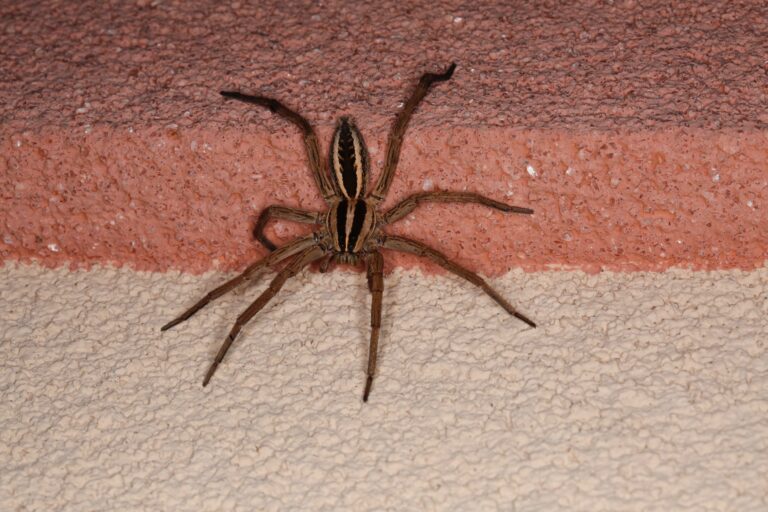
Wolf Spider (Hogna coloradensis)
Average Legspan: 1.5 inches
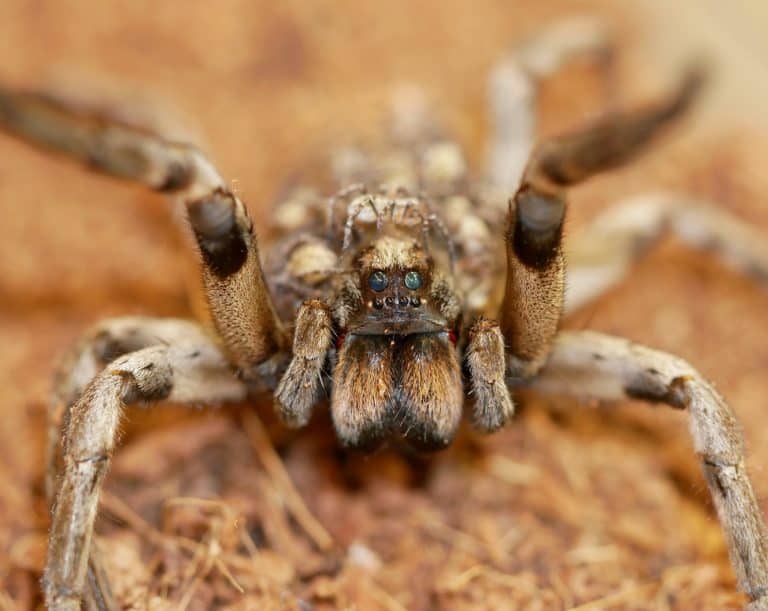
Wolf spiders live solitary lives, generally roaming around at night, hunting prey. Because they are rather large and hairy, they are often mistaken for tarantulas. Although they can climb trees, wolf spiders are typically found on the ground.
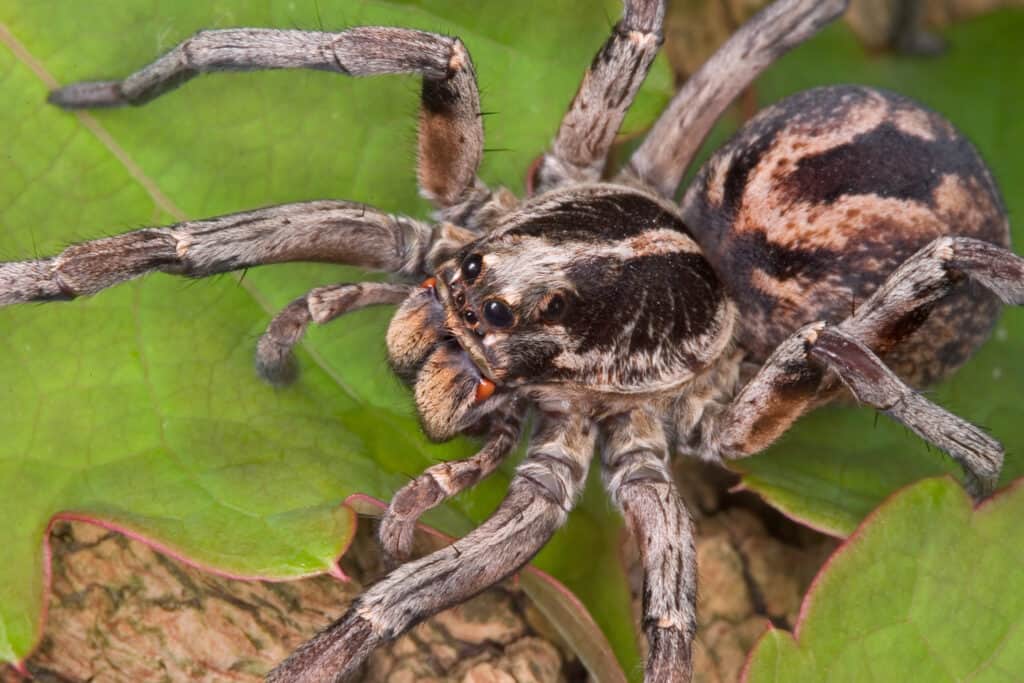
Wolf spiders inhabit gravel, stream edges, and low vegetation.
©Cathy Keifer/Shutterstock.com
Wolf spiders may occasionally enter homes accidentally, but they are not adapted for long-term survival indoors. They prefer moist, dark outdoor habitats such as leaf litter or areas under stones and logs.
Although wolf spider venom is not considered medically significant to humans, their bites can cause allergic reactions in some people. Bites may be painful and cause mild swelling, inflammation, and itchiness, but these symptoms usually resolve quickly.
Brown Widow (Latrodectus geometricus)
Average Legspan: 1.5- 2 inches
Brown widows come in several colors, including black, dark brown, and white. However, most of these spiders are light to medium brown. Brown widows are not as dangerous as black widows, and symptoms from their bites are less severe.
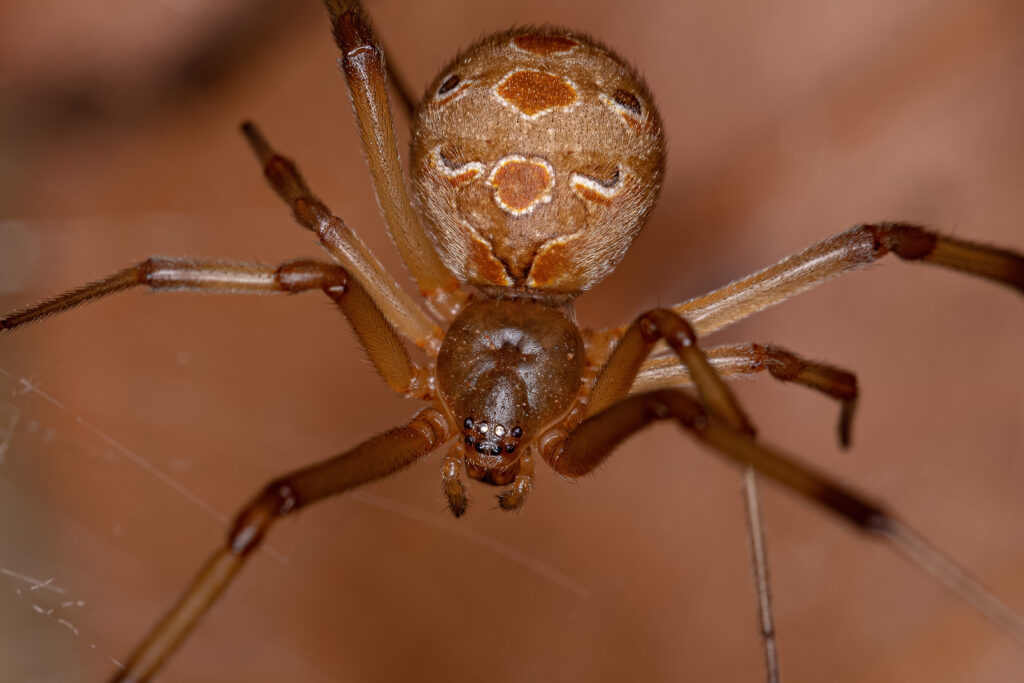
Brown widows come in several colors, including black, dark brown, and white.
©iStock.com/ViniSouza128
Although the brown widow’s venom is more potent than that of the black widow, they inject less neurotoxic venom, resulting in less severe symptoms. Adult males and juveniles of this species do not bite.
Brown widows are among the brown spiders in New Mexico that avoid humans whenever possible. In fact, when people come too near, these spiders will fall to the ground and roll into a ball, pretending to be dead. However, if handled, they will defend themselves. Their bites typically result in local pain and swelling at the site, although a small percentage of those bitten will experience more severe symptoms, including muscle cramping and nausea.
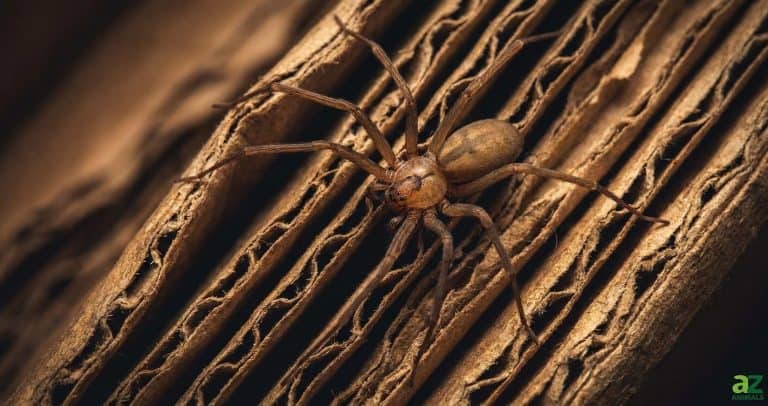
Brown Recluse Spider (Loxosceles reclusa)
Average Legspan: 1-1.5 inches
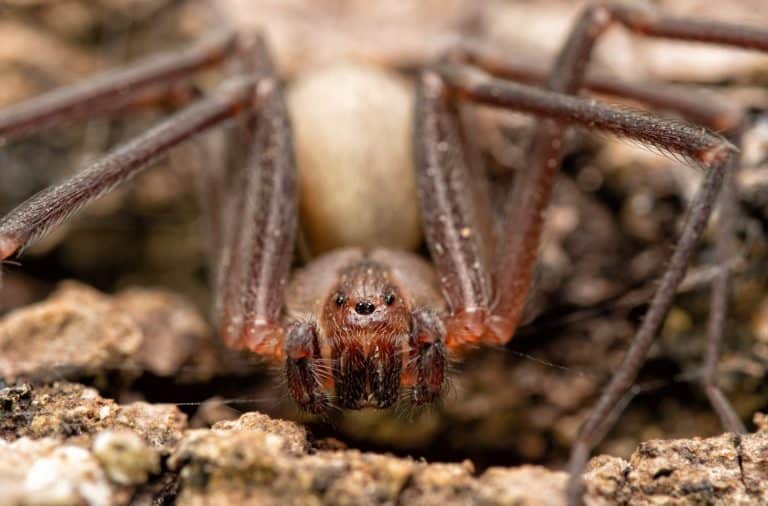
The brown recluse spider is perhaps the most feared brown spider in New Mexico because of its venomous bite. Brown recluse spiders are widely distributed throughout the south-central and Midwestern United States, but they are not considered established or common in New Mexico.
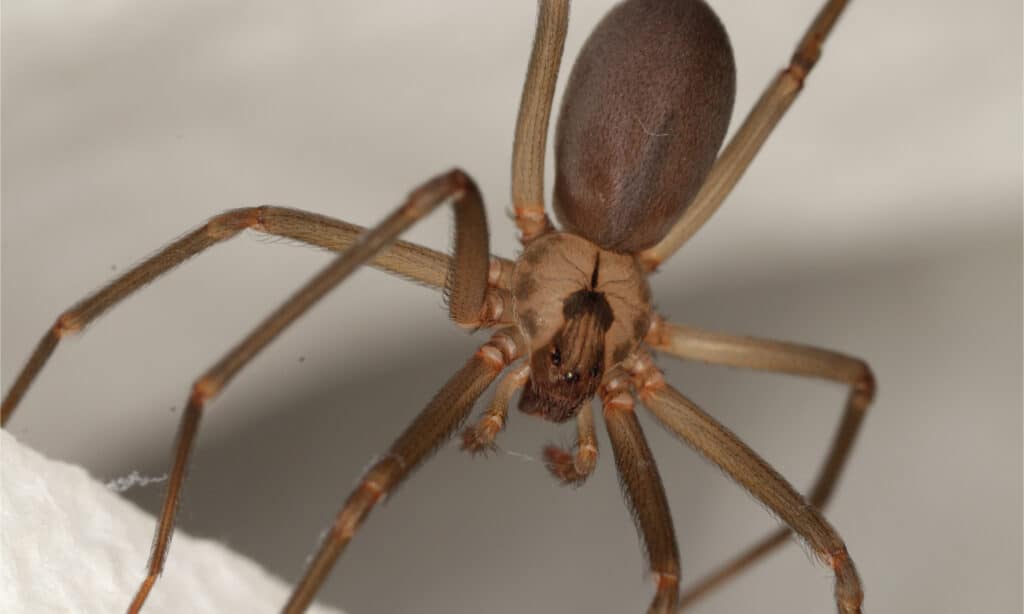
Brown recluse spider bites can cause significant damage to humans, and if bitten, seek emergency care immediately.
©Nick626/Shutterstock.com
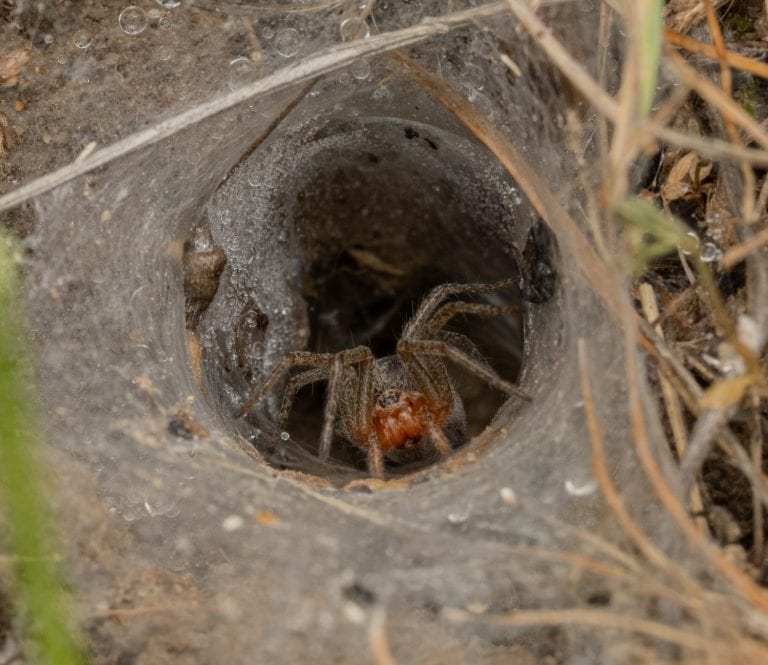
They are nocturnal and spend most of the night building webs that serve as both trigger systems for catching prey and as shelter. Their webs alert them when prey is nearby, but as dawn approaches, these spiders seek out dark crevices such as cracks, debris piles, and rocks. If inside a home or garage, they might hide in shoes, trash cans, tarps, rubber tires, or cabinets.
Although their bites are rarely fatal, they can cause significant tissue damage and often require medical attention to prevent complications such as necrosis.
Texas Orb-Weaver (Araneus illaudatus)
Average Legspan: 2 inches
Texas orb-weavers are nocturnal, constructing their webs at night. Some of these spiders eat or tear down their webs in the morning and create a new one each day.
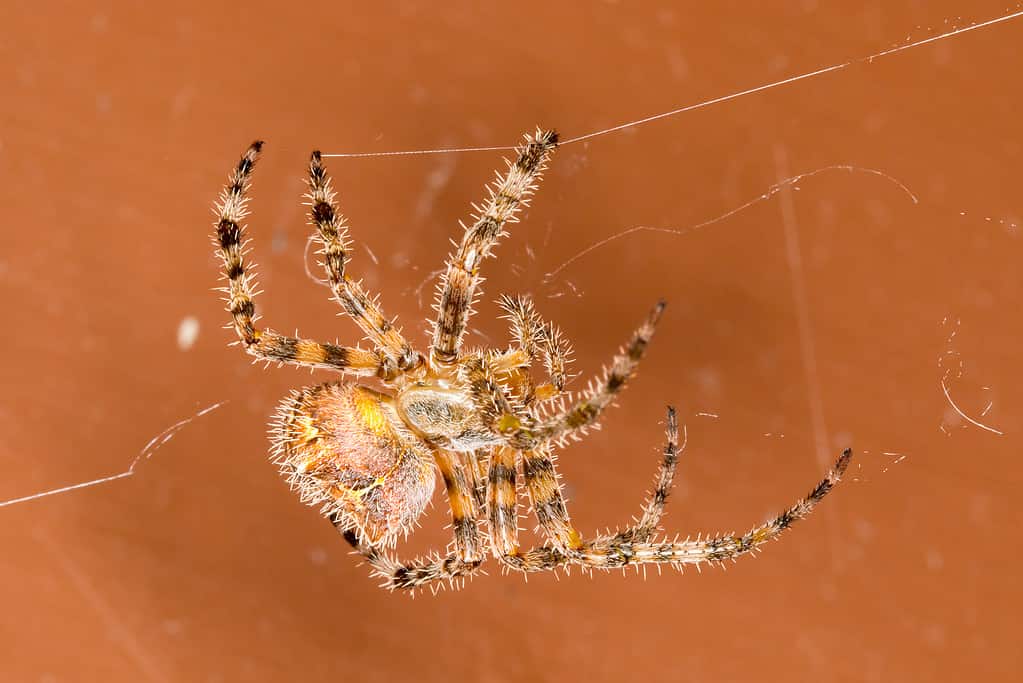
Texas orb-weaver spiders rarely bite and will only do so if they feel threatened or cornered.
©Elliotte Rusty Harold/Shutterstock.com
Texas orb-weavers are docile and non-aggressive, rarely biting unless handled, threatened, or trapped. Their venom is not dangerous to humans and usually causes only a mild reaction, similar to a bee sting. However, in the event of an allergic reaction, it is important to seek medical aid.
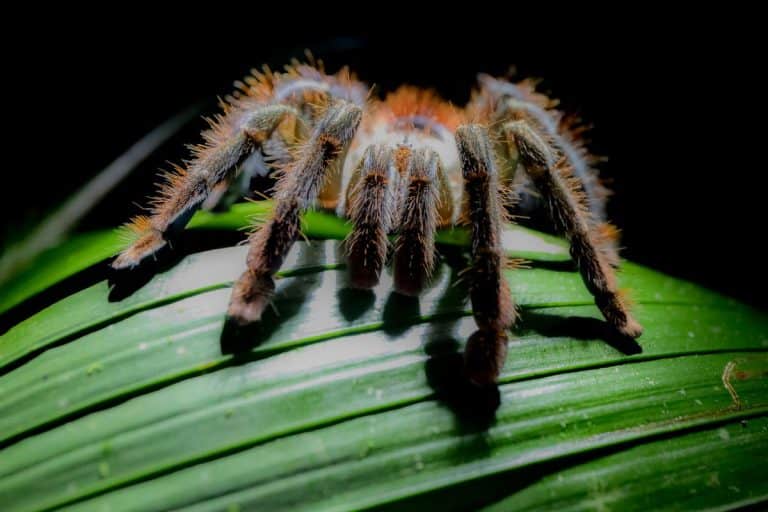
Texas Brown Tarantula (Aphonopelma hentzi)
Average Legspan: 4-5 inches
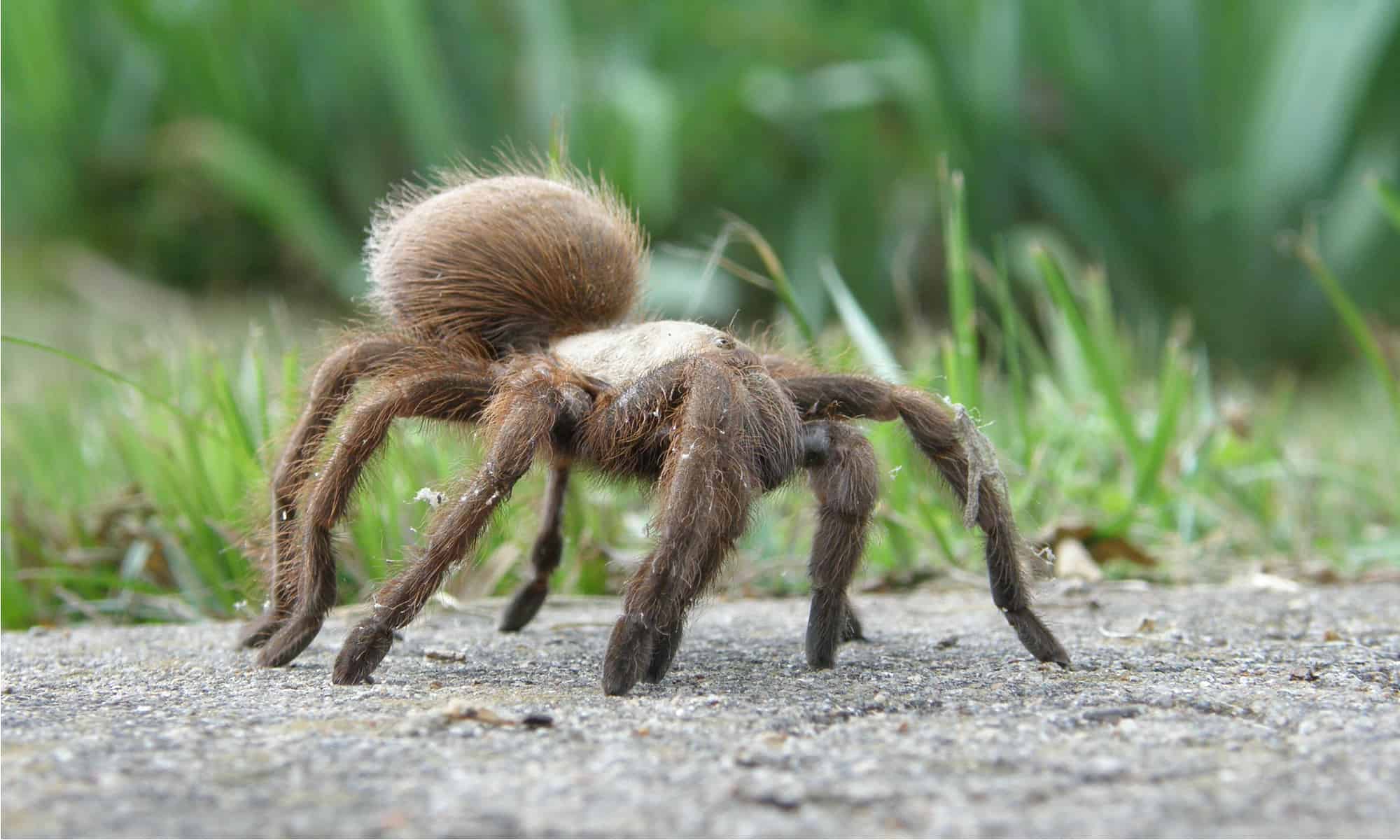
The Texas brown tarantula is typically found on the ground, where it searches for food and mates. Despite their name, these spiders are widely distributed across North America, including New Mexico, Arizona, Kansas, Louisiana, and Mexico.
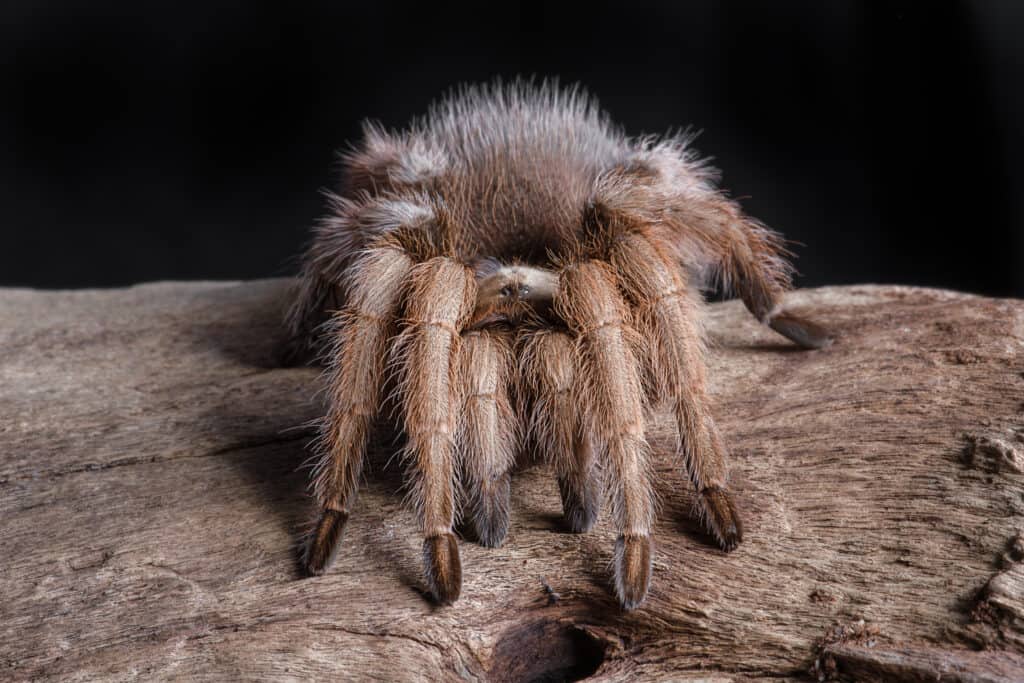
Texas brown tarantulas are mainly found on the ground, where they look for food and mate.
©Alan Tunnicliffe/Shutterstock.com
They are not aggressive, but when frightened, they may run away, stretch their front legs to appear larger, or bite. Although their bites are not dangerous, they can be painful.