
Hopefully, you never find a rodent scurrying away from you after you flip on the light indoors or outdoors. However, if you do spot one, there are some identifying features you should know to determine what kind of problem you’re dealing with. Below, we identify four rodents spreading germs throughout Virginia and provide a brief overview of the diseases they carry.
4 Rodents Spreading Germs Throughout Virginia
1. House Mice
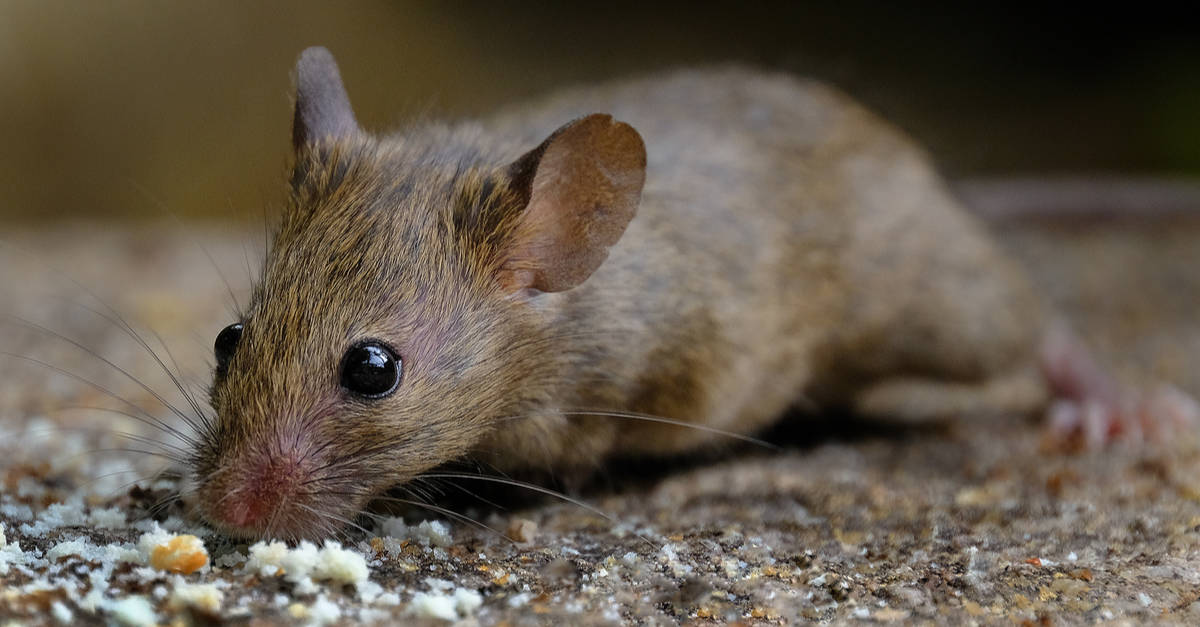
House mice are the most comment rodents in Virginia. They’re distinguished by their rather slender bodies, their large ears, and their long tails. If you look closely, you can see that house mouse eyes are both dark and beady. The tail is worth mentioning because it’s often longer than the house mouse’s body. Their fur is like velvet, and their colorations vary a bit, ranging from grayish brown to black. Their bellies, however, are much lighter (usually whitish or tan).
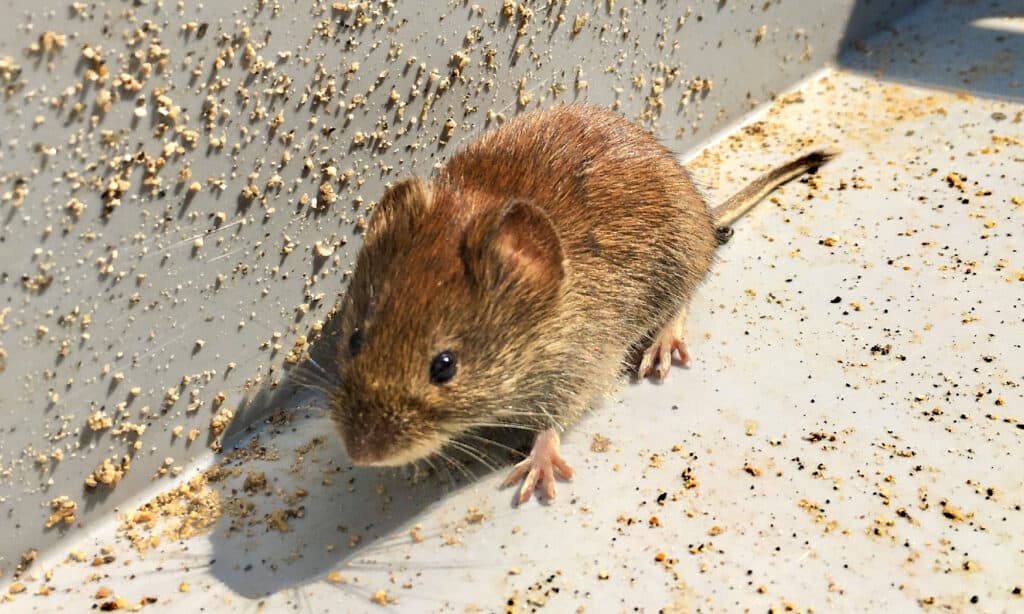
House mice are the most comment rodents in Virginia.
©iStock.com/Bruno_il_segretario
2. Deer Mice
Deer mice, like house mice, have large ears and black eyes. Their build is slender as well, and they’re speedy. However, their coloration is a bit different. It ranges from grayish brown to more of a brownish red. Their underbellies are lighter, with more of a whitish color than their house mice counterparts. You can also look at their tails; they’re distinctive,, with a darker top, lighter bottom, and lots of fine hair.
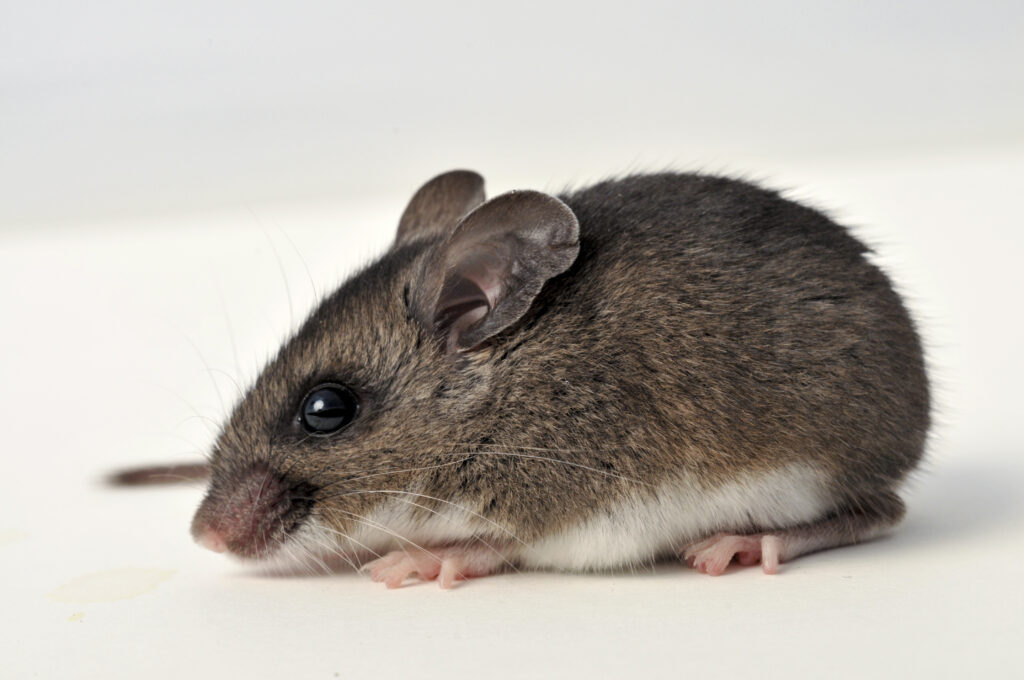
Deer mice, like house mice, have large ears and black eyes.
©Close Encounters Photo/Shutterstock.com
3. Norway Rats
Norway rats are quite stocky. Their heavy bodies are brownish with black lowlights that look as if they’ve never been combed. Their bellies have a lighter color to complement and contrast their unkempt fur. They also have small, protruding eyes, but their ears, unlike mice, are quite small. These aren’t the most agile rodents, which is why they prefer hanging out inside different types of man-made structures, including homes and businesses.
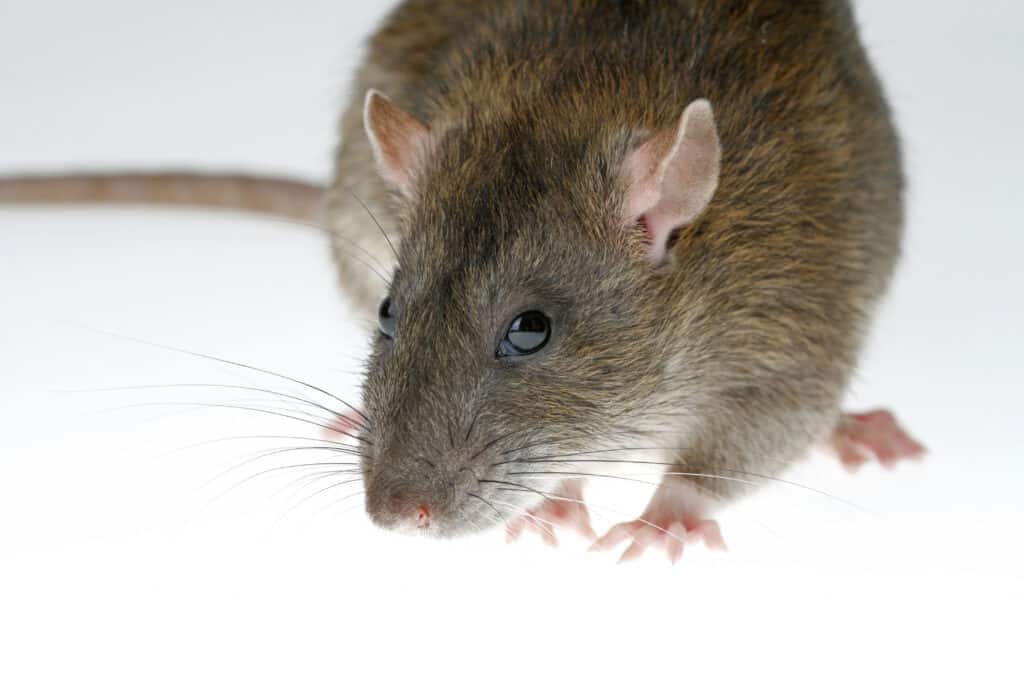
Norway rats are quite stocky and have smaller eyes and ears thann mice.
©Holger Kirk/Shutterstock.com
4. Roof Rats
The color of roof rats is darker than the others, usually just black or dark brown. They do have light-colored bellies, however, and while they have kind of delicate, long bodies, they also have large, contrasting ears. Their noses are distinctively pointed. If you can’t tell them apart from other rodents based on their appearance, you should be able to tell based on their climbing adeptness.
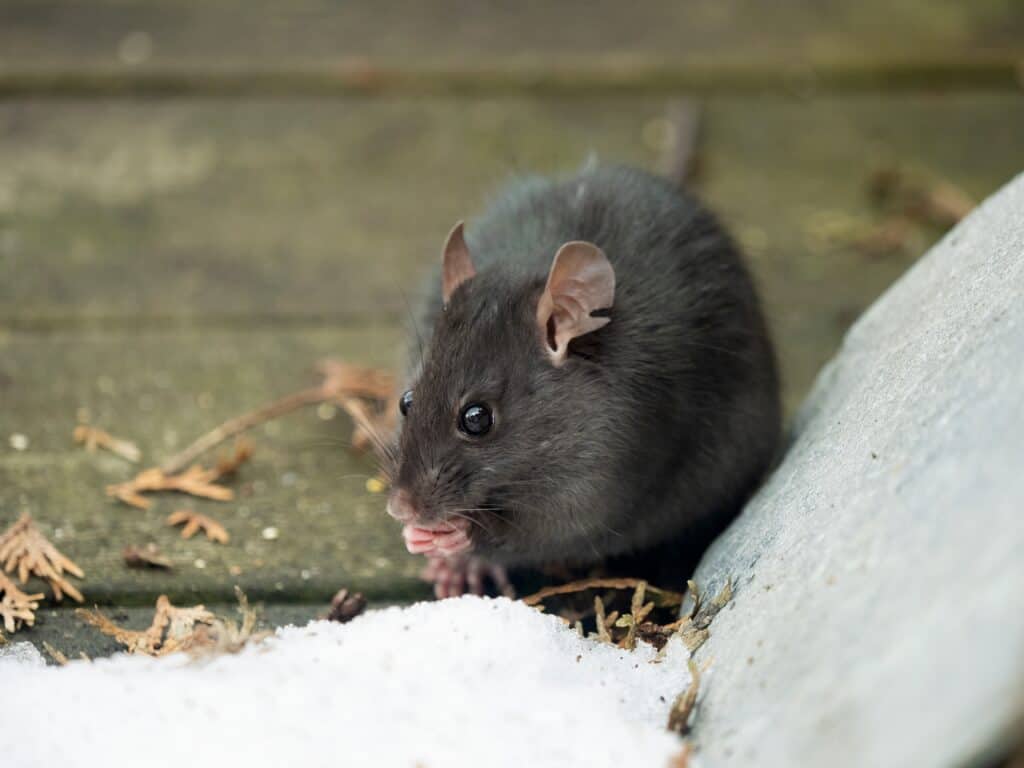
The color of roof rats is darker than the others, usually just black or dark brown.
©Ernie Cooper/Shutterstock.com
What Diseases Do Rodents Carry?
Rodents like mice and rats are typically found around rotting food and sewers and dumpsters. Because of their attraction to these unclean environments, they tend to become magnets to a variety of different bacteria. Not only that, but they can become the transmitters of some serious human pathogens. Even though both mice and rats can make great pets, when they’re wild, they are capable of transmitting some of the following diseases:
- Salmonellosis
- Leptospirosis
- Hantavirus
- Plague
- Tularemia
- Lymphocytic choriomeningitis