
Quick Take
- Five hours of effort couldn't move this mamba, and the technique that finally worked sounds like the last thing a rescuer should try. See how it ended →
- Everything you think you know about mamba aggression is probably wrong, and mistaking myth for fact could be deadly. Separate myth from fact →
- A black mamba's tongue holds the real key to understanding why it behaved the way it did, and the reason has nothing to do with tasting the air. Explore mamba sensory behavior →
- A suburban ceiling can be more attractive to a mamba than wild bush, and understanding why sheds light on the reason removal attempts keep failing. Why ceilings attract mambas →
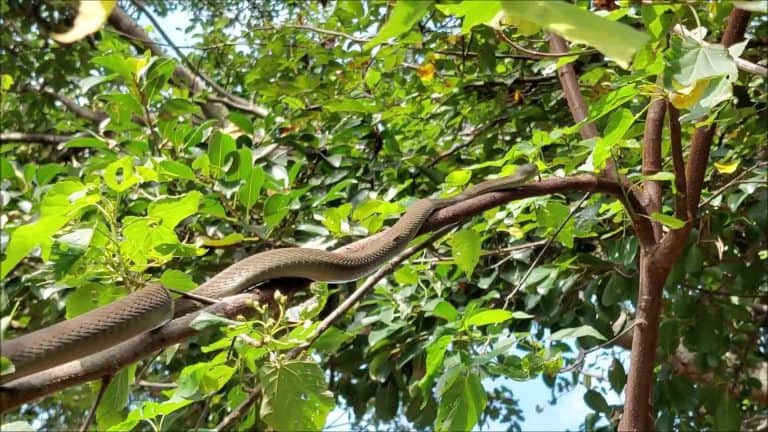
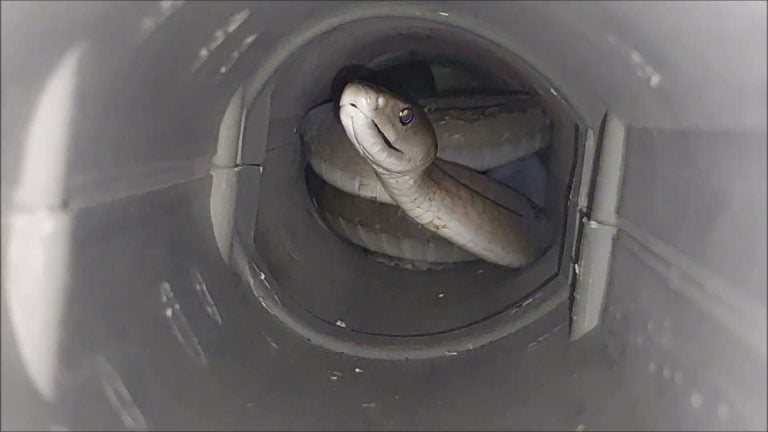
In a suburb of Durban, South Africa, snake rescuer Jason Arnold joined his colleague Grant to respond to a call that had been going on for months. A black mamba had made its home inside the ceiling of a home, occasionally poking its head out through a gap in the roof tiles before slipping back into hiding. Earlier rescue attempts, including one that lasted five hours, failed when the snake kept disappearing deeper into the roof.
What makes this rescue video so helpful for understanding how mambas act is the method Arnold used to remove it. Instead of trying to force the snake out, he gently waved a pair of long snake-handling tongs near the opening and let the animal come to him. The snake poked its head out, flicked its tongue, and repeatedly came forward to check things out. Arnold described the snake as curious, a word that fits right in with what snake experts have observed about the species for decades.
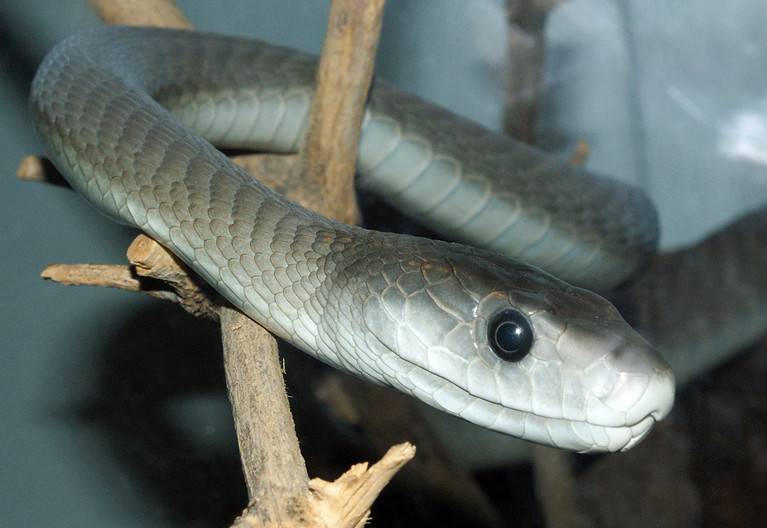
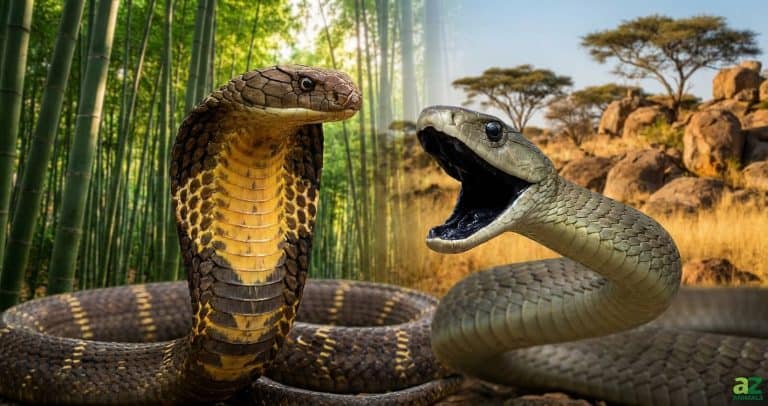
Black mambas hunt during the day using their sharp eyesight — their eyes are medium-sized, with irises ranging from greyish-brown to shades of black. Field research in South Africa shows that mambas actively travel across wide areas to hunt, using both sight and smell to find food like mice, rats, hyraxes, and birds. Unlike snakes that sit quietly in one spot waiting to ambush their meal, active hunters benefit from checking out anything new in their surroundings. A moving object near a hiding spot is worth looking into because it could be food, a rival snake, or a danger that needs watching.
Classic Mamba Behavior
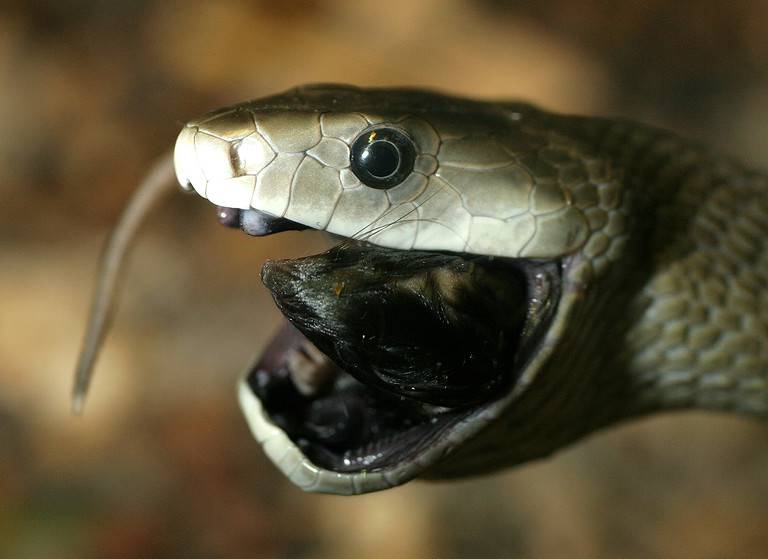
Leading wildlife and snake safety groups in South Africa describe the black mamba as alert and high-strung rather than mean or aggressive. Given the chance, a mamba will almost always run away. Their terrifying reputation comes from their extremely powerful venom, which attacks the nervous system and the heart, leading to the popular myth that mambas actively chase people. However, long-term scientific studies show this isn’t true. When cornered, a mamba will lift the front of its body, open its mouth wide, and hiss to scare off threats, but this is purely in self-defense.
The snake’s curiosity is a natural reaction driven by its senses. A mamba flicks its tongue to collect scent particles from the air, sending them to a special scent-processing organ in the roof of its mouth. This organ processes information about food trails, other snakes, and potential dangers. When Arnold moved his tongs, he gave the snake something to see and likely something to smell, as the tools may have carried scents from other mambas he had handled. The snake came out out to look, took in sensory information, and then backed away, all of which are part of its classic safety test.
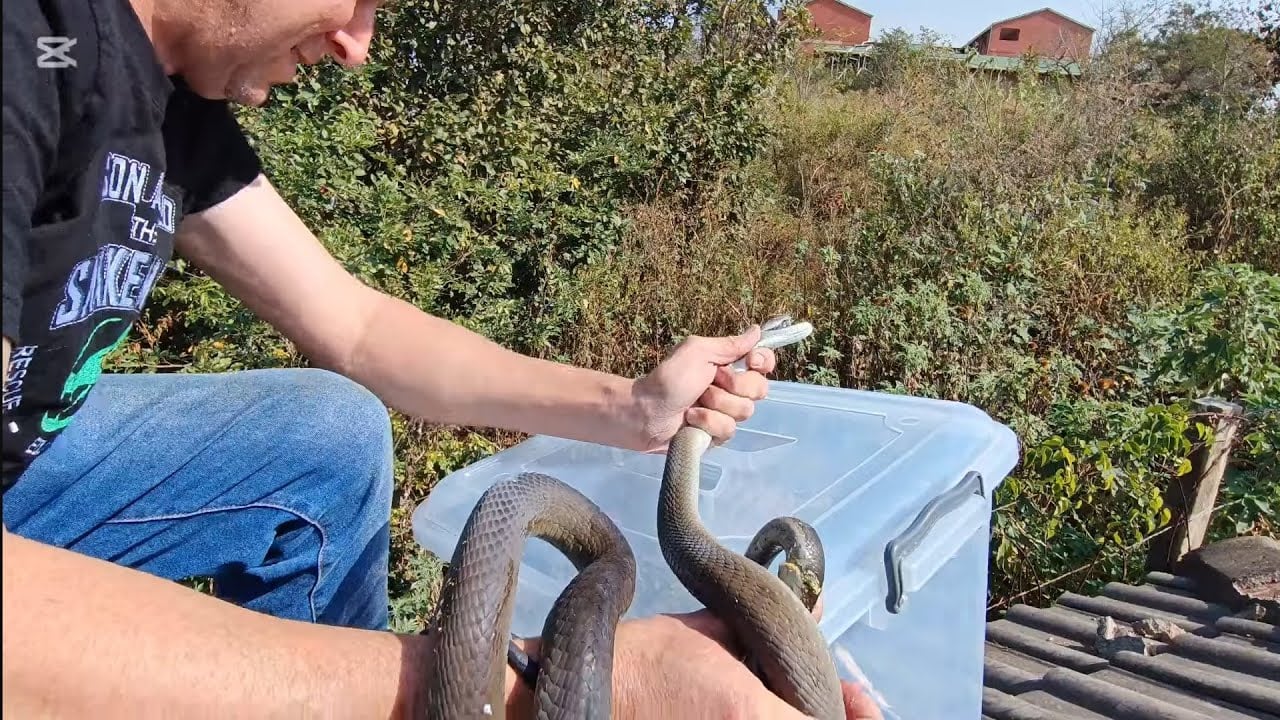
Mambas will almost always flee if given the opportunity. However, if one is found in your home, call a professional to help remove it.
©Jason Arnold (Snake Handler) via YouTube — used under fair use – Original / License
The environment played a big role, too. The house sits next to thick wild bush and a water source, which is ideal mamba territory. In nature, mambas prefer hiding out in rocky hills, termite mounds, and hollow trees. To a snake, a human house with a warm roof cavity and plenty of rodents feels just like a natural shelter. A warm ceiling with gaps in the tiles and easy access to nearby gardens is just about perfect. Inside the roof, the rescuers even found shed skin from a smaller, harmless snake species, showing that the cozy space had attracted multiple reptiles over time.
And Finally, the Capture
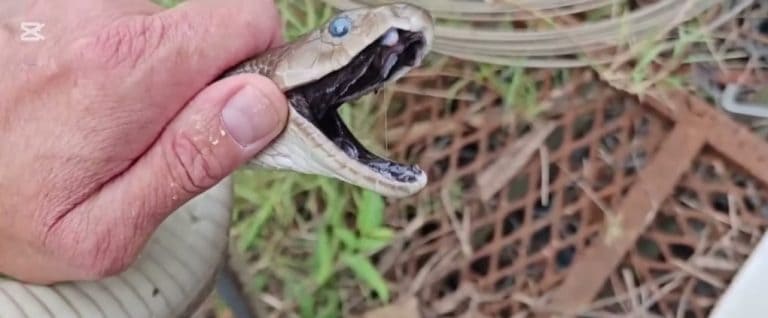
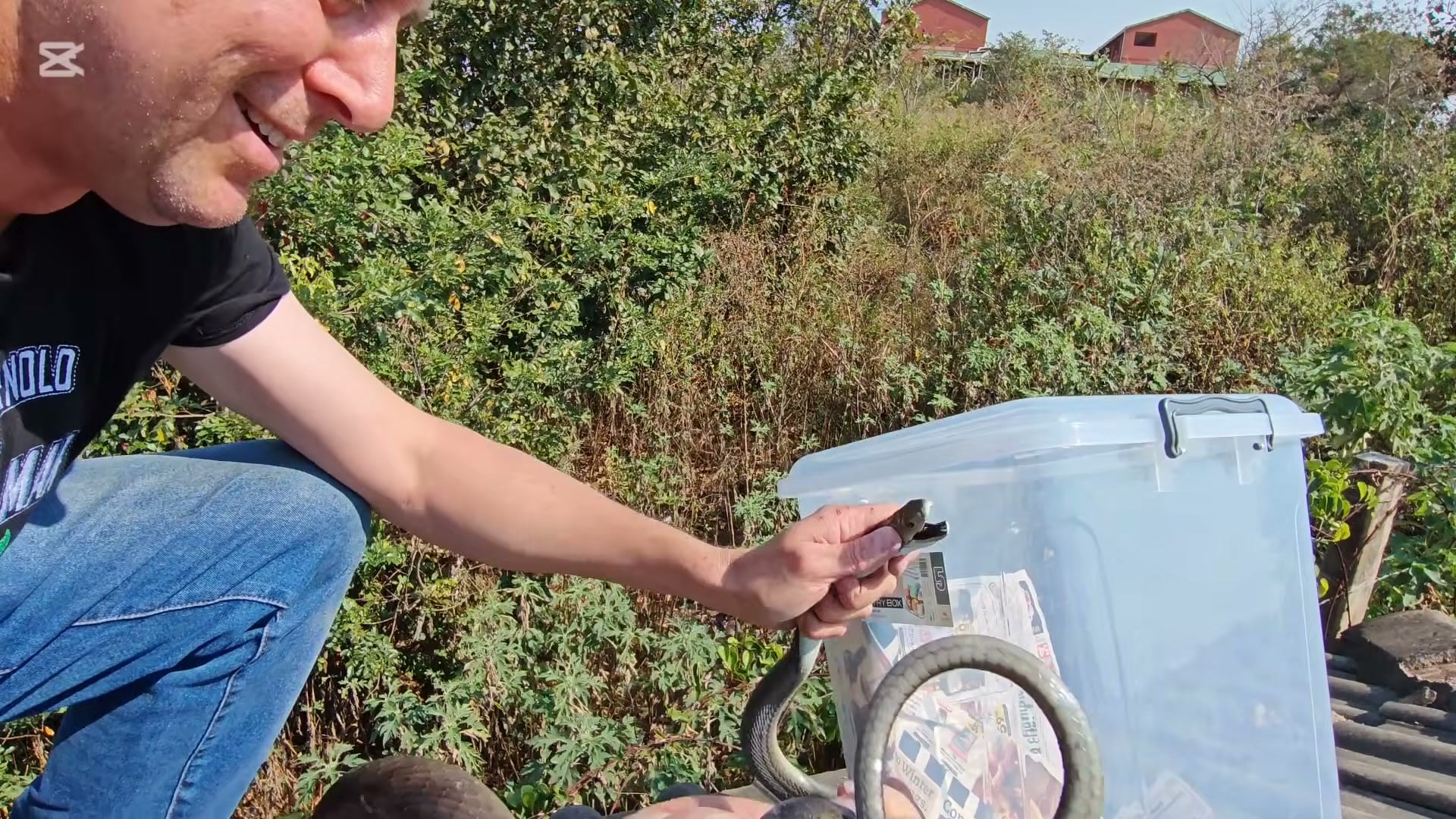
Eventually, after removing a few roof tiles, the rescuers safely pinned and bagged the mamba. Once secured behind the head, the large snake settled down quietly, which is typical behavior for the species when handled correctly by a professional.
Black mambas can grow over 10 feet long, making them the longest venomous snake in Africa and the second-longest in the world, right behind the king cobra.
For anyone living in regions where mambas are found, remember: if a mamba gets into your roof, call a trained professional. Trying to smoke out, flush out, or corner a mamba vastly increases your chances of getting bitten, and antivenom can still be difficult to get in parts of southern Africa.