
Quick Take
- One snake you've probably seen a hundred times is technically venomous, a fact that scientists only confirmed in the early 2000s. Garter snake venom details →
- One juvenile snake along the Susquehanna is so convincingly disguised that it's routinely mistaken for a venomous species, a confusion that even experienced observers frequently make. Milk snake mimicry explained →
- A snake that looks completely harmless near the river can deliver a bite painful enough to make you reconsider everything you thought you knew about nonvenomous species. Northern water snake bites →
- One of these eight snakes is disappearing fast, having already been wiped out of two states entirely, and its last stronghold runs along a river most Pennsylvanians cross without a second thought. Timber rattlesnake decline →
From its headwaters in New York to its mouth, which empties into the Chesapeake Bay, the Susquehanna River flows through the heart of Pennsylvania, serving as a vital natural resource that supports major regional industries, powers hydroelectric plants, and sustains an abundance of flora and fauna. Among the wildlife it supports, the Susquehanna River is home to many of the 21 snake species found in Pennsylvania. Continue reading to learn about 8 of the snakes that live near the Susquehanna River in Pennsylvania.
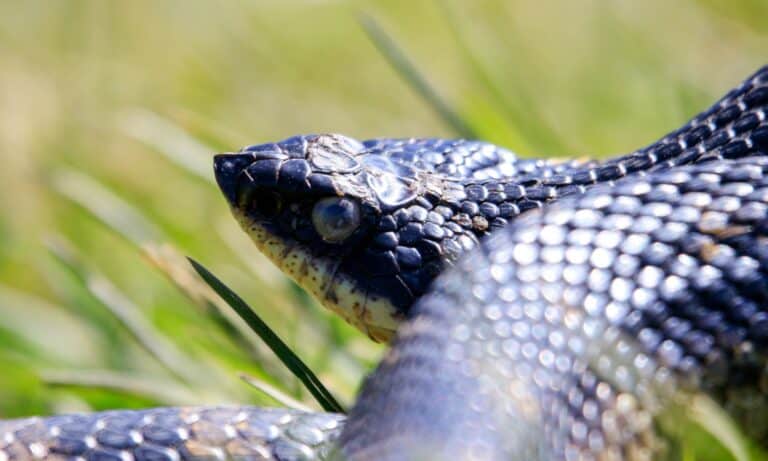
Northern Black Racer (Coluber constrictor constrictor)
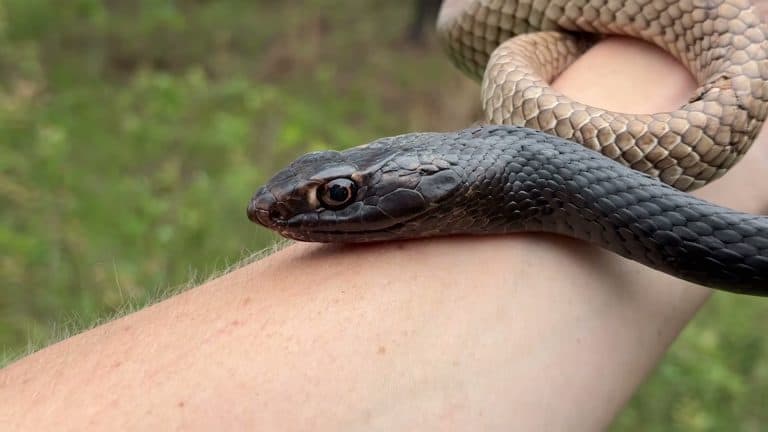
The Northern black racer is a fast-moving, nonvenomous snake that is common in the sunny, open habitats along the Susquehanna River. These snakes thrive in the meadows and brushy areas along the river. Black racers use their speed to hunt prey, including small rodents, frogs, and insects.
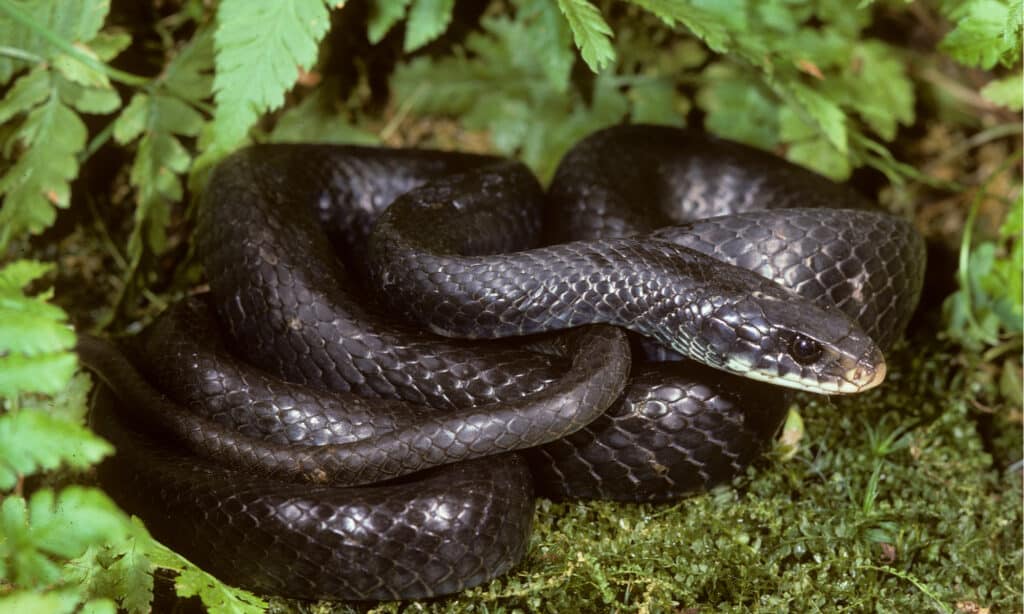
Northern black racers are quick-moving snakes.
©Breck P. Kent/Shutterstock.com
The Northern black racer is a slender snake that is between three and five feet long. Adults exhibit solid matte-black dorsal scales, a white chin, and a dark belly. Juvenile Northern black racers look drastically different, with a gray or brown body patterned with reddish-brown, black, or gray blotches that fade as they mature.
Eastern Rat Snake (Pantherophis alleghaniensis)
Eastern rat snakes, also called black rat snakes, are one of Pennsylvania’s largest and most common snake species. They thrive in the forested and agricultural areas along the river. Excellent climbers, Eastern rat snakes are often found in trees. They are also excellent swimmers.
The Eastern rat snake is a large, nonvenomous constrictor, ranging from 3.5 to over 7 feet in length, that is found throughout Pennsylvania. Adults are typically shiny black dorsally with a white chin and a checkered black-and-white belly. Juveniles are distinctly different from adults, typically light gray or brown with dark, blotched patterns, and are often mistaken for copperheads (Agkistrodon contortrix).
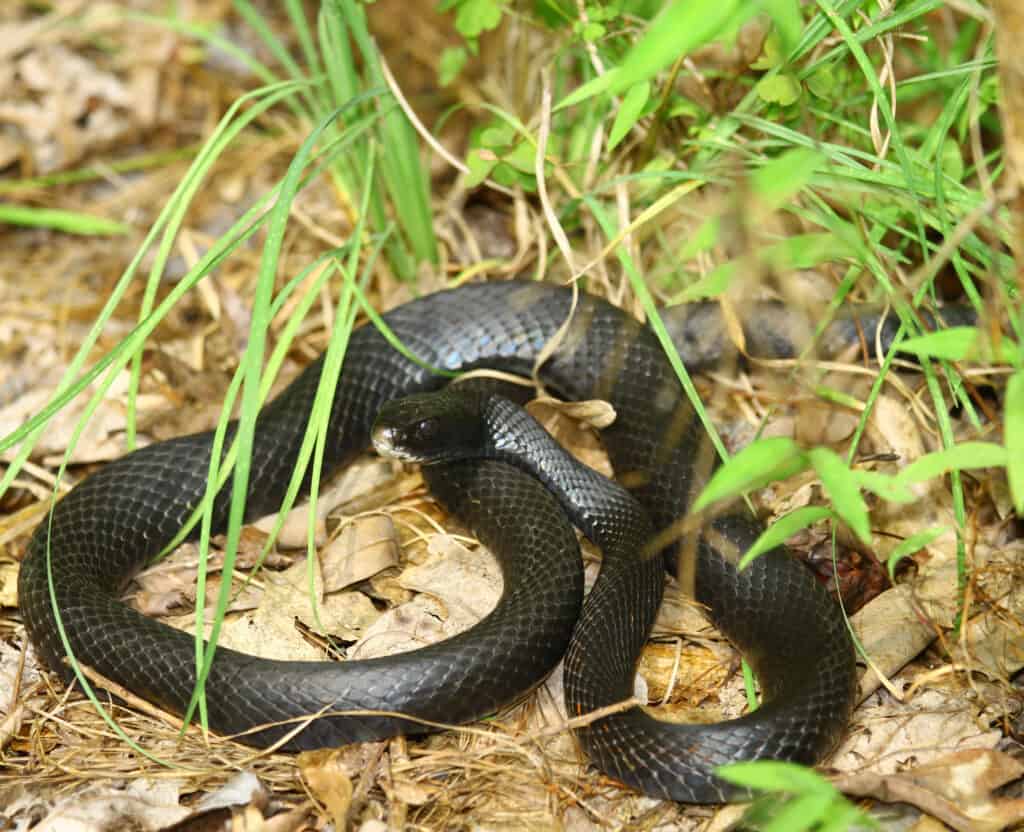
The Eastern rat snake primarily takes refuge under boards, rocks, in trees, and under bark.
©Barry Blackburn/Shutterstock.com
Eastern Milk Snake (Lampropeltis triangulum)
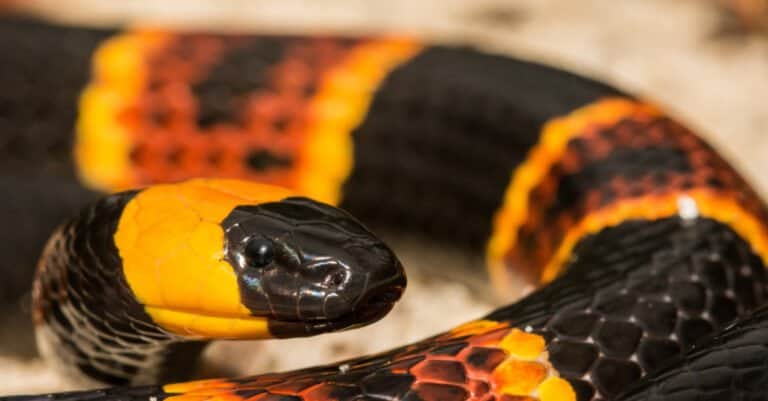
The Eastern milk snake is found around the Susquehanna River near agricultural areas, fallow fields, and deciduous forests. Eastern milk snakes are brightly colored, with banded or blotchy patterns that allow them to mimic venomous coral snakes. They also shake their tail to imitate a rattlesnake when threatened. The Eastern milk snake is a medium-sized snake, ranging from 24 to 52 inches long.
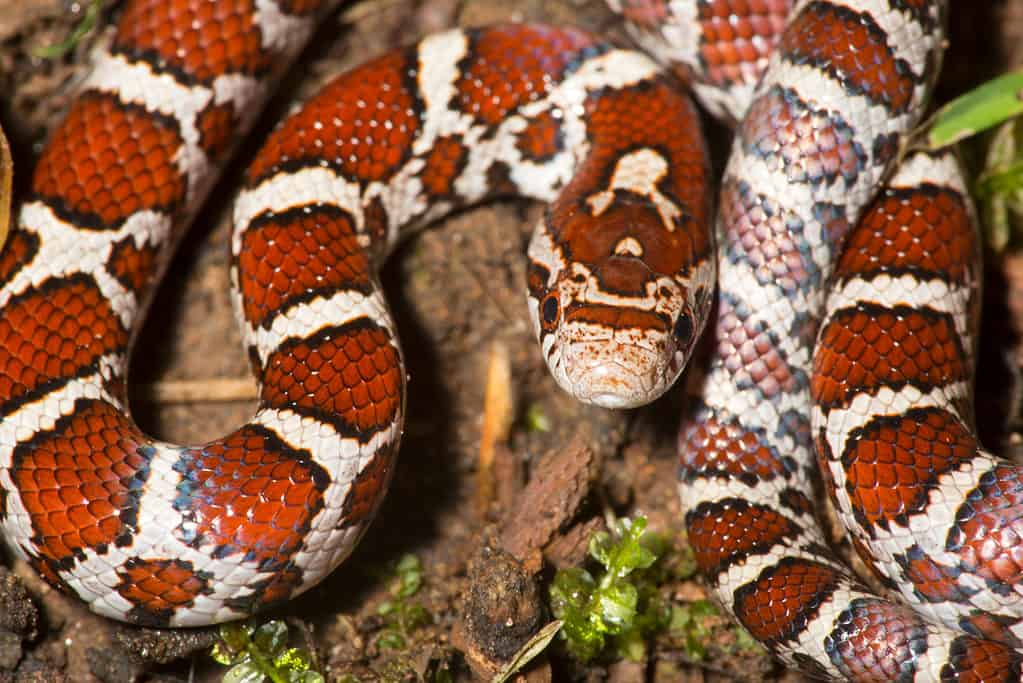
The Eastern milk snake prefers forested areas but is often found in barns and around farms.
©Jeff Holcombe/Shutterstock.com
Smooth Green Snake (Opheodrys vernalis)
Widely distributed across Pennsylvania, the smooth green snake is a nonvenomous snake with a solid green back and a yellow/white belly. They have smooth (unkeeled) scales and are active, terrestrial foragers of insects, often found in open, moist meadows, grasslands, and at forest edges. Smooth green snakes are small, typically measuring between 12 and 20 inches in length.
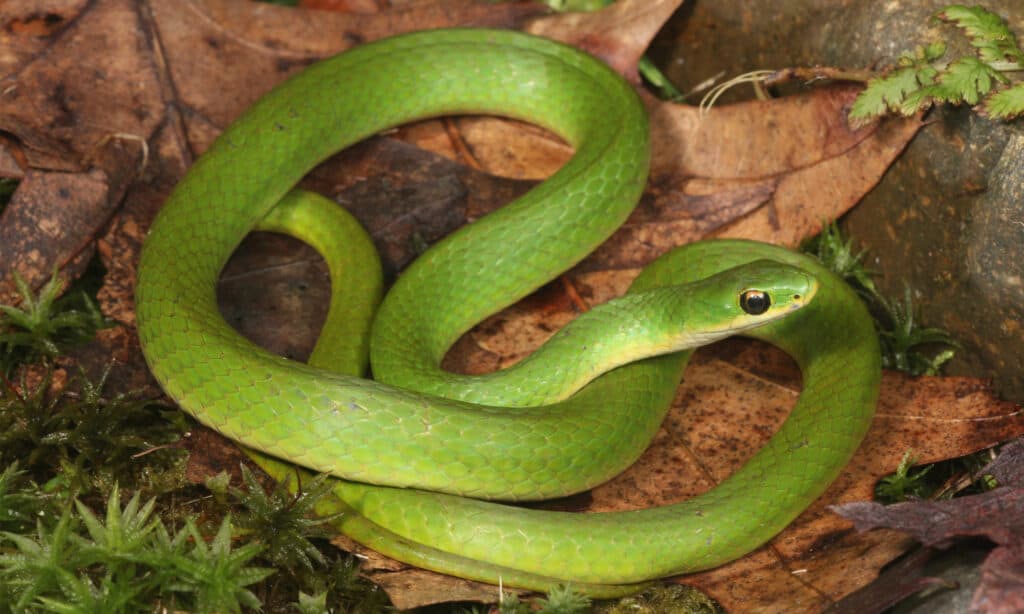
The smooth green snake is considered a species of special concern due to population declines.
©iStock.com/tamers1
While they are mostly terrestrial, smooth green snakes are capable of swimming and will enter the water to move between habitats or to escape danger. They are most often found on the ground or in low vegetation, where their bright green color provides excellent camouflage.
Northern Water Snake (Nerodia sipedon)
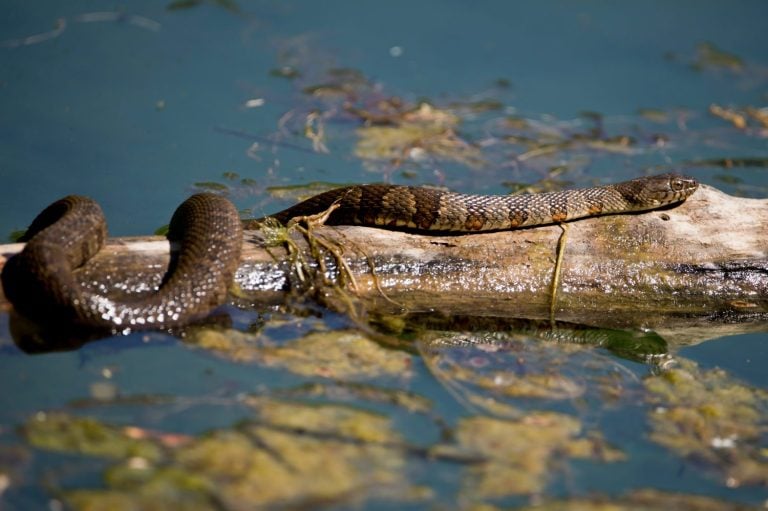
The Northern water snake is a nonvenomous, aquatic snake that is widely distributed across Pennsylvania. They have strongly keeled scales, which give them a rough appearance. The water snake’s belly is usually white, yellowish, or light brown, marked with reddish-brown to black, crescent-shaped, or half-moon spots. Mature Northern water snakes are between three and four feet long, on average.
Northern water snakes are regularly seen basking on the banks of the Susquehanna River. These snakes will flee into the water if a potential threat comes too close, as they try to avoid danger. However, they will defend themselves if cornered. While they are not venomous, larger specimens can inflict painful bites.
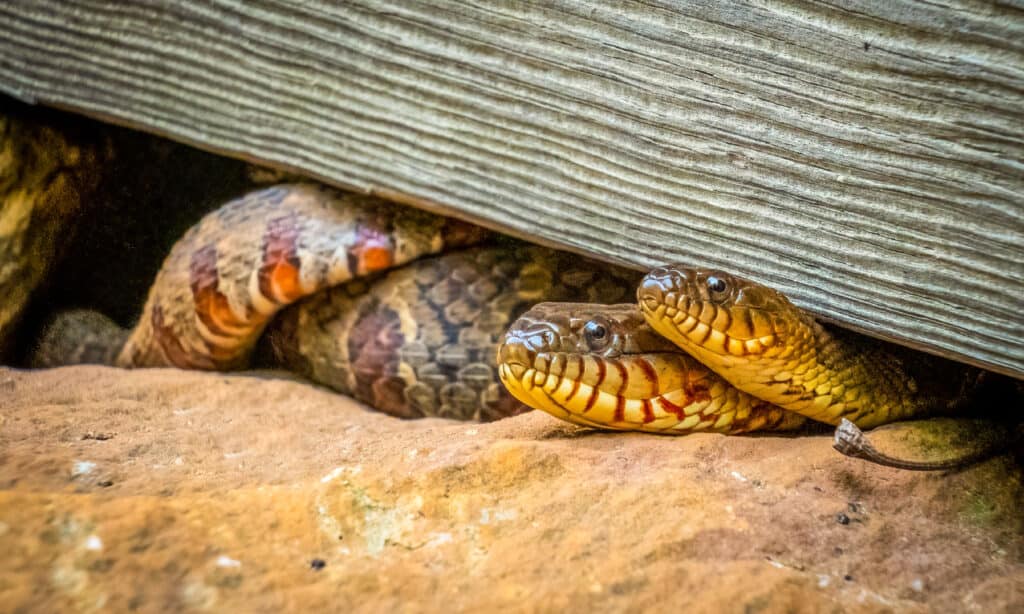
Northern Water Snakes are found in virtually every county in Pennsylvania.
©samray/Shutterstock.com
Eastern Garter Snake (Thamnophis sirtalis sirtalis)
Eastern garter snakes are found statewide in Pennsylvania, often near water, including the Susquehanna River. These snakes have three longitudinal stripes (yellow, blue, or white) on a dark body and generally measure between 18 and 34 inches long.
Although they are harmless to humans, Eastern garter snakes are technically venomous, but their venom is not medically significant. While they were once thought to be completely nonvenomous, research in the early 2000s confirmed that all 35 species of garter snakes produce a mild neurotoxin.
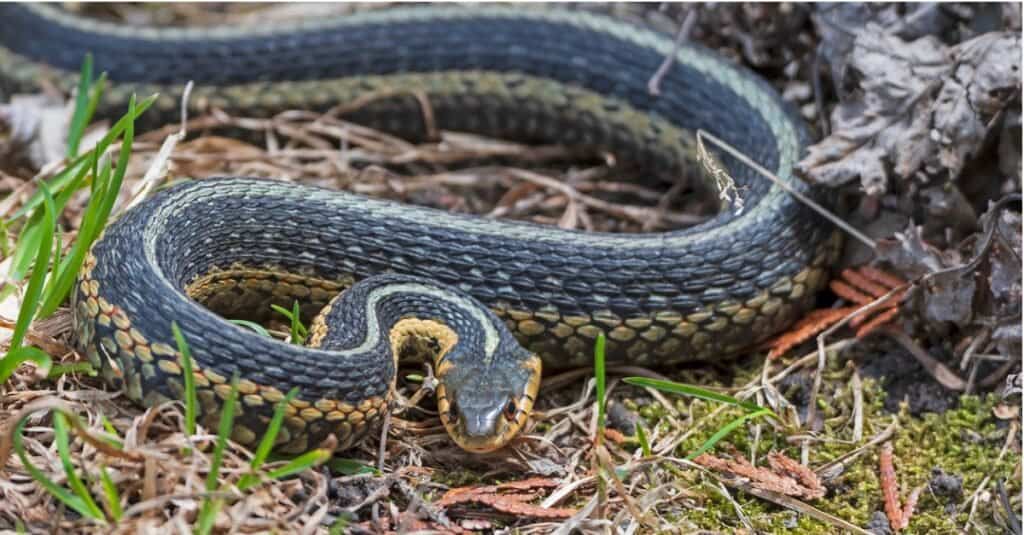
While common garter snakes are not harmful to humans, they do have venom, which they use to subdue their prey.
©iStock.com/Wildnerdpix
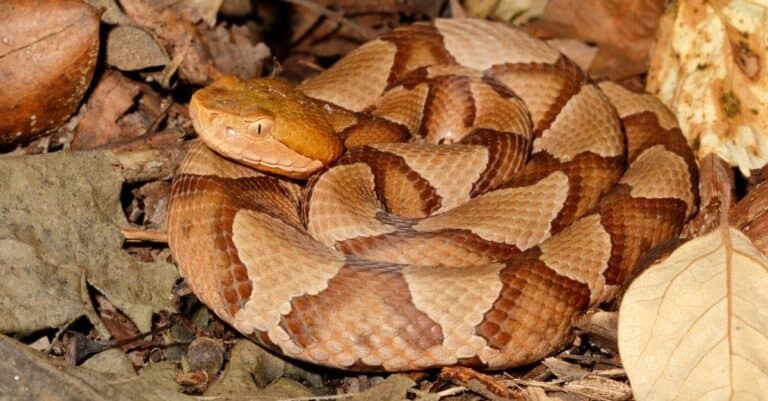
Eastern Copperhead (Agkistrodon contortrix)
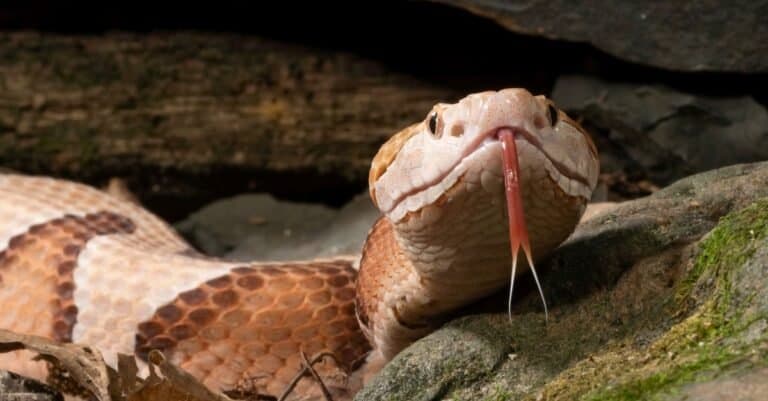
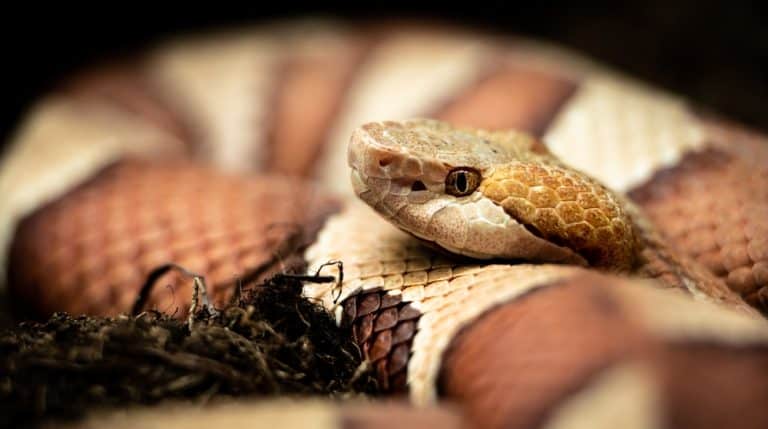
The Eastern copperhead is a venomous pit viper found throughout Pennsylvania, except in the northernmost counties.
They are recognized by their copper-colored heads and distinct Hershey’s Kiss or hourglass-shaped bands. Eastern copperheads are generally between two and three feet long.
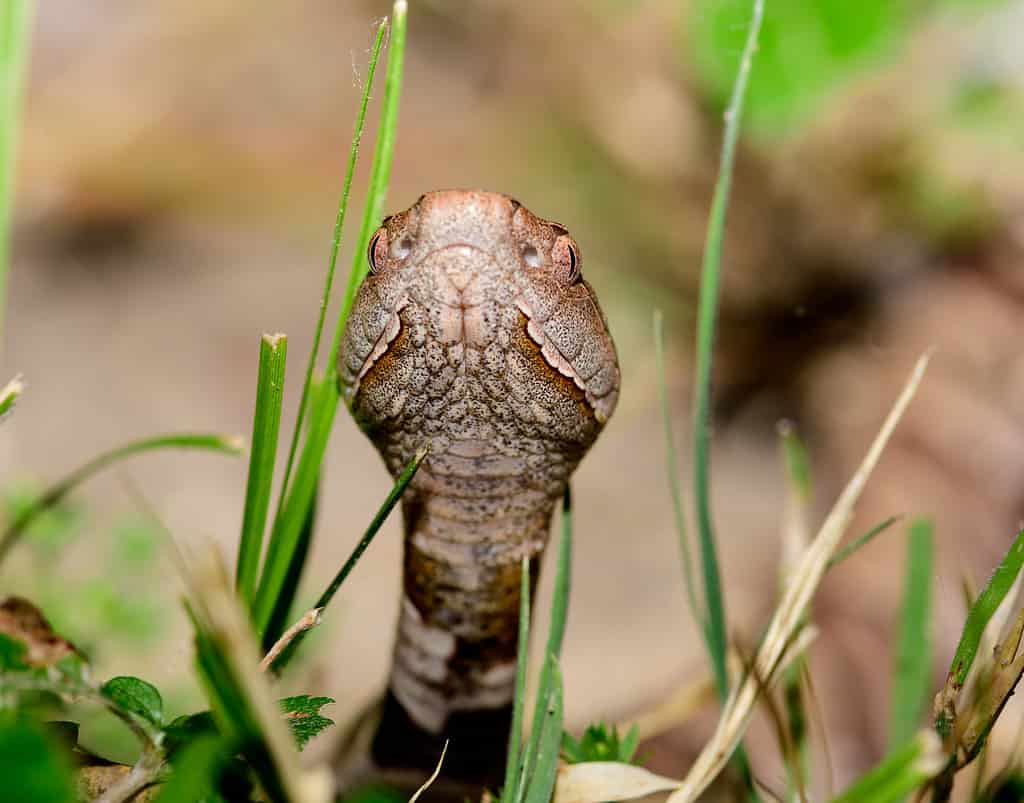
While Eastern copperheads are not aggressive, they are venomous.
©iStock.com/JWJarrett
Eastern copperheads are frequently seen near the Susquehanna River, particularly in the rocky, forested hills of the lower Susquehanna Valley. Although they are terrestrial snakes, the river corridor provides an ideal habitat for them.
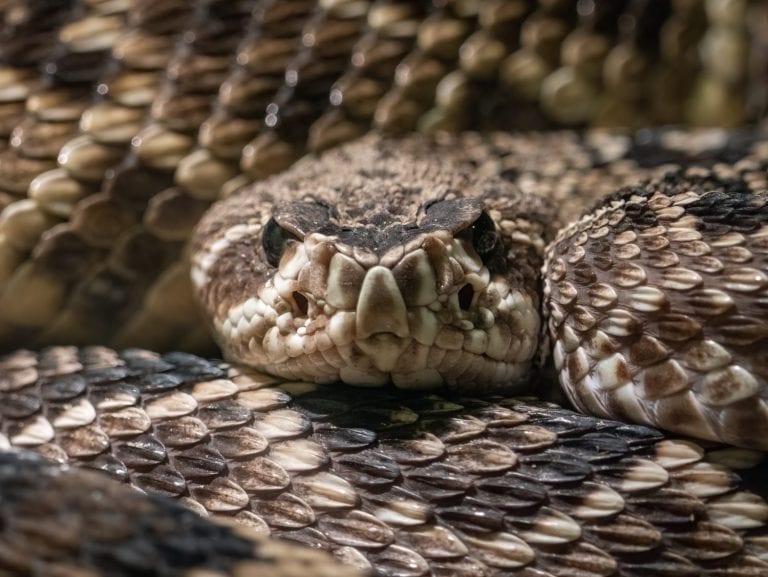
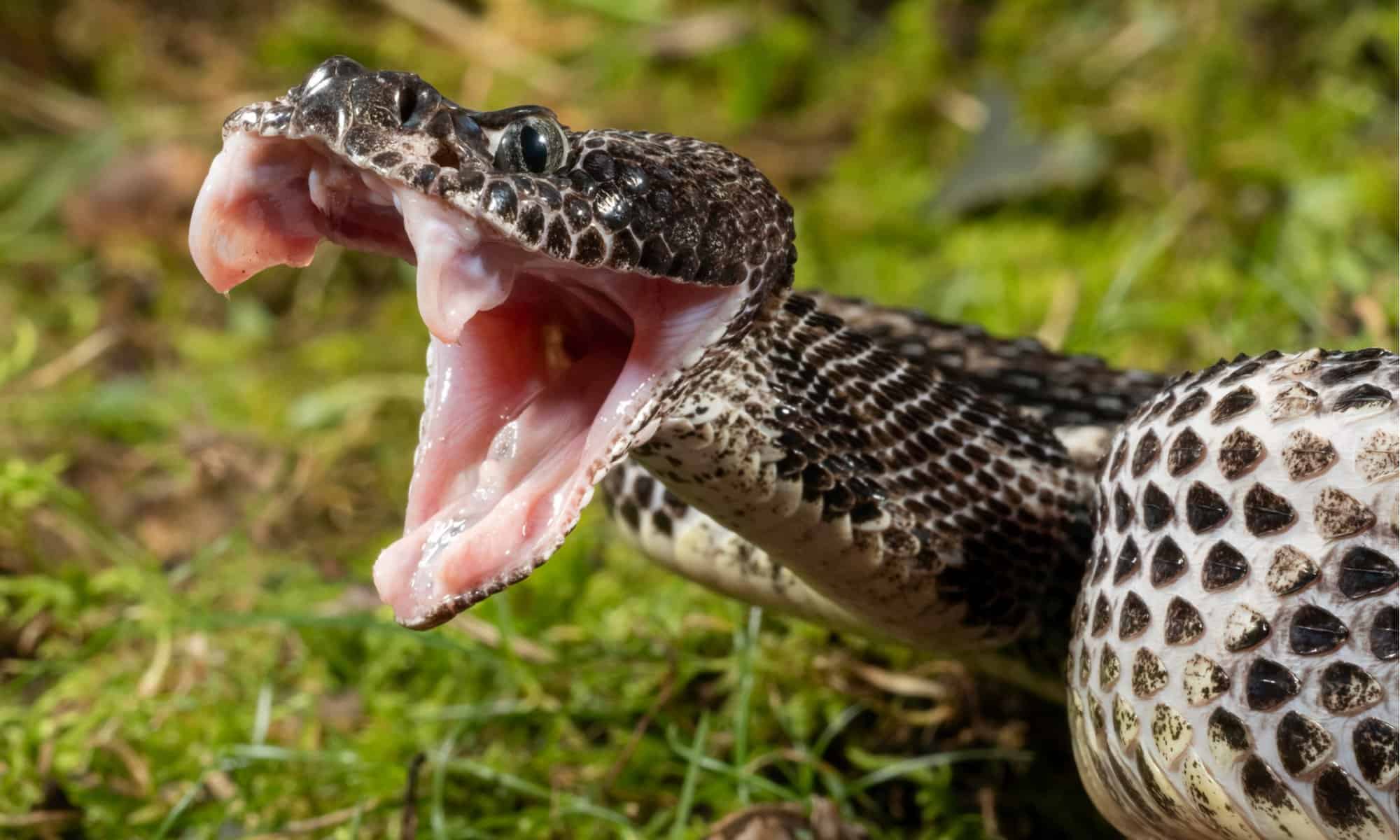
Timber Rattlesnake (Crotalus horridus)
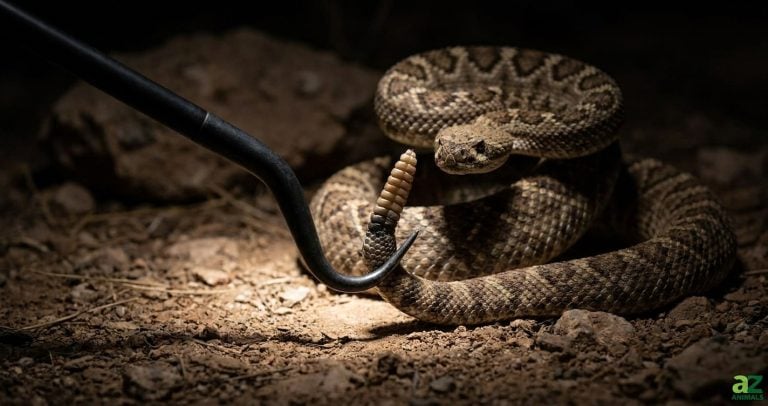
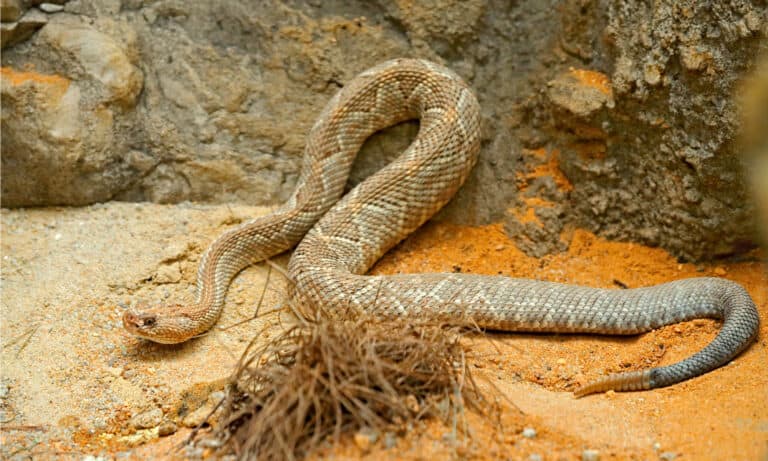
The timber rattlesnake is a three- to five-foot-long venomous pit viper native to Pennsylvania’s mountainous regions, including the rocky slopes bordering the Susquehanna River. It uses south-facing outcrops along the river valley for basking, hunting small mammals, and overwintering.
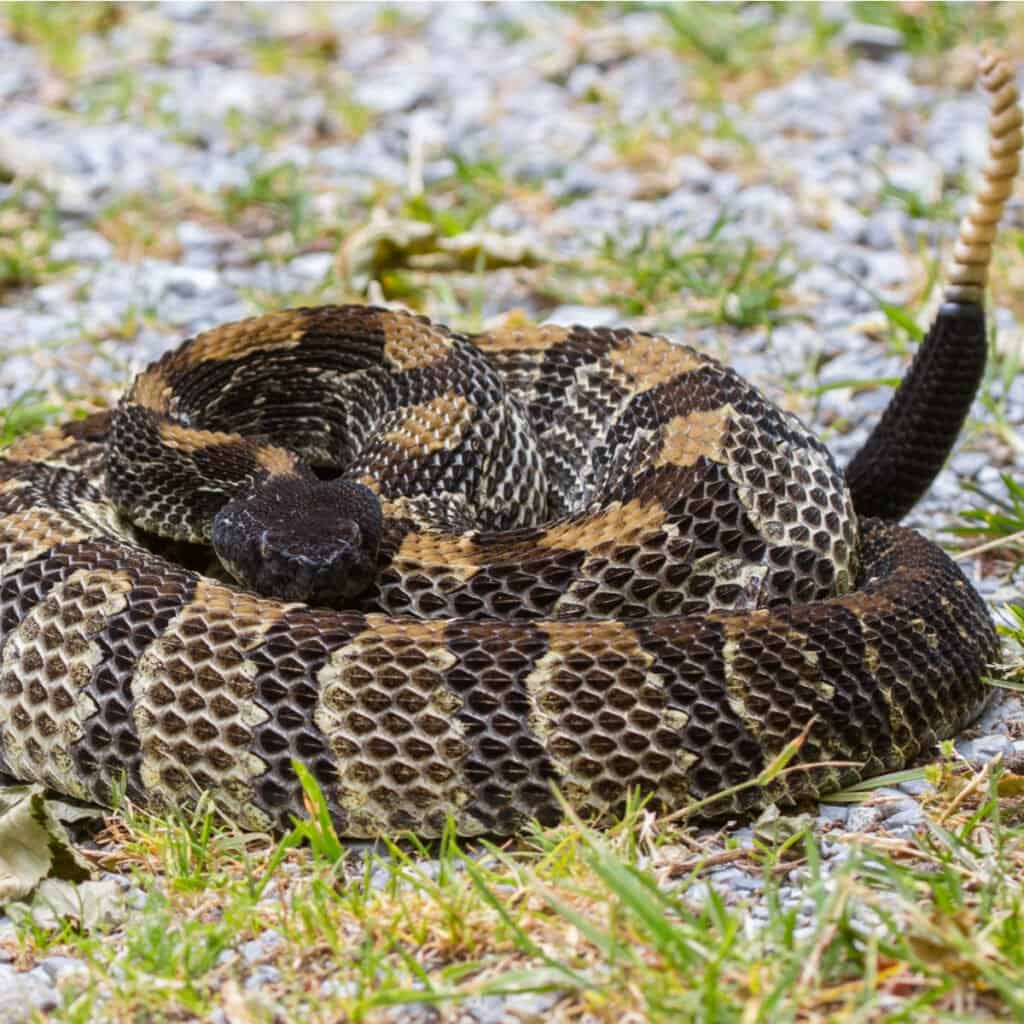
The venom of a timber rattlesnake is potent and can be life-threatening, but fatalities in healthy adults are extremely rare with prompt medical treatment.
©Frode Jacobsen/Shutterstock.com
The timber rattlesnake is facing significant population declines across its range due to habitat loss, human persecution, and a slow reproductive rate. While listed as a species of least concern globally by the IUCN, it is designated as endangered or threatened in most Northeastern U.S. states and has been completely extirpated in Maine and Rhode Island.