
Quick Take
- Crocodiles are considered living fossils because they haven’t changed much in millions of years.
- Crocodiles are cold-blooded reptiles with extremely efficient metabolisms.
- Crocodiles in captivity live longer than crocodiles in the wild.
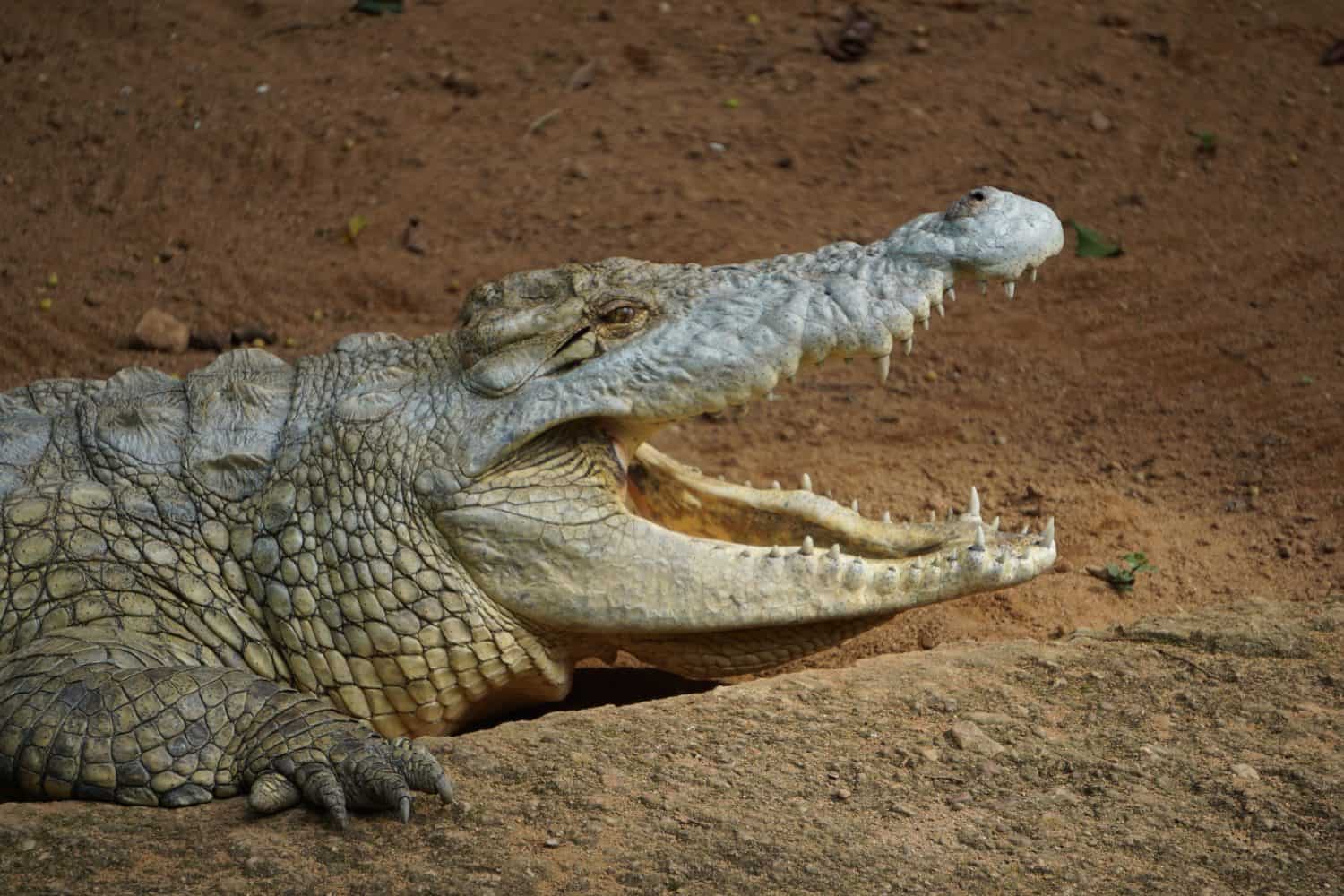
Crocodiles are ancient, semi-aquatic predatory reptiles that have thrived for over 200 million years, found in Africa, Asia, Australia, and the Americas. They are considered living fossils because their overall appearance and behavior have changed little over time. The order Crocodilia contains 26 living species, which are categorized into three families: true crocodiles, alligators and caimans, and gharials. Crocodiles are cold-blooded reptiles with armored skin, powerful tails, and an immense bite force. In the wild, crocodiles live 50 to 80 years, while captive crocs can live even longer. Continue reading to learn more about crocodiles and discover the world’s oldest crocodile.
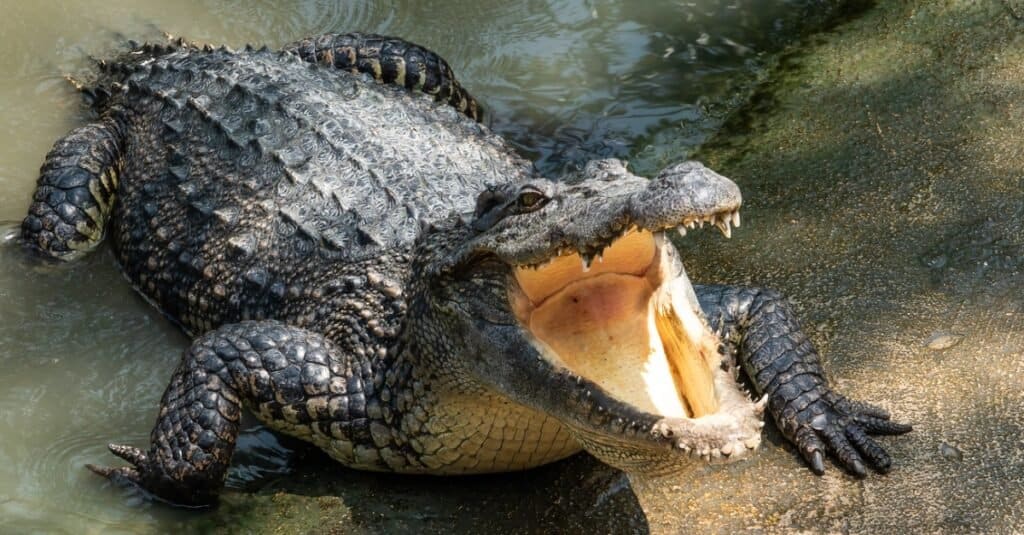
Crocodiles are exceptionally fast swimmers, capable of reaching burst speeds of 15 to 20 miles per hour (mph).
©AppleZoomZoom/Shutterstock.com
What is the Average Lifespan of a Crocodile?
Crocodiles are long-lived reptiles, with average wild lifespans ranging from 30 to over 70 years, depending on the species. Larger species typically live longer than smaller ones. Crocodiles exhibit indeterminate growth, meaning that they continue to grow throughout their lives, rather than stopping at a certain age. While they grow rapidly when young, their growth rate slows significantly as they age, but it never completely stops. As they age, crocodiles experience slower biological growth and tooth wear or loss, often dying from starvation, disease, or injury.
Like many animals, those in captivity have longer lifespans than those in the wild. Captive individuals can live for over 100 years due to a lack of predators, consistent food, and veterinary care.
The crocodile’s highly efficient metabolic processing is directly responsible for its remarkable longevity. Their longevity is further supported by their ability to survive for months without eating by storing fat in their tails and drastically slowing their metabolism.
How Old was the Oldest Crocodile on Record?
Although it is notoriously hard to accurately determine how old a crocodile living in the wild is, measuring growth rings on bones and teeth is how wild crocodile ages are estimated. This method is the best measure of a crocodile’s true age, but it is not an exact science, because fluctuations of wet and dry seasons cause irregular growth.
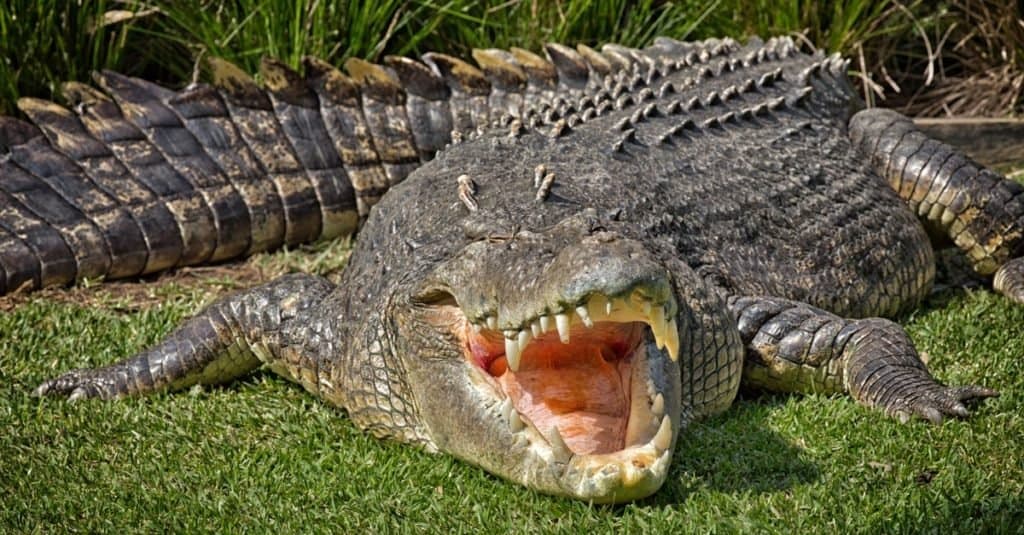
Saltwater crocodiles have lifespans of 60-70 years.
©PomInOz/Shutterstock.com
The oldest crocodile on record was Mr. Freshie, a freshwater crocodile (Crocodylus johnstoni)that lived to be 140 years old. Mr. Freshie lived at Australia Zoo on the Sunshine Coast from 1970 until he died in 2010. He was originally captured in 1970 by Bob and Steve Irwin (the Crocodile Hunter) after being shot by hunters, and was then transported to the Australia Zoo for medical care.
Despite sustaining severe wounds, Mr. Freshie recovered and lived at the zoo until he passed away peacefully in 2010. Although he spent only forty years in captivity, it is estimated that Mr. Freshie was already 100 years old when he was captured, making him 140 years old at the time of his death. If this estimate is accurate, Mr. Freshie would have been born in 1870, just five years after the American Civil War and seven years before Thomas Edison demonstrated the first phonograph at the offices of Scientific American.
The world’s oldest still living crocodile is a Nile crocodile (Crocodylus porosus) named Henry. named Henry. As of 2026, Henry was reported to be 125-126 years old and lives at the Crocworld Conservation Centre in South Africa, where he has lived since 1985.