
Quick Take
- What looks like a cottonmouth charging at you might actually be something else entirely. See what's really charging →
- Cottonmouth venom destroys tissue, but Louisiana's bite statistics tell a story most people won't expect. Check Louisiana's bite record →
- A juvenile cottonmouth uses its tail not for rattling but for luring. See juvenile hunting behavior →
- Science has put cottonmouth aggression to a direct test, and the results contradict almost every campfire story ever told. See the scientific evidence →
The cottonmouth snake (Agkistrodon piscivorus) takes its name from the interior of its mouth, which is white like cotton. Cottonmouths bask on logs and branches during the day and hunt at night. Cottonmouths are heavy-bodied snakes that are typically found near water. In Louisiana, cottonmouths are primarily found in swamps and bayous. Continue reading to discover when cottonmouths are most active in Louisiana.
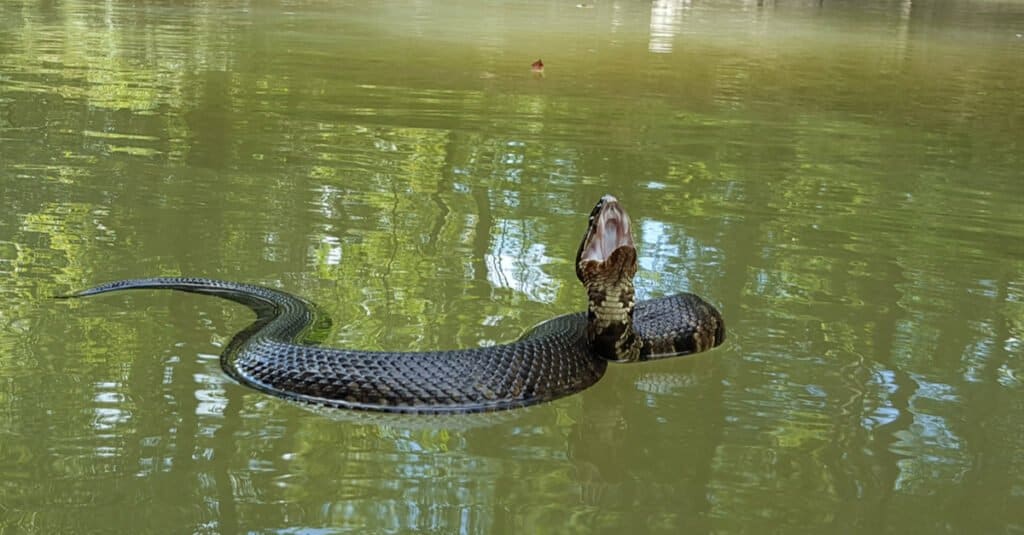
Also called a water viper or a water moccasin, cottonmouths can reach lengths of up to six feet.
©Seth LaGrange/Shutterstock.com
What Does a Cottonmouth Look Like?
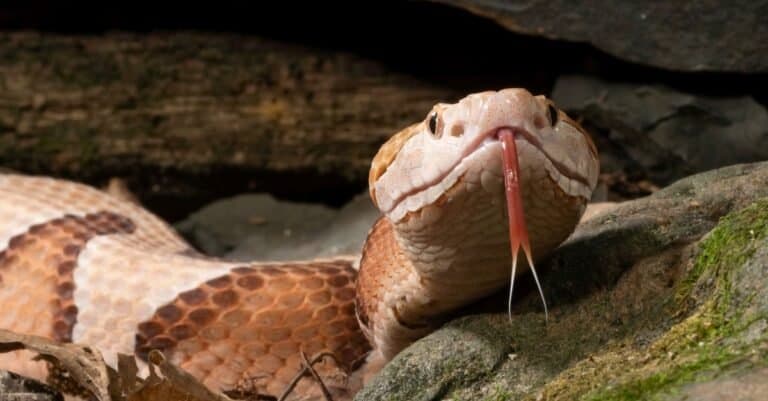
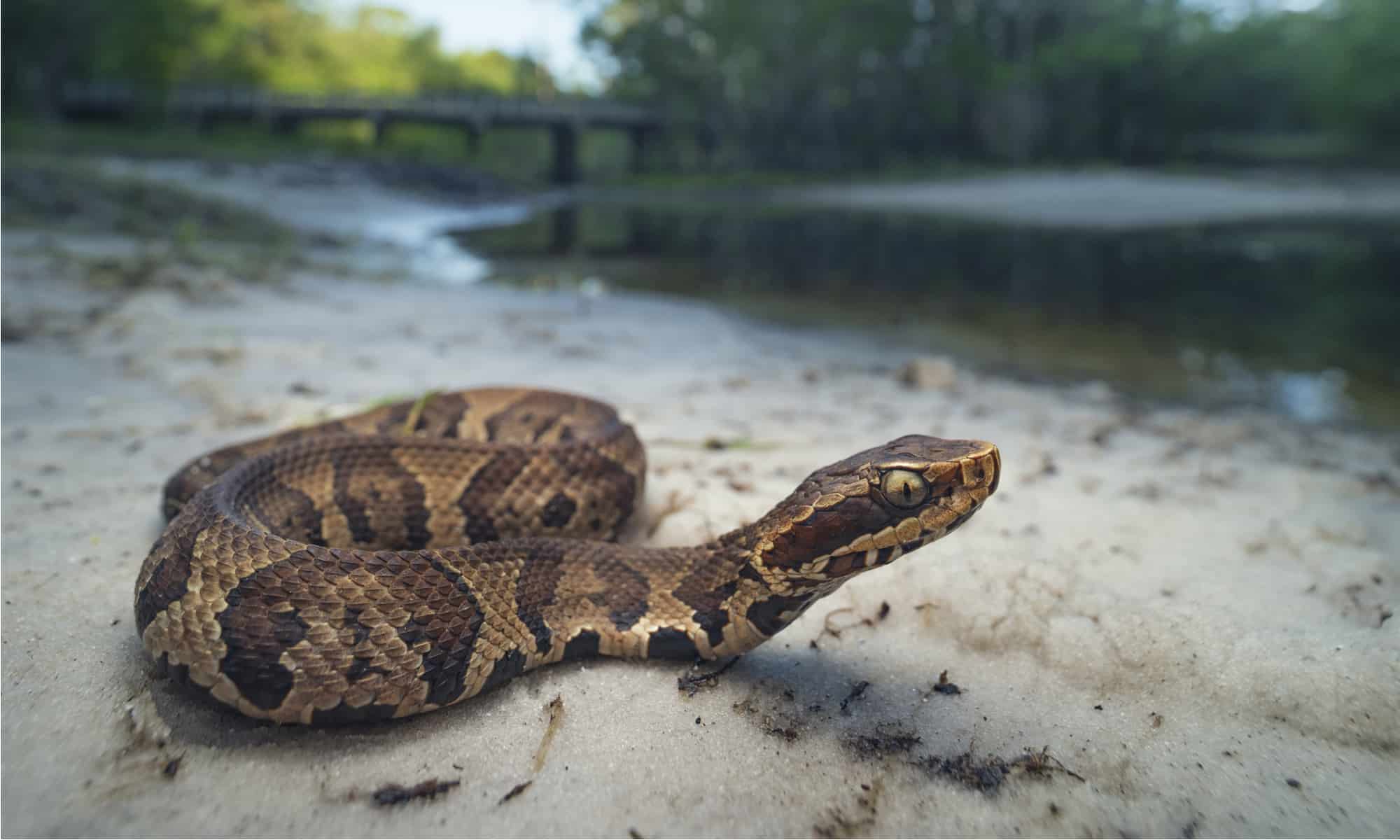
The cottonmouth is a heavy-bodied pit viper with a triangular head. Mature cottonmouths have dark brown, olive-brown, or solid black scales, while juveniles exhibit vivid crossbands and a signature bright yellow or greenish tail tip. These patterns darken and fade into uniform black as the snake matures.
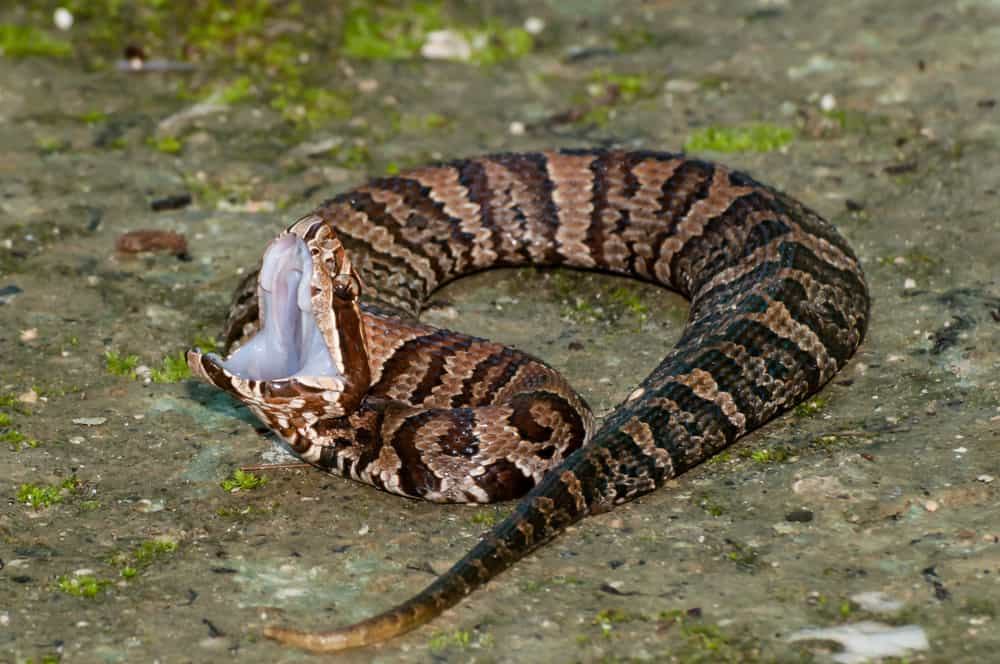
Juvenile cottonmouths are more vividly colored than mature cottonmouths.
©Jay Ondreicka/Shutterstock.com
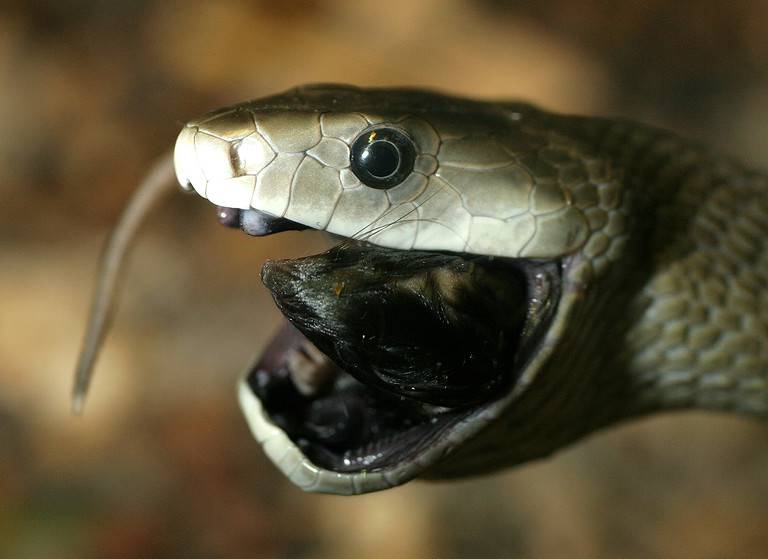
The name cottonmouth is derived from the cotton-white lining of their mouth, which they flash as a defensive warning. The cottonmouth displays strong sexual dimorphism, in which males are significantly larger and up to three times heavier than females.
Where Do Cottonmouths Live?
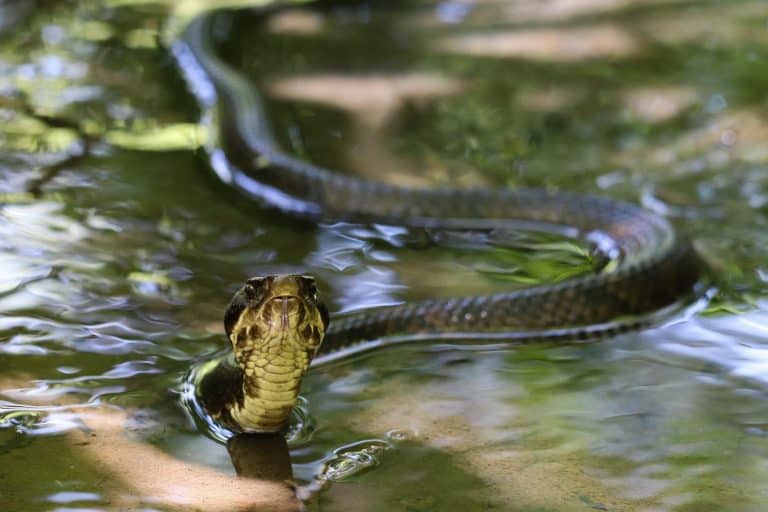
Cottonmouths are semi-aquatic snakes that rarely venture far from the water. They are strong swimmers and spend most of their time in water or resting on low branches, logs, or muddy banks at the water’s edge.
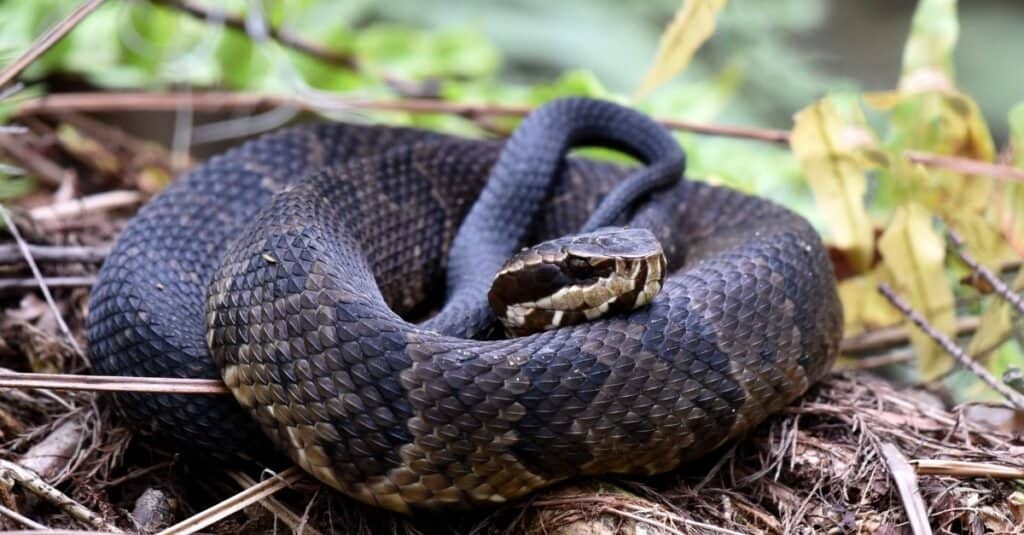
Cottonmouths are semi-aquatic snakes.
©Rini Kools/Shutterstock.com
While adult cottonmouths rarely stray far from water, juveniles are known to venture farther inland across dry ground, where they remain primarily stationary. Juvenile cottonmouths shake their brightly colored tails to attract prey instead of actively hunting. Staying hidden is crucial to their survival, as young snakes are vulnerable to predators such as hawks, owls, herons, egrets, snapping turtles, and alligators.
Are Cottonmouths Aggressive?
Although urban legends portray the cottonmouth as a frightening, slithering beast, years of scientific data suggest that cottonmouths are docile, slow-moving snakes that will only attack humans as a last resort.
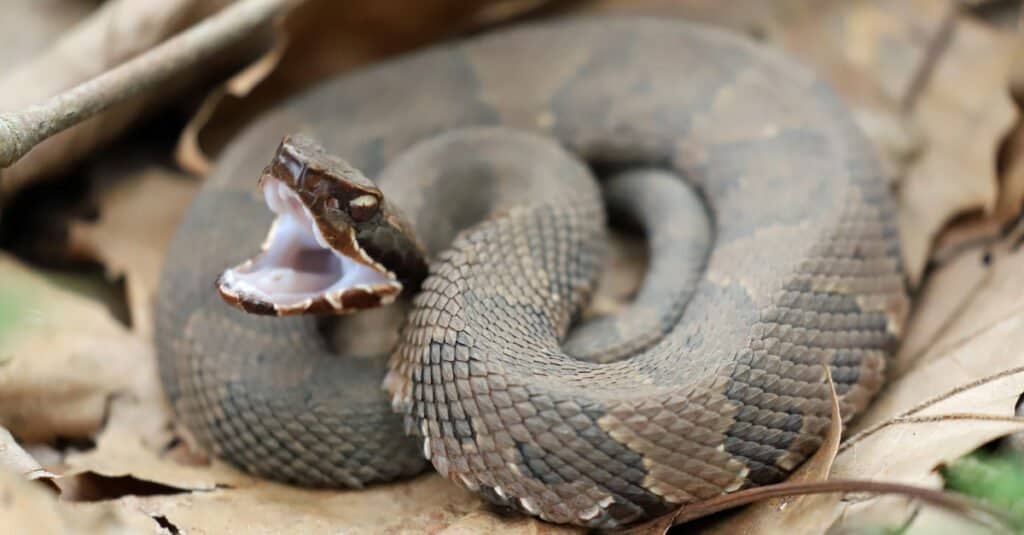
Cottonmouths are responsible for fewer than 1% of fatal snake bites in the United States.
©KF2017/Shutterstock.com
Contrary to popular belief, cottonmouths are not aggressive and will never actively hunt or chase humans. They are docile, slow-moving snakes.
Misunderstandings occur when a startled snake flees toward its escape route or swims toward a boat looking for a place to rest, actions that are often misinterpreted as an attack.
However, a cottonmouth’s primary defensive response is to coil up and flash its white mouth as a warning. An oft-cited study determined that cottonmouths will always choose flight over fight. In the study, no cottonmouths attempted to bite until they were physically restrained.
Are Cottonmouths Venomous?
The cottonmouth has potent, cytotoxic (tissue-destroying) venom. Despite the severity of their bite, which can cause swelling, pain, and necrosis (tissue death), cottonmouth bites are rarely fatal to healthy adults.
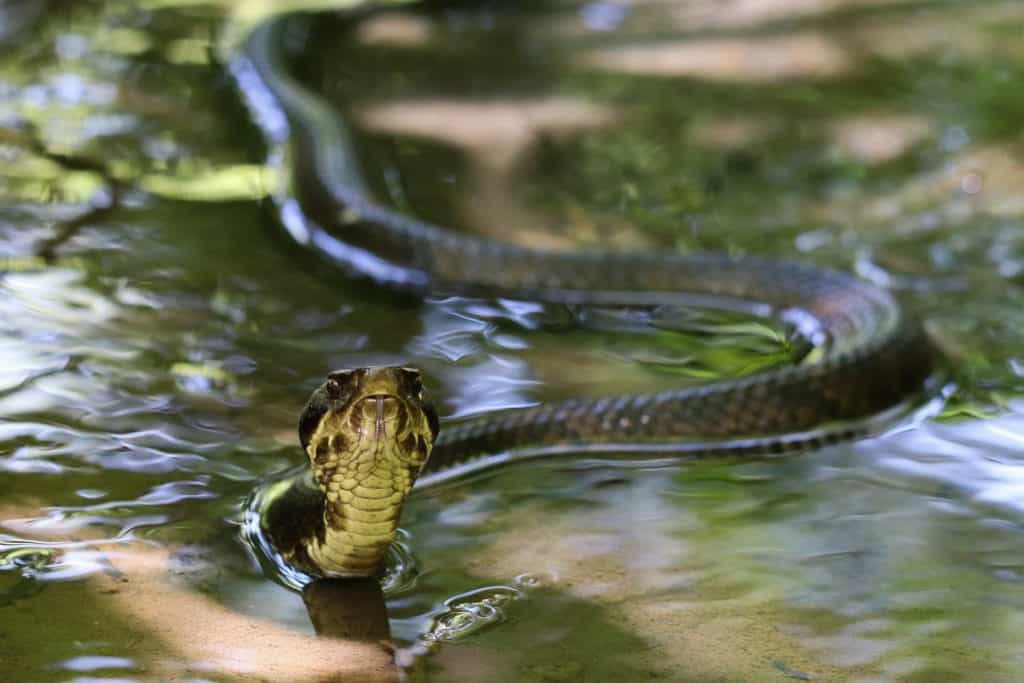
Although cottonmouths have potent venom, no fatalities have been recorded in Louisiana in at least 75 years.
©Rafael R Sandoval/Shutterstock.com
Louisiana averages 334 venomous snake bites per year across all of its native venomous species. Detailed toxicological and medical records confirm that there have been no fatalities from cottonmouth bites within the state for decades.