
Quick Take
- Forest cobras are known for aggressive strikes and venom that shuts down the immune system, yet the fishermen living among hundreds of them have never recorded a single deadly bite. How can that be? See the zero-bite mystery →
- These cobras behave completely differently on this island than anywhere else in Africa, and the reason challenges what we assume drives animal aggression. Discover the unusual cobra behavior →
- The island's name is a clue to why these deadly snakes are untouchable, and this fact has quietly shaped a conservation outcome no formal policy could replicate. Explore the sacred taboo effect →
- The cobras also act as uninvited security guards against other snake species, though not in any way the fishermen planned or control. Meet the island's snake guards →
Many Indigenous groups attribute spiritual significance to natural areas and species. This has been going on for millennia and includes sacred trees and animals. Deadly predators, including venomous snakes, frequently appear in folklore, and fear of snakes (ophiophobia) is a common human experience. Recent ethnobiology studies examine how cultural beliefs can lead to broad conservation ethics. We examined the relationship between some Ugandan fishermen and the deadly cobras they share an island with.
Introducing the Musambwa Islands
The Musambwa Islands are located in Lake Victoria, Uganda. It takes about 1.5 hours to reach the islands by boat from the Rakai District. The largest of the rocky islands covers 2.5 hectares and is the only one that is inhabited. It has been designated as an Important Birding Area (IBA) by Birdlife International and is home to gray-headed gull colonies, cormorants, egrets, herons, kingfishers, and pelicans, to name just a few avian species.
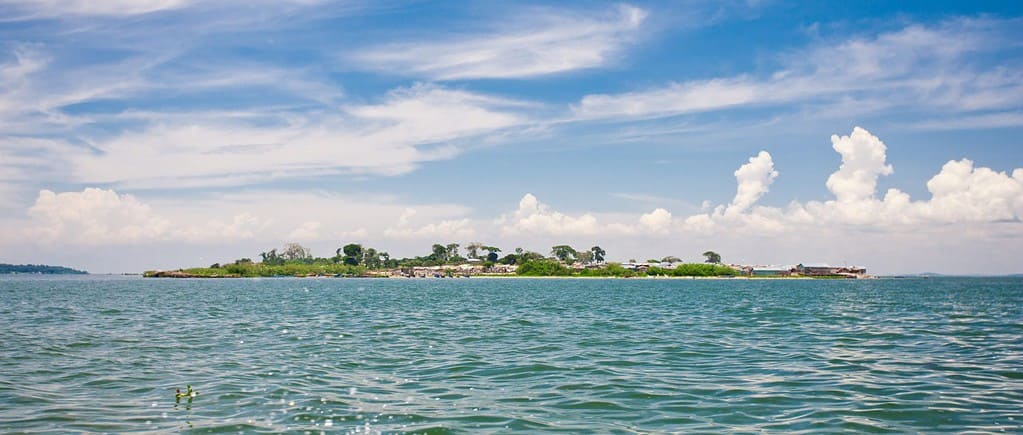
Musambwa Islands are in Lake Victoria.
©Travel Stock/Shutterstock.com
It is also home to approximately 100 resident fishermen and about 1,000 forest cobras!
About Forest Cobras
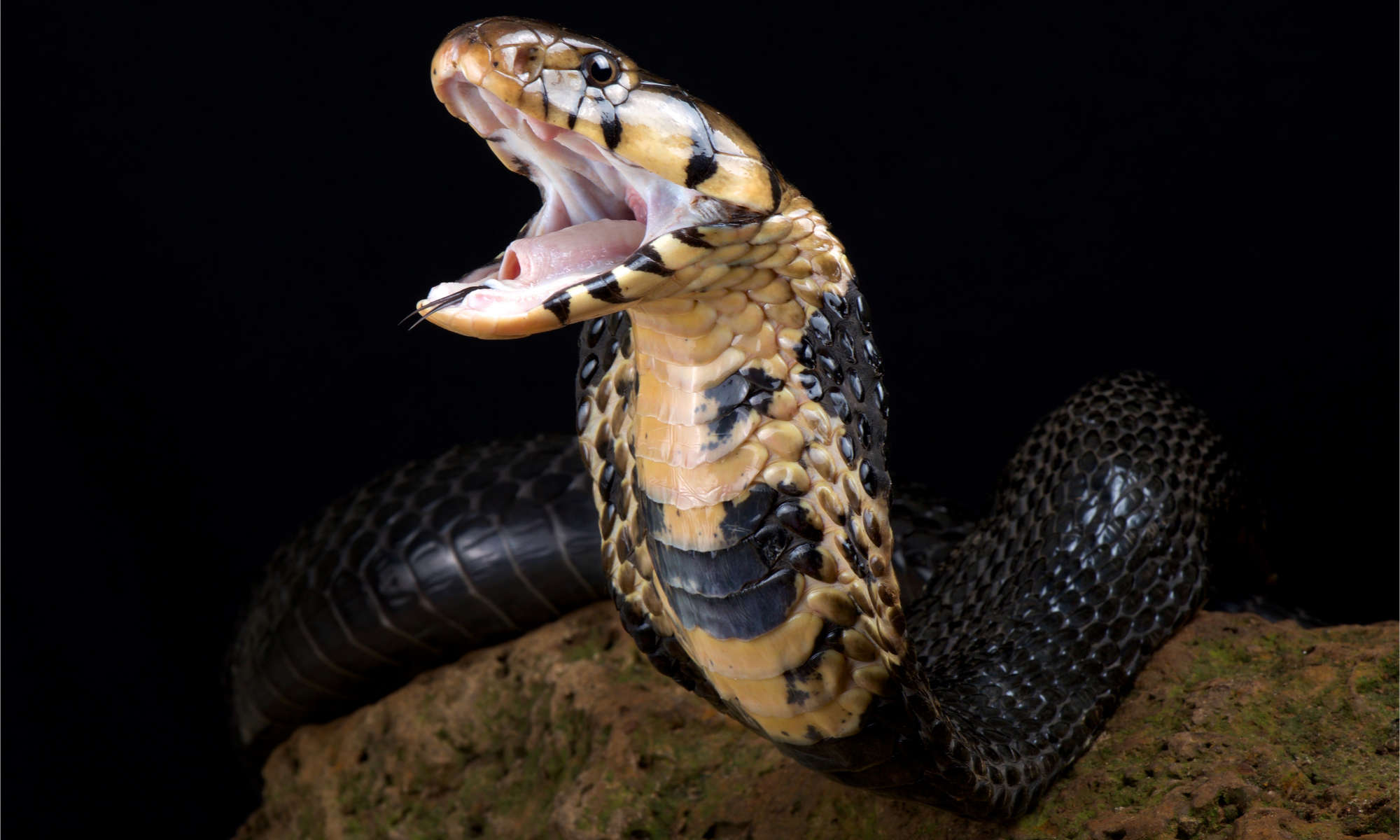
Forest cobras (Naja melanoleuca) are found in forests and shrublands throughout most of sub-Saharan Africa. There are actually five species within the forest cobra group. They are frequently found around human habitats. As their natural habitats are being destroyed, they are occasionally found in urban areas.
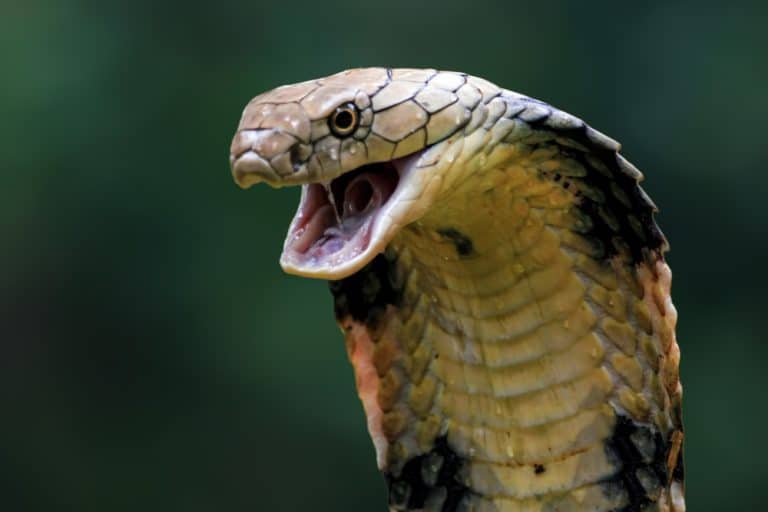
These are large snakes that can reach nearly 9 feet in length with thick bodies, large heads, and black and white markings. Colors vary with geographical location. They are semi-aquatic and prefer to live near water. On Musambwa, they feed on birds (and their eggs), frogs, and other snakes.
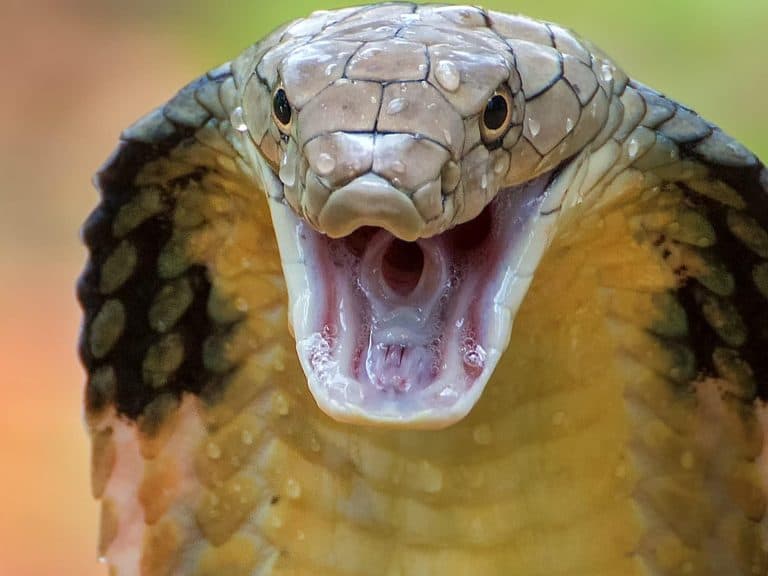
When threatened, these snakes expand their hood and lift the front part of their body from the ground so they look larger. If these defensive measures do not deter the threat, they will bite, which has earned them a reputation as highly aggressive snakes. They can strike over a large distance and at speed. The cobras deliver a post-synaptic neurotoxic venom that also impairs the victim’s immune response and prevents platelets from aggregating, acting as an anticoagulant. Victims may suffer nausea and vomiting, drooping eyelids, increased heart rate, and neurological effects. The venom can be deadly.
These cobras can also deliver ‘dry bites,’ where they pierce the skin without injecting venom. This allows them to scare off threats without wasting their venom.
What is the Relationship Between Musambwa Fishermen and Cobras?
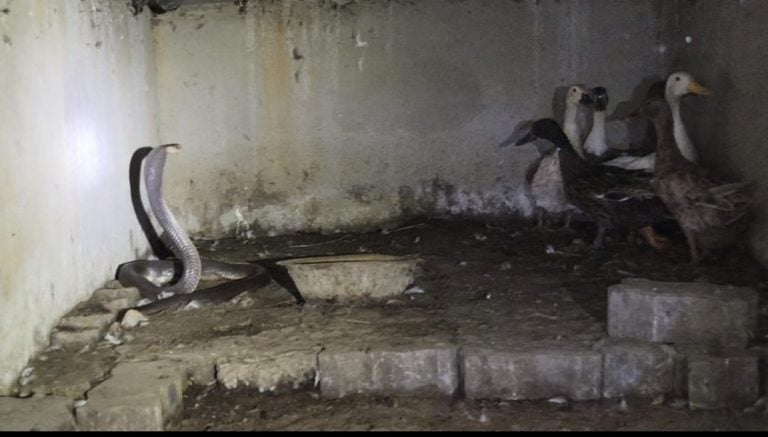
The cobras that live on Musambwa are unique. They do not display the usual defensive behaviors and regularly move around human dwellings and other buildings. Despite this close contact, no fatal bites have been recorded. Because these cobras hunt other snakes, they may have prevented other snake species from becoming established on the island.
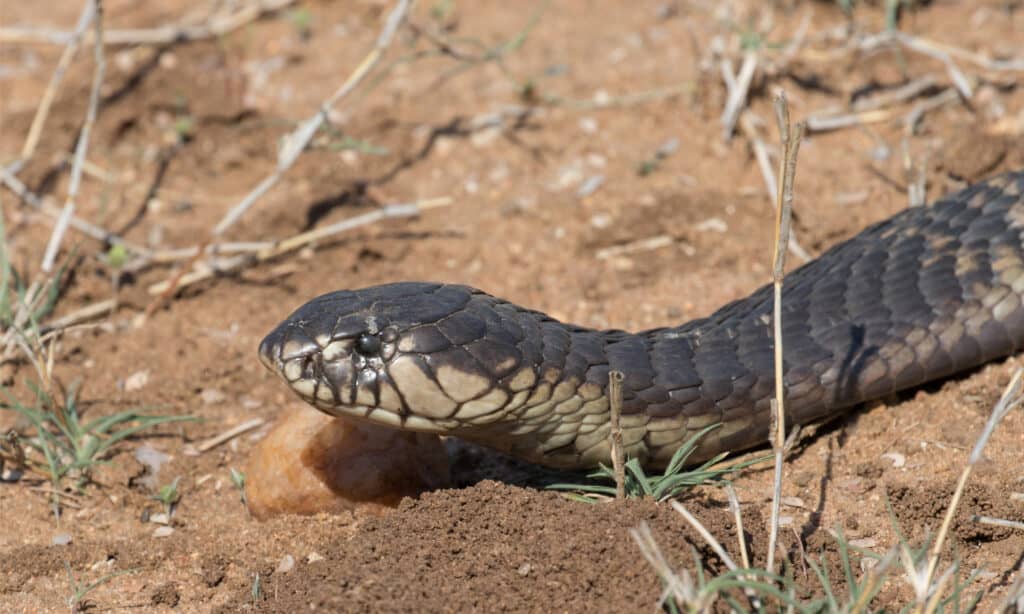
Forest cobras on Musambwa do not deliver venomous bites.
©iStock.com/Ken Griffiths
The island is inhabited by fishermen. Women’s access to the island is restricted, and they can only disembark there under certain conditions. They are not permitted to sleep on the island. Members of the Musambwa fishing community have been interviewed in detail for a study by Florida International University and Makerere University. The study clearly showed that the fishermen regarded the cobras as sacred.
The researchers found that snakes on Musambwa are not persecuted and therefore do not see humans as a threat. One dry bite has been recorded and took place when a fisherman was chasing a rat! The fishermen are usually afraid of snakes, but not when they are on the island.
Mutual Respect
The snakes on Musambwa are considered by the fishermen to be divine beings. Even the name ‘Musambwa’ translates to ‘god’ or ‘spirit’ in the native Luganda language. It is forbidden to harm the snakes on the island. The snakes’ lack of aggression may also be related to the abundance of food. With so many bird colonies on the island, there is a plentiful supply of eggs.
Interestingly, only cobras are sacred. If other snakes, such as pythons or vipers, arrive on the island, the cobras chase them off! The fishermen’s attitude towards birds is also highly respectful. They do not harass the birds and believe that harm will come to those that do.
The chairman of the fishermen had been fishing for 20 years. Although he lived in Kampala on the mainland, he spent most of his time on the island. He was involved in setting up the Musambwa Island Joint Conservation Project, which aims to protect the island’s precious wildlife.
Future Challenges
There have been occasional tensions between local Ugandan fishermen and Tanzanian fishermen over fishing rights. The local fishermen also face financial hardship when fish stocks move to deeper waters between June and October.
The future of this area may include small-scale tourism, but it would need to be managed cooperatively by the fishermen. Tourism to Musambwa would likely appeal to bird enthusiasts and those interested in local spiritual beliefs.
Most importantly, visitors to the island would need to be educated about local taboos and beliefs regarding birds and snakes.