
You may find snakes fascinating or terrifying but no matter which camp you’re in, you should know more about the venomous snakes in your state. Discover when the North Carolina copperheads are most active and learn that although they’re dangerous, they’re not out to get you.
What Are Copperheads?
Copperheads are venomous snakes that have heavy bodies and right upon hatching, they are ready and able to inject their deadly venom. Their fangs are completely functional, and the toxicity isn’t muted just because they’re just hatched — they possess venom that is just as toxic as their adult counterparts.
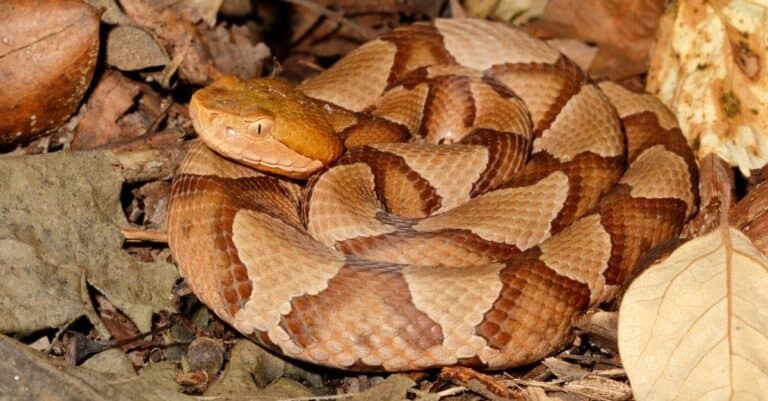
Although copperheads pose a danger to humans, it’s not because they’re aggressive and actively looking to hurt you. They camouflage so well that you may accidentally step on one, and it’s those instances that cause the copperhead to bite and defend itself against what it perceives as an aggressive predator.
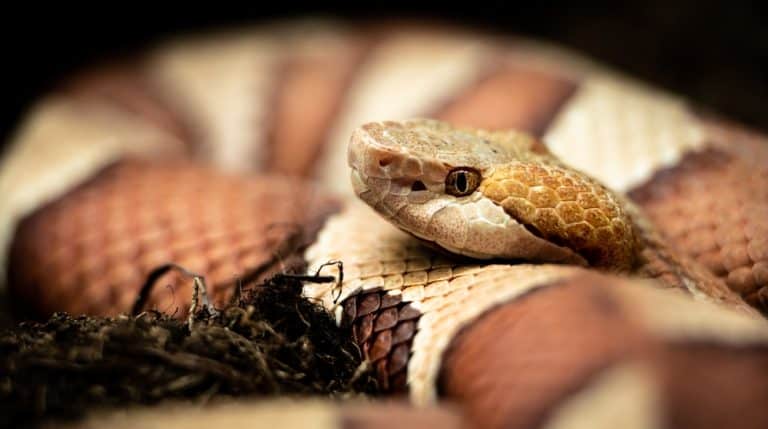
The copperhead’s scales are keeled, and their bodies have a reddish-brown color that can be described as coppery. They have bands on their bodies that look a lot like hourglasses but that are also commonly referred to as Hershey’s Kisses because of the outline they form. When juvenile, the copperhead has a slightly different coloration than adults. It appears grayer and has a notable yellowish, sulfur-like tail that it keeps for about one year.
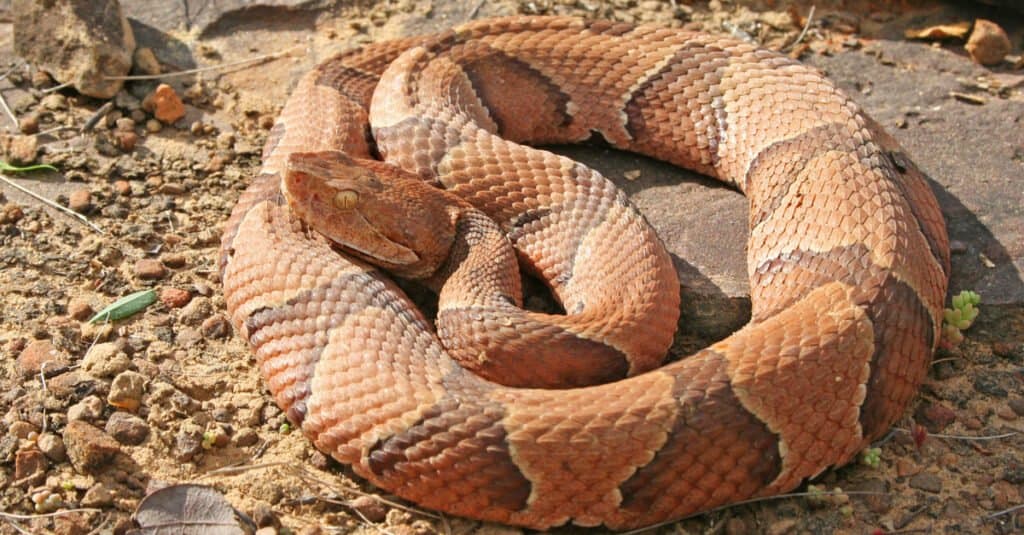
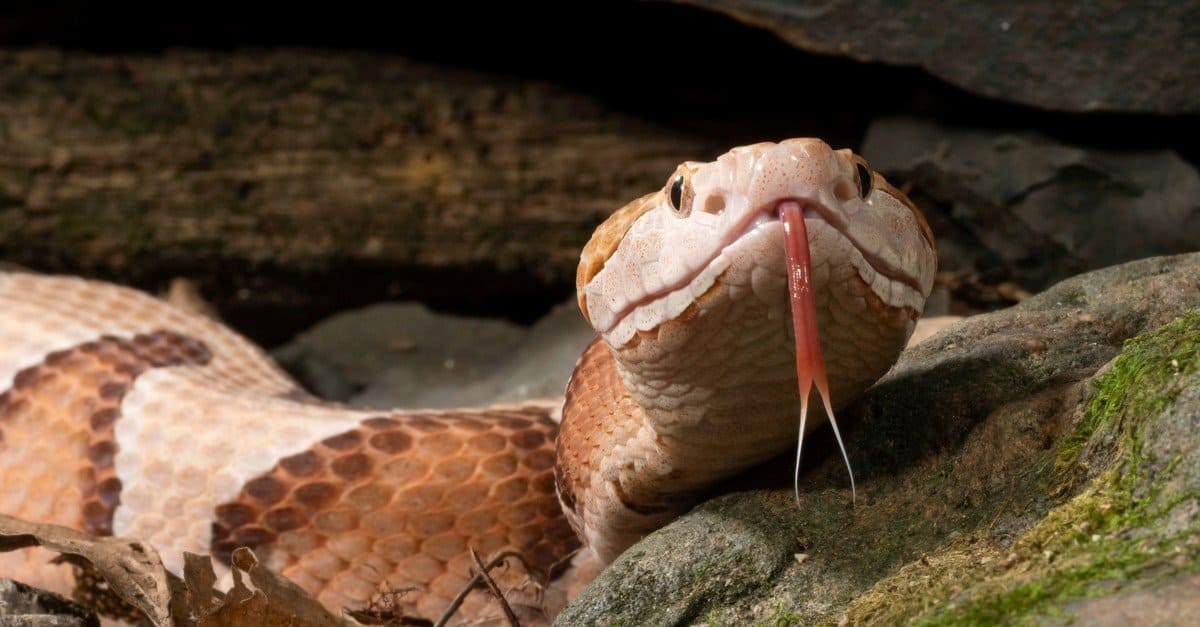
The Copperhead’s scales are keeled, and their eyes have vertical pupils that make them resemble cat’s eyes.
©Creeping Things/Shutterstock.com
Are Copperheads Dangerous?
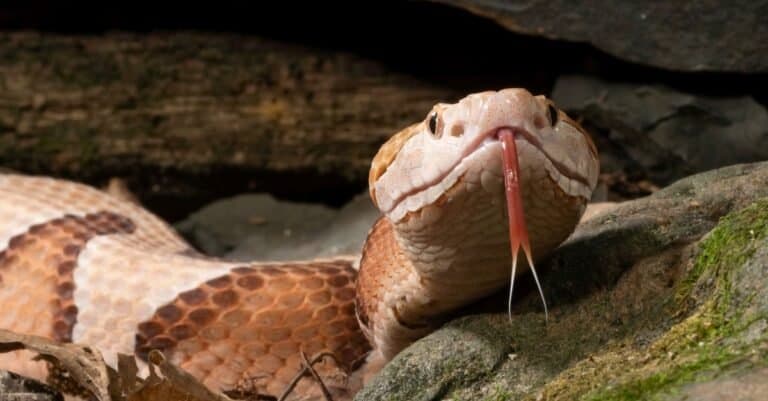
Copperheads have fangs even after hatching, fully equipped to deliver venom. The size of their fangs differs, however, depending on their size. The longer the snake, the longer its fangs. The venom they employ and use on their prey is hemolytic, meaning it breaks down their prey’s red blood cells. If a copperhead bites a human, immediate medical attention is a must.
The resulting symptoms include redness and swelling around the bite area as well as pain that most describe as severe. The site of the bite tends to be tender and additional symptoms may include nausea, vomiting, and diarrhea. Breathing may be short and labored, and if the case is extreme, a person may stop breathing completely. When there’s an allergic reaction, prompt medical attention becomes lifesaving.
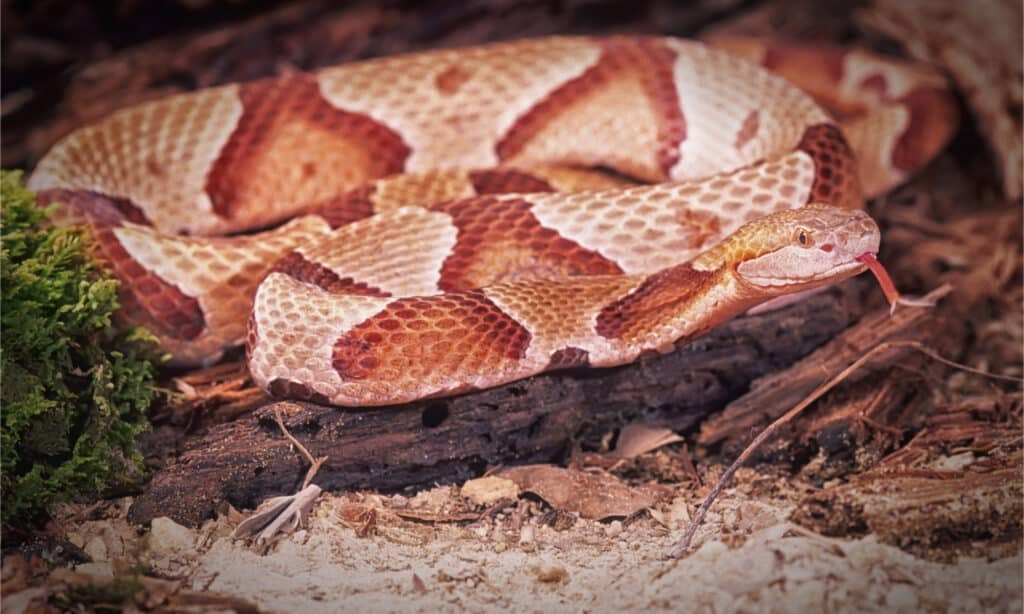
Copperheads have fangs even after hatching with the size of their fangs depending on their size.
©outdoorsman/Shutterstock.com
When Are North Carolina Copperheads Most Active?
Starting in spring through fall, those in North Carolina should keep a keen eye out for copperheads. It’s not because they’re out to get you; it’s because they’re out and about and you may accidentally step on one! When the weather is hot, they’re nocturnal so keep a bright flashlight handy if you have to head out, especially in grassy areas. Baby copperheads emerge in the later part of the summer season, usually around August but as late as early October.