
When you think about animals chasing their tails, you probably think of a dog first, running in a circle in a cartoonish way, hyperfocused on capturing their own tail. However, if you have spent enough time around cats, you know that they, too, can partake in this silly-looking habit. Here, we discuss what exactly causes cats to chase their tails.
Sometimes, cats communicate things through their behaviors.
©savitskaya iryna/Shutterstock.com
Why Do Cats Love to Chase Their Tails?
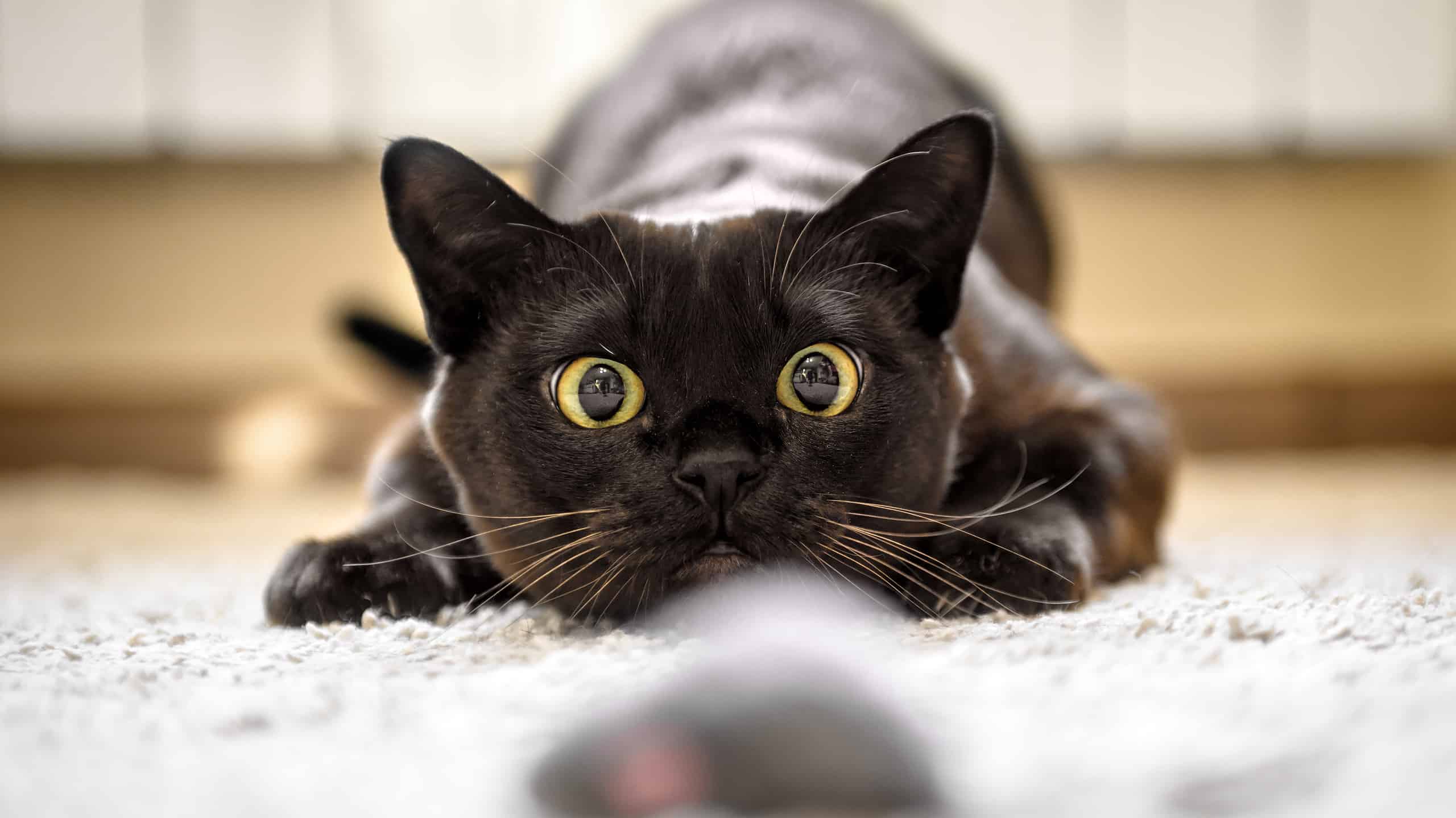
Cats are natural-born hunters; often, having a cat as a pet can feel like having your very own tiny tiger living with you! A cat’s energy level and urge to hunt prey can depend a lot on the age and breed of your furry friend. For example, young kittens typically have high energy levels, resulting in them pouncing on and chasing every moving thing. Additionally, breeds like Bengals are very closely linked to wild cats, and primal instincts like hunting may be quite strong. While there can be varying reasons for your cat to chase their own tail, the most common reason is that they are feeling particularly playful and have the urge to practice hunting. When they see something (in this case, their tail) move out of the corner of their eye, their natural instinct is to chase it.
Your Cat Might Just Be Bored
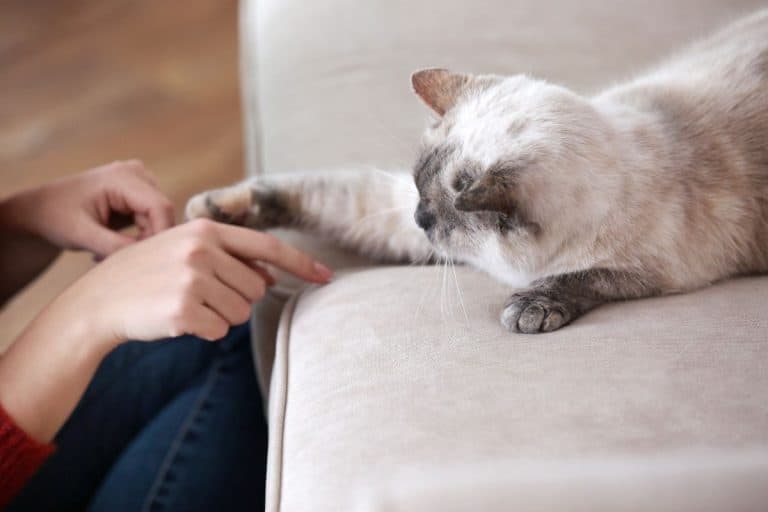
If you see your cat playfully chasing their tail on the regular, it might also mean that they are just trying to get their playful energy out! Think about how and how often you engage in play with your pet and consider adding more playtime into their daily routine. There are all sorts of ways for you to help your cat get their pent-up energy out, whether it’s getting them to chase around a feather teaser or using a laser pointer to get them to jump up on the walls! Playing with your cat is a great way to build a bond with them and will likely keep any of their boredom at bay.
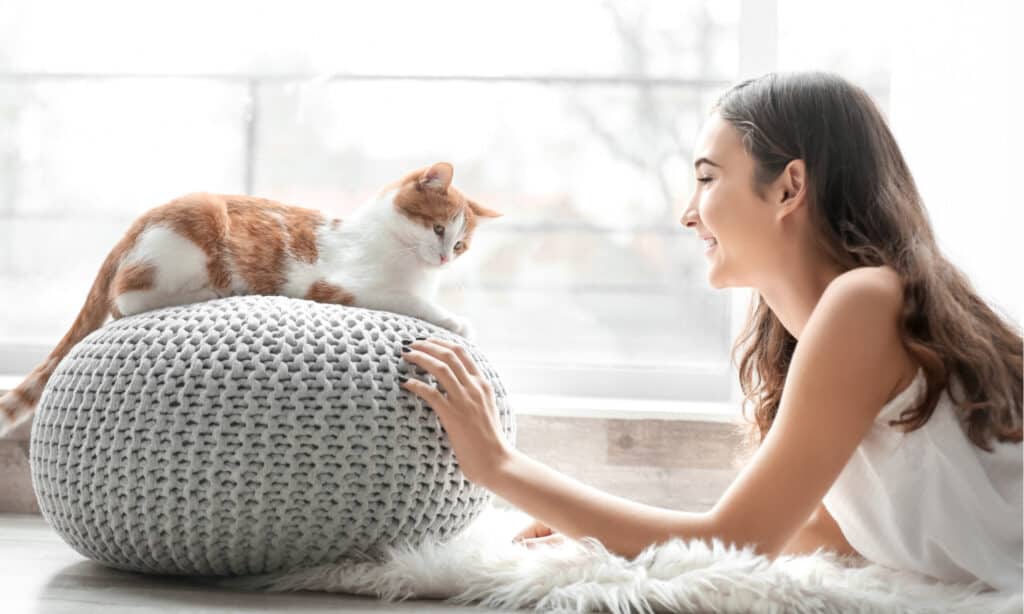
It’s important to take time to play with your cat.
©Africa Studio/Shutterstock.com
Things to Look Out For
Although cats chasing their tail is typically a harmless and momentary activity, in some cases, this habit can be a result of other issues. If you notice your cat repeatedly chasing their tail multiple times a day, or if you catch them starting to bite on their tail, talk to your veterinarian about these possible causes.
OCD (Obsessive Compulsion Disorder)
Like us, our feline friends can sometimes develop obsessive habits that are difficult to control. Behaviors such as overgrooming, biting their skin, or consistently chasing their tail can be a compulsion due to them experiencing stress or anxiety.
Allergies
If you notice your cat constantly trying to get a hold of its tail to lick or gnaw on it, it could be a sign of allergies. When cats are experiencing an allergy to a particular food or other item in their environment, their skin, especially on their tails, will tend to get dry and itchy. If your cat is experiencing itchiness, it’s important to talk to your vet about any potential allergies or fleas.
FHS (Feline Hyperesthesia Syndrome)
This medical condition is not super common but might be worth looking into if no other possibilities seem to be the answer for your cat’s tail-chasing behavior. Cats with FHS feel a type of tingling sensation in their back and their tails. In an attempt to get this feeling to stop, cats will routinely chew and overgroom their tails.
Can Cats Feel Their Tails?
If you’ve ever seen a cat’s tail moving around, you might think that it has a mind of its own! However, cats are very aware of their tails and can feel them. Many cat’s tails are ultra-sensitive, and these cats will surely let you know if they don’t want their tail touched!
Do Cats Communicate With Their Tails?
Although we may not speak the same language, we can tell much about how a cat feels if we pay close attention to their tail movements. Cats use their tail as a way to communicate with other cats and humans. Often, if a cat’s tail is held high with soft back-and-forth movements, they feel happy, interested, and alert. However, if you notice a cat’s tail kept low and aggressively moving side to side, it could indicate that they are angry, scared, or annoyed, especially if their tail looks extra poofy!