
Cats are beloved companions to millions of people around the world. But do cats catch colds? Let’s learn more about this subject in detail.
Do Cats Catch Colds?
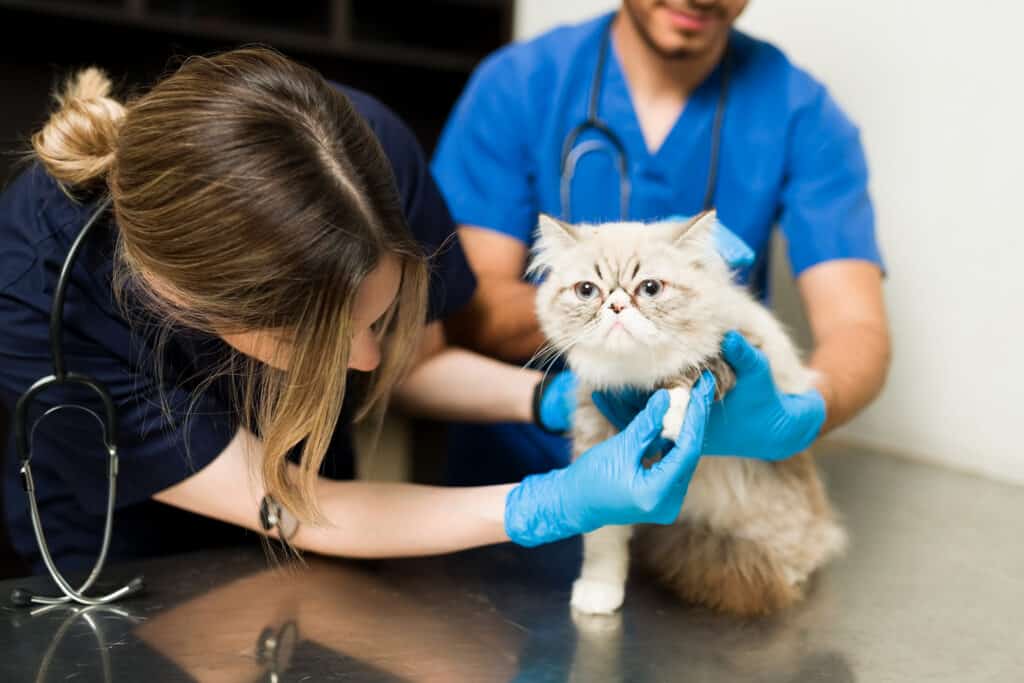
Cats catch colds just like humans do. They show very similar symptoms, too.
©Beach Creatives/Shutterstock.com
Do cats catch colds like humans do? Yes! A cold is an upper respiratory infection, and cats are just as susceptible to them as humans are. They even have the same ‘cold season’ in the fall and winter as we do.
The good news is that most cat colds are not seriously life-threatening. However, there are a few symptoms that you should look out for that are danger signs of a secondary or worsening infection. These are especially dangerous to elderly cats or kittens or cats who have not had their vaccines yet. If you have a cat with a chronic illness or a suppressed immune system, be especially mindful.
How Do Cats Catch Colds?
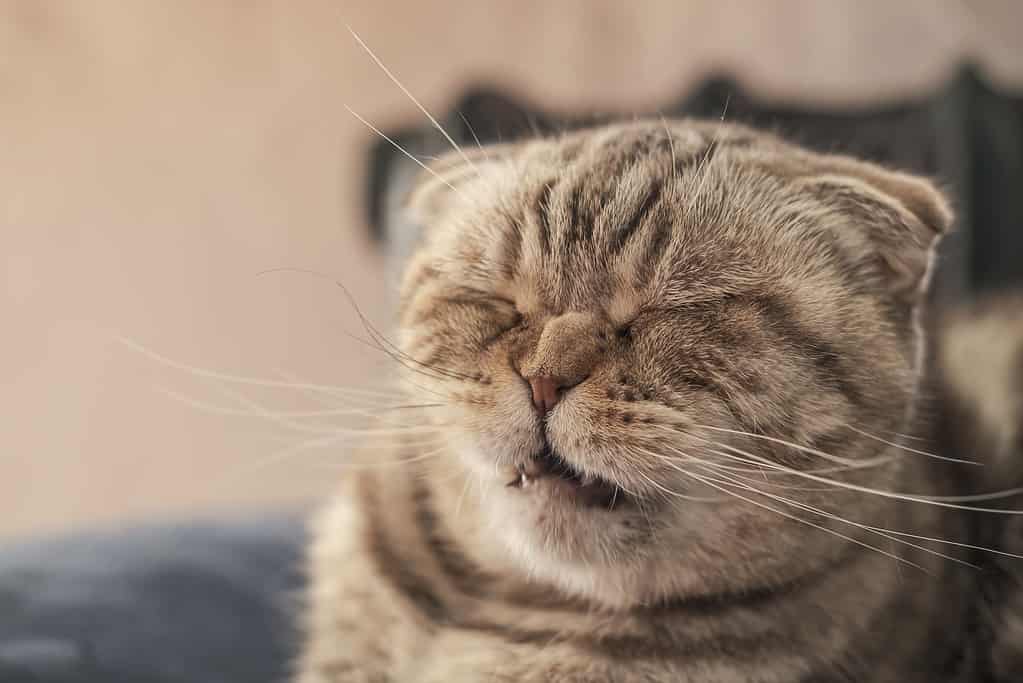
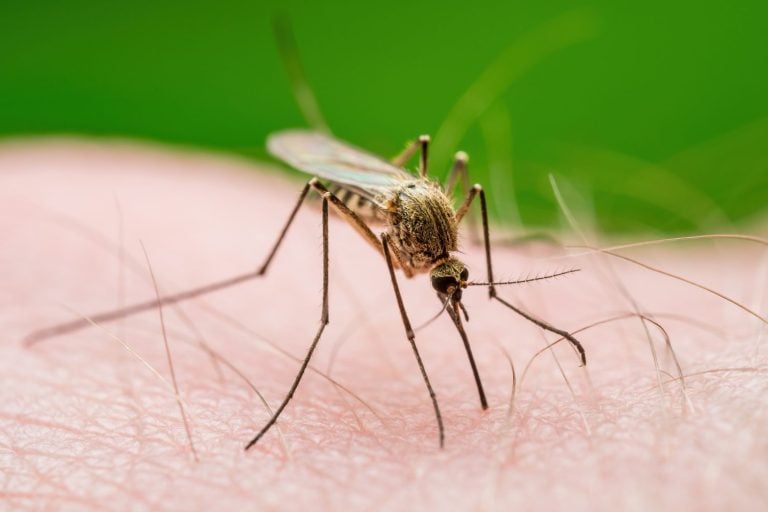
When a cat comes in contact with the mucus of a sick cat via sneezing or coughing, they can catch a cold.
©koldunova/iStock via Getty Images
A cold in a cat is caused by either a virus or bacteria. Colds are spread from cat to cat, so they catch them from another cat who is sick. The most common way that cats catch colds is by mucus droplets from a sneeze or cough. This happens a lot when cats are taken to the groomer or a kennel and come in contact with other cats. Cats that are allowed to go outside catch colds much more often than indoor cats.
What Are The Signs and Symptoms of a Cat Cold?
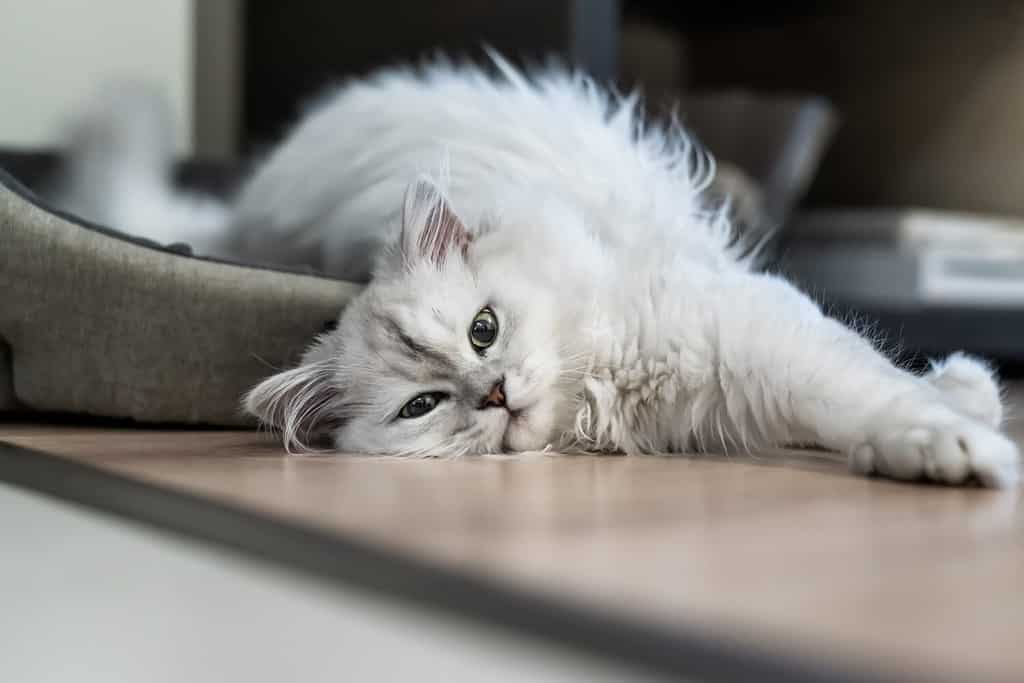
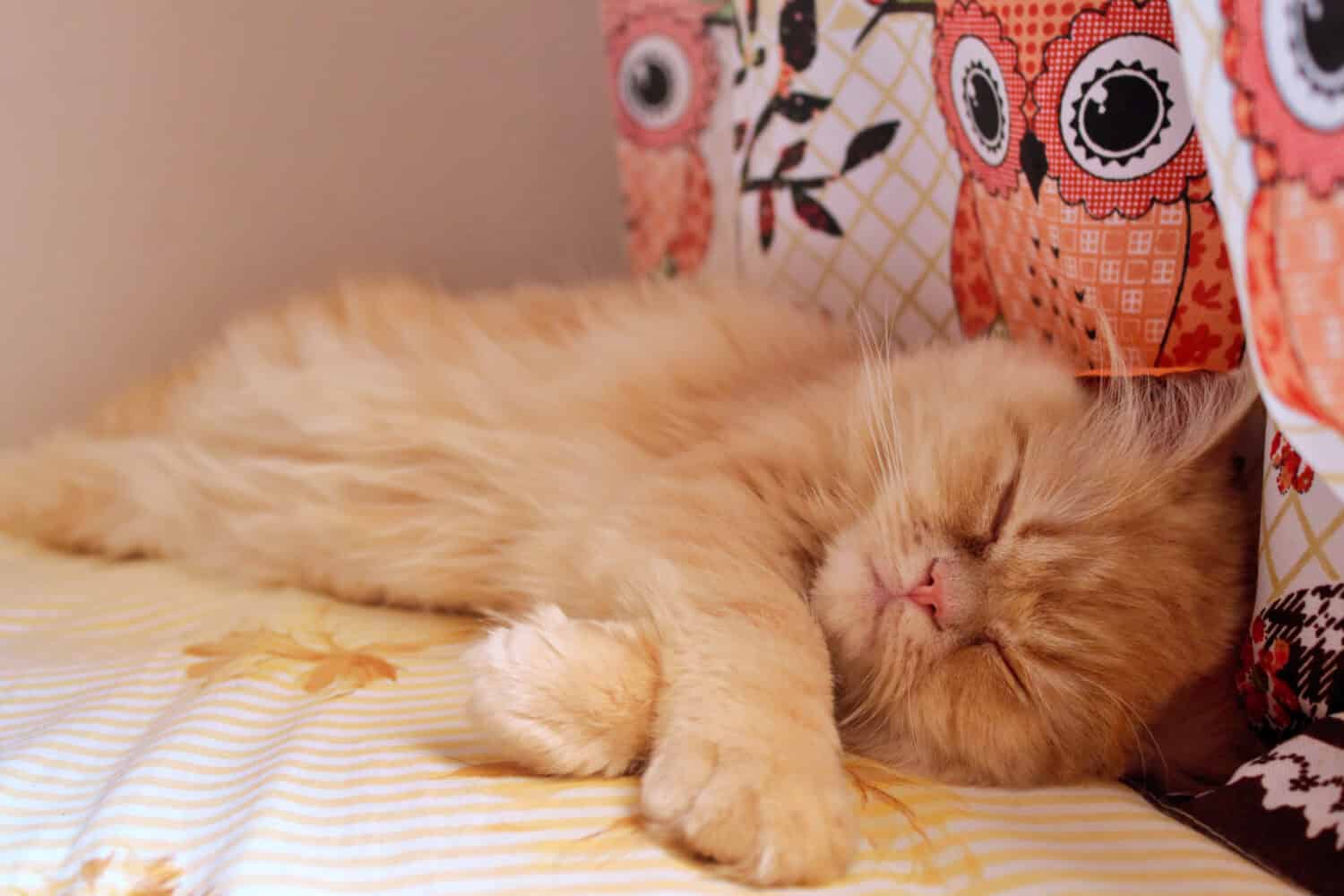
Most of the time, a cat’s cold symptoms will start improving after 72 hours.
©Jasmine_K/Shutterstock.com
Within 24 hours of catching a cold, most cats will start to show signs of illness. These symptoms usually get worse over the course of 72 hours and then start to get better on their own.
- Sneezing
- Coughing
- Runny nose
- Breathing through their mouth (signs of a stuffy nose)
- Fever (a body temperature over 102.5°F)
- Red eyes
- Watering eyes
- Refuses to eat or eats little
How to Treat a Cat With a Cold
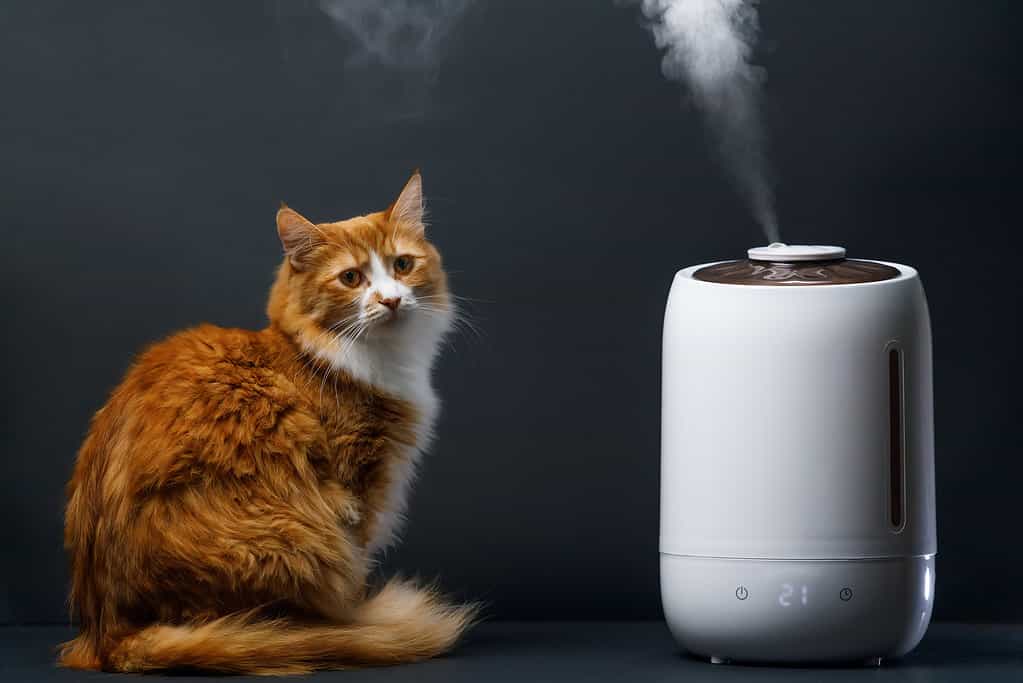
A bathroom full of hot steam or a humidifier is soothing to infected mucus membranes when your cat catches a cold.
©Denis Mamin/iStock via Getty Images
If you think your cat has a cold, try to make them as comfortable as possible. It is helpful to make the environment in your home more humid using a humidifier. It can be nice to place their bed or blanket close to a source of humidity to ease their discomfort. Do not put essential oils in the humidifier; many of them are toxic to cats. If your cat has a blocked nose, moisten a cloth with warm water to clear it out. To clear watery eyes, wipe their face with a clean cloth or piece of gauze and saline solution.
If your cat is congested, they may not be able to smell their food and may not want to eat. To help your kitty get the nutrients they need, try buying a more flavorful wet cat food and warming it up. Encourage your cat to stay hydrated by offering sodium-free broth or tuna juice.
Additionally, make sure your cat has plenty of blankets to stay cozy while they recover. Since you cannot catch your cat’s cold, it is a good time to give extra snuggles.
Serious Cold Symptoms—Time to Take Kitty to the Vet
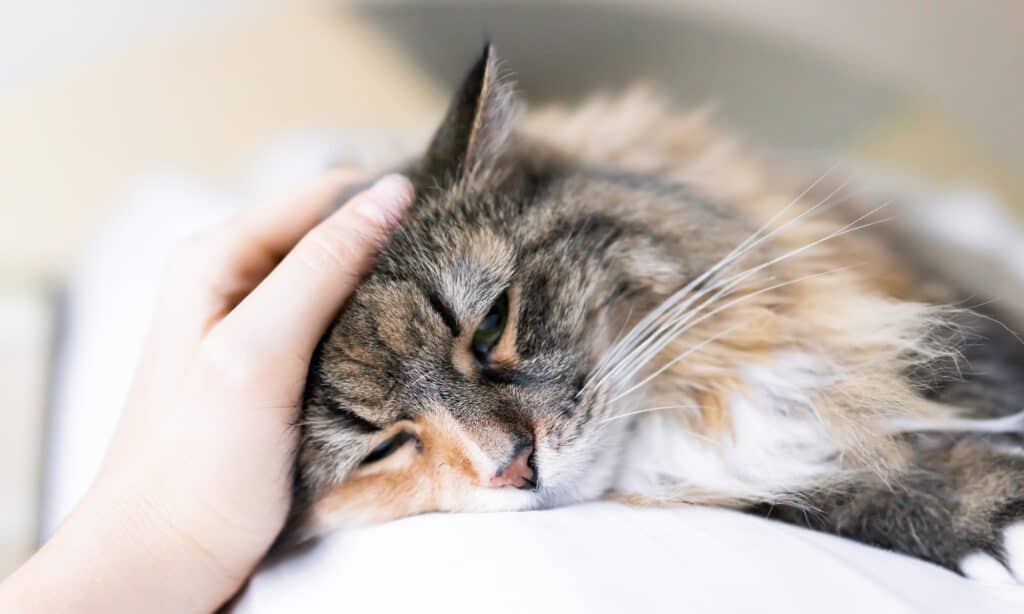
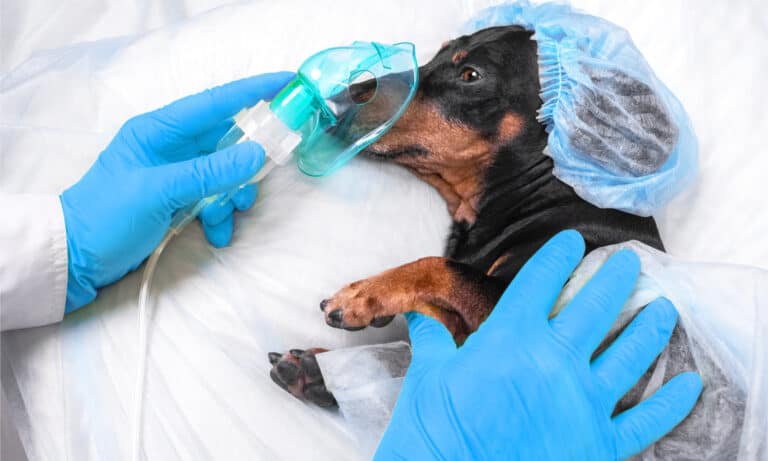
If you do not see any signs that the cold is getting better by day four, it is time to schedule a vet appointment for your cat.
©iStock.com/krblokhin
A cat’s cold will likely last 7-14 days in total, just like a human cold. However, you should see signs that they are improving on day four. If they are not showing any improvement or are getting worse at the 4-day mark, it is time to take the kitty to the vet. If allowed to fester, the cat can develop pneumonia or a serious sinus or ear infection. This is most likely in elderly cats, kittens, or cats battling other health issues. It is also more likely in cats that are not vaccinated yet. Take any cat that shows any one of the following symptoms to the doctor immediately.
- Fever of 105°F or higher- see an emergency vet.
- Deep cough lasting more than 4 days.
- Heart rate over 220 beats per minute.
- Blue lips
- Yellow or green discharge from the nose.
- Yellow or black liquid in the ear.
- Swelling or red ear canal.
- Loss of balance.
- A sour odor coming from the ear.
- The cat is pawing or scratching at their ear or face.
- The cat is tilting their head often.
- Cherry eye or protruding third eyelid.
- Any swelling of any part of the face, nose, or head.
Can Cats Catch Colds From Humans?
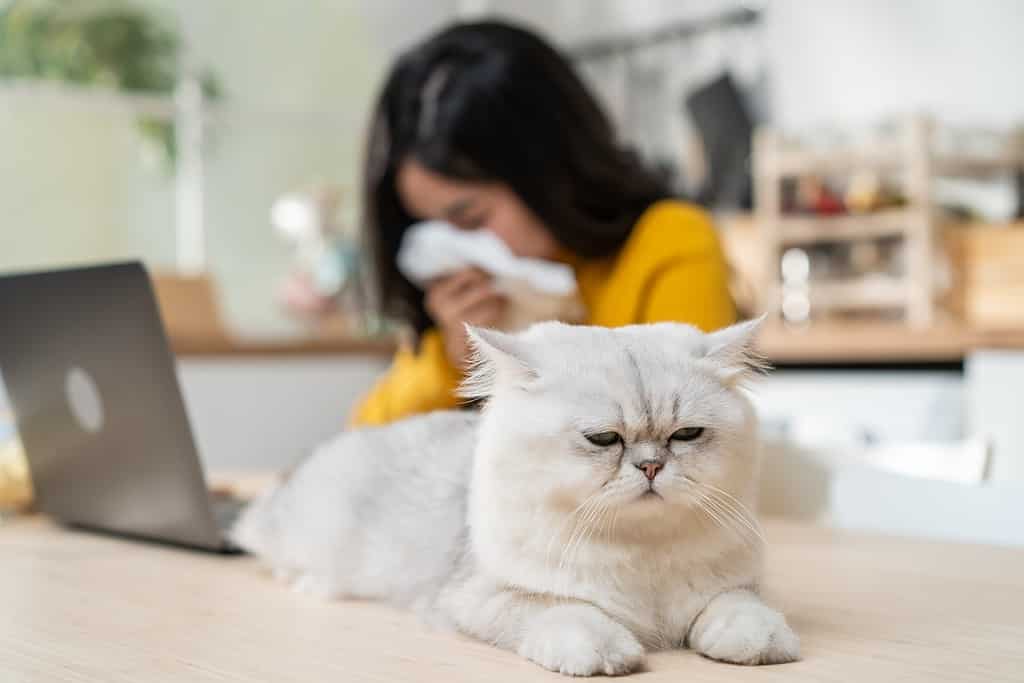
Don’t worry; cats catch colds from each other, not from humans or other pet species.
©Hananeko_Studio/Shutterstock.com
It is not likely that cats can contract colds from humans. Most viruses are only able to survive in their own species, so transmission of a cold from one species to another is highly unlikely. This means that your cat is not likely to catch a cold from another species of pet in the household either. So you don’t have to worry about your dog and cat sharing a cold.
While there are some bacteria that can be passed from humans to cats and vice versa, this is a rare occurrence. Cats can contract COVID-19 from humans and may have mild symptoms, but this is not at all common.
How to Tell the Difference Between Allergies and a Cold in Cats
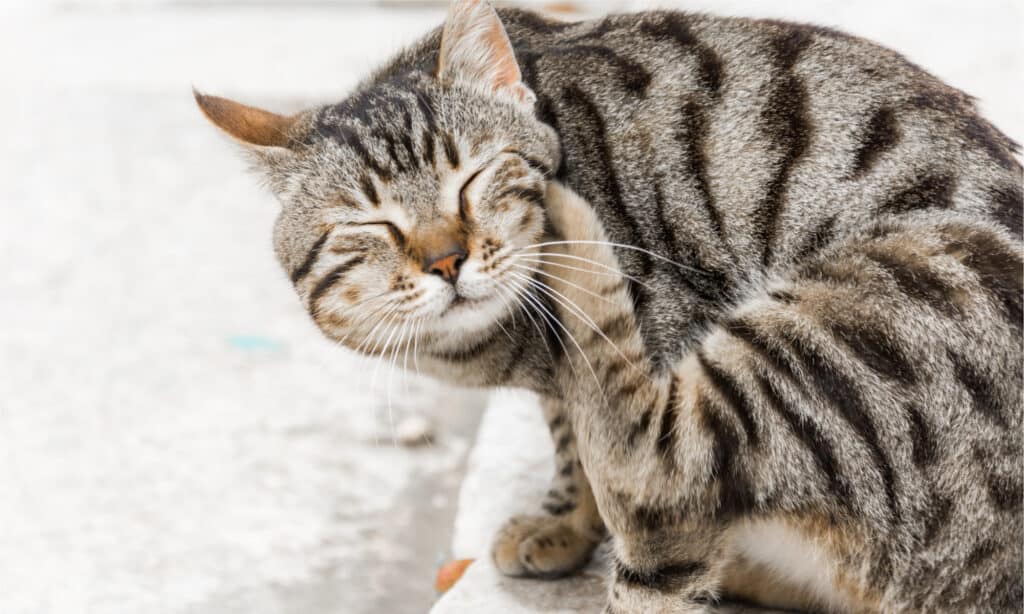
If your cat has itchy skin or a rash, this is not from catching a cold. Skin and digestive issues are more likely the symptoms of allergies or some other condition.
©Thrithot/Shutterstock.com
It can be difficult to spot the differences between allergies and a cold because they are very similar. The symptoms of allergies in cats are coughing, wheezing, running eyes, and sneezing. All of the same signs of a cold!
The major difference between a cat cold and allergies is the duration and timing. Many allergies in cats are a chronic problem that keeps coming up over and over. For example, if your cat has seasonal allergies, it might exhibit symptoms during the spring and fall allergy season every year. Or if they are allergic to a type of food or cat litter, they might show signs when they eat or use that product each time.
If your cat shows signs that are skin-related, like rashes or itching, this is most certainly not a cold. Digestive problems like bloating and gas are common allergy symptoms also, and not from a cat cold.
Overall, cats usually get a cold once or maybe twice per year. If your cat is showing cold symptoms more often than that, it is time to go to the vet for allergy testing.
Can I Give My Cat Cold Medicine?

You can help your cat breathe easier when they catch a cold by wiping their nose for them.
©javitrapero/iStock via Getty Images
Never give a cat human medication. If your cat has a severe cold, the vet can prescribe medication for cats that is safe and effective. Over-the-counter human medications can be dangerous for cats. For example, simple medications like aspirin, acetaminophen (Tylenol), and Pepto Bismal are deadly and toxic to cats but perfectly safe for human use. Even the cold remedies labeled as natural containing zinc and vitamin C are harmful to the red blood cells in cats. As mentioned above, cats are especially susceptible to the toxicity of essential oils, so contact a vet before using.
If you want to help your cat breathe easier through a stuffy or dry nose, it is safe to use plain saline nasal spray. Similarly, you can use artificial tears made of saline to flush away eye excretions safely. Be sure it has no added ingredients and is only salt water. Filling up the bathroom with hot steam from a shower is also helpful in easing irritated mucous membranes.
How Do I Prevent a Cat Cold From Spreading to Other Cats?
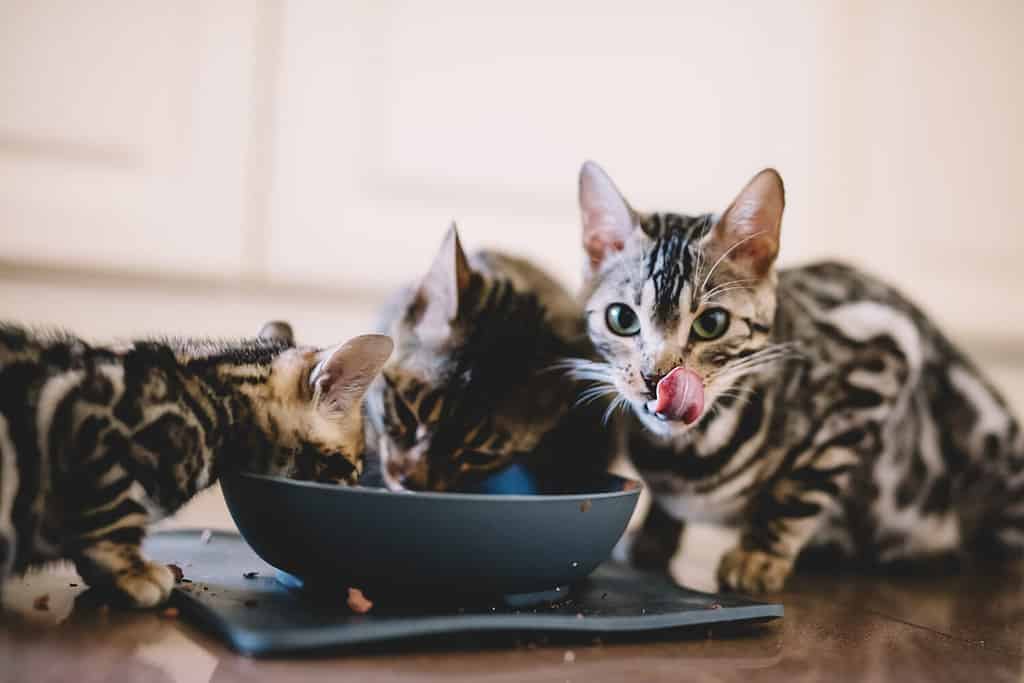
When cats catch a cold, separate them, or they may all catch it. Do not let them eat from the same bowl while sick.
©PHOTOCREO Michal Bednarek/Shutterstock.com
If you have other cats in the house, you want to to try to minimize the spread of infection by
- Keeping your cat isolated from the other cats, if possible.
- Washing and disinfecting all bedding, toys, litter boxes, and food dishes that your ill cat has used.
- Wash hands thoroughly with soap and warm water after handling the sick cat or any objects it may have come in contact with.
- Avoid contact between healthy cats and other cats outside of your home to prevent infection from spreading or coming into the house.
- Keep all cats in the household up to date on vaccinations.
- Keep the anxiety levels of all cats low. Stress makes them vulnerable to infections, like colds and flu.