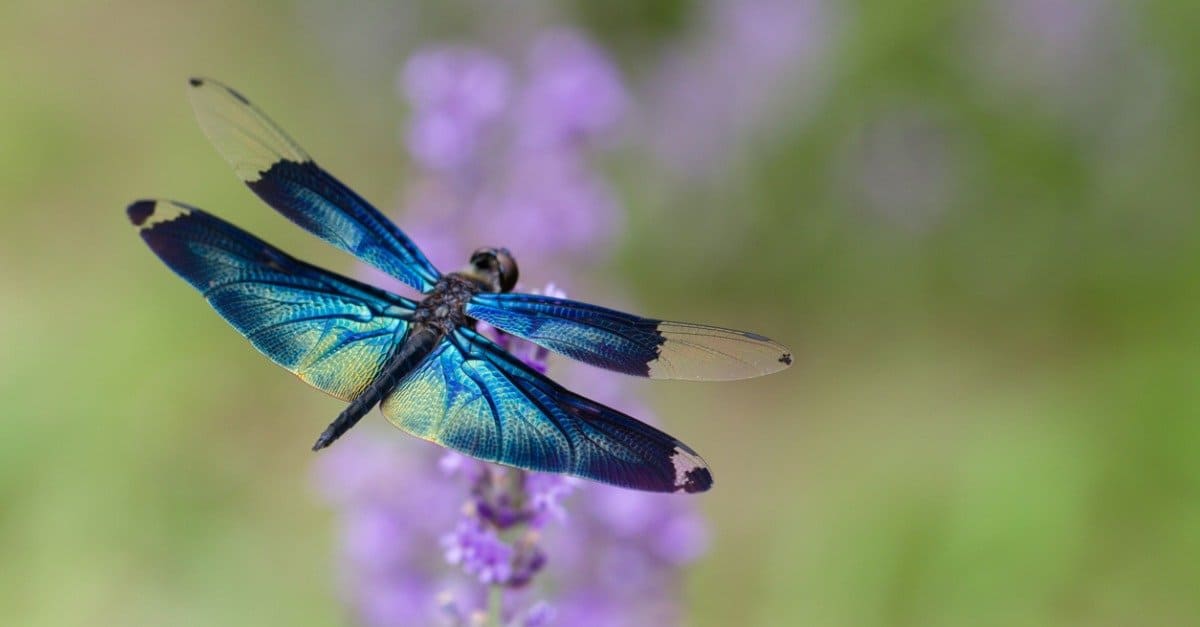

As one of the first-ever evolved winged insects, dragonflies have inhabited the earth for almost 300 million years. We instantly recognize these animals by their beautiful outer appearance and their incredibly fast-moving wings. Their appearance is so unique that it’s usually impossible to mix them up with any other insect.
There are dragonflies on every continent except Antarctica, so chances are, most of us have seen one while outside. As such, an interesting ancient insect with over 5,000 different species, it makes sense to wonder just how long they live and how their lifespan compares to other bugs. Let’s take a look at the dragonfly lifespan and explore what makes these arthropods so fascinating!
How Long Do Dragonflies Live?
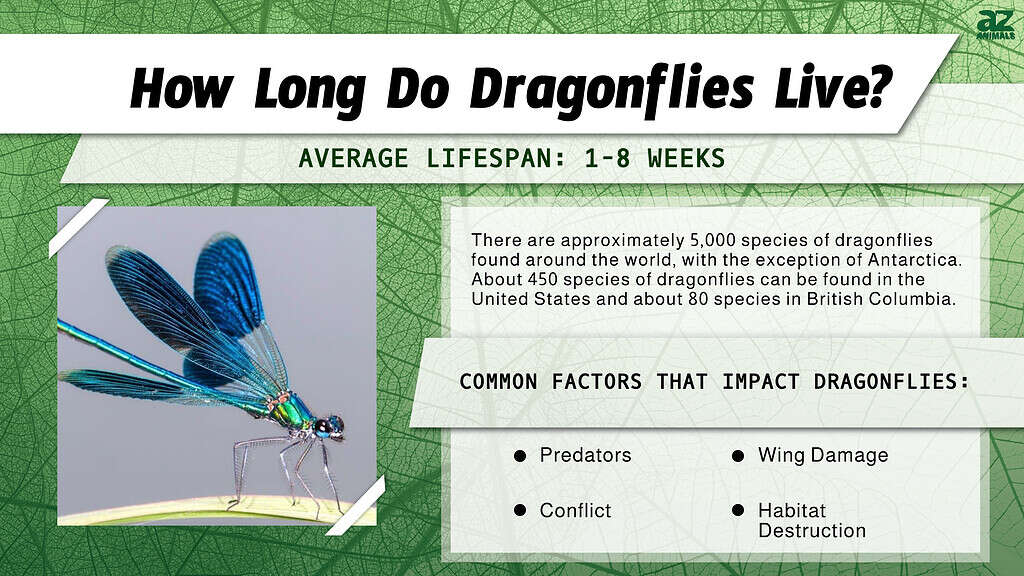
The lifespan of dragonflies is anywhere from a week to eight weeks. However, you might be surprised to learn that some dragonflies survive for more than ten times the length that adults do while underwater as nymphs.
As adults, dragonflies have life expectancies as short as a week. However, lifespans can be longer. In colder weather, they’ll be shorter, but if conditions are warm and there is no extreme weather (significant rainstorms and wind), dragonflies can live beyond a couple of months and as long as six months.
Dragonfly development takes significantly longer than their adult lives. Nymphs typically spend a year or more developing before emergence. However, some species of dragonflies (such as the golden-ringed dragonfly) can spend up to five years in their larval stage. That’s ten times longer than the life expectancy of the oldest adult dragonflies.
Several factors impact the life expectancy of dragonflies. For example, according to “The Dragonflies of Europe” by Richard Askew, “the mortality of sexually mature dragonflies appears to be largely independent of their age.” Dragonflies are often the victims of larger predators, as well as wing damage sustained during conflicts with other adult dragonflies. This is why dragonflies seldom die from old age.
The Average Dragonfly Life Cycle
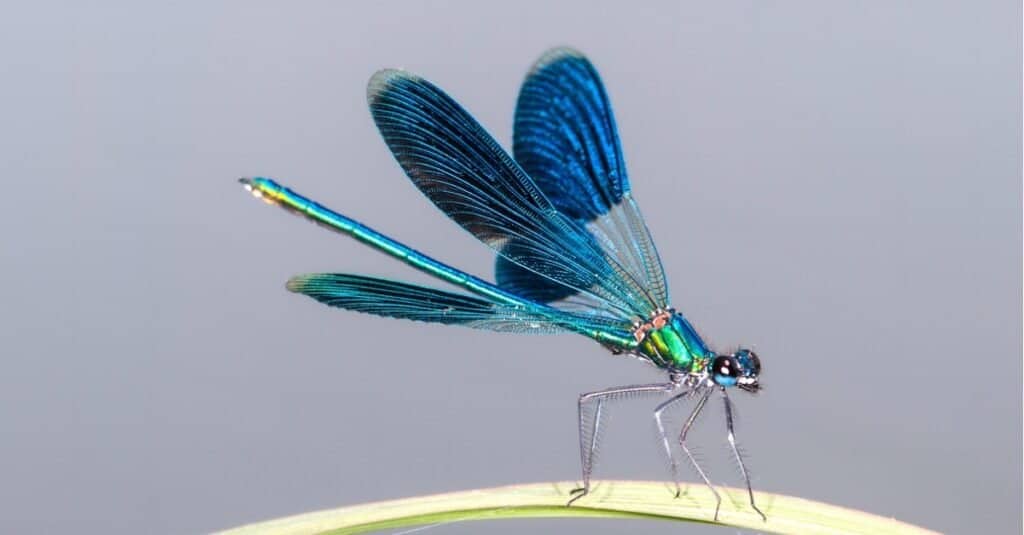
Dragonflies spend most of their lives as nymphs.
©iStock.com/MBadnjar
The dragonfly life cycle is divided into three stages: egg, larva (also known as nymph), and adult.
Egg
Female dragonflies can produce hundreds of eggs throughout their lifetime. Females will typically lay these eggs in batches over a period of a few weeks or months. The eggs are either laid in plant material or loosely deposited in water. Endophytic eggs are laid on land and are longer in shape, while exophytic eggs are round and found in water.
Within two to five weeks after the eggs are laid, they will begin hatching. However, some species, such as the emerald damselflies and even some hawkers, won’t hatch until the next spring season.
Nymph or Larva
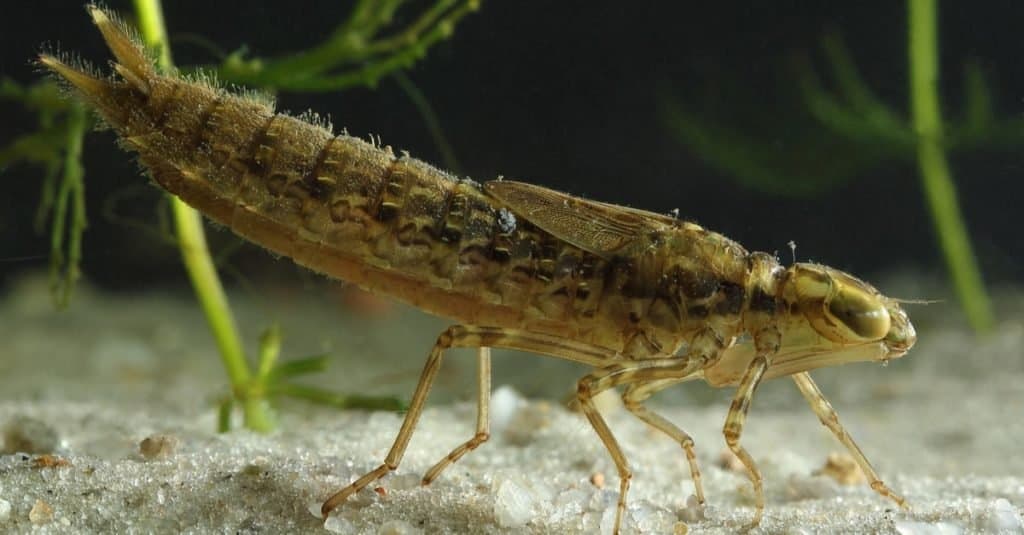
Dragonfly nymphs may eat other dragonfly nymphs to survive.
©Vitalii Hulai/Shutterstock.com
Once the dragonfly egg hatches, the dragonfly larvae (or nymph) stage begins. This is the start of the longest stage of the dragonfly life cycle, as they spend the most time in the nymph stage. Dragonfly nymphs dwell in the water while they mature into dragonflies in a process that can take anywhere between a few weeks and five years.
During this stage, the dragonfly nymph will hunt and devour live prey as much as possible, including insect larvae, worms, snails, leeches, tadpoles, and tiny fish. They will also molt as often as necessary — sometimes up to 14 times — to reach their full size and attain their wings.
Since they spend most of their life in aquatic settings as nymphs, dragonflies are able to breathe through gills in their rectum. They are also able to propel themselves through the water by expelling water through their anus.
Juvenile Dragonfly & Adult
Once the dragonfly has reached its full size and the weather favors them, they will then begin their final step, called emergence. This transformation includes climbing out of the water and up onto the stem of a plant. They will then begin to undergo their final molt and will leave behind their skin, called an exuvia. Once this process is completed, they emerge as juvenile dragonflies. They then begin to hunt for food in preparation for maturity.
Dragonflies are predators, and believe it or not, they have a roughly 95% success rate when hunting. They are equipped with sharp mandibles that they use for tearing prey apart. Thanks to this sharp jaw, baby dragonflies are capable of eating mosquito larvae, worms, tadpoles, and even small fish. Once they mature, the life cycle begins again as the dragonfly starts to hunt for a mate.
How Does Dragonfly Lifespan Compare to Other Arthropods?
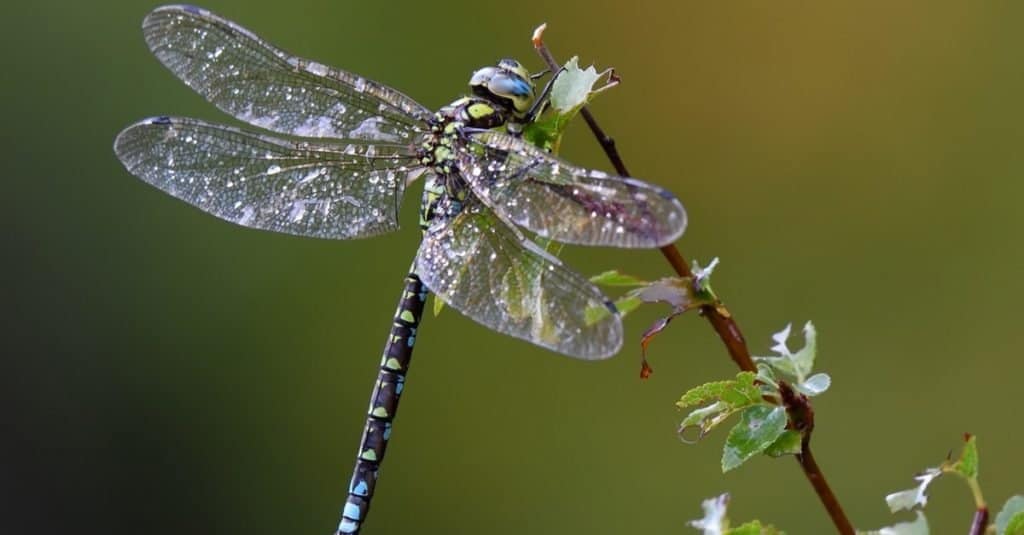
Dragonflies are arthropods.
©aaltair/Shutterstock.com
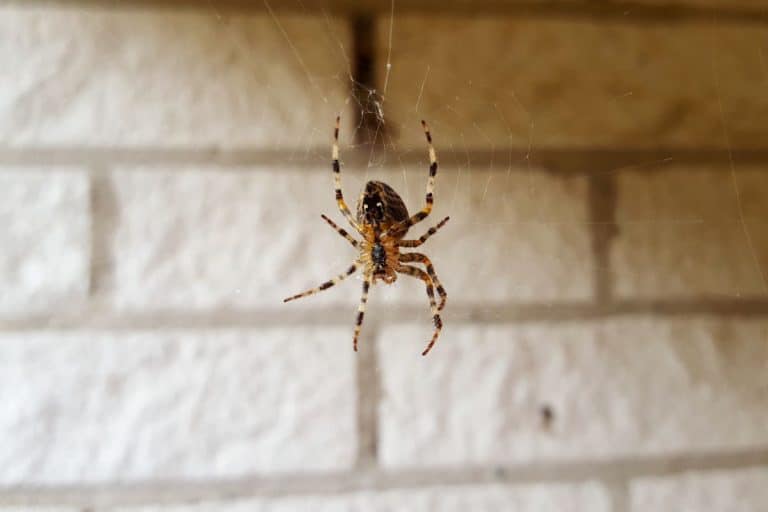
Dragonflies are classified as arthropods. Arthropods are the largest phylum in the animal kingdom. The phylum Arthropoda includes lobsters, crabs, spiders, insects, centipedes, and millipedes. Animals are classified as arthropods if they have exoskeletons, segmented bodies, and paired, jointed legs.
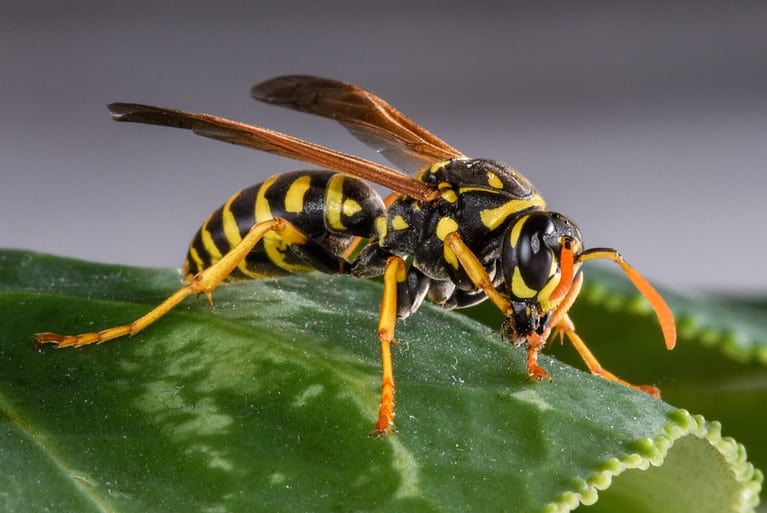
With some species having a lifespan of up to five years as nymphs and six months as adults, dragonflies have a relatively average lifespan when compared to many other insects. As adults, many insects only live up to a year. However, some have defied these odds.
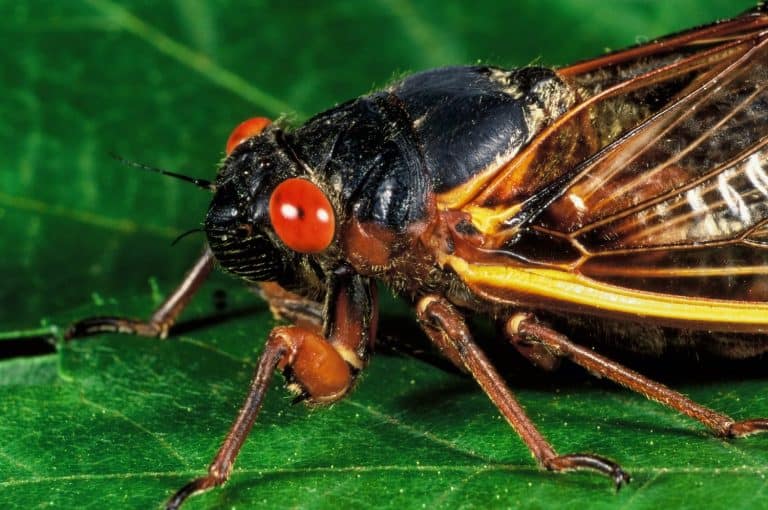
Some cicadas, for example, live for 17 years, while queen termites have been found to live for 30 to 50 years. Still, their lifespan is surprisingly not the shortest among insects. When compared to mosquitoes, which live only a matter of weeks, and houseflies, which live up to 28 days, the life of the dragonfly does not seem quite as short.