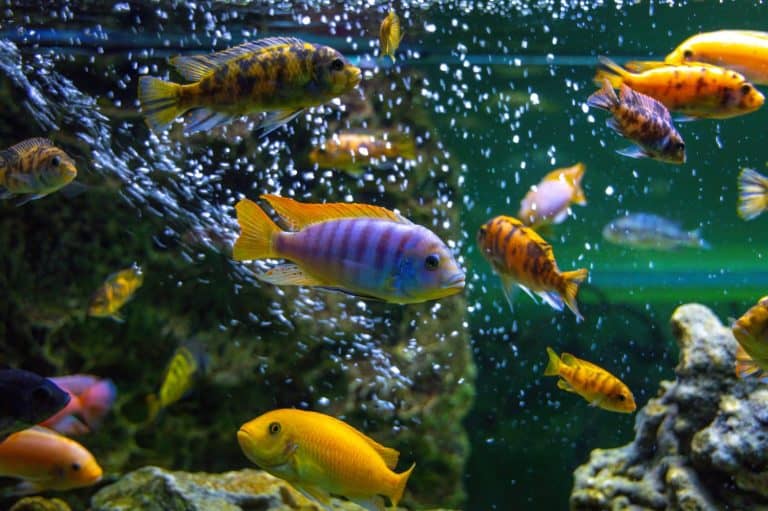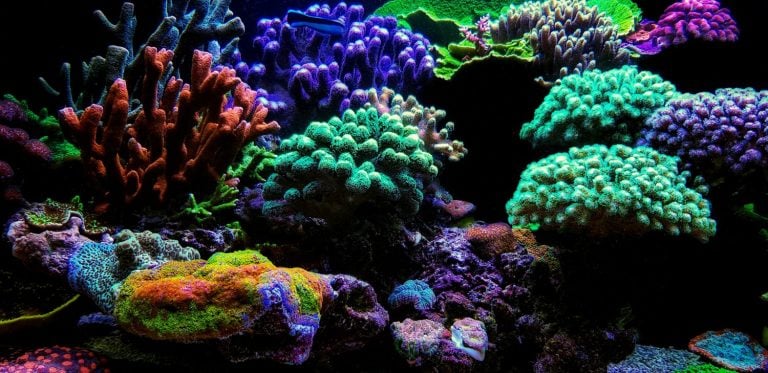

Nitrates (NO3) are a natural component in both freshwater and saltwater fish tanks. Nitrates are the by-product of the nitrogen cycle, and they indicate biological balance in aquariums.
Nitrates occur when organic matter in the water is broken down, creating ammonia and nitrite. Almost all fish tanks should have nitrates pop up on a water testing kit, even if there are no traces of ammonia and nitrite.
Although nitrates are the nitrogen cycle’s less toxic by-product, they can build up to problematic levels. Fortunately, you can effectively reduce nitrates in fish tanks in several ways.
How Can You Tell If Your Fish Tank’s Nitrates Are High?
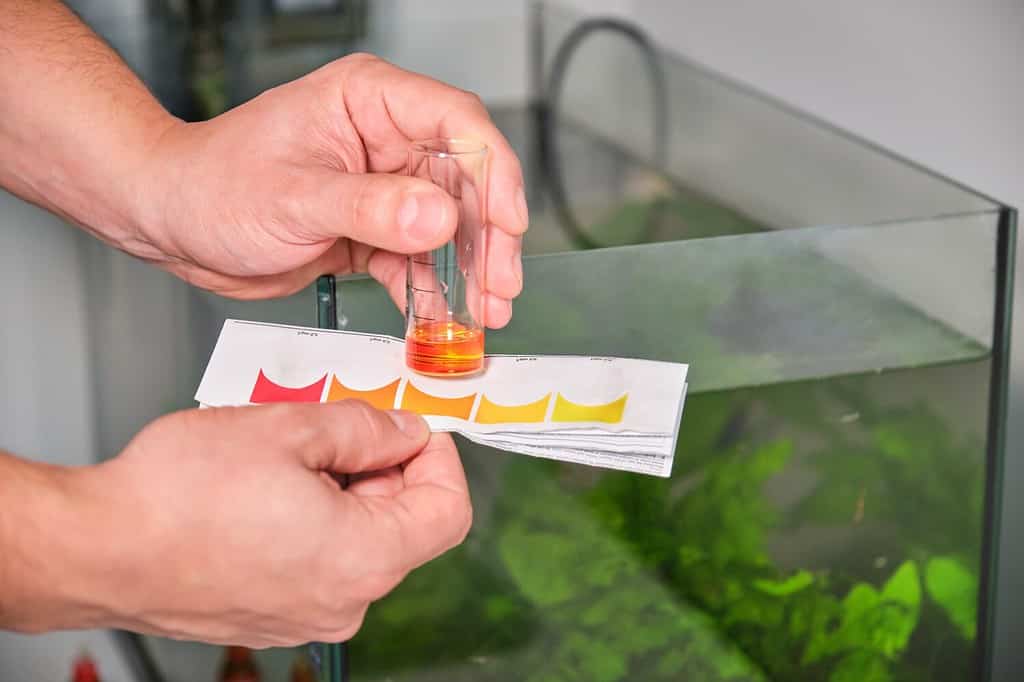
Water testing kits are the only reliable way to measure nitrate in aquariums.
©Ladanifer/Shutterstock.com
There are various factors that can contribute to high nitrates in a fish tank – decaying fish food or waste, overstocking, detritus, and unfiltered water. You can expect the tank’s nitrates to spike the highest after the tank has finished cycling. Nitrates in the water are invisible to the naked eye and can only be detected using a water testing kit.
Water testing kits allow you to measure the nitrates in either freshwater or saltwater tanks. There are two main types of water testing kits you can use, such as strips or liquid. However, the liquid water testing kits are preferred because experts believe them to be more accurate than the strips.
The safe limit of nitrates in fish tanks can vary depending on the species of fish you keep and the salinity of the water. Most freshwater fish and plants can tolerate up to 25 parts per million (ppm) nitrates. Less than 15 ppm nitrates is safest for most saltwater fish tanks. Reef tanks or those with sensitive invertebrates should have a nitrate level below 5 ppm.
If the nitrate levels in your tank are abnormally high, your fish, plants, or invertebrates might show signs of nitrate toxicosis.
Nitrate Toxicosis in Fish
- Curved body in a C-shape.
- Rapid breathing
- Lethargy
- Loss of appetite
- Surface gasping
- Disorientation
After noticing these signs and testing the tank’s water, you should take steps to reduce the nitrates mentioned in this article.
Effective Ways to Reduce Fish Tank Nitrates
Below are seven ways you can quickly reduce nitrates in your fish tank.
1. Do Partial Water Changes
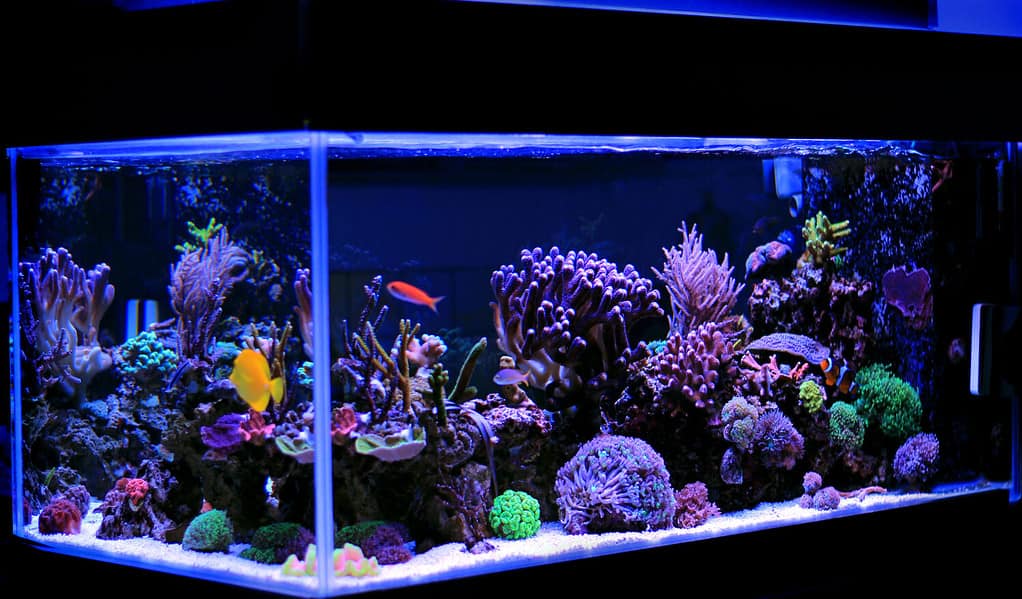
Water changes help you reduce nitrate in aquariums and dilute pollutants with fresh water.
©Vojce/Shutterstock.com
Water changes are the number one way to reduce nitrates in any fish tank. However, you want to avoid removing all of the tank’s water and stick to doing partial water changes.
If your fish are otherwise healthy but the nitrates are high, a 20% to 30% water change is usually effective. If you are dealing with an algae outbreak from excess nitrates or sick fish, an immediate 40% to 45% water change every few hours is sufficient.
Ensure that you are regularly testing the water in between to measure the nitrates until they return to an ideal level. You generally want to avoid doing full water changes to avoid shocking your fish, as the sudden change in water chemistry can be stressful.
2. Grow Live Plants
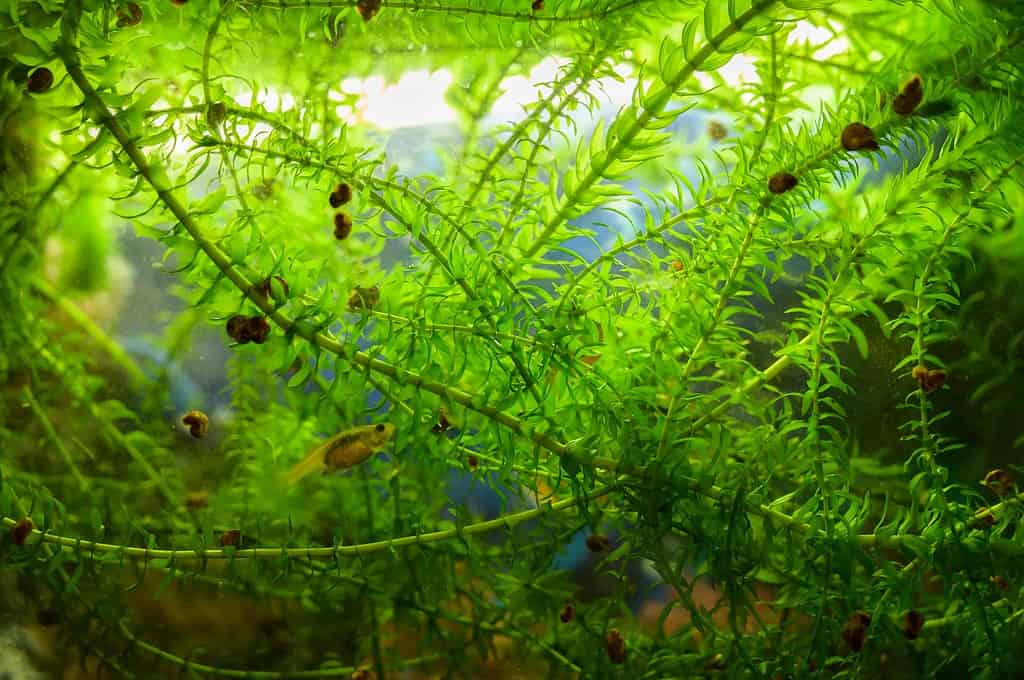
Growing plenty of live plants in your fish tank can help improve the water quality.
©Vladimir Arndt/Shutterstock.com
Live aquatic plants do an excellent job of reducing the water’s nitrates and using it for growth. However, you will need to grow a significant number of plants before you notice a difference in the nitrate level. This method is better to keep nitrates under control rather than to treat a tank that already has an unsafe nitrate level.
Large or fast-growing plants like java fern, hornwort, duckweed, pothos, and water sprite are excellent at utilizing nitrates in freshwater tanks. For saltwater tanks, fast-growing column-feeding plants are preferred. The larger the fish tank is, the more plants you will need to grow. It is recommended to grow three or more varieties of aquatic plants to reduce nitrates.
3. Try Different Filter Media
Filter media can make a huge difference in your fish tank’s nitrate levels. If you have a filter with cartridges for filter media, try adding some in to improve the tank’s filtration. Filter media such as Seachem matrix or denitrate may help reduce nitrates in a fish tank while supporting denitrifying bacteria.
Otherwise, it is important to have a good filter running in your fish tank that can support the tank’s size and stocking level. Most filters offer biological and mechanical filtration, but choosing a filter that offers chemical filtration too can be beneficial.
4. Use a Denitrator Filter
A denitrator filter is a type of biological filter that removes nitrate through anaerobic denitrification. Denitrator filters help to break down nitrates in the water that escape as nitrogen gas.
You can either DIY your own denitrator filter or purchase one online. Denitrifying filter media should be placed inside a media reactor that is linked to an aquarium water pump. This allows the tank’s water to flow through the reactor and reduce nitrates in the water. Sulfur-based filter media is often recommended for denitrator filters.
5. Run a Refugium
If you run a reef or saltwater aquarium, using a refugium can help naturally reduce nitrates. Refugia cultivate macroalgae and other denitrifying biological bacteria separately from the tank.
Chaetomorpha, Halymenia, or Caulerpa algae are often chosen by hobbyists because they are fast growers that can thrive in refugia. The size of the refugium will vary depending on how large your tank is.
It should be placed in an area where the tank water passes through, such as a sump. Your refugium will need a light source so that the macroalgae can grow and reproduce properly.
6. Maintain the Tanks Substrate
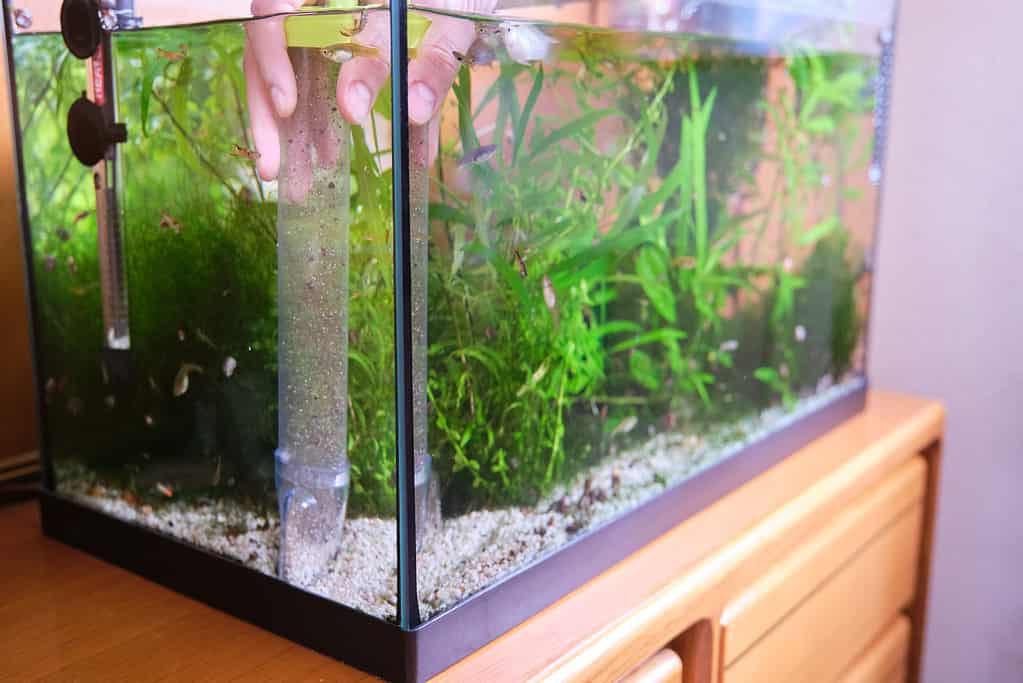
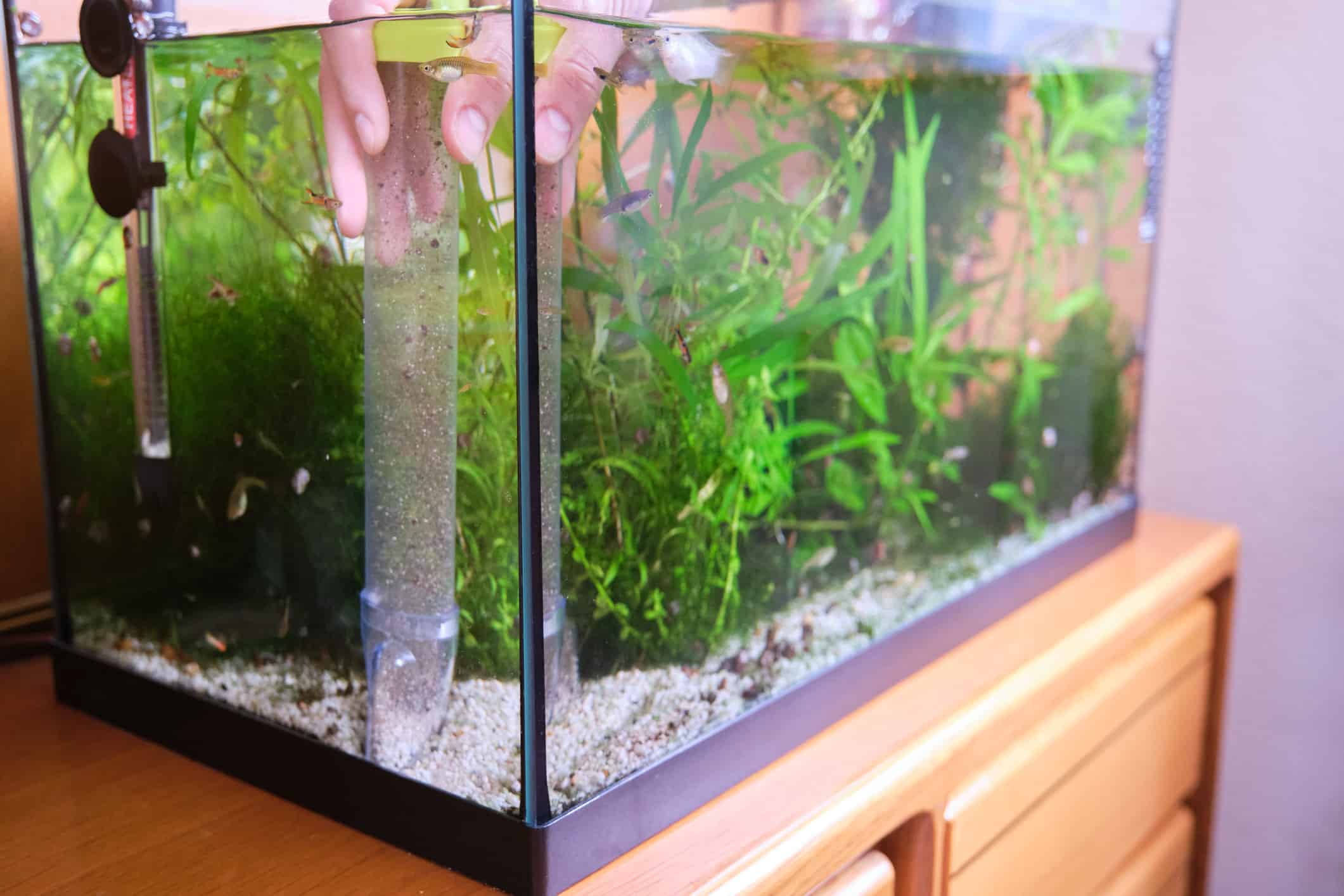
Gravel vacuums effectively remove gunk from the tank’s substrate during water changes.
©Ladanifer/iStock via Getty Images
A fish tank’s substrate can harbor detritus (organic waste) which could contribute to elevated nitrates. Whether you have gravel or sandy substrates, plenty of gunk, fish poop, and decaying food can accumulate within the layers.
If you do water changes without siphoning the substrate, you might want to start making it part of your fish tank maintenance routine. Although detritus is normal in fish tanks and usually gets broken down by beneficial bacteria, large buildups may affect the water quality.
Using a siphon or gravel vacuum is a great way to suction out detritus from the substrate. Siphons make water changes a whole lot easier while keeping the substrate clean.
7. Avoid Overfeeding
Overfeeding is a major factor leading to high nitrates in a fish tank. High nitrates are not the only concern with overfeeding fish food, as ammonia spikes are common too. You ideally want to feed your fish as much as they can eat within three to five minutes.
Avoid feeding your fish too much food at once and letting it decay in the tank. If you accidentally add too much food to the tank, try using a fish net to remove excess food or do a partial water change.
Summary Of The 7 Effective Ways to Quickly Reduce Nitrates in a Fish Tank
| Rank | Ways to reduce nitrates |
|---|---|
| 1 | Partial water changes |
| 2 | Live plants |
| 3 | Filter media |
| 4 | Denitrator filter |
| 5 | Refugium |
| 6 | Substrate maintenance |
| 7 | Avoid overfeeding |