
Quick Take
- Most aquarium filters work on waste that's already dissolved, while protein skimmers intercept it at an earlier stage that completely changes what builds up in your water. See how it differs →
- Only three components power a protein skimmer, and one of them does something to organic waste that sounds too simple to actually work. See the mechanism →
- A protein skimmer can't replace water changes, but it does affect how often and how much water you need to change, and that's worth understanding before you decide to skip one. Explore water change impact →
- Experts say a protein skimmer is overkill for one specific reef tank scenario, though most setups don't qualify.
Reef tanks can be intimidating for those creating their first. There is a lot of information to digest, which makes the undertaking tedious. Fortunately, once the corals, fish, and other select animals in the reef tank are established, they are virtually self-sustaining.
One of the most important factors is maintaining water parameters that allow coral and other marine creatures within the small ecosystem to thrive. This is why a reef tank needs a protein skimmer. Without one, water quality and the health of the reef tank are lost.
What Is a Protein Skimmer?
The overall health of a reef tank revolves around nitrogen cycling, which is key to the survival of all marine life in the reef tank. Without nitrogen cycling, the waste from fish and coral would build up and eventually kill everything in the tank.
Also known as a foam fractionator, a protein skimmer aids in nitrogen cycling by acting as a filtration device. They can be used in all types of saltwater aquariums, including reef tanks.
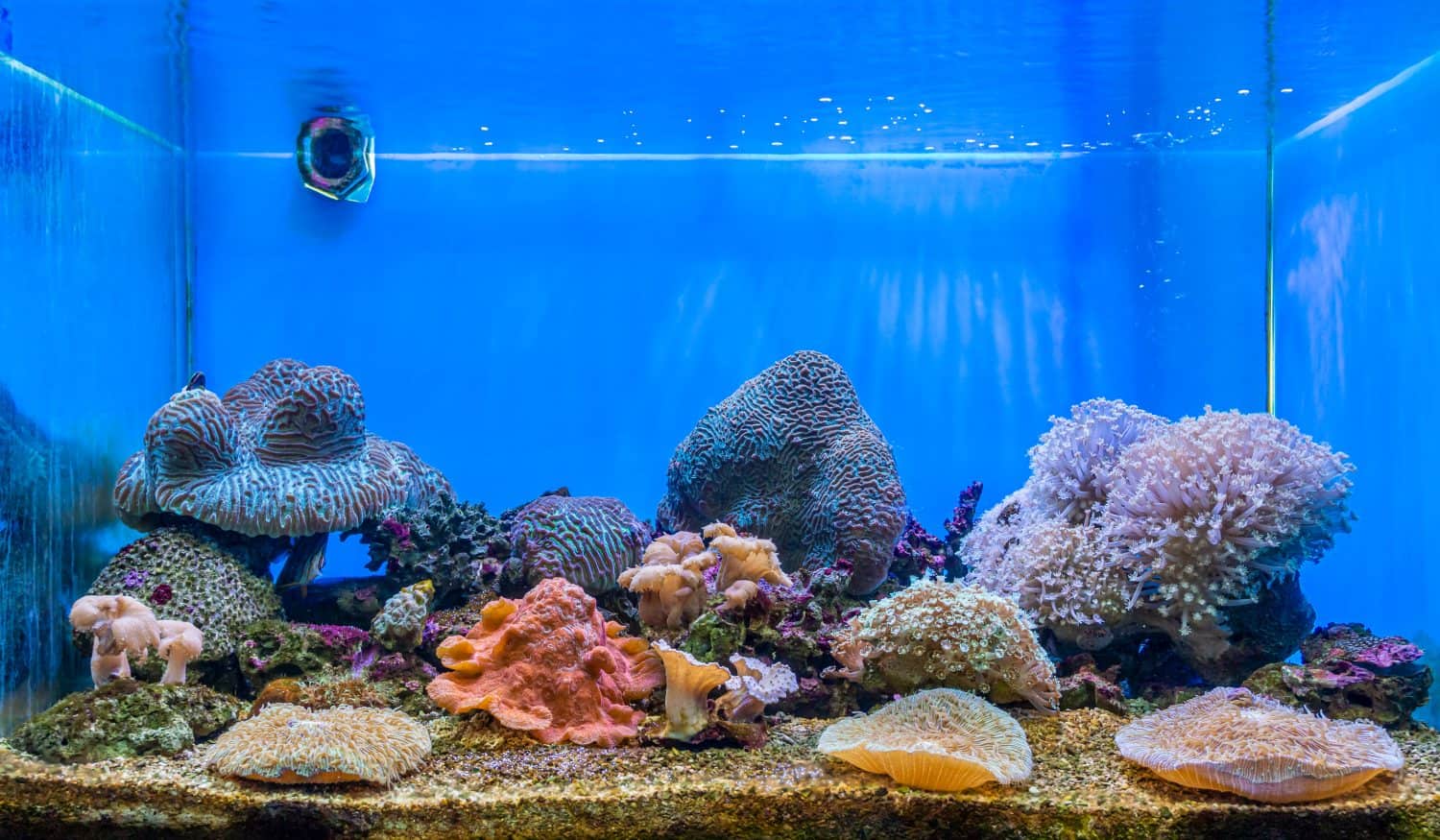
Protein skimmers capture organic material in a reef tank before it can dissolve.
©JoeyPhoto/Shutterstock.com
Unlike freshwater filtration devices that remove dissolved waste, a protein skimmer removes organic waste before it breaks down. This means compounds such as ammonia, nitrate, and phosphate cannot build up as they would with traditional filters.
Overall, a protein skimmer helps to keep the water cleaner. However, it does not replace water changes or biological or mechanical filtration. It is simply an additional tool that helps keep the ecosystem healthy.
How Does a Protein Skimmer Work?
Protein skimmers remove organic matter from the water. But how do they do this before the organic matter breaks down into harmful compounds?
To work effectively, protein skimmers use the following three components:
- Water
- Surface tension
- Air
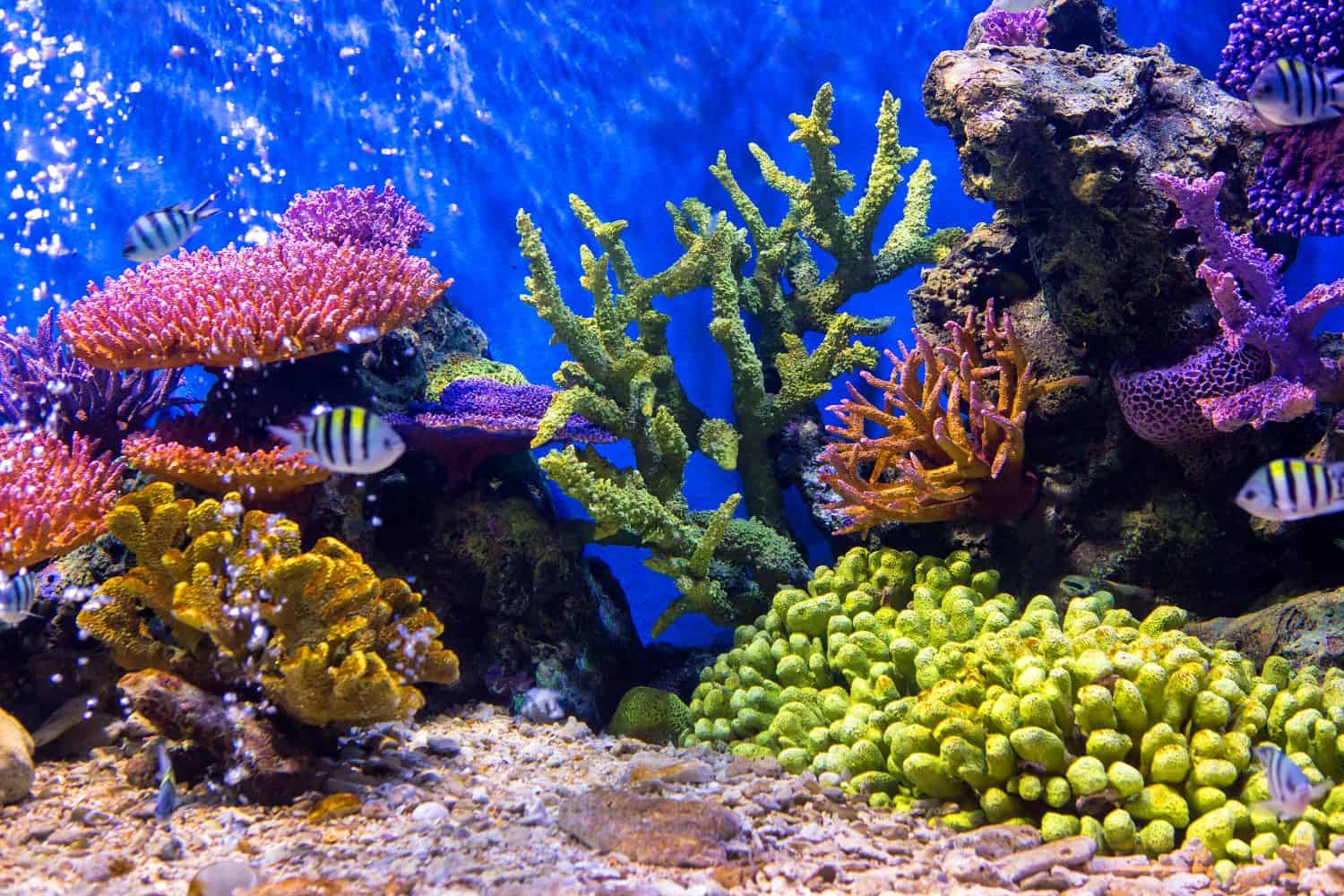
The bubbles from a protein skimmer attract organic material, which is then collected in a container as “skimmate.”
©Sukpaiboonwat/Shutterstock.com
The protein skimmer releases bubbles into the water. As the bubbles move through the water, organic waste from coral and fish attaches to their surfaces.
The bubbles congregate on the water’s surface, where they are corralled into a collection container. The organic waste creates a dark sludge known as “skimmate” which is removed periodically as it accumulates in the collection container.
Benefits of Using a Protein Skimmer in a Reef Tank
Some fish experts say a protein skimmer may not be needed if the bioload is small. For those who have a reef tank with few corals and no other aquatic life, a protein skimmer may not be necessary. However, there are major benefits to including a protein skimmer as a tool for maintaining a healthy ecosystem, and they are essential for the majority of reef tanks.
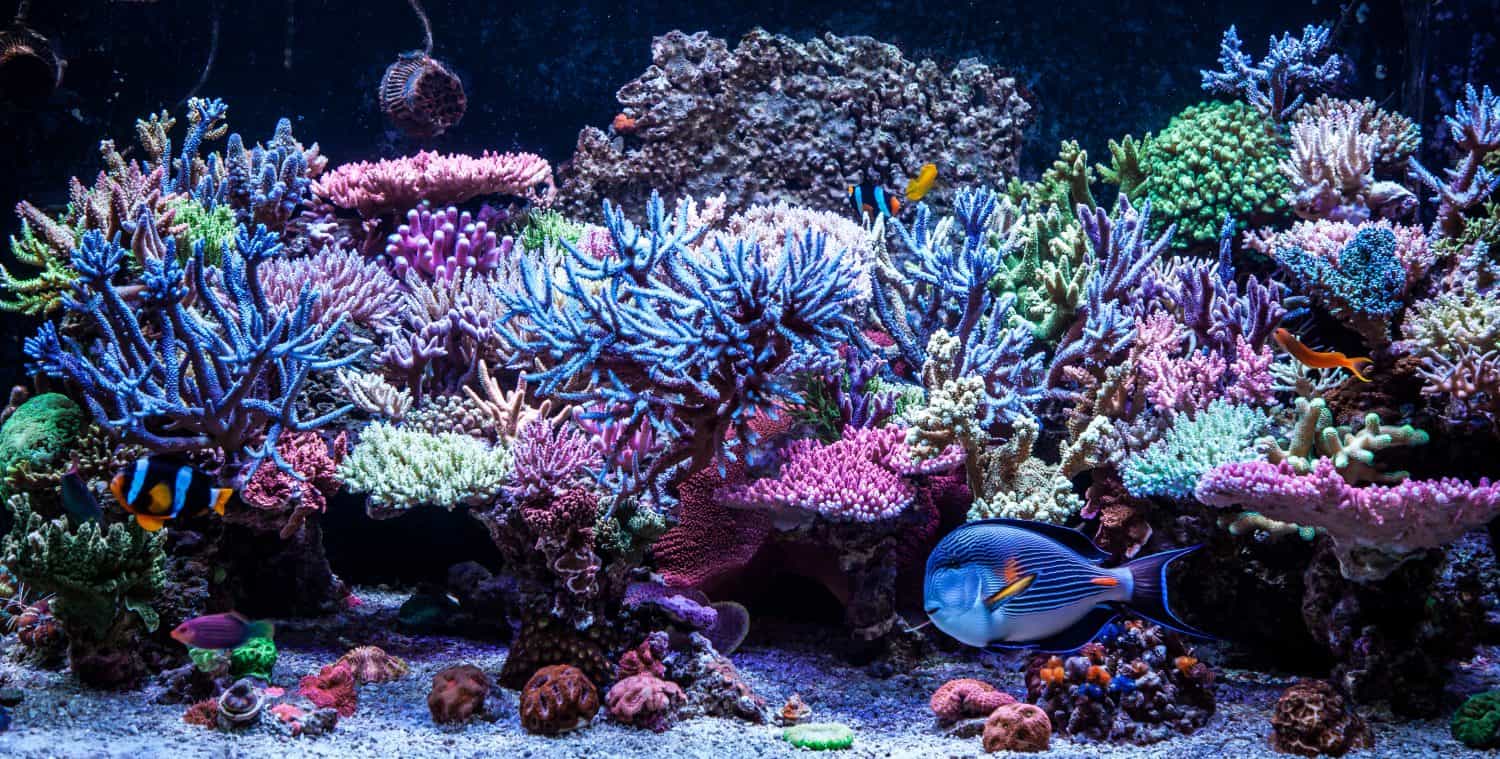
Protein skimmers help keep the reef tank ecosystem cleaner, producing highly oxygenated, clearer water with less odor.
©Tassnal Laophorm/Shutterstock.com
The benefits of including a protein skimmer in a reef tank include:
- Less frequent water changes
- Less water removal when changing
- Improved water oxygenation
- Water quality stabilization
- Less water odor
- Better water clarity
- Algae control
Protein skimmers are worthwhile investments in your tank. When establishing this tiny ecosystem, ensure that a protein skimmer is included. Your corals and other marine life will stay happy and healthy.