
Quick Take
- The cleaner wrasse isn't actually after the parasites. What it really wants is something the bigger fish can't afford to lose. See what wrasse really want →
- Getting caught cheating doesn't stop the wrasse. It triggers a completely different strategy that somehow makes the victim cooperate anyway. See how cheating backfires →
- Wrasse take their manipulation one step further with a technique scientists have given its own name, one that involves using one fish to con a completely different one. Explore the deception technique →
- Wrasse turn out to be one of scientists' best tools for studying something most people assume only mammals can do. See wrasse as research models →
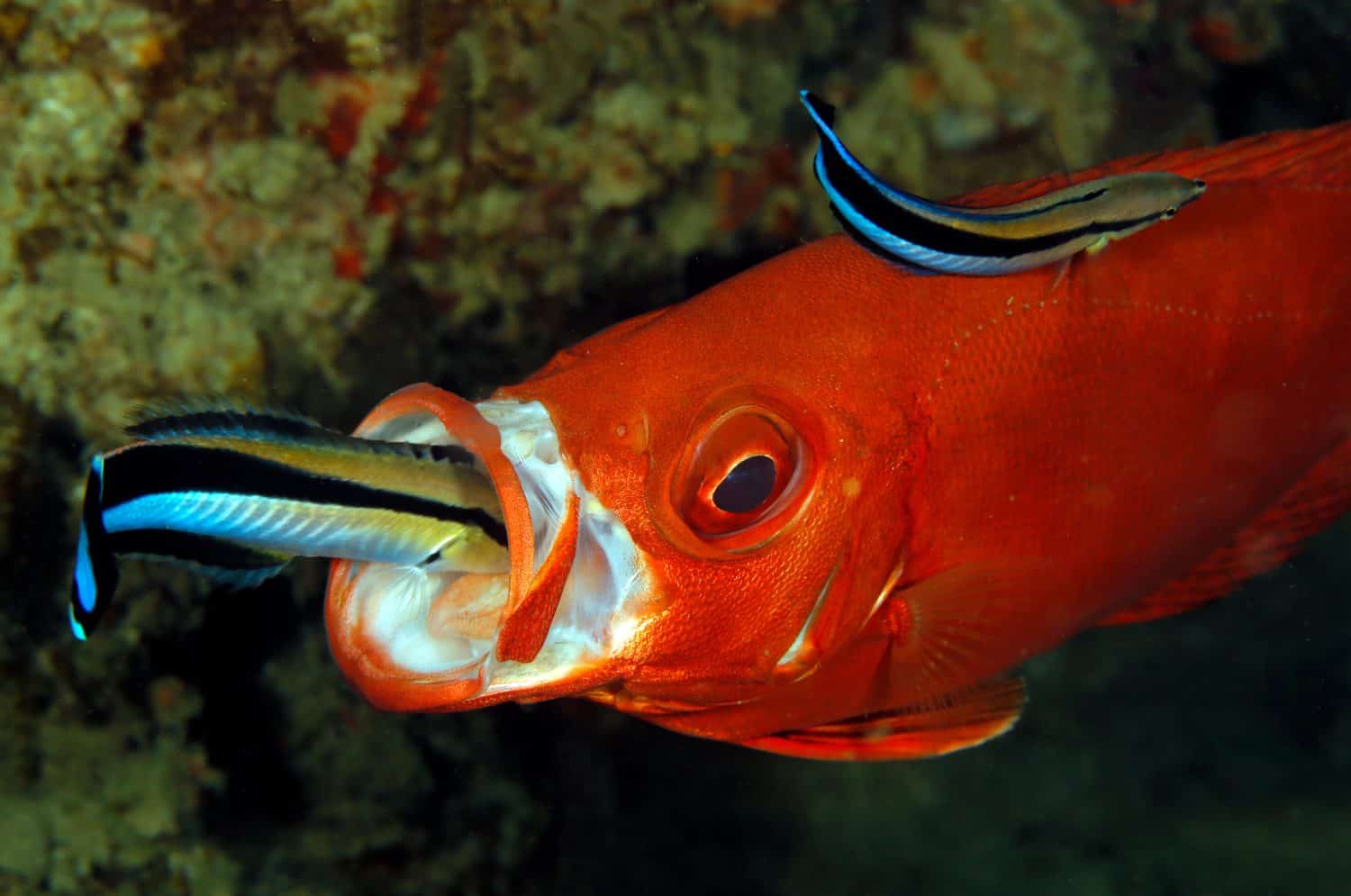
Spend any time snorkeling or scuba diving on coral reefs and you’ll see something that will make you look twice. Tiny fish hanging out in and around the mouths of fish 20 times their size.
It resembles an underwater carwash, with big fish pulling in, one after another, waiting their turn for the tiny fishes’ attention.
What you’re seeing is the tiny cleaner wrasse doing what it does best – feeding off the annoying parasites that plague most larger fish. It’s a symbiotic relationship, where each side gets a benefit from working together.
But the little cleaner wrasse has a secret. It’s after more than just parasites.
What Is a Cleaning Station?
Cleaning stations are areas on a coral reef where cleaner wrasse wait for their bigger clients to show up. They advertise their services by doing a little dance that includes wagging their tails.
This attracts the attention of potential clients. When a larger fish shows up, it signals its desire to be cleaned by spreading its fins and becoming motionless.
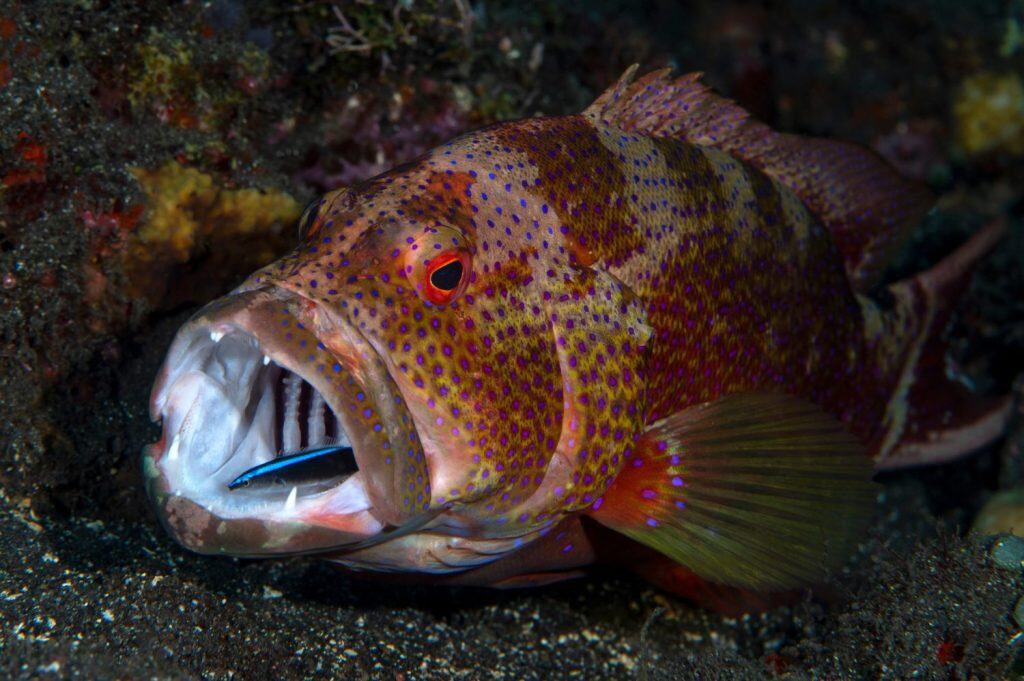
Cleaner wrasse willingly enter the mouths of much bigger fish to pick parasites out.
©DiveIvanov/Shutterstock.com
That’s the wrasses’ cue to get to work. They confidently dart in and out of the bigger fish’s mouth, removing parasites. While normally you’d expect a bigger fish, like a grouper, to just eat the tiny wrasses, in this case they both know the value of the wrasses’ work. The big fish lets the little fishes get on with things.
When Wrasses Cheat
For the cleaner wrasse, luring in a big client is about more than snacking on parasites. Wrasse actually prefer the protective slime coat that covers the parasites. One study confirmed this using controlled tests.
That slime also protects the fish from sunburn, scrapes, and germs. So, they really don’t want to lose it. But the wrasse is undeterred. It will often bite the slime rather than the parasites. When it does, the larger fish visibly flinches.
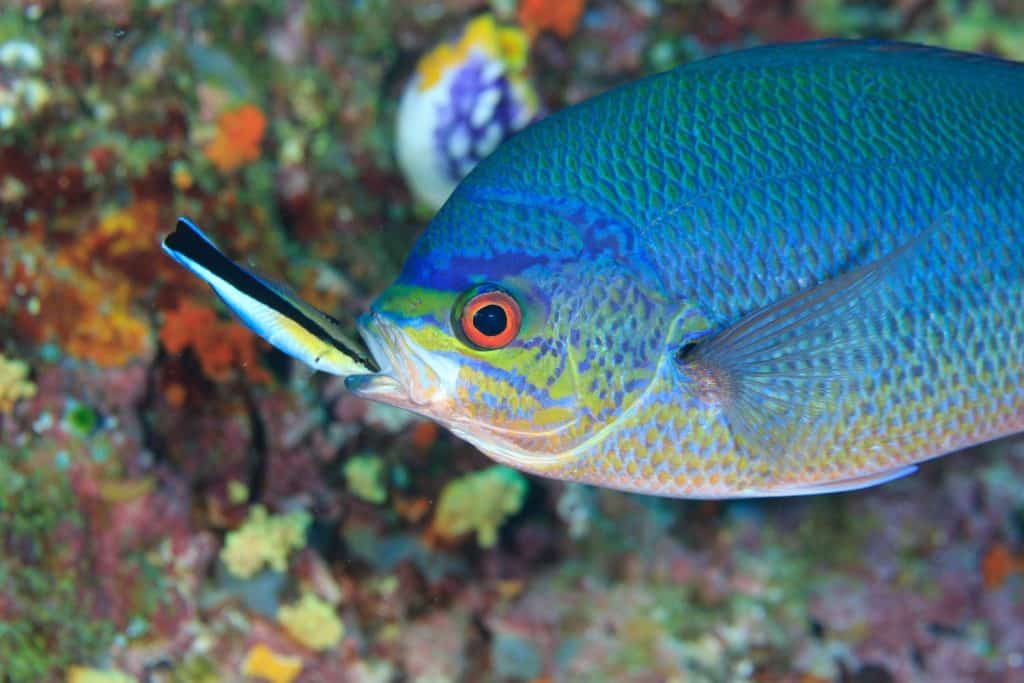
The cleaner wrasse like to eat parasites, but they like the bigger fish’s slimy protective coating more.
©SergeUWPhoto/Shutterstock.com
Scientists call this cheating behavior by the wrasse. But this isn’t a casual accusation — ‘cheating’ is the actual research term scientists use when one party in a symbiotic relationship prioritizes self-interest over the other’s benefit.
How Cleaning Clients Respond
Once the bigger fish is on to what the wrasse is doing, it usually gets annoyed. To calm it down, the wrasse takes the opposite approach. It strokes the bigger fish’s fins, giving it a bit of an aquatic massage, sort of like a wrasse apology. Scientists call this “tactile stimulation.”

Cleaner wrasse perform a valuable service on coral reefs.
©Vojce/Shutterstock.com
But the wrasse sometimes takes things to the next level. One study discovered that wrasse will use the massage trick to lure in a smaller fish to catch the attention of a bigger fish. When the bigger fish moves in, the wrasse cheats the big fish instead. Scientists have a name for that behavior, too – “tactile deception.”
Why Cleaning Stations Are Important
Cleaning stations aren’t just a cosmetic convenience. The wrasse keeping the bigger fish clean has reef health importance. Studies have shown that when cleaner wrasse are not present on the reef, fish diversity is reduced.
And the wrasse are important for another reason. They can remember their past clients, judge behavior, and change their own approach to meet the current client’s needs. For scientists, wrasse are one of the best animals to study for decision-making in a non-mammal.