
Quick Take
- The lion wins more individual matchups than the elephant, yet it still loses the fight. See the final verdict →
- The lion's biggest physical advantage turns out to be useless in this fight, and may even work against it. See why claws fall short →
- Despite its reputation as the savannah's apex predator, the lion's finely tuned hunting skills barely matter here. See how hunting skills fare →
- Seven factors decide this fight, though the two that matter most are not the ones most people would pick. Explore the deciding factors →
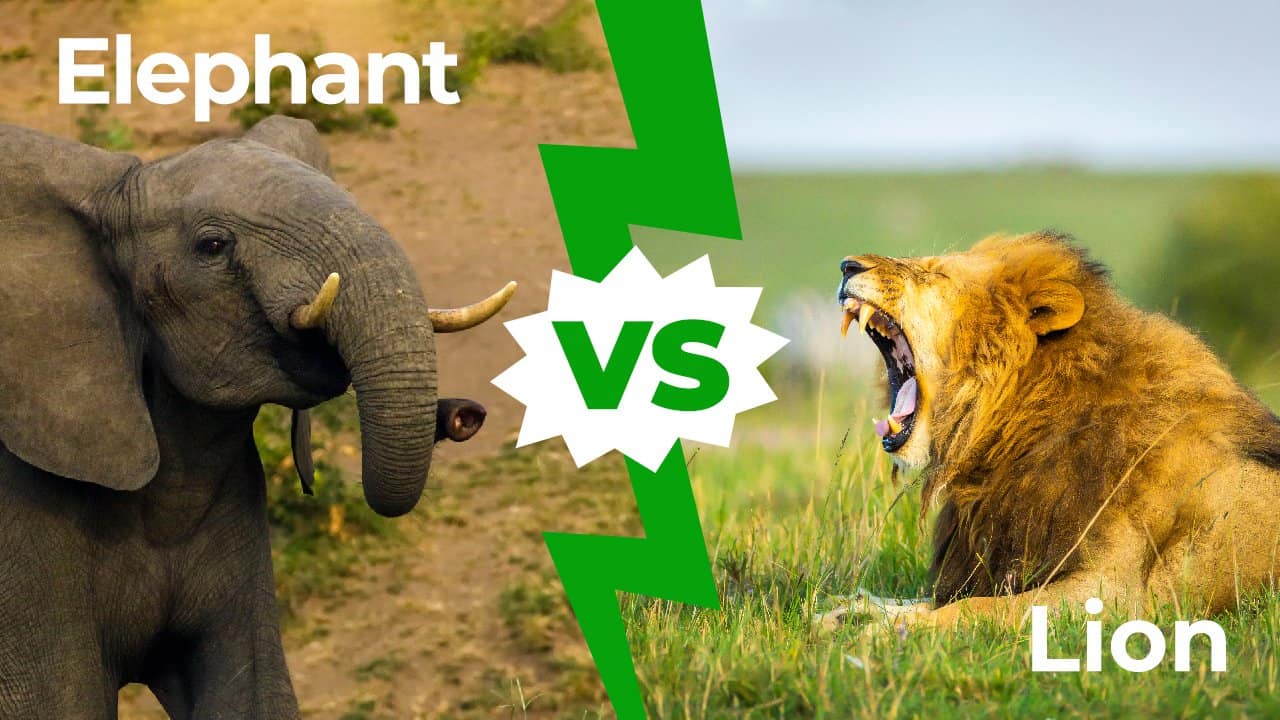
Two of the most iconic animals from Africa are the elephant (Loxodonta africana; L. cyclotis) and the lion (Panthera leo). The carnivorous lion, known as the King of the Jungle, is capable of hunting almost any animal it encounters on the savannah. The elephant, a herd-based herbivore, also roams these same areas. Lions and elephants generally coexist with mutual respect and tend to avoid each other, but what would happen if these two powerful animals faced off in a one-on-one fight? Seven factors can help determine the outcome: size, speed, bite force, senses, defenses, offensive abilities, and predatory behavior. Continue reading to discover which one of these magnificent animals is capable of destroying the other as they fight for their lives.
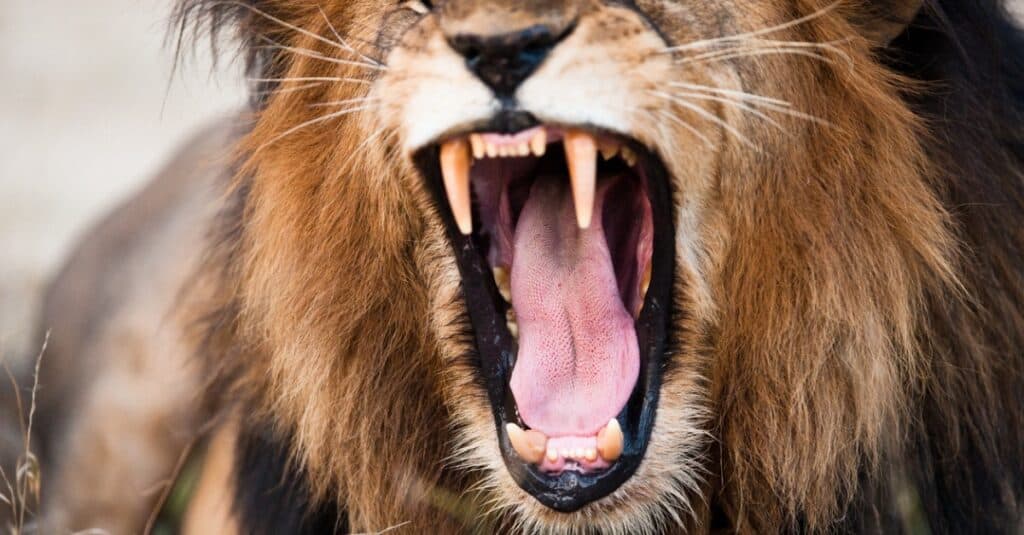
The physical components and combat abilities are key factors in a fight between these two.
©iStock.com/3dan3
Elephant vs. Lion: Size
An African elephant is significantly larger and heavier than a lion. An adult bull (male) elephant typically stands 8 to 13 feet at the shoulder and weighs between 5,000 and 14,000 pounds. An adult male lion stands 3.5 to 4 feet at the shoulder and weighs between 330 and 550 pounds.
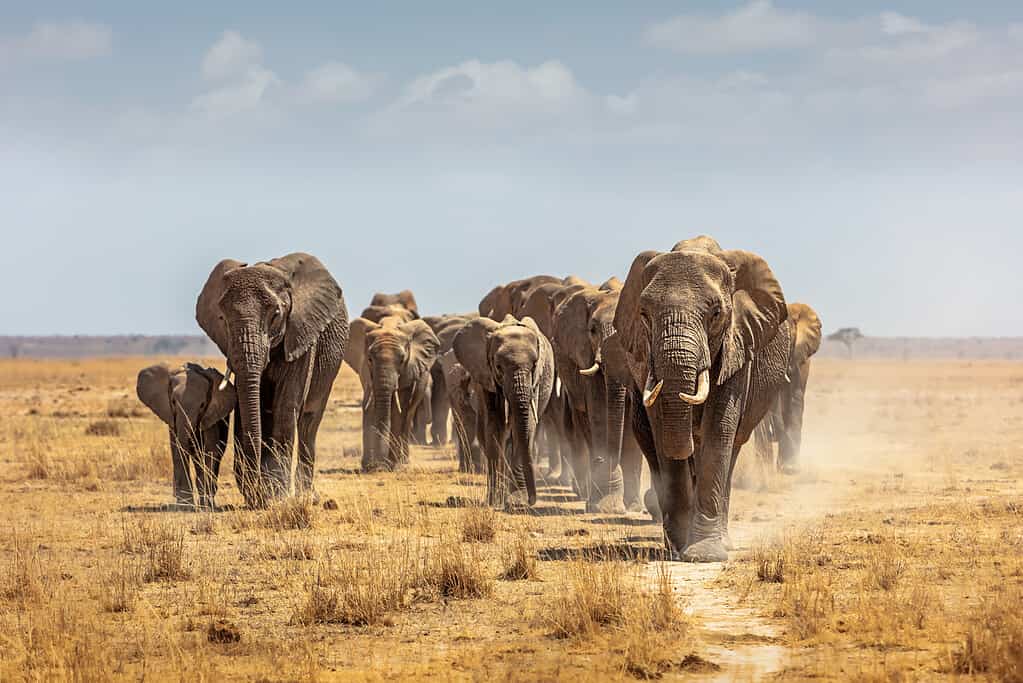
African elephants are the world’s largest land mammals.
©adogslifephoto/ via Getty Images
This means that an adult bull elephant is 10 to 30 times larger than an adult male lion.
Size Advantage: Elephant
Elephant vs. Lion: Speed and Movement
A lion is significantly faster and more agile than an African elephant.A lion is capable of reaching speeds of up to 50 miles per hour (mph) in very short bursts, though more commonly their top speed is around 35-40 mph.
‘An African elephant can charge at speeds up to 25 mph, though they typically move at around 15 mph when running. While elephants are surprisingly fast, lions are much quicker and more agile. However, if a lion were to charge directly at an elephant, it would likely end badly for the lion. The lion’s speed is most useful for escaping from the elephant, not attacking it.
Speed Advantage: Lion
Elephant vs. Lion: Bite Force and Teeth
Elephants don’t use their teeth defensively, and their biting power is nothing special. They’re herbivores, after all. However, lions have a powerful bite force typically measured around 650 pounds per square inch (PSI), though some recent estimates suggest it could be as high as 1,000 PSI.
Bite Force Advantage: Lion
Elephant vs. Lion: Senses
Elephants do not have the fine-tuned senses of a predator. They can hear well and smell food from miles away, but they do not have great vision. That leaves them at risk of being ambushed.
Lions are apex predators that have amazing sight even at night, a good sense of smell that can sense other animals’ markings, and wonderful hearing that allows them to seek prey from a distance.
Sense Advantage: Lion
Elephant vs. Lion: Defenses
African elephants rely on passive defenses such as size, thick skin, and a cohesive social structure, whereas lions utilize active, aggression-based defenses to deter threats. An adult elephant’s sheer mass makes it nearly impervious to predators, whereas lions rely on pride defense to survive.
Defensive Advantage: African elephant
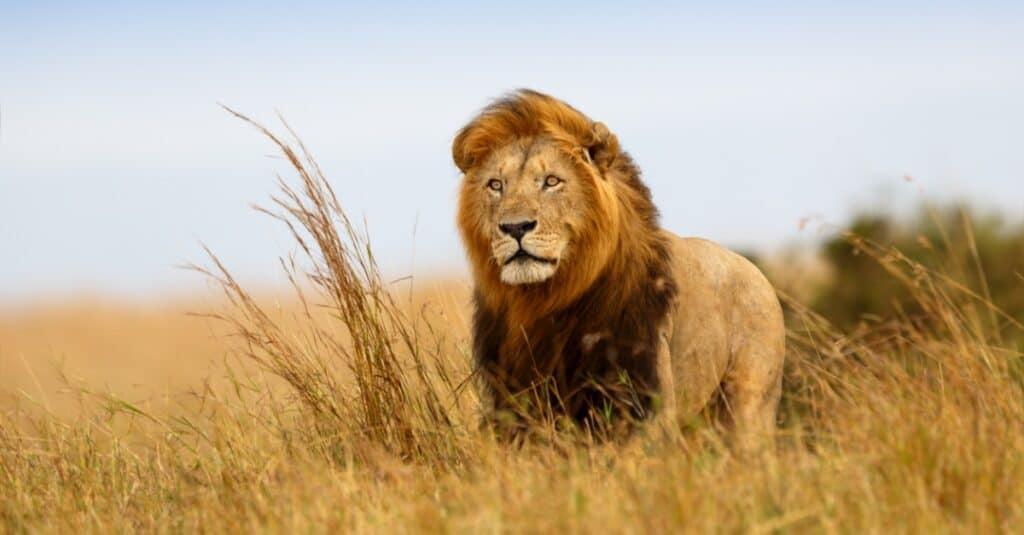
Lions are expert ambushers that can see well at night and quietly attack.
©iStock.com/MaggyMeyer
Elephant vs. Lion: Offensive Capabilities
An African elephant’s offense relies on stomping, ramming with tusks, and trunk slamming, while a lion relies on speed, claws, biting, and cooperation within the pride.
Elephants are more likely to go on the offensive, especially when protecting their territory or calves by initiating aggressive charges. While lions are apex predators, they are strategic hunters who typically avoid dangerous confrontations. In contrast, elephants often attack when they perceive a threat, making them arguably more aggressive in defensive situations.
Offensive Advantage: Lion
Elephant vs. Lion: Predatory Behaviors
The elephant has no predatory behaviors, but it knows when danger is coming and acts accordingly. They do not hesitate to charge and head off enemies before they get too close.
Lions are amazing ambush predators that can seek and kill other animals at night. They are good at hiding their large bodies and know how to bring friends along to secure the kill.
Predatory Advantage: Lion
Who Would Win a Fight Between an Elephant and a Lion?
An elephant would win a fight with a lion. A single lion does not pose much of a threat to a fully grown elephant. The elephant is simply too large for the lion to handle.
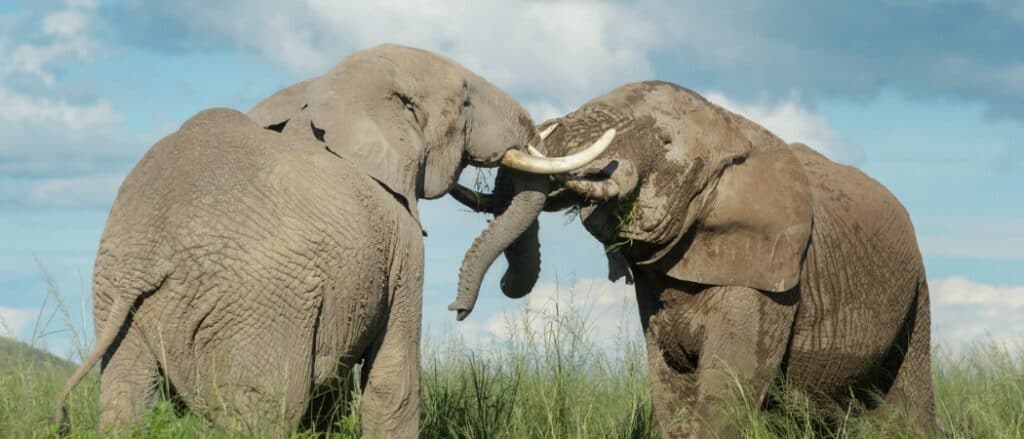
An elephant would win in a fight against a lion.
©iStock.com/AndreAnita
The elephant could either flip the lion over and stomp it to death, or use its tusks (if it has them) to impale the big cat. A lion is large, but it can’t deal with 20 times its own weight being pushed into its body by a rampaging beast.A lion is large, but it can’t deal with 20 times its own weight being pushed into its body by a rampaging beast.
A large pride of lions has occasionally been documented killing elephants, though it is extremely rare for them to successfully kill a fully grown, healthy bull elephant. In a one-on-one match, a lion poses little threat to an adult elephant.