
Quick Take
- A California ground squirrel's tail does something physically measurable when it faces a rattlesnake, and that biological trick turns the predator's own senses against it. See how the heat trick works →
- Before confronting a rattlesnake, these squirrels perform a strange ritual using the snake's own shed skin, and the behavior is not what you would expect. Discover the snakeskin ritual →
- Rattlesnake venom is lethal to most small mammals, yet adult California ground squirrels have a biological reason to stand their ground that most prey animals simply don't have. Explore their venom immunity →
- Throwing rocks at a rattlesnake only makes things worse, but that raises the question of why the squirrel does it anyway. Watch the provocation behavior →
In a battle between a California ground squirrel and a rattlesnake, many would put the odds on the rattlesnake to come out the victor. The same people would wonder if a squirrel was brave or foolish for even attempting to defend itself rather than retreat. However, California ground squirrels have evolved a trait that not only stops rattlesnakes in their tracks but also sends them slithering away, proving that the squirrels are not as easy a target as they appear to be.
California Ground Squirrel Waves Its Tail to Scare Off a Rattlesnake
California ground squirrels will stand their ground when a rattlesnake attempts to invade their colony. A YouTube video by Animal Life shows that the squirrels are not intimidated; in fact, they will even provoke the snakes before ultimately sending them away in fear.
A California ground squirrel found a snakeskin near its colony. Sensing the rattlesnake was near, the squirrel began to chew on and rub the snakeskin on its fur.
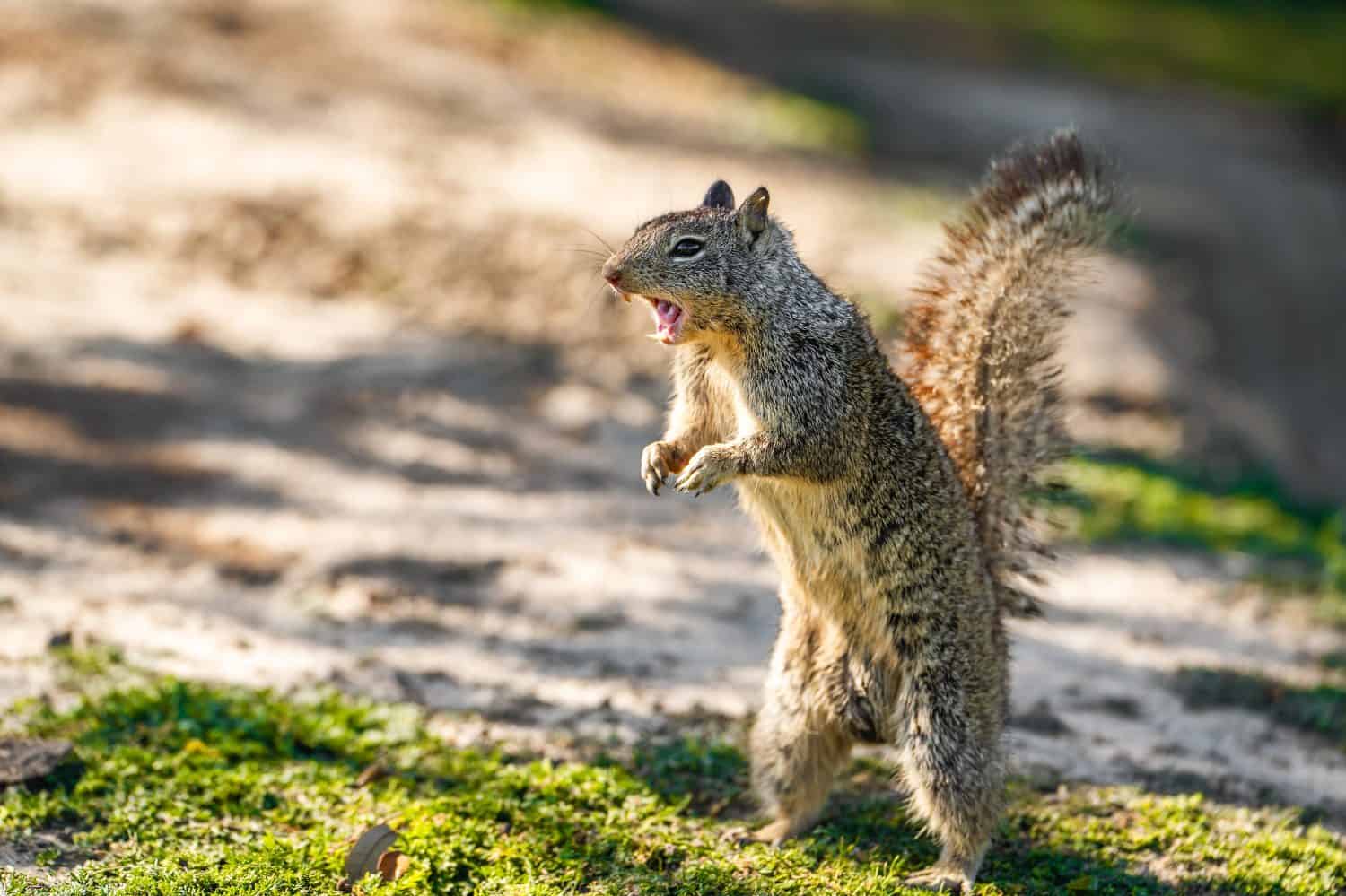
California ground squirrels will shake their tails to ward off rattlesnakes.
©Iv-olga/Shutterstock.com
After locating the snake just a short distance away, the ground squirrel begins to throw stones and dirt at the snake. This does not scare the snake, but only provokes it, as the video explains. But what happens next causes the snake to retreat.
The squirrel shakes its tail back and forth with gusto. In a matter of moments, the snake stops any forward advancement and decides to slither away. The ground squirrel did not have to physically defend itself, so what made this snake run in fear?
Why Does the Ground Squirrel Waving Its Tail Intimidate the Rattlesnake?
Rattlesnakes do not have the best vision and can only see in yellows and greens. While their eyesight is sensitive to shapes and movement, they primarily use their infrared senses to detect prey. California ground squirrels exploit this trait to their advantage via tail-flagging to confuse rattlesnakes and hopefully, send them on their way.
California ground squirrels will wave their tails vigorously from side to side when confronting a rattlesnake. This heats up the squirrels’ tails. Rattlesnakes can detect heat with their infrared vision. To the rattlesnake, the heated, waving tail appears as if a much larger predator is in front of them, rather than a small mammal they would normally prey upon.
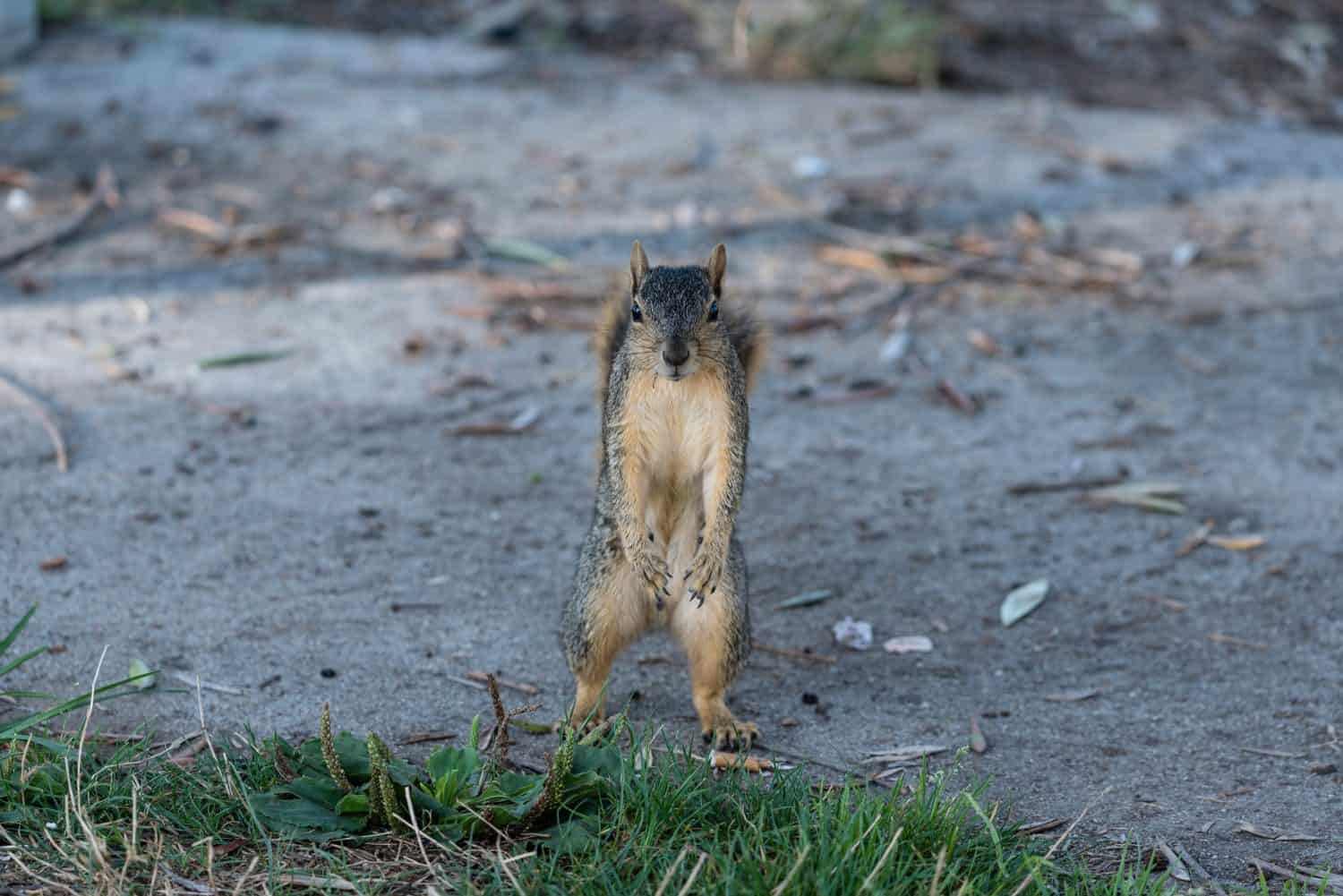
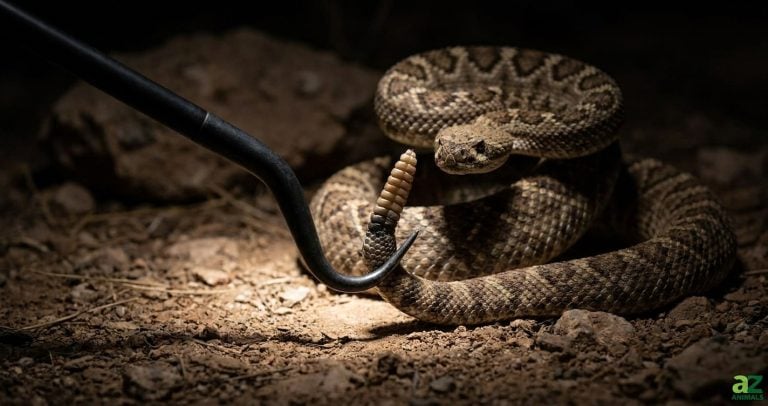
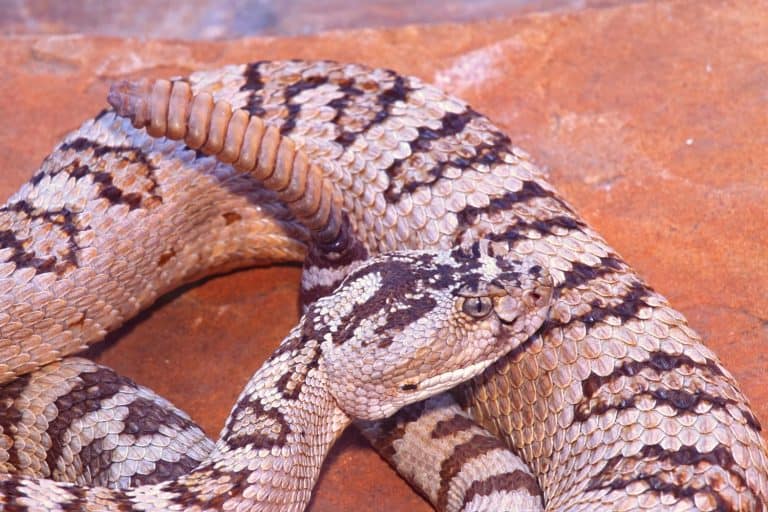
Rattlesnakes will sense the heat coming from the ground squirrel’s tail and retreat.
©Alex Krassel/Shutterstock.com
Instead of being on the offensive, the rattlesnake becomes defensive when squirrels tail-flag. Using their loreal pits, or “heat-sensing organs” located between the eyes and nostrils, rattlesnakes sense a large mammal in front of them, versus the smaller squirrel. Rattlesnakes become wary of the ground squirrel and, in many instances, retreat. Consequently, adult ground squirrels are not as susceptible to being targeted by rattlesnakes, given the defensive strategies they have evolved over time.
Ground Squirrels Use Shed Snakeskin to Their Advantage
It was not out of hunger that the California ground squirrel in the YouTube video was eating a shed snakeskin and rubbing it on its body. This is yet another defensive move of the squirrels to keep rattlesnakes from attacking.
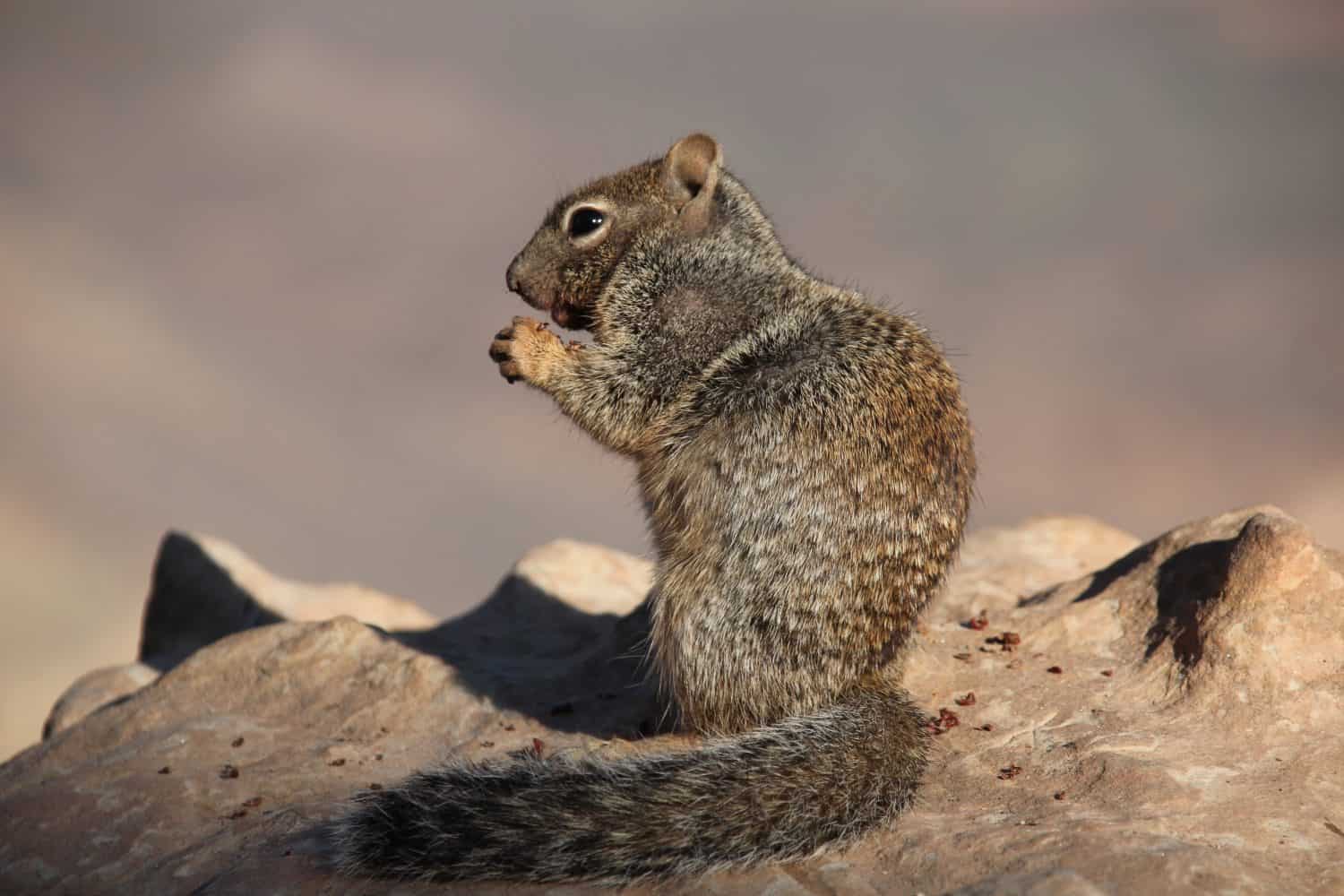
Ground squirrels will chew on and rub snakeskin on their bodies to confuse rattlesnakes.
©Jessfv/Shutterstock.com
California ground squirrels will rub discarded snakeskin on their bodies and chew on it to put the snake’s scent on their bodies. When used with their tail wagging technique, rattlesnakes are thoroughly confused by the creature they see before them. Not only does it look large, but it has the scent of a rattlesnake. This combination is enough to deter the snake, which does not want to involve itself with what it sees as a larger, stronger predator.
In some instances, as seen in the video, the rattlesnake will slither away. While the snake believes it has escaped getting into a tussle with a predator, it is really a victory for the California ground squirrel, which used wits over fighting to save its colony.
Ground Squirrels Have Immunity to Rattlesnake Bites
California ground squirrels are very adept at scaring off rattlesnakes by vigorously shaking their tails and using shed snakeskin to confuse them. However, there are times when rattlesnakes remain defensive rather than retreating and will strike. Fortunately, adult ground squirrels have some immunity to rattlesnake venom, which may explain their confidence when confronting the reptiles.
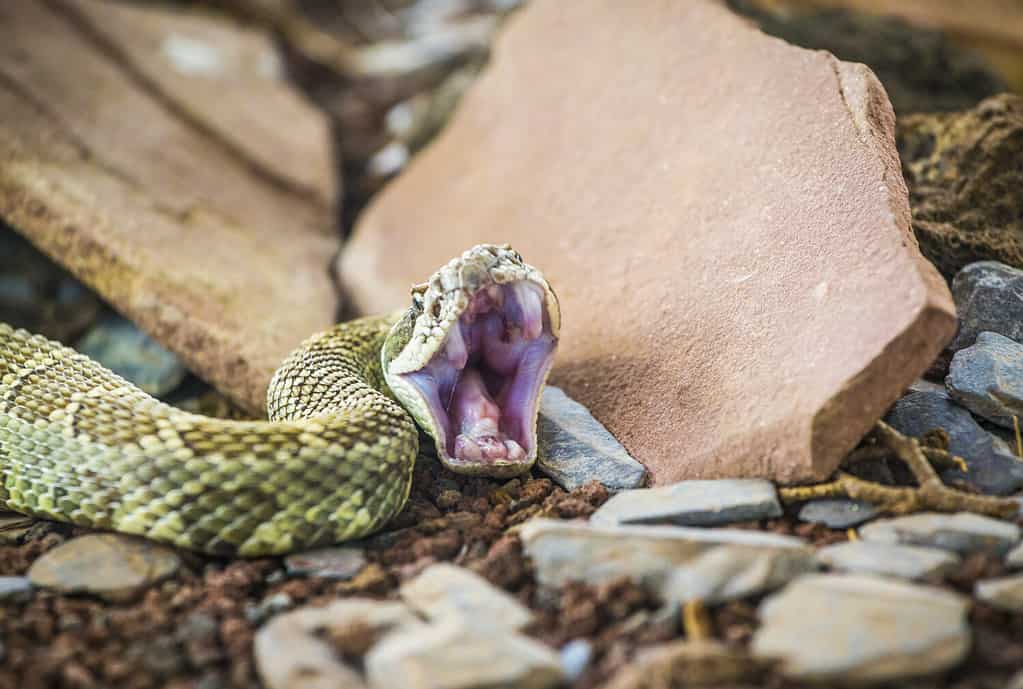
California ground squirrels can survive rattlesnake bites.
©Clement Horvath/Shutterstock.com
Unlike other small animals bitten by rattlesnakes, California ground squirrels can typically survive a rattlesnake bite. The proteins in their blood bind to the venom, allowing them to continue fighting and protecting their young from rattlesnake predation. Because ground squirrels are not easily defeated, rattlesnakes may back off after their venomous strike fails to have the intended effect. This keeps both the defending squirrel and the rest of the colony safe from the snakes.
While the ground squirrels would prefer to use defensive moves to keep rattlesnakes at bay, they are not afraid to put up a fight against the would-be predator. After years of evolution, California ground squirrels have proven to be worthy opponents against rattlesnakes, showing that even the scariest of predators can be spooked off with the right defensive strategies.