
Quick Take
- Achieving 100% locomotion control over a cockroach is a mandatory requirement for jewel wasp survival.
- The sub-esophageal ganglion location creates targeting hurdles when prey size exceeds 10 times the wasp.
- Its venom can induce compliance rather than paralysis in the cockroach.
- A 2-stage sting protocol is required before the wasp can safely lead the cockroach home.
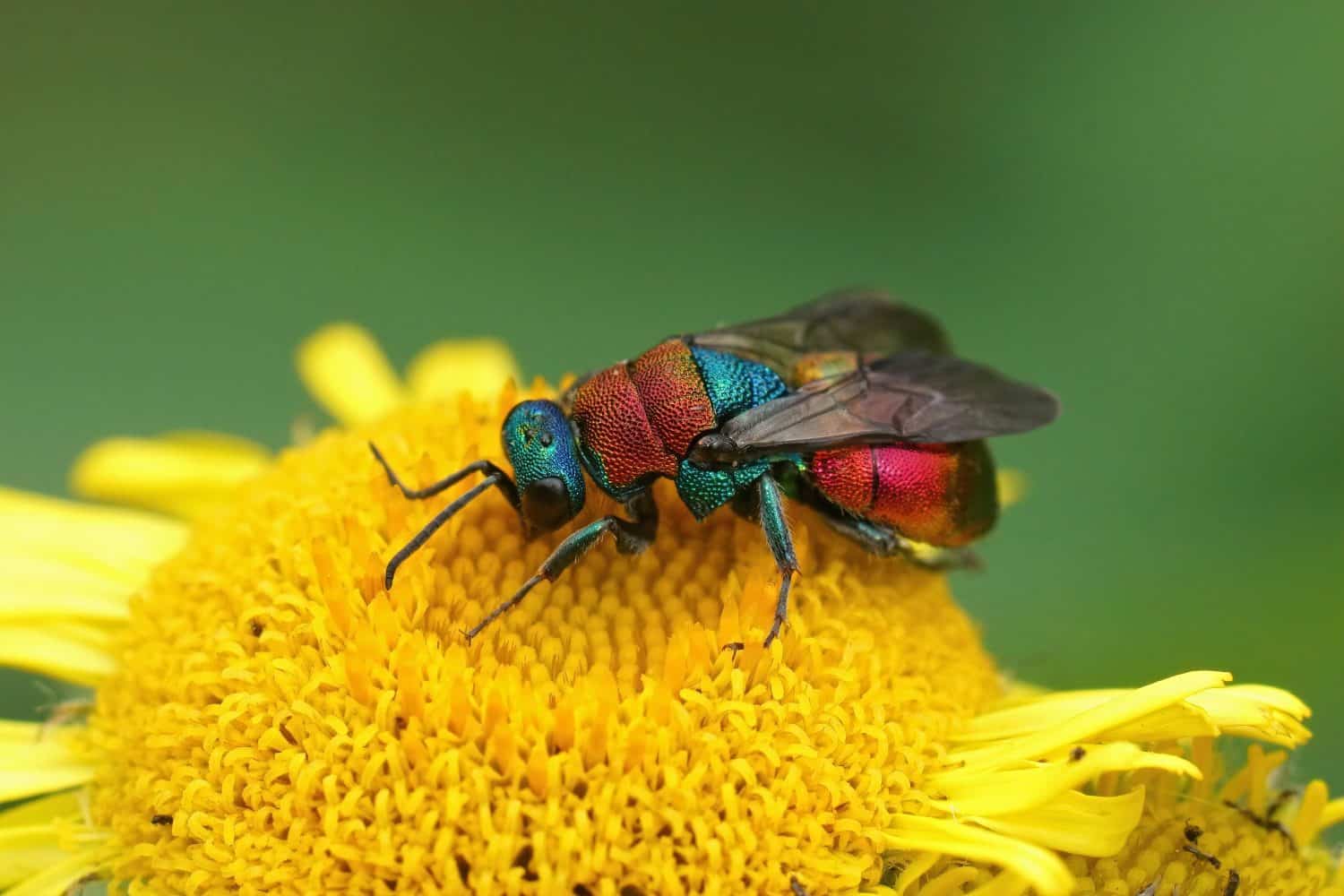
The jewel wasp is known to be a brutal killer.
©Wirestock Creators/Shutterstock.com
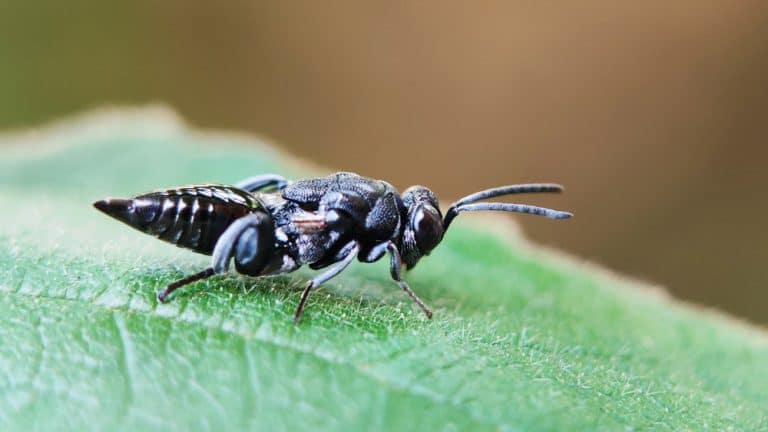
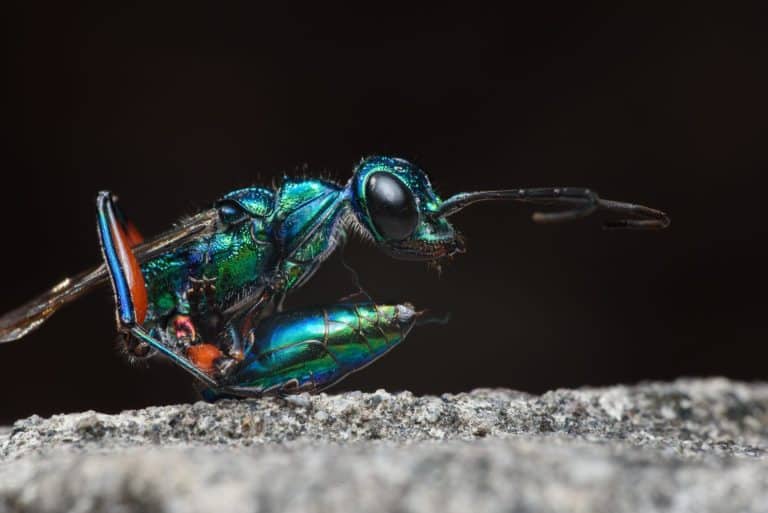
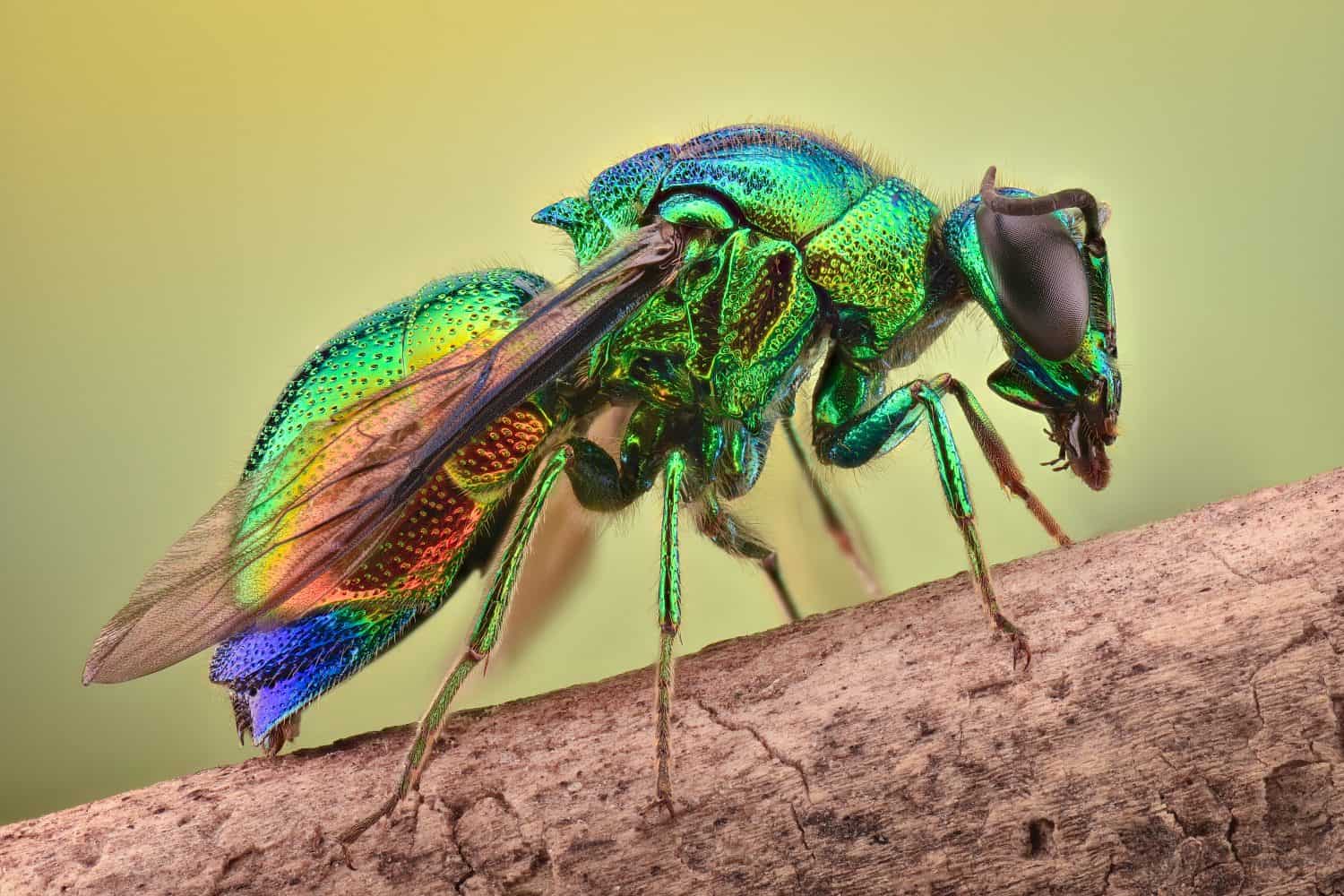
Imagine a predator that doesn’t just kill its prey, but performs a high-stakes “brain surgery” to turn it into a willing servant. Meet the jewel wasp (Ampulex compressa), a shimmering, emerald-hued insect that has mastered the art of biological mind control. While most wasps paralyze their victims, the jewel wasp uses a precise cocktail of neurotoxins to hijack a cockroach’s “free will,” disabling its escape reflex while leaving its legs perfectly functional. From “walking” its victim home on a leash made of antennae to its larvae’s gruesome internal buffet, the jewel wasp’s life cycle is a real-life horror movie hidden within a beautiful, metallic shell.
Don’t let its dazzling metallic-green and blue colors fool you; this wasp is one of nature’s most chilling assassins.
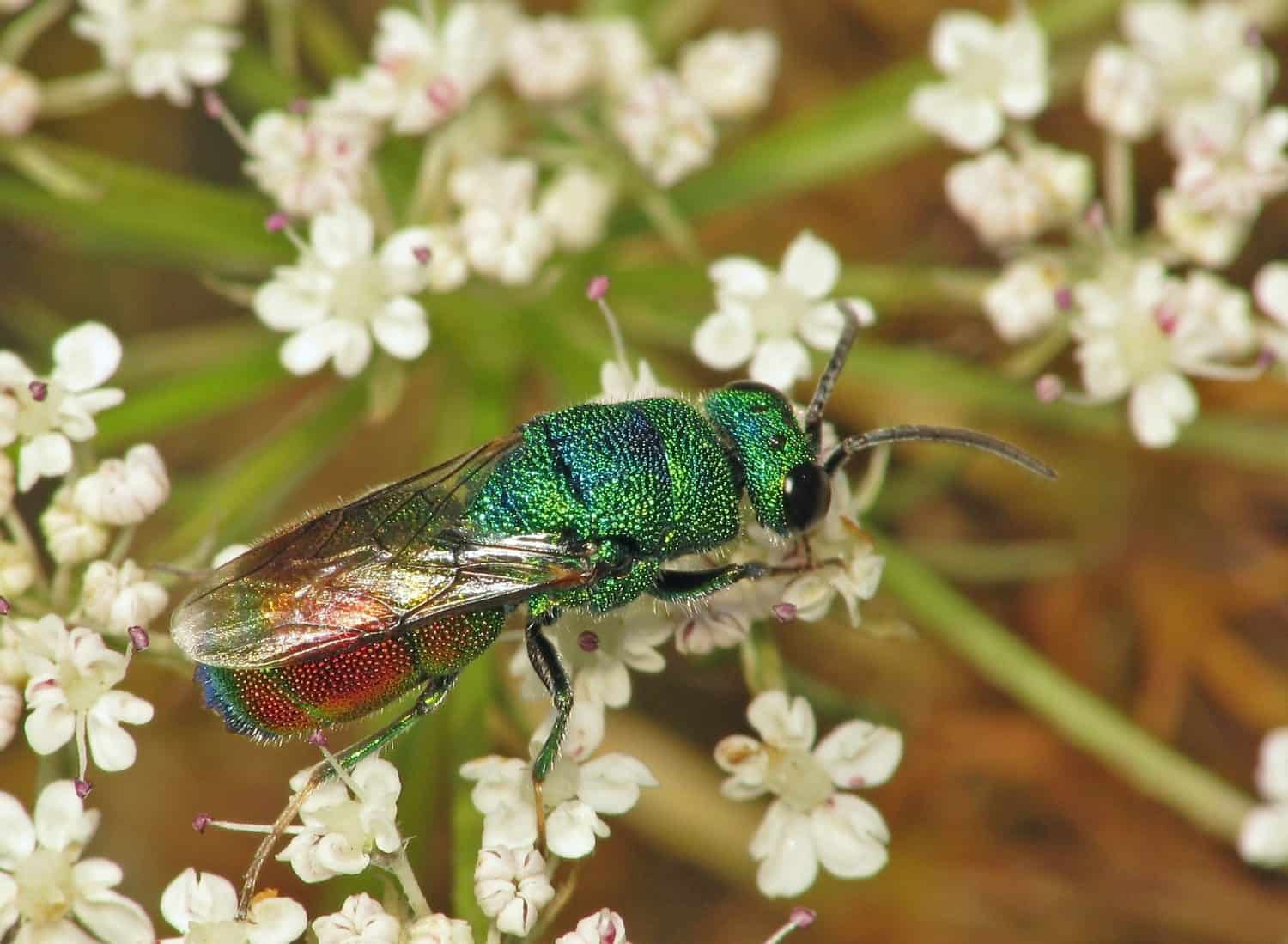
The jewel wasp is named after its dazzling and shiny coloring.
©Haseeb385/Shutterstock.com
The Precision Surgeon: Two Stings, One Zombie
Most predatory wasps simply sting their prey to paralyze it, dragging an inert body back to their nest. The jewel wasp is far more sophisticated. Its attack begins with a swift, immobilizing sting to the cockroach’s thorax, temporarily paralyzing its front legs. But that’s just the prelude. The real horror begins with the second sting.
The wasp then delivers a second, incredibly precise sting directly into the cockroach’s brain. Scientists have observed that the wasp carefully probes the cockroach’s head, targeting specific ganglia that control its escape reflexes and motivation. This isn’t a random jab; it’s a neurosurgical strike that delivers a cocktail of venom designed not to kill, but to incapacitate the cockroach’s will to resist. The cockroach remains fully capable of movement, but critically, it loses the drive to initiate movement on its own. It becomes a puppet, waiting for its master’s command.
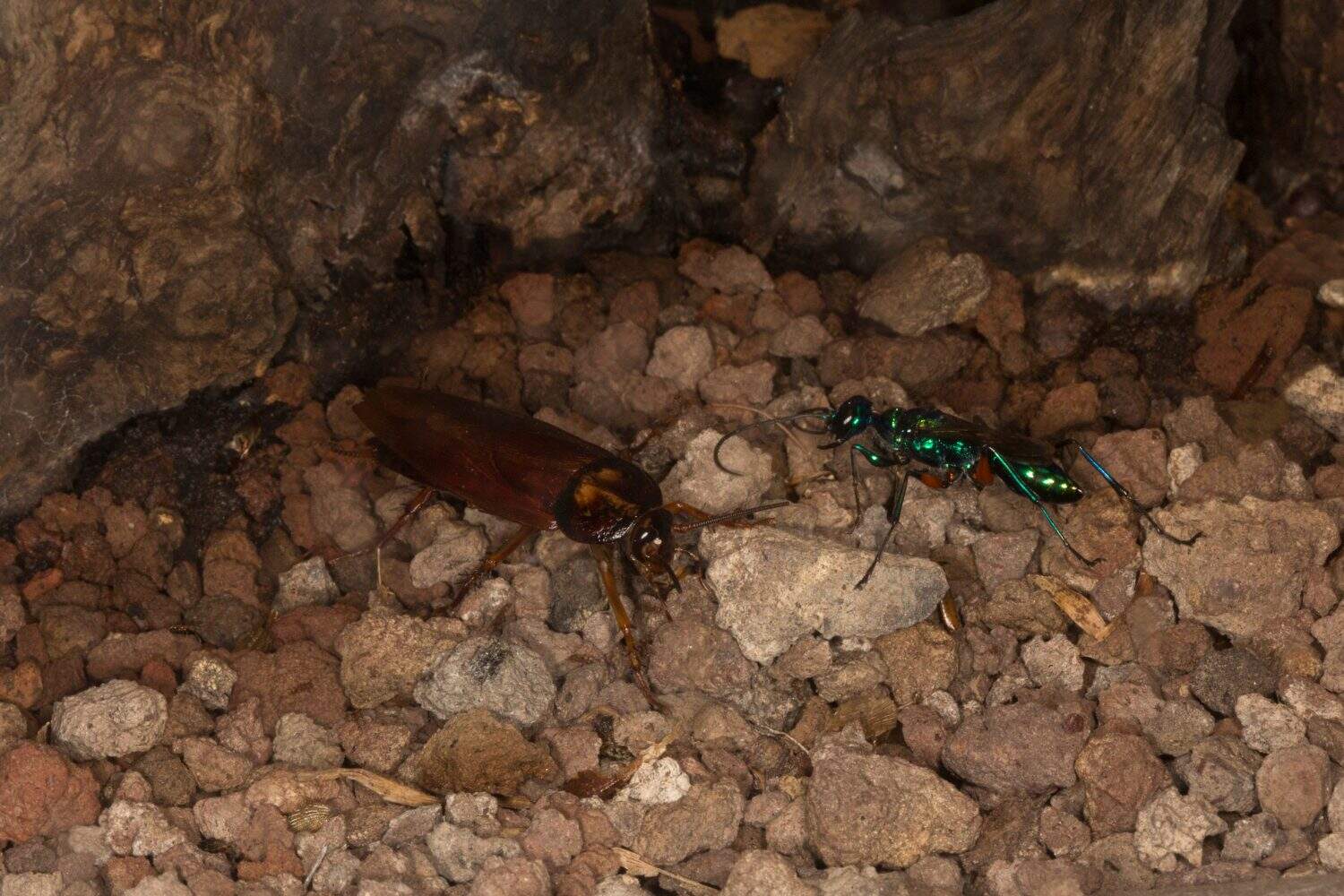
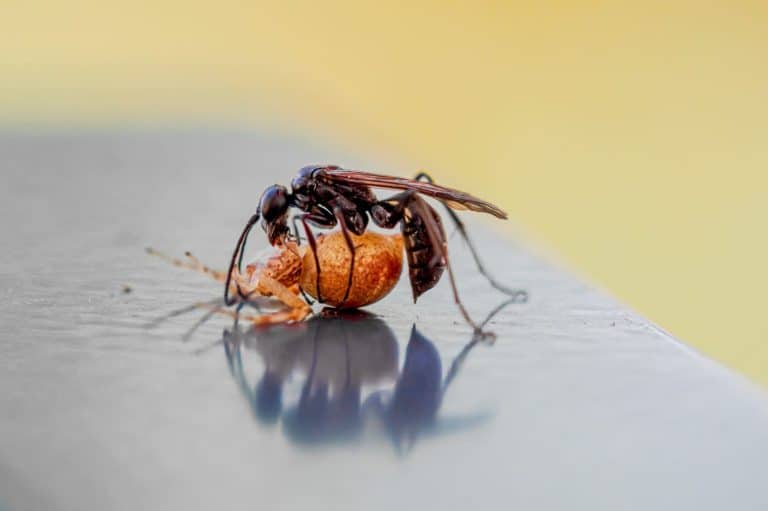
Roaches don’t stand a chance against the jewel wasp.
©Podolnaya Elena/Shutterstock.com
The Leash of Despair: A “Walking” Victim
With its victim’s will compromised, the jewel wasp initiates the next chilling phase: transportation. It doesn’t drag the cockroach, nor does it carry it. Instead, the wasp bites off roughly half of each of the cockroach’s antennae. This isn’t just an act of mutilation; the remaining stumps become the perfect handles.
The wasp then grips one of the shortened antennae and effectively “leads” the cockroach to its burrow. The stunned cockroach, despite being able to walk, offers no resistance. It follows its captor like a dog on a leash, a silent, unwilling participant in its own demise. This macabre procession can sometimes cover significant distances, with the wasp meticulously guiding its much larger prey back to a pre-selected underground chamber.

The Internal Buffet: Keeping the Meal Fresh
Once safely in the burrow, the wasp lays a single egg on the cockroach’s leg. This egg hatches into a larva, and this is where the story gets even more gruesome. The larva doesn’t immediately kill its host. Instead, it initially feeds externally on the cockroach for several days before burrowing inside to strategically consume internal organs.
This isn’t a mindless feeding frenzy. The larva is a master of resource management, carefully avoiding vital organs that would cause the cockroach to die too quickly. It ensures the cockroach remains alive, fresh, and immobile for several days, serving as a living, personalized, and perfectly portioned meal for the developing wasp. The cockroach might be a “zombie,” but it’s a remarkably well-preserved one, ensuring the larva has a sustained source of fresh nutrients.