
Quick Take
- This jellyfish has a quirk in its life cycle that makes it nearly impossible to spot, which is exactly why the invasion went undetected for so long. Why cryptic invasions go unnoticed →
- Ask most Europeans where this jellyfish lives, and they'll confidently give you the wrong answer. That widespread confusion is fueling the invasion. See the survey findings →
- Citizen science is supposed to be the early-warning system for biological invasions, but it only works if people can recognize what they're looking at. How citizen science falls short →
- Some invasive species trigger immediate alarm, while others slip across six continents before anyone raises a flag. That difference says a lot about which threats we're most likely to miss. Which threats we're most likely to miss →
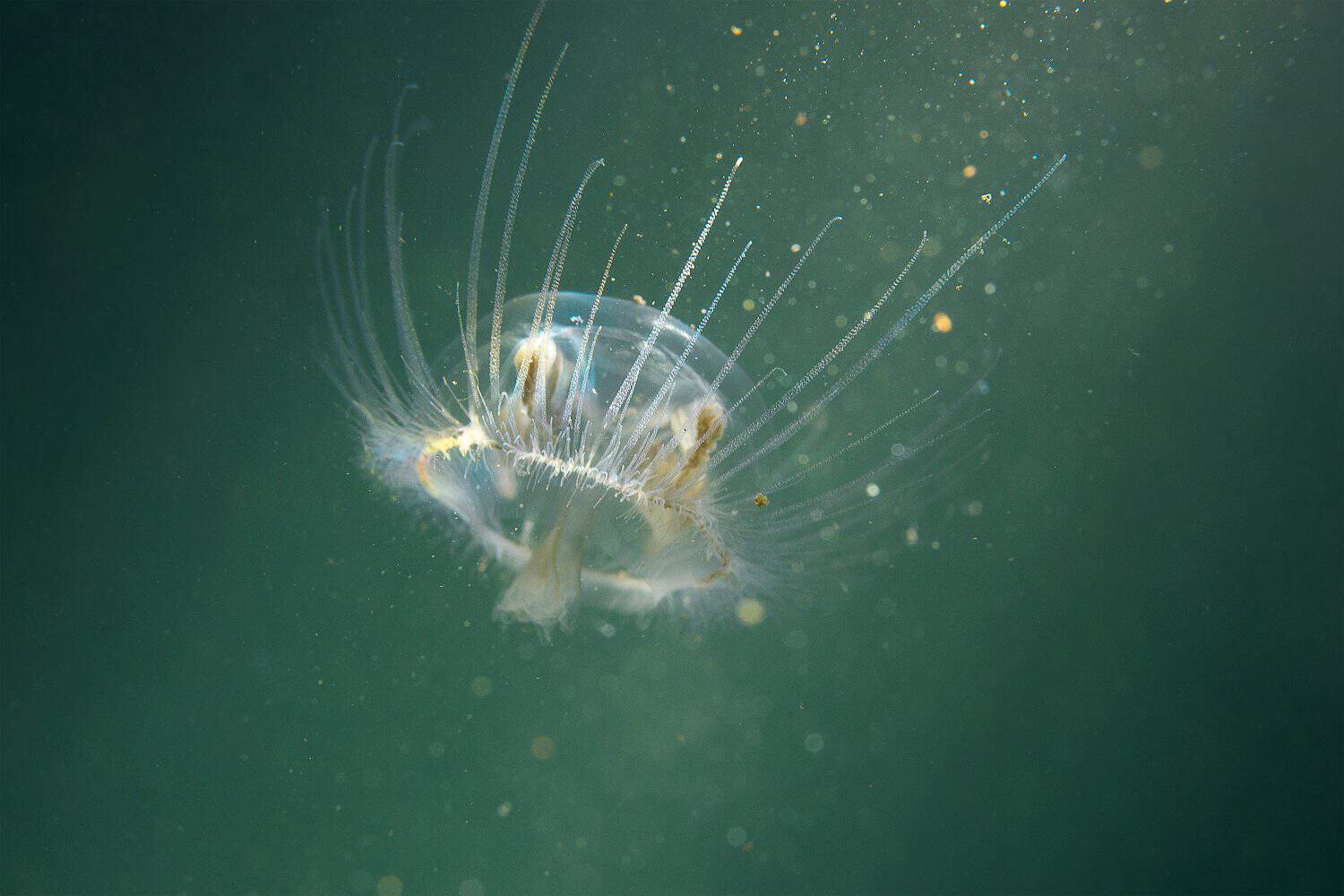
There is a stealthy invader in European waters, and the people who live there are blissfully unaware. A freshwater jellyfish called Craspedacusta sowerbii is quietly spreading and remaining largely unnoticed. Now, a fascinating study has surveyed public knowledge and perception of this creature. The findings reveal a startling lack of awareness that needs to be addressed if management responses are going to be effective.
The Dangers of Cryptic Invaders
Invasive species are a threat to biodiversity all over the world. Invasive alien species are defined by scientists as organisms that have been introduced outside their native range and threaten biodiversity, ecosystem services, or human well-being. Sadly, invasive alien species are now recognized as the fifth main cause of species extinction.
This is also not a problem that will go away anytime soon. The exponential rise in trade, globalization, and international transport has resulted in an estimated 37,000 alien species being introduced into new ecosystems, with at least 3,500 classified as invasive.
Yet not all invasive alien species enjoy the same levels of attention from scientists, managers, or the general public. Some, such as the zebra mussel Dreissena polymorpha in North America, attract attention right away due to the spectacular effects they have. Others are less obvious and remain unnoticed. These are the so-called cryptic invasions. Underestimating the damage that cryptic invasions can inflict is a mistake!
Invasive Jellyfish
Craspedacusta sowerbii is the world’s most widespread freshwater jellyfish. Experts believe its native home is the Yangtze River basin in China. In 1880, it was described in an ornamental pond in London, and that was just the start! It has now been recorded on six continents. In Europe, that includes countries such as Spain, Italy, France, and Greece. It was likely transported around the globe as propagules (in its podocyst stage), hidden in aquatic plants or submerged in substrates.
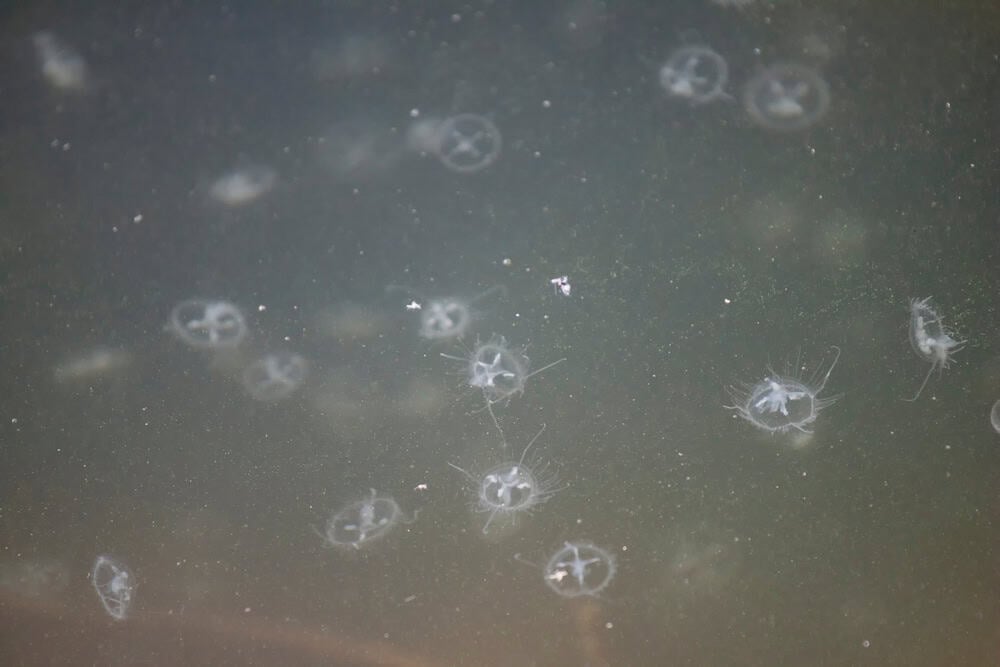
Craspedacusta sowerbii likely spread across the world in ornamental aquatic plants.
©DKeith/Shutterstock.com
In the U.S., C. sowerbii appears to be established in at least 44 states. It was likely introduced to the U.S. in ornamental aquatic plants, especially water hyacinth. It may also be inadvertently spread by waterfowl.
Despite this widespread range, very few studies have focused on this jellyfish. Some investigations have suggested that it disrupts food webs by competing with fish larvae or macroinvertebrates. Its impact in the U.S. is not clear, but it can alter nutrient dynamics and exert top-down control on zooplankton communities, though its overall ecological impact remains under study. Thanks to its life cycle, it is only visible for a few days each year, which makes spotting it a challenge.
Therefore, scientists wanted to establish whether people were even aware of its existence!
Why Do Public Perceptions of Invasive Species Matter So Much?
Citizen science participation in scientific monitoring of habitats and species is becoming increasingly important. Enthusiastic members of the public can be the ‘eyes and ears’ of scientists in diverse and widespread locations over prolonged periods. Citizen scientist networks have played an important role in detecting and tracking biological invasions. For this to work, however, the public must be aware of the species and must know how to recognize it.
A recent study, led by researchers from several European universities, used survey data and citizen observations to ascertain the level of public knowledge and perception of C. sowerbii in 17 European countries. The multilingual survey was conducted over 22 months and collected 1,388 responses.
What People Know About Invasive Jellyfish
Worryingly, this invasive jellyfish species is virtually unknown to the general public in Europe. Over 80 percent of the people surveyed did not know its scientific name, and nearly half incorrectly believed it lived in the sea rather than in freshwater. There was a lot of confusion between freshwater and marine jellyfish. This demonstrates how difficult it is for the public to recognize this species. More importantly, it highlights the broader challenges of detecting cryptic freshwater invasions.
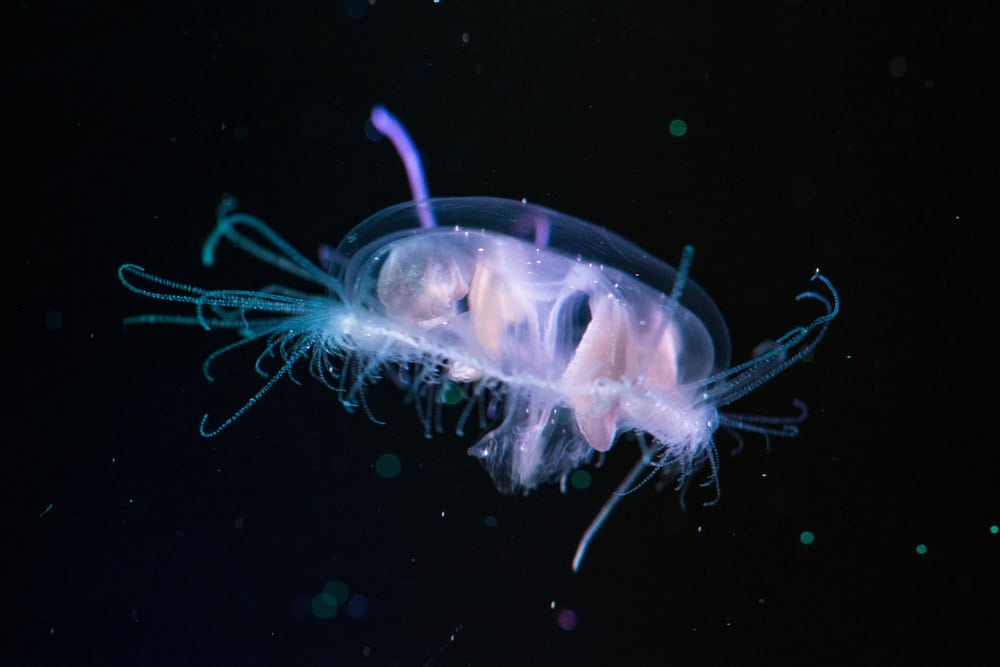
Nearly half of the people claimed they had seen Craspedacusta sowerbii in the sea.
©Carolin Bleese/Shutterstock.com
C. sowerbii is a strictly freshwater species, yet nearly half (49 percent) of the people questioned claimed that they had seen it in the sea! This is likely down to a ‘bias’ towards marine jellyfish in the media. When people came across these jellyfish, their response was a combination of fascination and caution. It was even described as ‘beautiful’ by 21 percent of respondents. However, these creatures can gather in large groups during the summer, which triggered feelings of nervousness and caution in over 50% of those questioned.
These jellyfish are not considered dangerous to humans. Its venomous sting can paralyze a small fish but is unlikely to penetrate human skin. In this study, 8 percent of people reported being stung by them, but of those, 56 percent reported no pain at all. Interestingly, it was the people who had seen the jellyfish themselves who felt there should be public discussion and government action about them.
Why This Matters
The findings are important because this is a well-established invasion. What’s more, the global spread of C. sowerbii could be increased by climate change. At the same time, the public is largely overlooking it and does not have access to adequate information and awareness-raising efforts. Therefore, it is the responsibility of management authorities, environmental NGOs, and researchers to include cryptic species in their action plans. We need to monitor cryptic species now to prevent potential ecological emergencies in the future.