
Foxes are a common wildlife species found in Maryland. Foxes have adapted to diverse habitats, including urban spaces, prairies, farmlands, and coastal sand dunes. Although they live around humans, foxes are typically shy and try to avoid human contact at all costs.
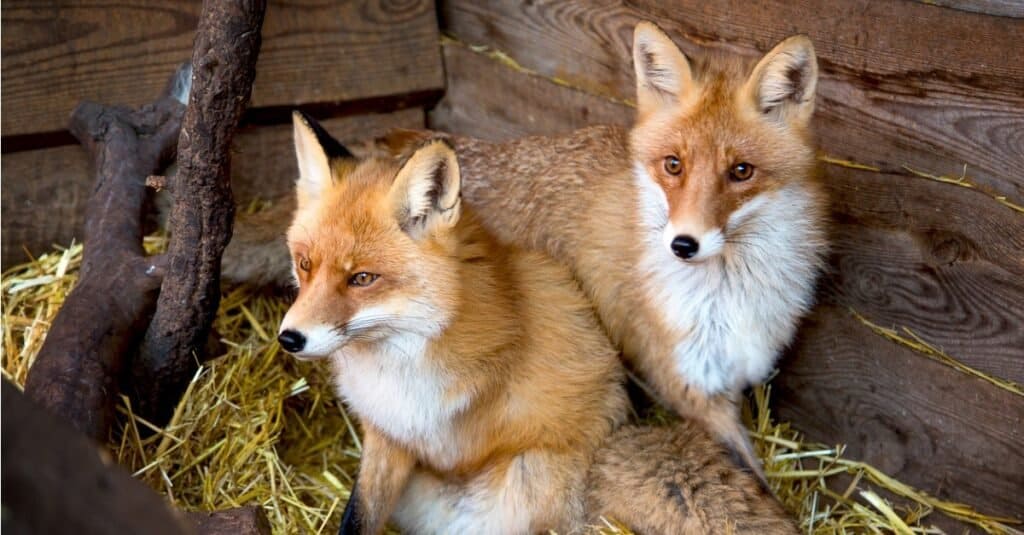
Foxes mate for life.
©iStock.com/Svetlana Belkina
Foxes are known to be clever creatures adept at finding food, surviving in all types of climates, avoiding predators, and caring for their young. There are four different types of foxes living in the United States. Maryland is home to two of them.
What Types of Foxes Live in Maryland?
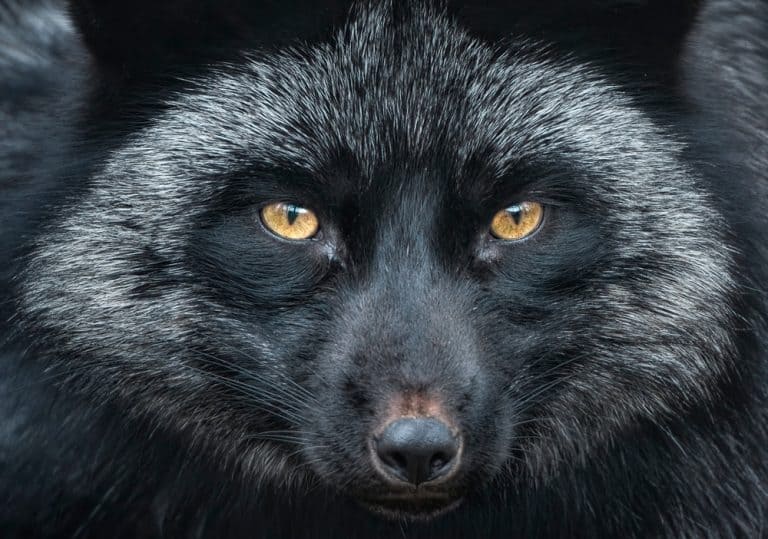
Two types of foxes live in Maryland: the red fox and the gray fox. The red fox is the most abundant and well-known fox that can be found in North America. The gray fox, also seen across the state, is smaller than the red fox and can be spotted by its mask-like face and silver-gray coat.
The Red Fox (Vulpes Vulpes)
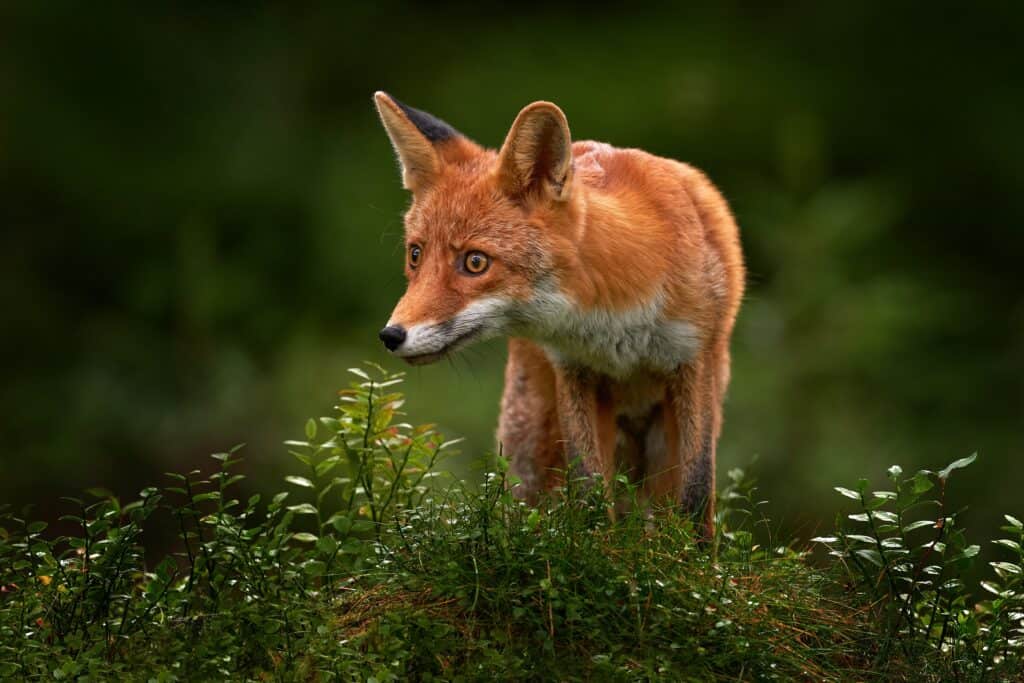
Red foxes are abundant throughout North America, including Maryland.
©Ondrej Prosicky/Shutterstock.com
The Red Fox makes its home across North America from the Arctic Circle into Central America and is commonly found across the state of Maryland. Red foxes have reddish-orange coats, slim bodies, black legs, black ears, and white-tipped bushy tails. They’re on the small side, weighing up to 14 pounds.
Distribution
Red foxes, native to Maryland, live in many different environments across the state, including suburban neighborhoods and urban areas. However, they prefer living in open fields, wetlands, and woodlands.
Diet
Red foxes are omnivores, meaning they will eat both meat and plants. Their usual diet consists of snakes, insects, rabbits, birds, mice, berries, and other fruits. Red foxes can eat a variety of other foods as well. When they live near humans, red foxes will eat leftover pet food, scavenge from garbage cans, or raid chicken coops.
Behavior
Mainly nocturnal, red foxes are active from dusk to dawn. They live within home ranges which they mark with their scents but sometimes travel outside their range to hunt. Red foxes are not aggressive and will typically avoid contact with humans.
The Gray Fox (Urocyon Cinereoargenteus)

Gray foxes tend to live in dense forests and are more elusive than their red fox cousins.
©Rob Jansen/Shutterstock.com
Gray foxes, commonly found throughout Maryland, also reside in much of the eastern and southern United States. Like the red fox, the gray fox has large ears and a bushy tail. Its legs, however, are shorter than a red fox and it has a more cat-like snout. The gray fox also has a distinct coat of silvery gray fur and a black stripe down its tail. Slightly smaller than the red fox, gray foxes can weigh between seven and 14 pounds.
Distribution
Gray foxes tend to live in dense forests and are more elusive than their red fox cousins. They make dens in underground burrows, hollow logs or trees, and rocky crevices. Gray foxes often live near waterways such as streams or rivers.
Diet
Like red foxes, gray foxes are omnivorous and maintain a diet of plants and animals. They tend to eat birds, mice, squirrels, rats, insects, rabbits, fruit, nuts, and berries. However, gray foxes are less likely than their red counterparts to be found raiding trash cans and chicken coops.
Behavior
A nocturnal creature, the gray fox has a home range of around two to four miles. Gray foxes are solitary hunters, living alone, except during breeding season and when they form family units to raise their young. Otherwise, they will protect their territory ferociously. They are very agile and can not only climb trees but will jump from branch to branch to catch their prey.

A gray fox climbs a tree.
©Danita Delimont/Shutterstock.com
Interesting Facts
- Gray foxes are one of three types of dog species that can climb trees using their retractable claws.
- Red and gray foxes are fast runners. Red foxes can clock around 31 miles per hour, while gray foxes can run up to 28 miles per hour.
- Red and gray foxes are monogamous and mate for life.
- Baby foxes are called pups, cubs, or kits. A group of foxes is called a skulk.
- Even as babies, foxes have sharp hearing, excellent eyesight, and a keen sense of smell.