
Here’s a sight you won’t soon forget: you’re walking down a path when you see a massive snake zoom past your feet and slither its way up a tree!
That’s exactly what I saw along the Virginia and West Virginia border in mid-July 2025. Let’s take a look at the pictures of this snake climbing a tree and then answer what species it is and whether its dangerous.
In Pictures: Giant Rat Snake Climbs a Tree
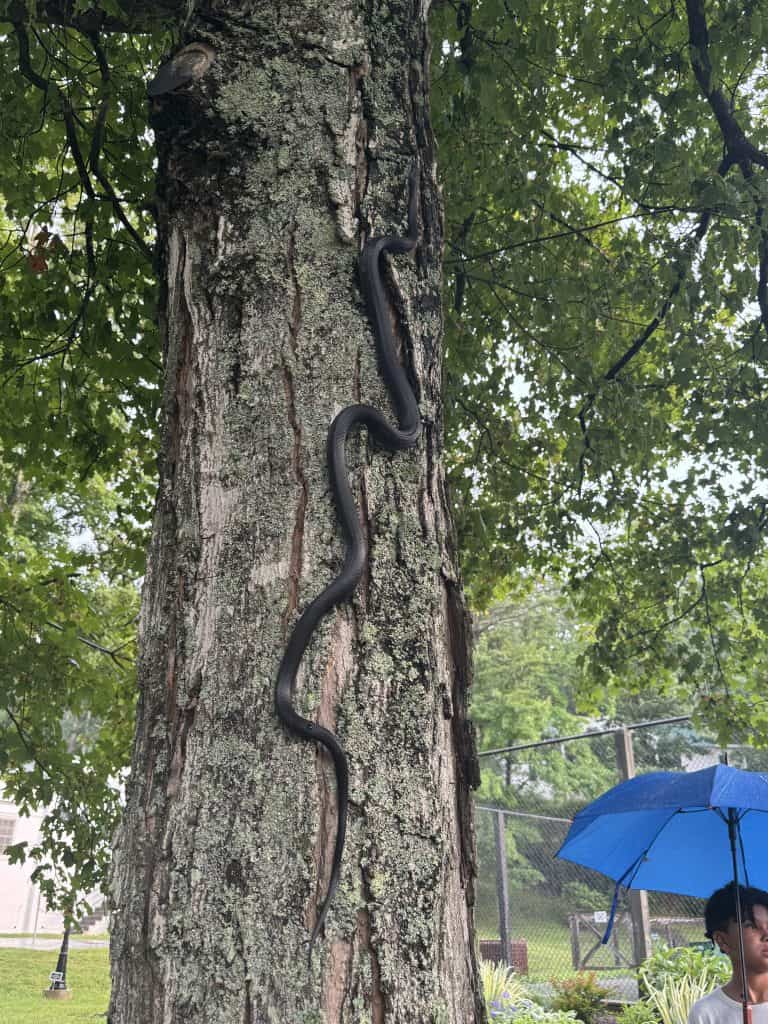
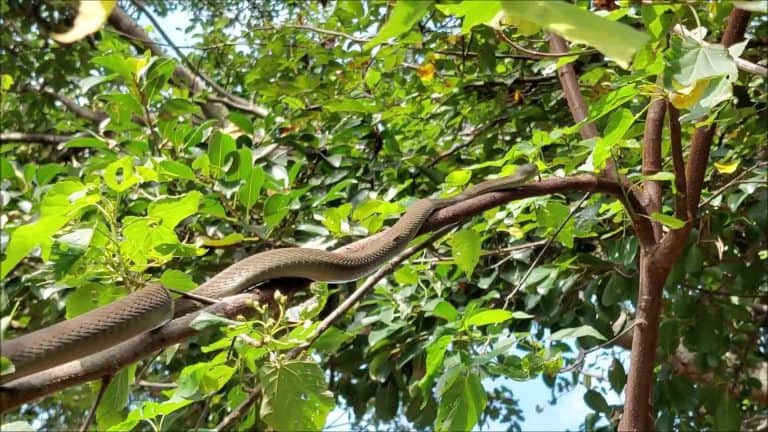
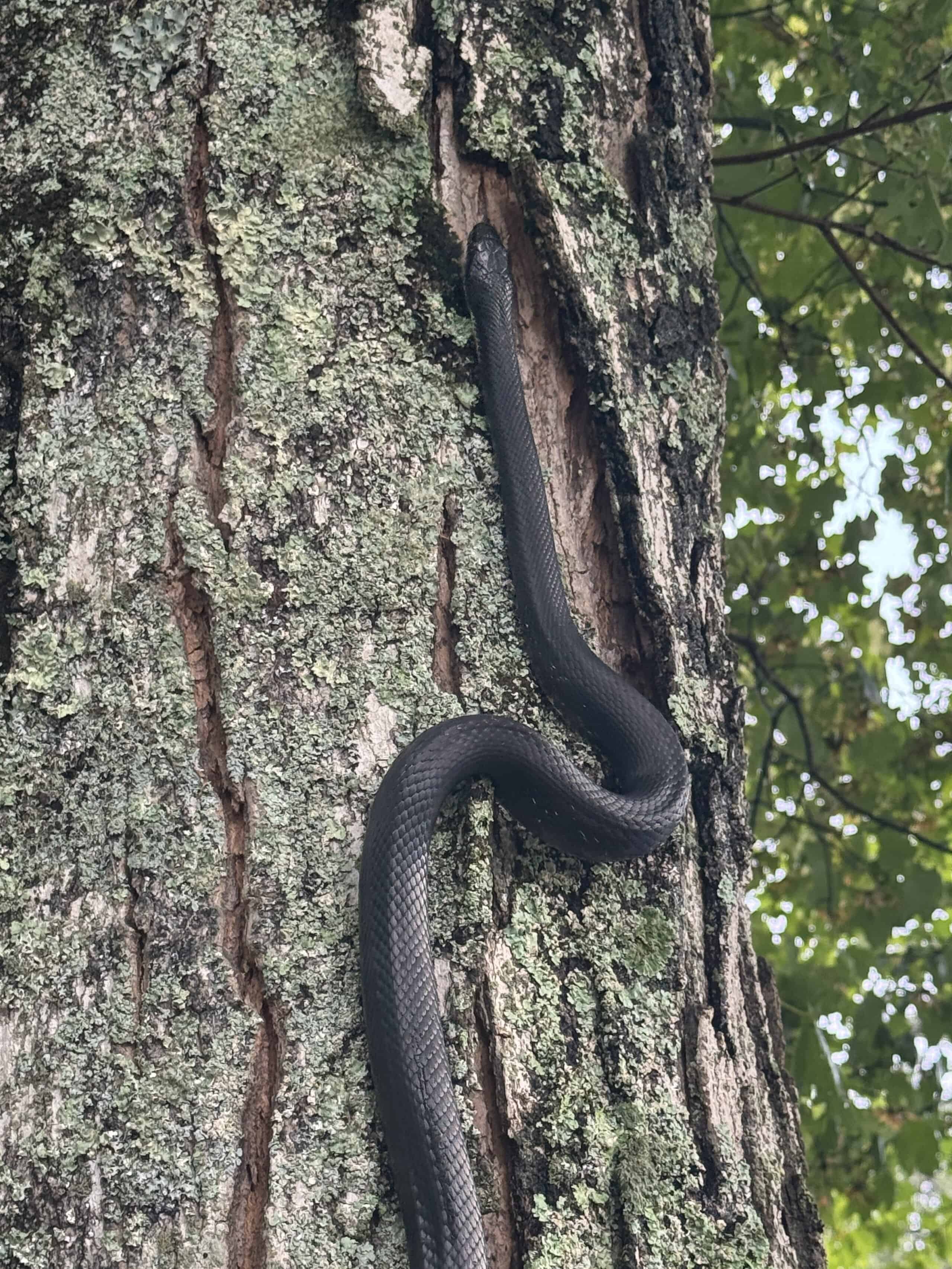
Here’s a picture of the snake I saw climbing the tree.
©
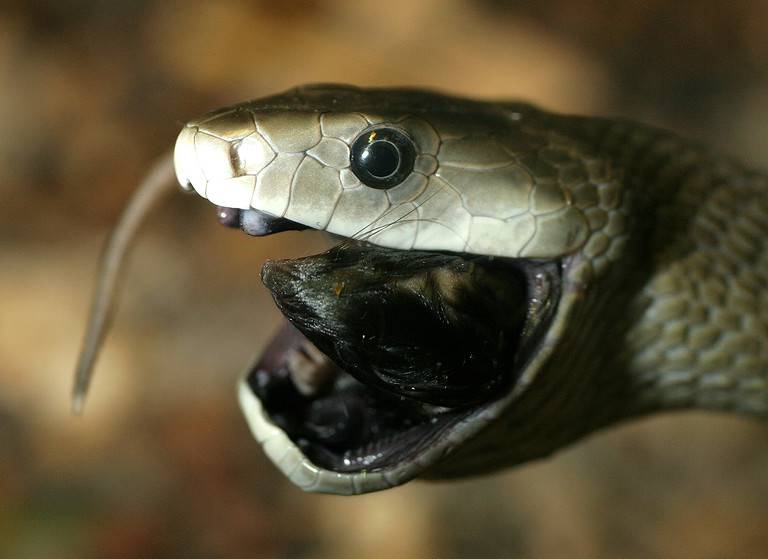
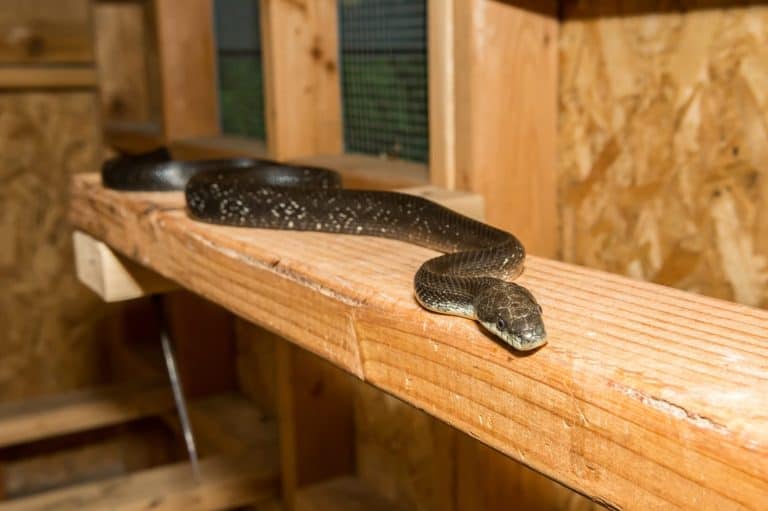
The snake I saw climbing a tree is a rat snake. The rat snake genus has several species throughout North America. Given the location of where I spotted this snake, it’s likely a gray (or central) rat snake.
Rat snakes are notable for being the largest snake species in the state of Virginia. The Virginia Herpetological Society lists the record central rat snake record in the state at 79.8 inches. That’s about 7 feet 7.8 inches.
The overall record for rat snake length (in any state) is 101 inches.
How long was this snake? It’s difficult to estimate based on a picture, but the snake certainly looks full-grown and not far from the record captured by the Herpetological Society.
Are Rat Snakes Dangerous?
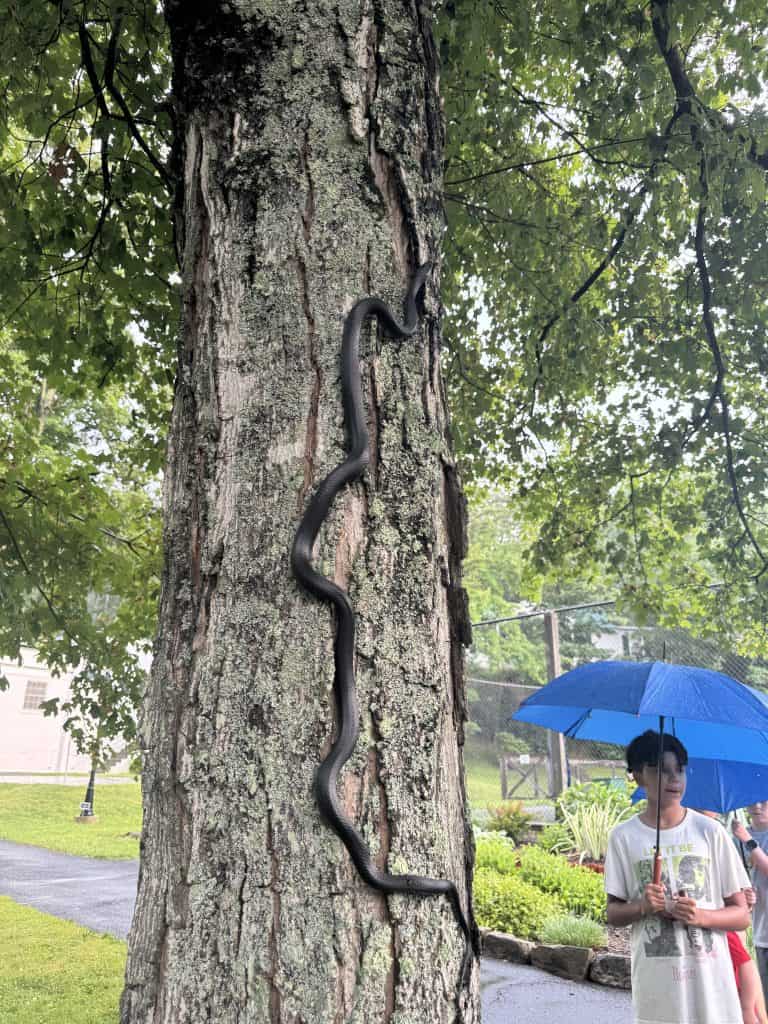
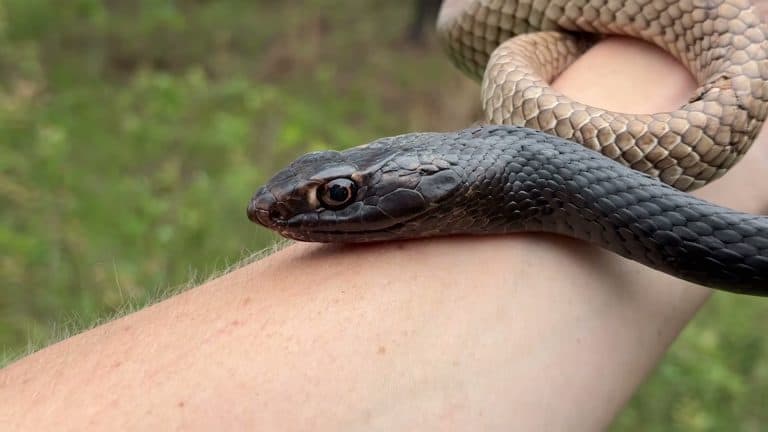
You can see the rat snake relative to people for perspective on its size
©
As you can imagine, a snake of this size climbing a tree caused quite a commotion.
However, the simple fact is that rat snakes are not dangerous. First and foremost, rat snakes are not venomous.
Different species of rat snake range across the United States. In the Southeastern United States in Florida and along the coasts in Georgia and the Carolinas, you’ll find Eastern rat snakes.
Central rat snakes live from Appalachia to the Mississippi River. West of the Mississippi River into the Great Plains, you’ll find Western rat snakes.
With this range, about 3/4 of the US population lives near rat snakes, so there’s a strong possibility you may have seen one before!
If a rat snake does bite, the pain level is generally compared to a cat scratch. So, while it may hurt, it’s generally not something that requires medical attention unless the bite causes an infection. The greater risk would be receiving a bite from a venomous snake that’s mistakenly identified as a rat snake.
What Snakes are Venomous in the Appalachian Mountains?
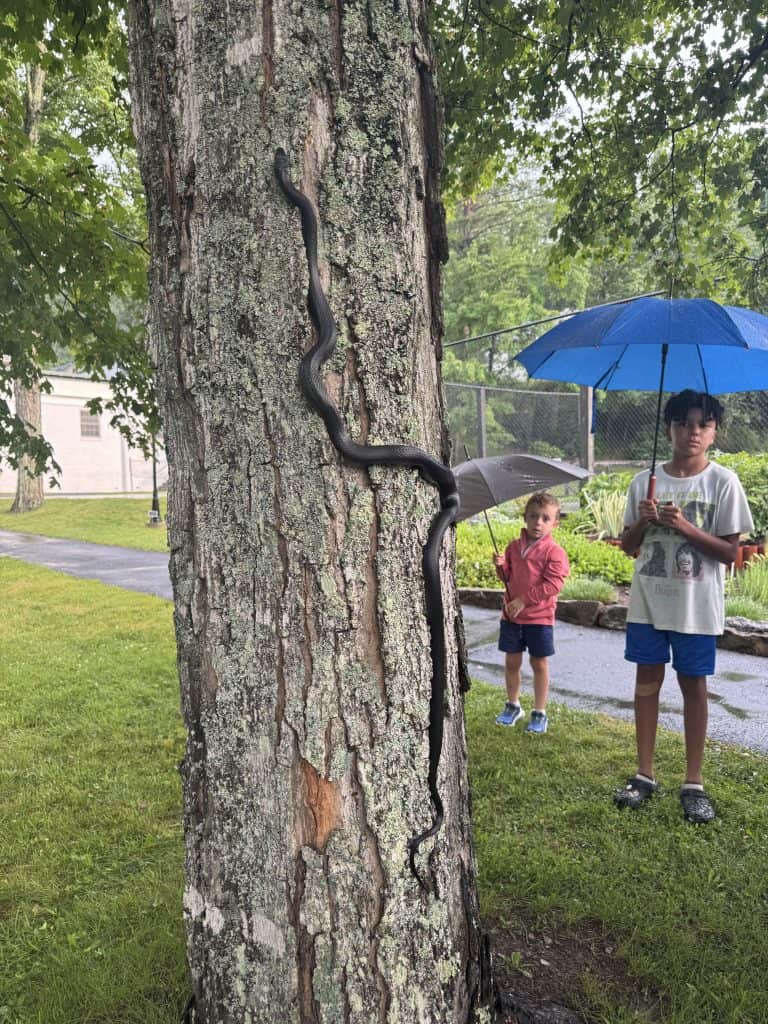
A picture of the rat snake right after it began climbing the tree. The rat snake eventually crawled onto one of the tree’s branches.
©
So, what snakes live alongside rat snakes that might be dangerous?
In the area where I spotted this rat snake, there are three primary snakes to be concerned about.
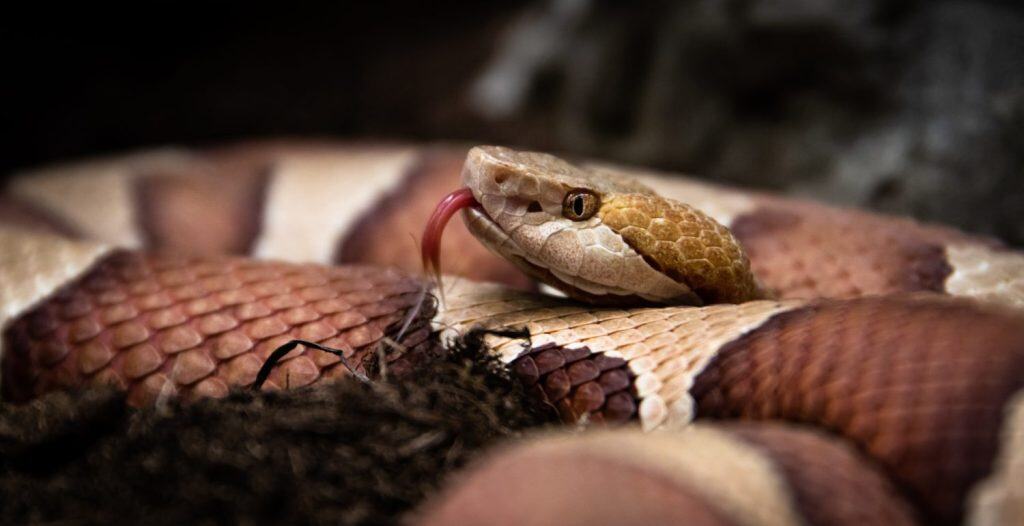
Eastern Copperhead
©vadviz.studio/Shutterstock.com
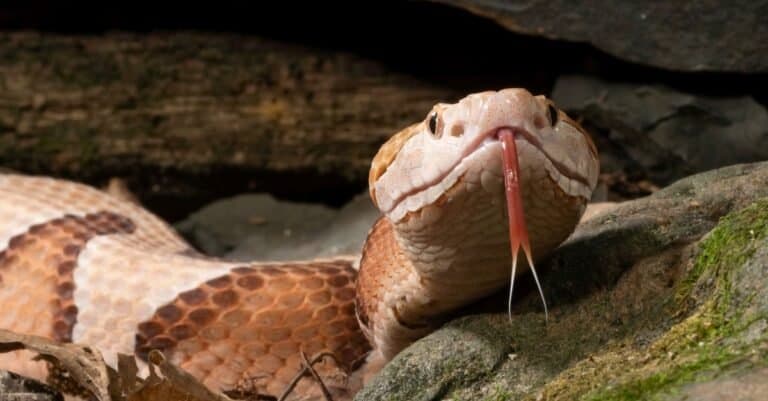
The first is a copperhead snake. Copperheads are much smaller than rat snakes, generally about two to three feet in length. They’re known for their hourglass bands and are venomous.
It’s worth noting that more than 50% of all venomous snake bites in the United States are believed to be from copperheads. These bites generally occur from people accidentally stepping on the snake.
While copperhead bites can be extremely painful, keep in mind that only about five people die from snake bites in the United States annually, in large part thanks to modern medicine.
Northern Cottonmouth

©Danny Ye/Shutterstock.com
Northern cottonmouth snakes are generally larger than copperheads and can reach up to 4 feet in length. The longest cottonmouth ever recorded in the state of Virginia was 60.5 inches long.
Cottonmouths are generally considered to be more venomous than copperheads. However, they’re also responsible for far fewer bites on an annual basis. It’s estimated that about 200 to 300 people are bitten by cottonmouth snakes in the United States each year.
Timber Rattlesnake
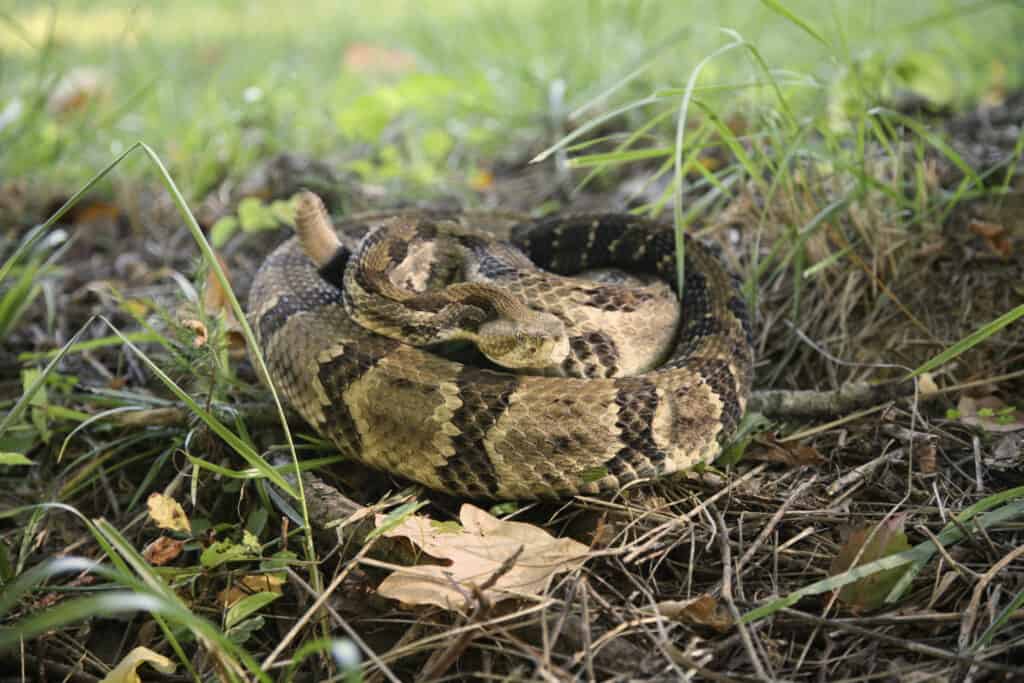
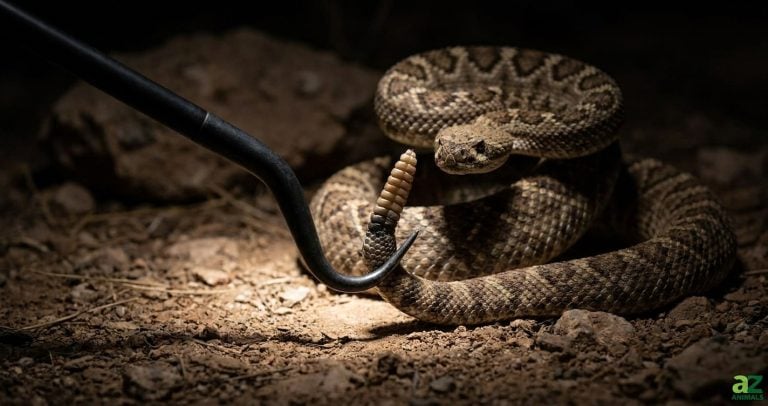
Timber Rattlesnakes are extremely venomous, but they are not typically aggressive.
©iStock.com/NajaShots
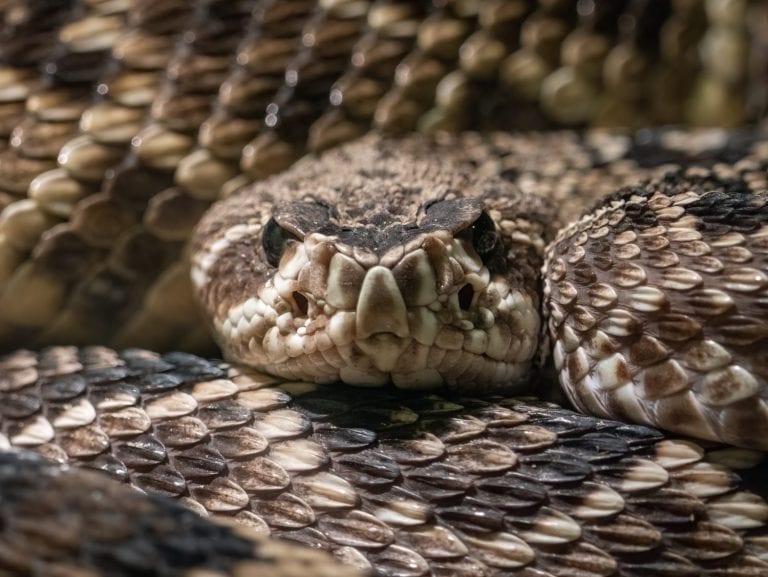
Another venomous snake to be aware of if you’re traveling in the Appalachian Mountains is the timber rattlesnake.
The timber rattlesnake is the largest venomous snake in Virginia, with individuals reaching 5 feet or more in length. The record size for a timber rattlesnake in Virginia is 67.1 inches.
As you can imagine, the most notable feature seen on a timber rattlesnake is its rattle! They also have zigzag bands that look different than the hourglass bands found on both cottonmouth and copperhead snakes.