
Quick Take
- A creature with no mouth, no organs, and no way to move is somehow classified as one of Earth's earliest animals, and the reason why challenges how we define animal life. Explore the Charnia fossil →
- This fossil looks exactly like a fern, yet making that assumption would be one of paleontology's most misleading mistakes. See why it's not a fern →
- The fossil survived 560 million years in three dimensions, which scientists describe as a feat so rare that it should barely be possible for this type of organism. See the rare preservation →
- Researchers almost never looked here, and what triggered them to check this sheep field hints at a far bigger discovery hiding in the cliffs nearby. Discover what lies nearby →
You never know what is lurking in the tundra-covered plains of Northern Europe. Though this region is somewhat inhospitable today, thousands of years ago the plains of Scandinavia hosted a wide range of underwater animals. As evidenced by the latest discovery in an Arctic sheep field, some of these ancient animals don’t resemble any animal we would recognize today. Recently, the University of Cambridge announced the discovery of a fossil known as Charnia. It dates to around 560 million years ago during the Ediacaran Period, when the first complex life forms began appearing on Earth.
The thing about the Charnia fossil is that it looks more like some type of plant than any modern animal. Its closest modern equivalent is perhaps the jellyfish. The Charnia lacked a mouth, organs, or any way to really move around. Despite being little more than a living, goo-filled bag, scientists believe it is one of the earliest animals ever to exist. The way this fossil was preserved also speaks to its rarity. Let’s learn more about the Charnia fossil and how it was discovered in the frosty plains of the Norwegian Arctic. We will also discuss how it points to what may become the first major Ediacaran fossil site of its kind found in Europe in years.
The Location
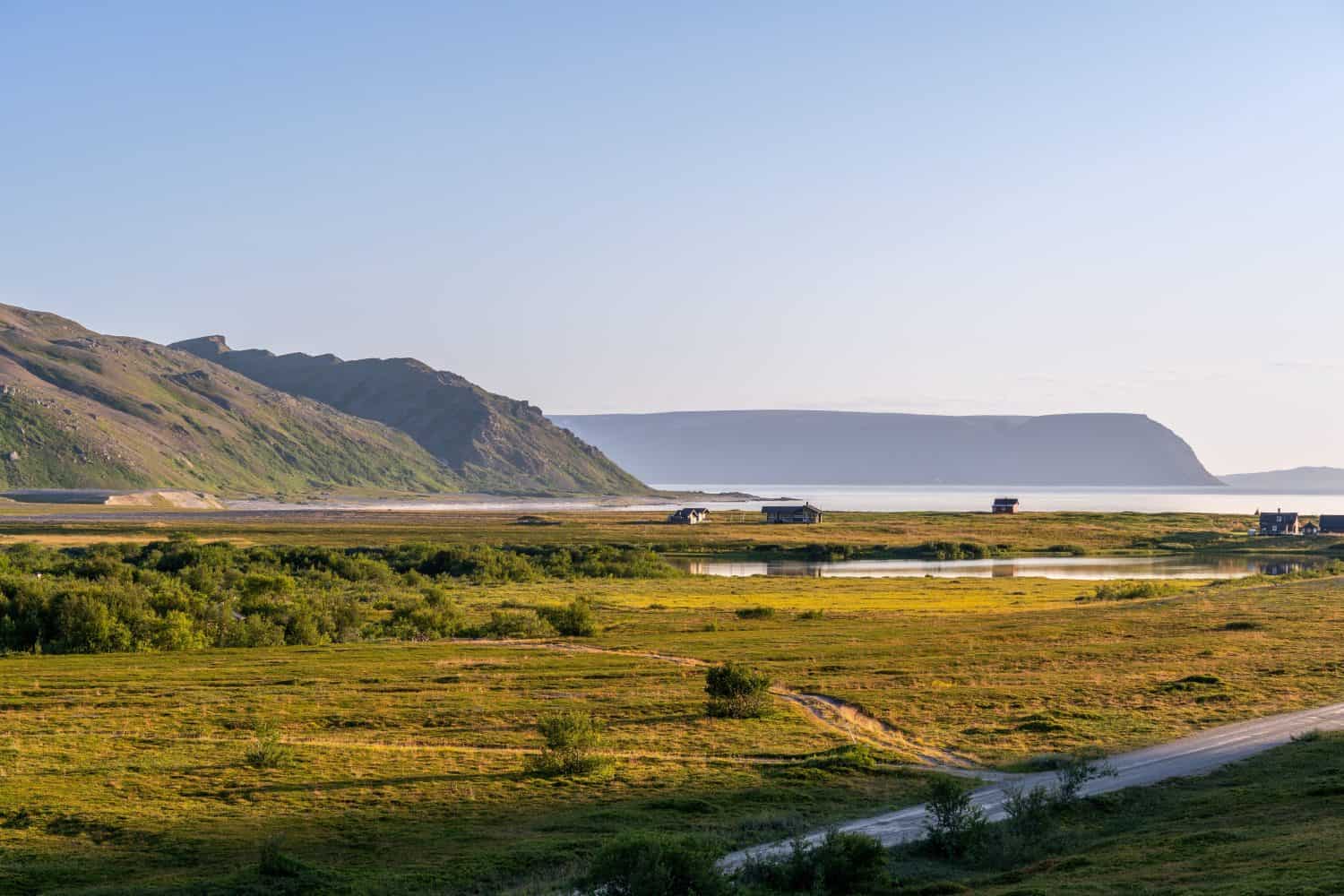
A rock that fell off a cliff in Finnmark, Norway, split open to reveal one of the stranger fossils in existence.
©Mantas Volungevicius/Shutterstock.com
To complete their study regarding the new fossil finds, a team of researchers from the University of Cambridge examined the Arctic sheep fields in Norway. Fossils from the Ediacaran period have been found all over the world. The discovery in Finnmark, Norway, however, points toward even more animals in unexpected places.
As Dr. Yorick Veenma, from the University of Cambridge’s Department of Earth Sciences, explained to the school’s research news site, discovery often follows the path of least resistance. He said, “As scientists, we tend to go to the same well-known sites again and again to look for fossils like these. This find shows that there is still potential for discoveries in less familiar places.”
Finnmark, Norway, features rock outcroppings that point toward the potential for life from the Ediacaran period. Once an ancient seafloor, the region’s modern geological formations show strange anchoring structures likely made by organisms. All it took to justify a closer look was the unexpected discovery of new fossils in a sheep field. Remarkably, the discovery came by way of a natural split in a rock. A rock had fallen off a cliff and cracked open, revealing the alien-looking Charnia fossil.
The Charnia Fossil
As reported in the research team’s study in the journal Palaeontology, the Charnia fossil found in the Norwegian Arctic could easily be mistaken for a plant. Despite looking almost identical to a fern, the Charnia was not a photosynthetic plant or alga. The fact that it was found in certain fossil beds suggests it lived deep under the water’s surface, well below the photic zone (the sunlit upper layer of the ocean). Perhaps the closest modern equivalent to Charnia is the jellyfish. This ancient creature lacked any real organs or openings. It barely moved. At most, it was a living bag of goo.
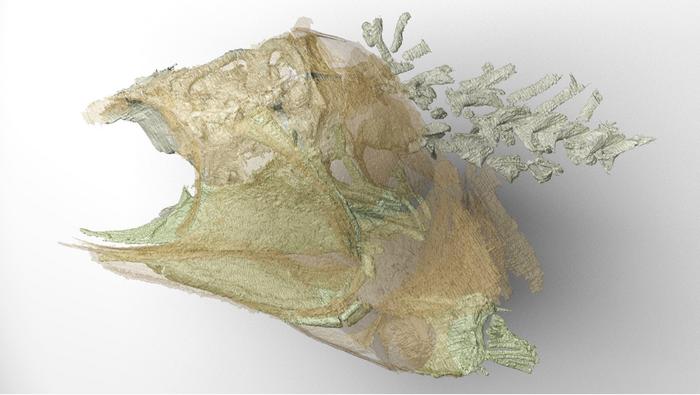
The researchers believe its discovery in Norway involved something of a natural disaster. An ancient underwater avalanche likely swept it up and buried it in the seabed, filling it with sediment. In turn, it provided the fossil with an extraordinarily rare composition: the Charnia fossil retains its three-dimensional form. It features ridges known as keels along each of its branches. This feature is hardly ever detected in similar, but flatter fossils.
Co-author of the study, Professor Neil Davies from Cambridge’s Department of Earth Sciences, pointed to the rarity of this type of fossil. On the University’s website, he said, “As a fossil record, the Ediacaran has several things working against it, primarily that most organisms were soft-bodied and skeletons hadn’t evolved yet, making them harder to preserve. A lot of fossils from the period occur as impressions where they’ve been squashed down under layers of rock.”
Further Discoveries
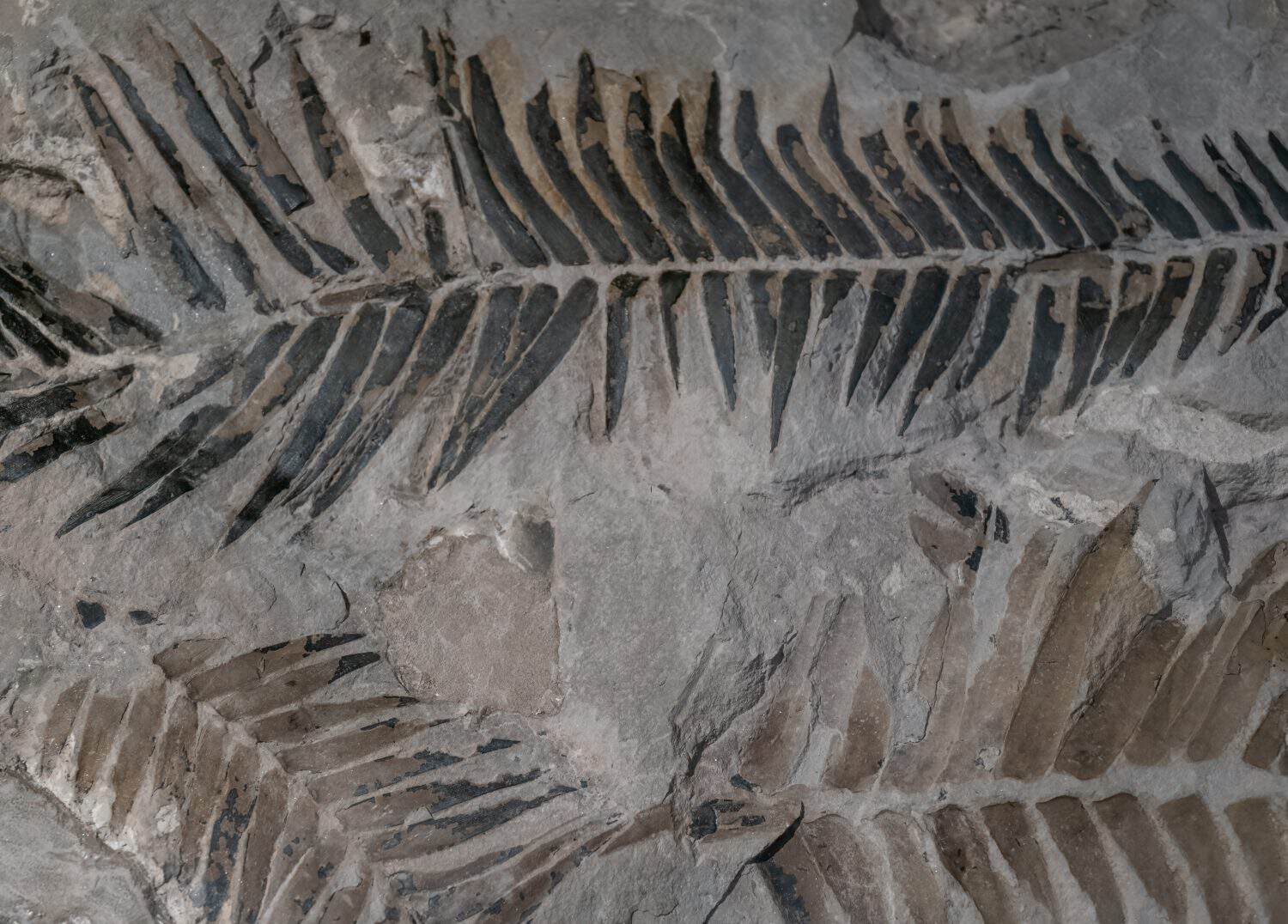
Charnia fossils may look like ferns, but they were actually animal life-forms similar to modern jellyfish.
©Wlad74/Shutterstock.com
The discovery of such a well-preserved, unique fossil points to other potential discoveries waiting in the rocky cliffs of Northern Norway. Plus, no one thought to look at the area for Ediacaran fossils until one presented itself inside a split rock. This suggests there are even more strange, ancient creatures waiting to be found.
As Professor Neil Davies explained, “There may be a whole undiscovered community of these very early organisms preserved up there. Weird little umbrella-shaped blobs, things that don’t fit with what people know from elsewhere. There are a whole host of different things that were not known before.”
Following tried-and-true discovery channels is one approach. However, the researchers believe that looking in unexpected places will produce even more remarkable finds.