
Quick Take
- A humpback whale is a baleen whale, meaning it doesn’t have teeth but uses flexible, comb-like plates called baleen to filter small prey from the water.
- The sperm whale is the largest species of toothed whale.
- Sperm whales are generally heavier and bulkier than humpback whales, with adult males being significantly larger than even the largest humpbacks.
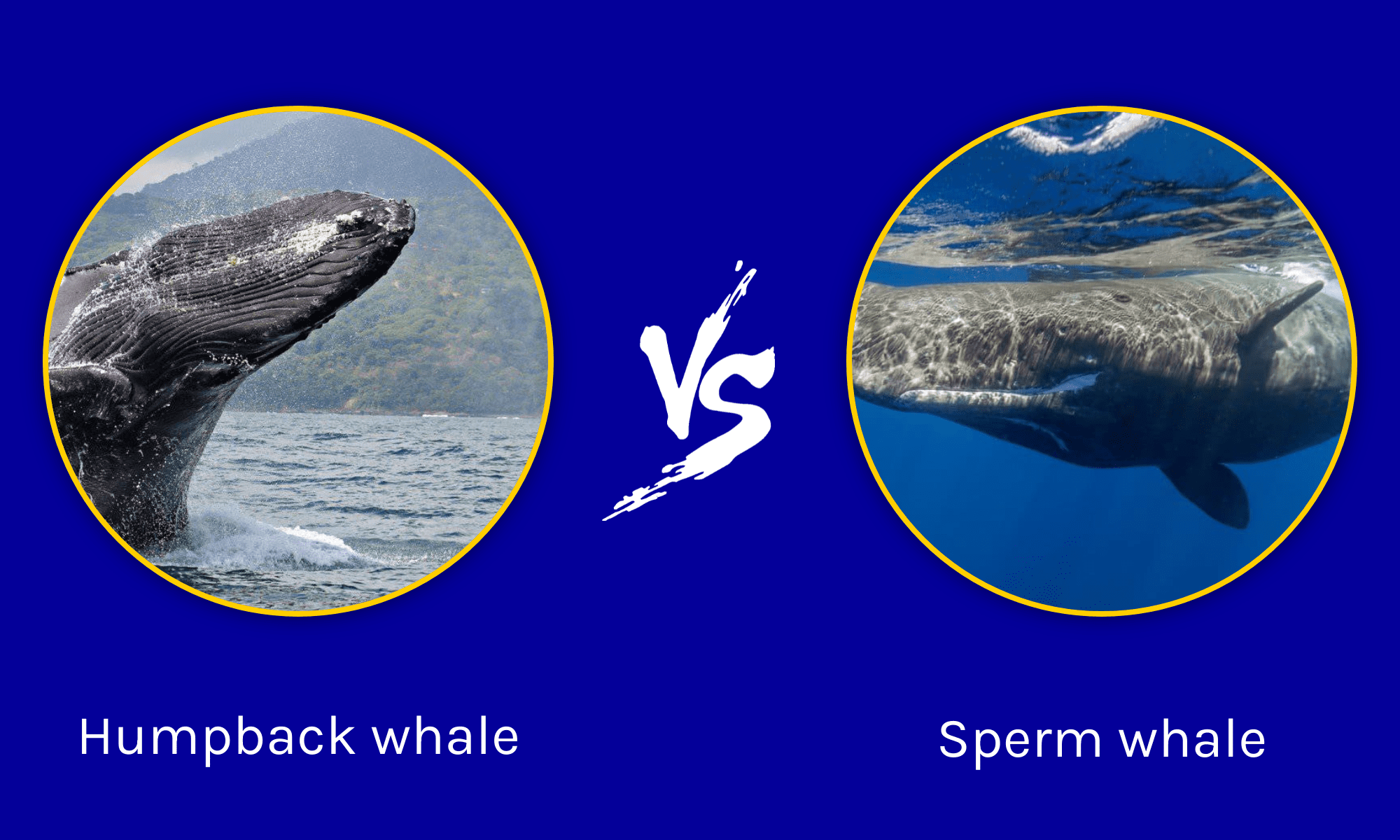
All whales have some things in common. They are all mammals. Whales all have streamlined bodies adapted for aquatic life. They all have flippers and tail fins that propel them through the water. Humpback whales and sperm whales are also similar in size and color. However, they have many characteristics that make them unique, including taxonomic classification, physical appearance, distribution, habitat, diet, and social structure. Keep reading to learn more about the differences that set these two whale species apart.
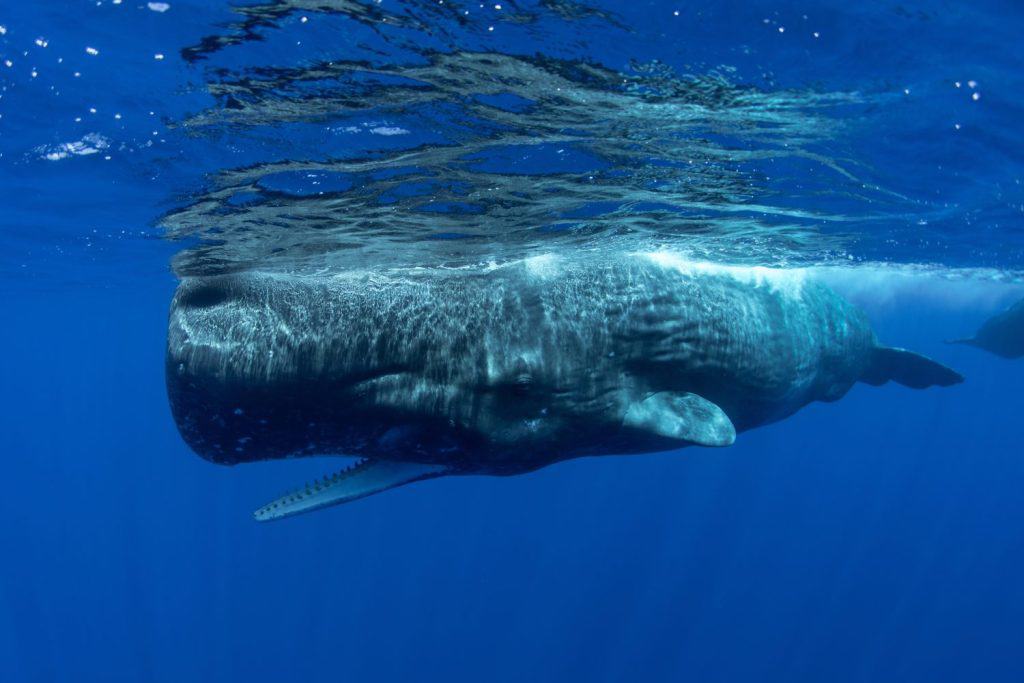
Sperm whales are the largest toothed whales.
©ohrim/Shutterstock.com
Classification
Humpback whales (Megaptera novaeangliae) are the only member of their genus. They are part of the suborder Mysticetes, or the baleen whales. They belong to the Balaenopteridae family, which includes the rorqual whales. Rorqual whales are distinguished by streamlined bodies, dorsal fins, and pleated throat grooves, which will be discussed in greater detail later in the article.
Sperm whales (Physeter macrocephalus) are also the only member of their genus. They are part of the suborder Odontoceti, or the toothed whales. They are the largest toothed whale, and thus, the largest toothed predator on Earth. These whales belong to the Physeteridae family.
Physical Appearance
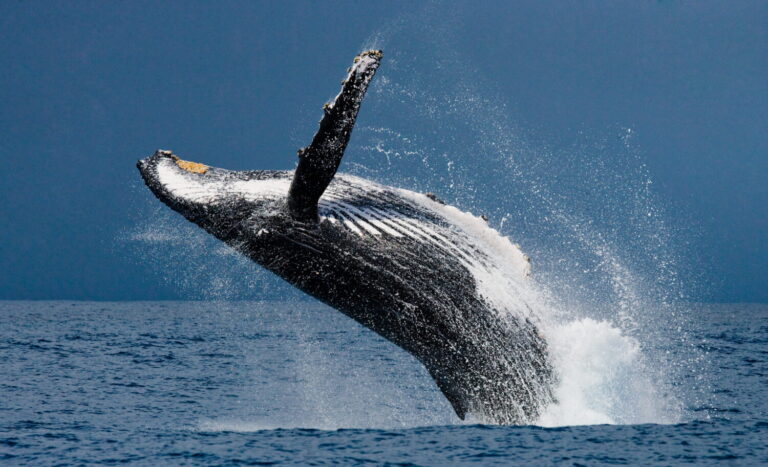
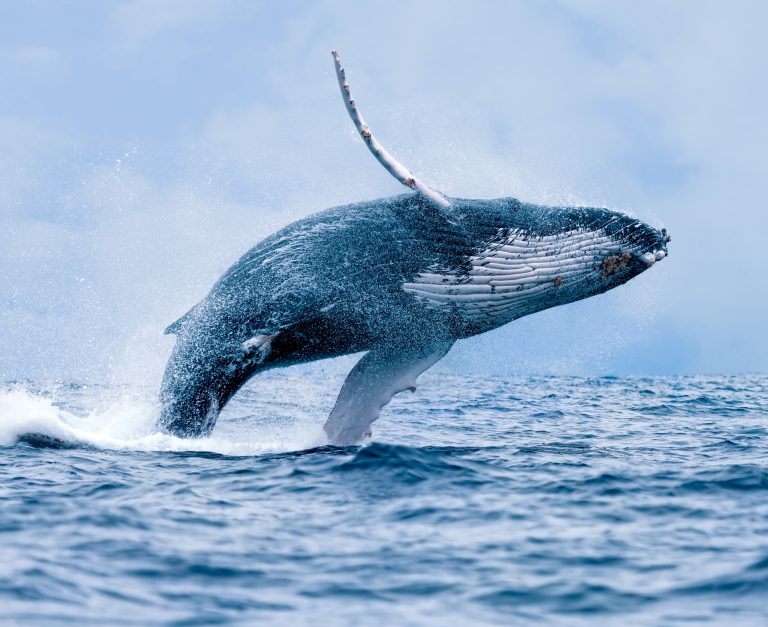
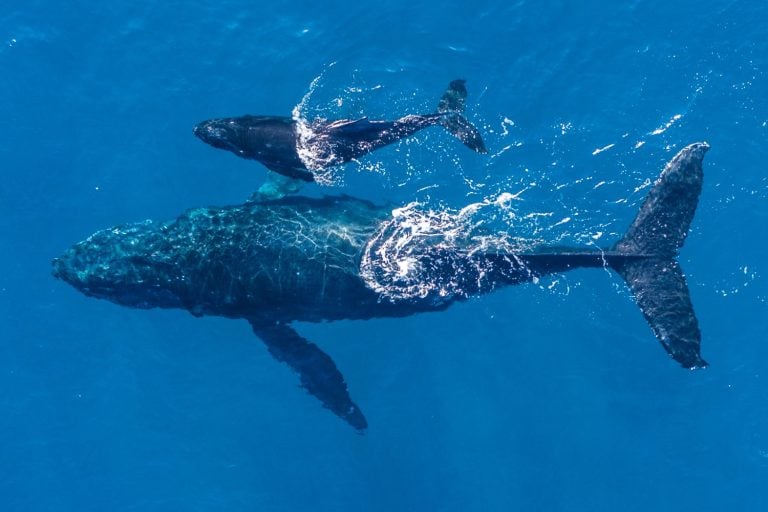
Humpback whales are mostly black, with white markings on their pectoral fins, bellies, and the underside of their tails. Their pectoral fins are extremely long, measuring up to 15 feet in length. Their tail flukes have pointed tips and can stretch up to 18 feet wide. The unique patterns on their tail flukes allow researchers to identify individual whales. These whales have a dorsal fin and a humpback shape when diving, which is where they got their name. They have two blowholes on the top of their heads, each corresponding to a lung. As mentioned above, they also have pleated folds of skin that run from their chins to their bellies.
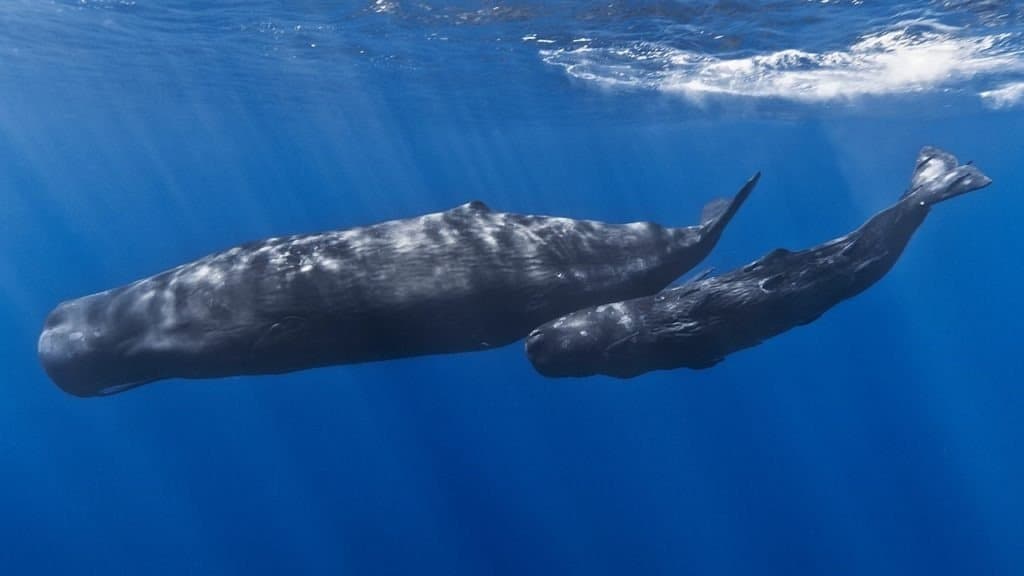
Sperm whales a large, blocky head that can measure up to one-third of their body length.
Sperm whales are mostly dark grey, but some whales may have white patches on their underbellies. Like humpback whales, individuals can also be identified by the markings and coloring on their tails. They have a large, blocky head that can measure up to one-third of their body length. Instead of a true dorsal fin, the sperm whale has more of a hump with smaller ridges on its back. They have small pectoral fins and one blowhole on the left side of the head. They were named for a waxy liquid in their heads called spermaceti. In sperm whales, spermaceti aids in echolocation and maintaining buoyancy. However, in the past, humans used it for fuel and lubrication, as well as to make cosmetics and candles.
Size
Some humpback whales and sperm whales may be similarly sized, but sperm whales tend to be heavier and display more obvious sexual dimorphism. Humpback whales grow to between 50 and 60 feet and weigh 35 to 40 tons. Humpback whales are sexually dimorphic; unlike most mammals, females are typically larger than males. Females can be from three to five feet longer than males, though their weight varies depending on their reproductive state.
Sperm whales also exhibit sexual dimorphism. However, it is more extreme than in humpback whales, and in sperm whales, the males are larger than the females. Adult males typically grow up to 52 feet in length, though unverified reports of larger individuals exist. They generally weigh up to 45 tons. Adult females, however, reach 36 to 40 feet in length and weigh up to 15 tons.
Distribution and Habitat
Humpback whales live in all of Earth’s major oceans, including the polar regions. They are more migratory than sperm whales and undertake long, seasonal migrations. Both males and females sometimes travel up to 5,000 miles between their winter breeding grounds in tropical waters and their summer feeding areas in colder waters, with some individuals recorded migrating over 8,000 miles. They are most often seen in coastal areas.
Sperm whales also live in all of the world’s oceans, including Arctic and Antarctic waters. Although some sperm whales migrate, their patterns are not as predictable. Mature males may migrate from colder feeding areas to warmer breeding grounds. However, females and calves tend to remain in warmer, tropical and subtropical waters throughout the year. Sperm whales also prefer the deeper waters of the open ocean.
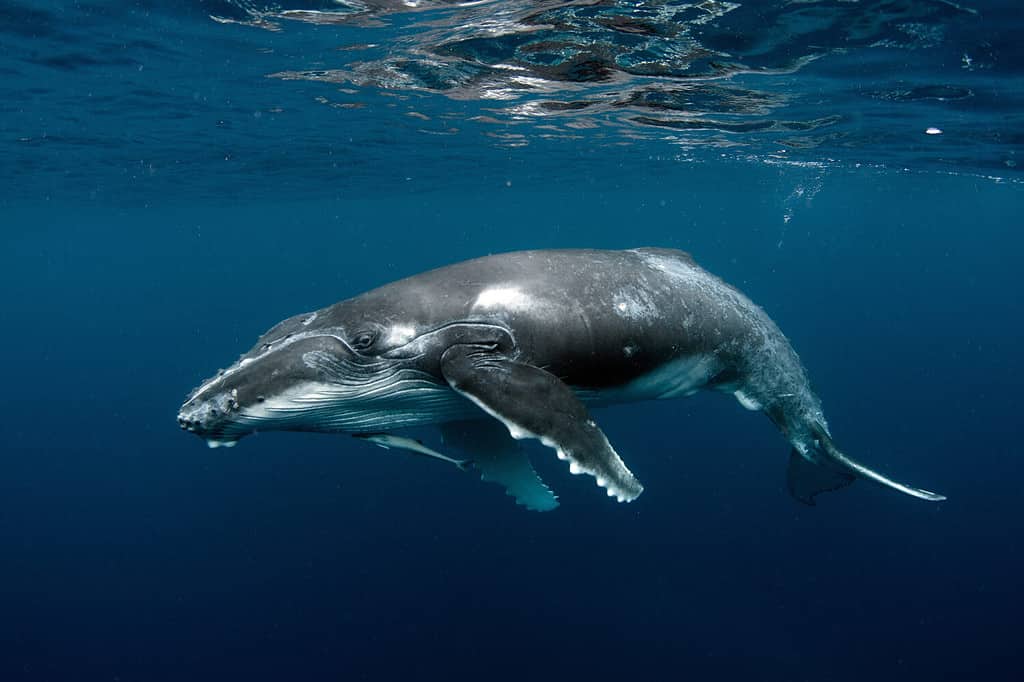
Humpback whales are migratory, sometimes traveling up to 5,000 miles between feeding and breeding grounds.
©Tomas Kotouc/Shutterstock.com
Feeding Method and Diet
Both humpback whales and sperm whales are carnivores, but they have entirely different feeding methods and diets. Humpback whales are baleen whales, so they are filter feeders and do not have teeth. They have fringed baleen plates that hang from their upper jaws. These plates are made of keratin, like our fingernails and hair.
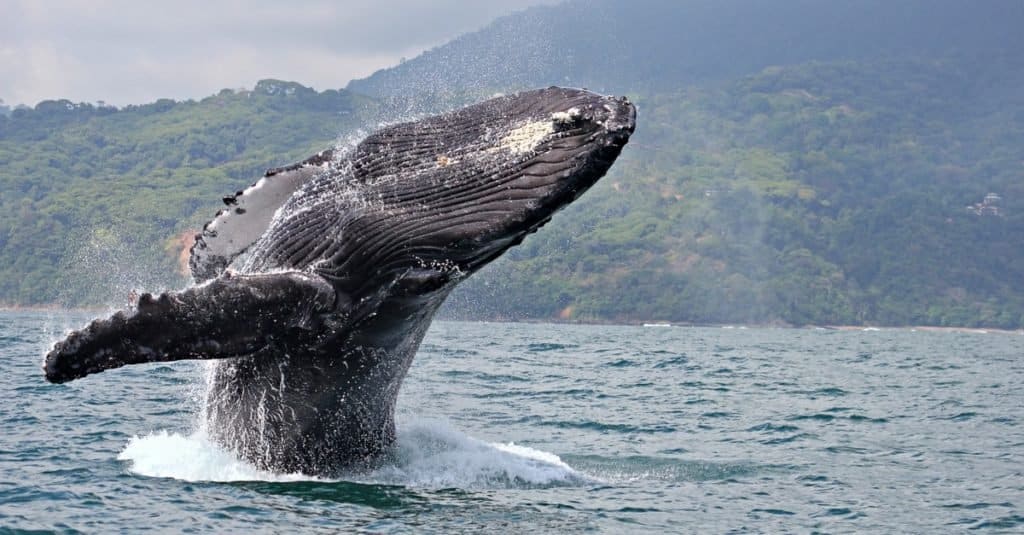
Humpback whales are carnivores that eat primarily krill.
©Claude Huot/Shutterstock.com
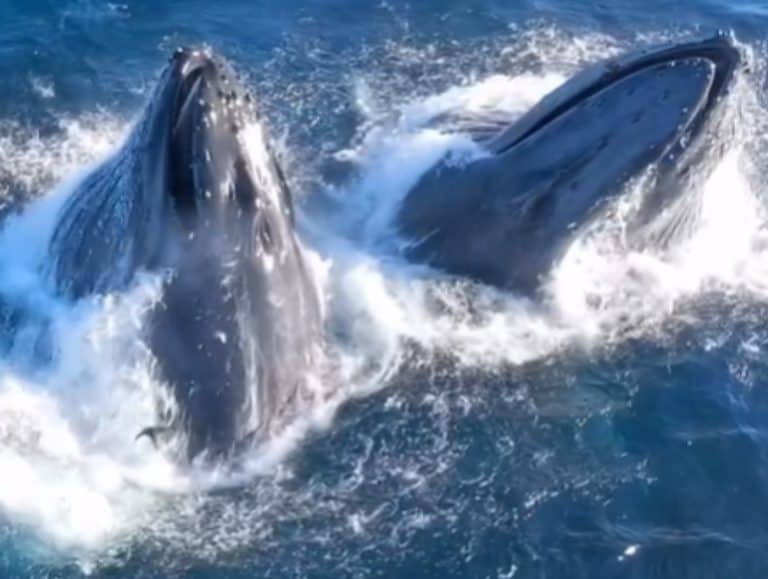
There are between 270 and 400 baleen plates on each side, measuring up to 30 inches long. During feeding, the pleats on their throats expand, allowing them to pull in large volumes of water and small organisms. Then, they close their mouths, contracting their throat pleats, and using their tongues and stomach muscles to push the water out through their baleen plates. These plates act as a sieve to catch krill, plankton, and small fish.
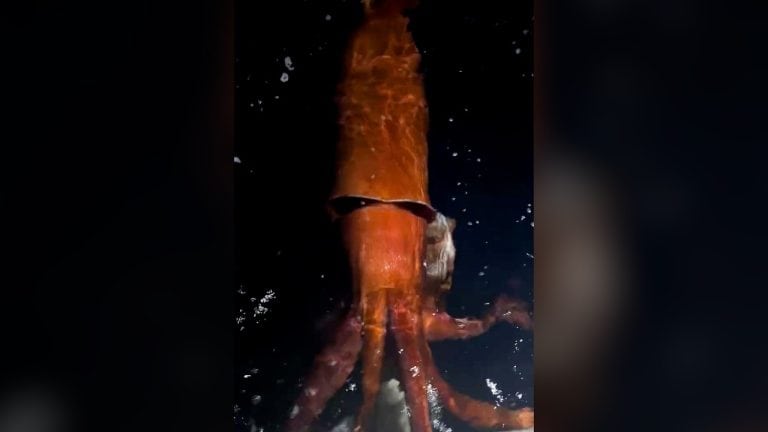
As noted earlier, sperm whales are toothed whales. They have large, conical, slightly curved teeth in their lower jaw, which has 20-26 teeth on each side. The upper jaw has vestigial teeth that rarely erupt, so instead, they have sockets for the bottom teeth to fit into when they close their mouths. These teeth can grow 4 to 8 inches long and may weigh up to 2.2 pounds each. However, they do not use their teeth to chew. Their teeth are used to grasp and hold prey before they swallow it whole. Sperm whales typically dive deep in the ocean and use echolocation to find food where there is little to no light. They may dive for 45 minutes to an hour at depths of over 2,000 feet. Their preferred food includes squids, skates, sharks, and large fish.
Behavior
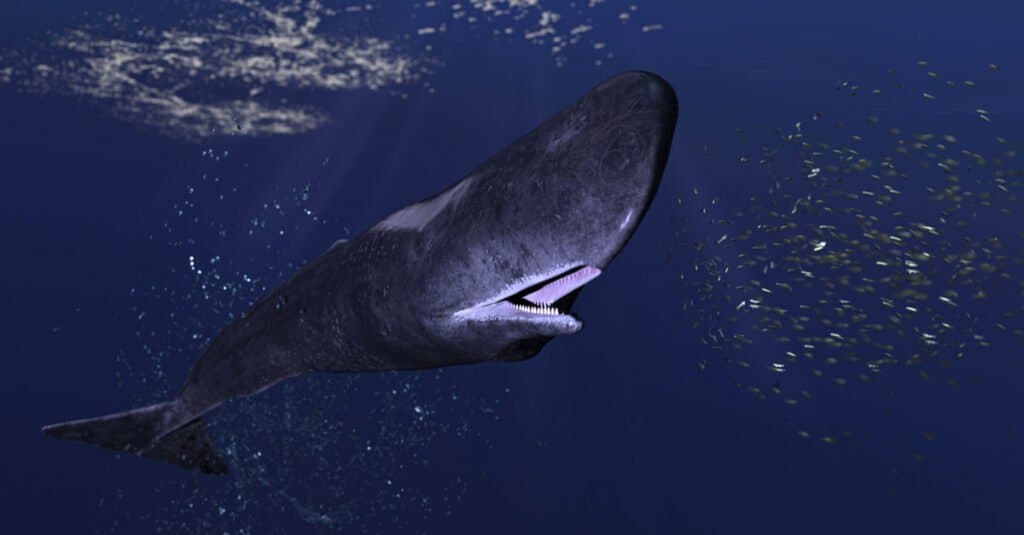
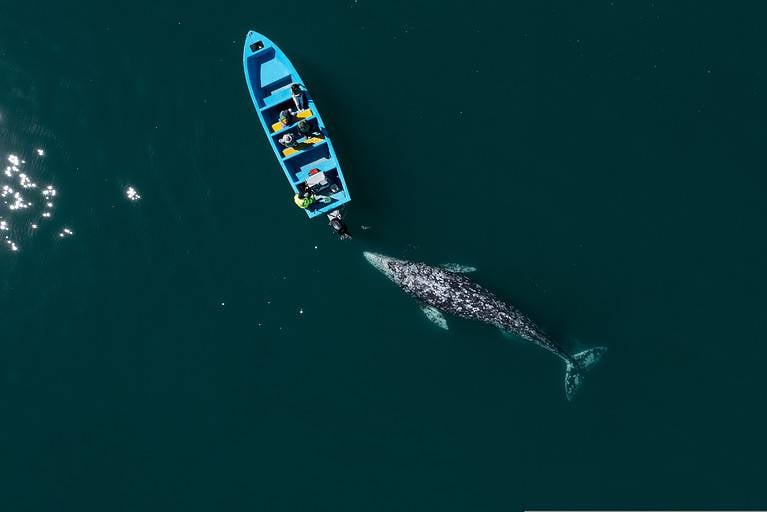
Sperm whales form stable, lifelong matrilineal groups of females and their calves.
©bekirevren/Shutterstock.com
There are also significant differences in social structure between these two whales. Humpback whales are generally solitary. They may form small, temporary groups for specific events such as feeding or mating. The social bonds between mothers and offspring are strong, but they only last for around a year. Therefore, these relationships are not as long-lasting as those observed in sperm whales. Humpback whales are frequently seen near the surface, breaching or slapping the water with their flippers and tails. They are also famous for their songs. Males, especially, are known to sing complicated songs that last over 15 minutes and are repeated for hours at a time.
Conversely, sperm whales form stable, lifelong matrilineal groups of females and their calves. These groups are called units. Males typically leave their birth groups and join bachelor groups. Mature male sperm whales may be more solitary. Groups of related family units are believed to share a common culture, vocal repertoires, and behaviors. These larger groups are called clans. Like humpback whales, sperm whales are known for their acoustic activity. However, sperm whales depend on sound to communicate, as well as echolocation to navigate and forage for food. They emit sounds called clicks, clangs, creaks, and codas. The spermaceti in their giant heads helps amplify and focus the sound to create a sonic map of their surroundings.
Comparing a Humpback Whale and a Sperm Whale
| Category | Humpback Whale | Sperm Whale |
|---|---|---|
| Classification | Part of the suborder Mysticetes, or baleen whales; belongs to the Balaenopteridae family | Part of the suborder Odontoceti, or toothed whales; belongs to the Physeteridae family |
| Distribution and Habitat | Live in all of Earth’s oceans; more migratory; more commonly seen in coastal areas | Live in every ocean; prefer deep, open ocean |
| Size | Length: Up to 60 feet Weight: Up to 40 tons | Length: Up to 52 feet Weight: Up to 45 tons |
| Physical Appearance | Primarily black with white on fins, bellies, and tails; Tails can reach up to 18 feet wide; long pectoral fins can be 1/3 of body length | Dark grey, may have white patches on bellies; large, block-shaped head up to 1/3 of body length; single blowhole on the left side of the head |
| Feeding Method and Diet | Filter feeding; mainly feed on krill, small schooling fish, and plankton | Use echolocation to hunt during deep dives; prey includes fish, octopuses, squid, and sharks |
| Behavior | Generally solitary; may form small, temporary groups; social bonds between mothers and offspring are not as long-lasting | Stable, lifelong matrilineal groups of females and calves; young males form bachelor groups; mature males solitary |