
Quick Take
- The rising bubbles are just the finale. The real coordination happens deep below the surface, triggered by a signal you'd never expect from a whale. See how the signal works →
- Humpbacks are notorious loners, yet bubble netting demands tight group coordination. Something specific pushes them to abandon their solitary nature every summer. Explore the social paradox →
- Solo humpbacks can bubble-net too, and watching a lone whale pull it off reveals just how sophisticated this technique really is. Watch a lone whale do it →
- Humpbacks barely eat for months before arriving in Alaska, and the reason one specific month makes all the difference for spotting them is not what you would guess. Find out why July matters →
Every July, humpback whales put on a show in Alaska’s waters. Not surprisingly, they’re hungry after a 3,000-mile swim from the warm waters of Mexico and Hawai’i.
Once they’re in their seasonal Alaskan home, they employ a remarkable technique that helps them find and feed on their favorite foods. It’s an essential part of the whales’ annual migration pattern.
Here’s everything you need to know about humpback whales, their “bubble-netting” technique for capturing prey, and the best spots to see humpback whales in Alaska.
What Is Bubble Netting?
Bubble netting is one of the most impressive examples of cooperative hunting among any species in the world. It starts with placid ocean waters that belie the frenzy about to erupt. Slowly, a ring of bubbles rises to the surface, turning the water into something that resembles a pot of boiling water.
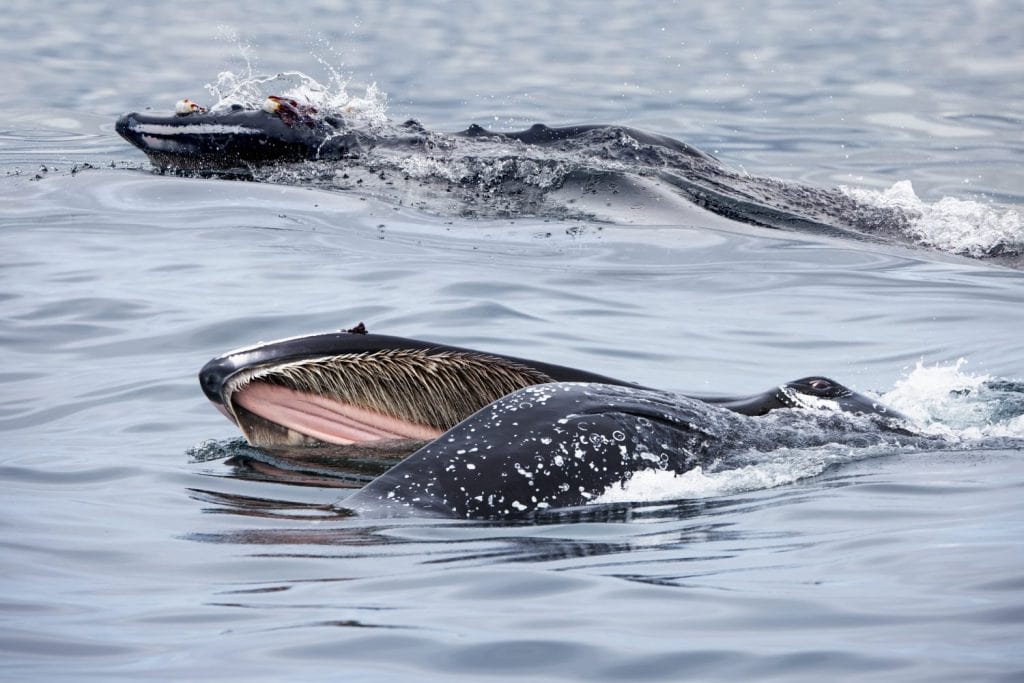
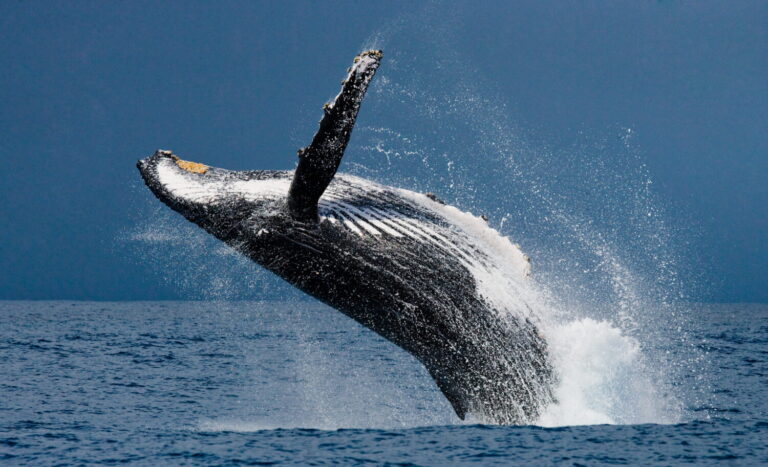
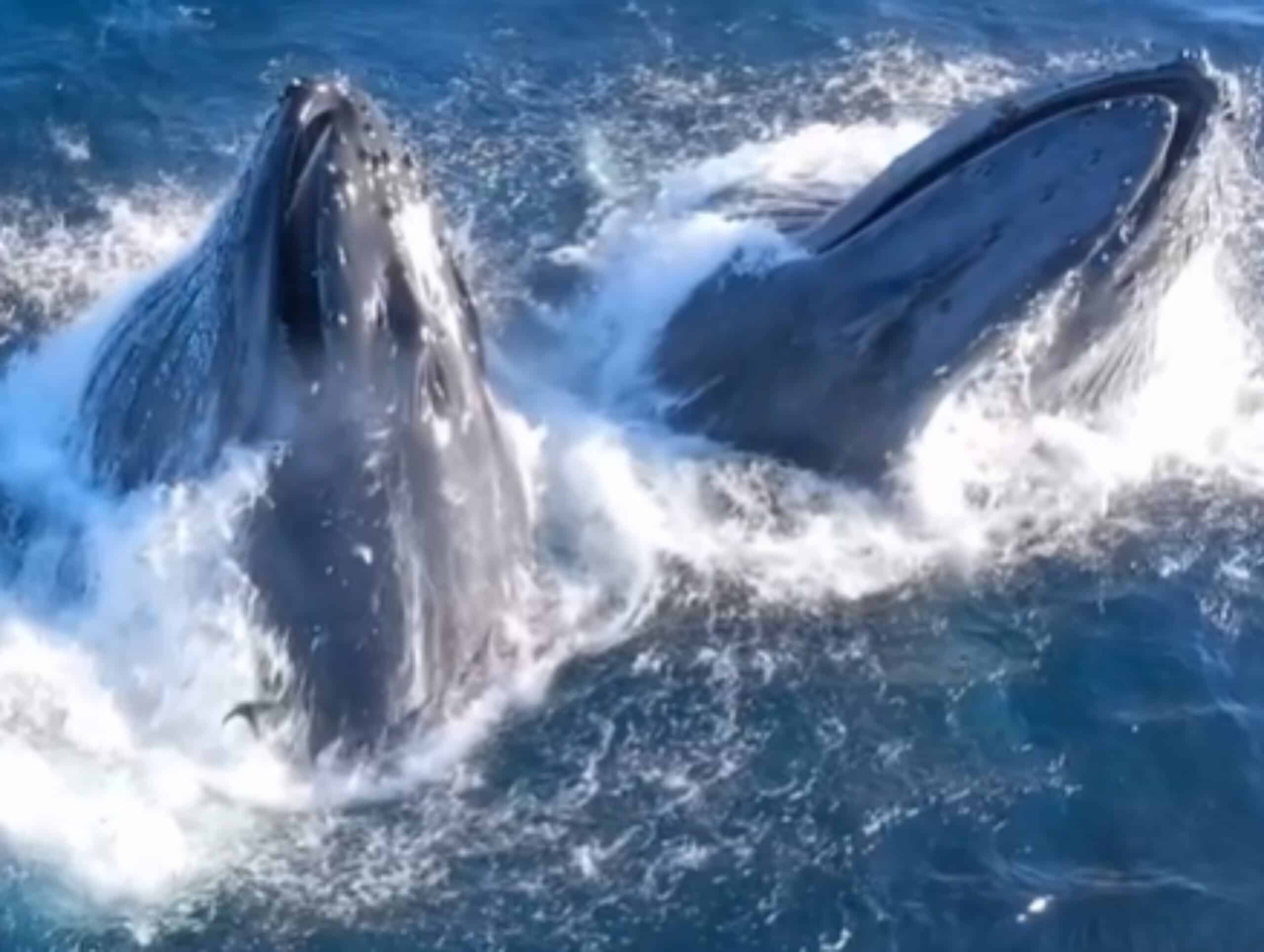
Humpback whales catch more food in a single gulp when they use the bubble-netting technique.
©muratart/Shutterstock.com
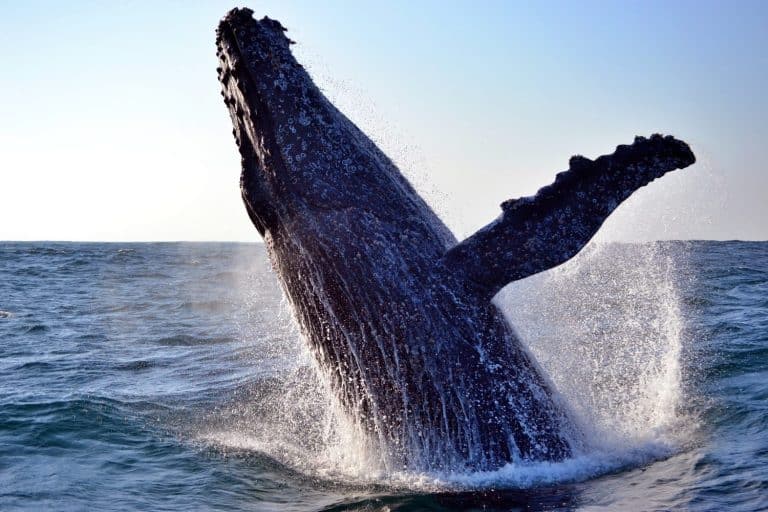
Then, seemingly out of nowhere, a group of humpback whales breaches the surface with their mouths open wide. The bubbles are the first sign that the whales have located a school of fish—often herring in Alaska—and are preparing to feed together. The herring don’t stand a chance. The whales use their wide-open mouths like scoops to collect as many herring as possible in a single massive gulp.
Then, as quickly as it begins, the whales sink back beneath the surface. The water quickly returns to calm, as if nothing ever happened—unless you’re a herring.
Researchers have been tracking about 60 whales that use the bubble-netting technique each summer when the whales return to Southeast Alaska.
Why Bubble Netting Works
Bubble netting isn’t about luck; it involves both strategy and physics. Long before any bubbles rise to the surface, whales position themselves below the targeted school of fish, ready to deploy their secret bubble weapon.
As the whales slowly approach the fish, they spiral in increasingly tighter circles, emitting a constant stream of bubbles from their blowholes. These rising bubbles form a wall that traps the schooling fish in an ever-shrinking ball, causing the fish to panic and rise to the surface.
Then, one whale, acting as the leader, emits a call—often compared to a trumpet sound—that signals the rest of the pod to simultaneously charge up to the surface with mouths open, directly through the center of the bubble ring.
But Aren’t Humpback Whales Loners?
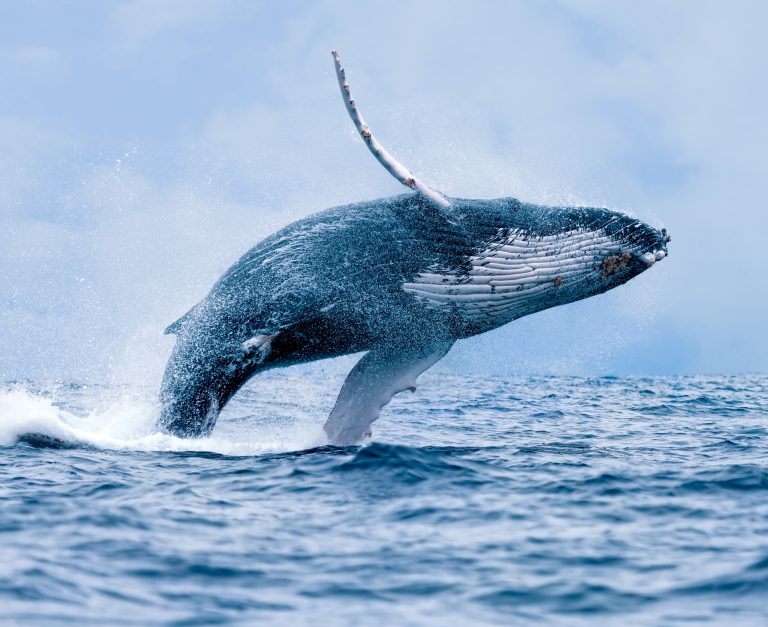
Humpback whales are typically solitary, so bubble netting is a rare and remarkable behavior to witness. It is one of the few times they gather and cooperate as a large group to accomplish a task. Sometimes, these groups include more than 12 whales working together to perform bubble-netting.
Scientists note the strategy nets each whale far more food per gulp than it would working solo.
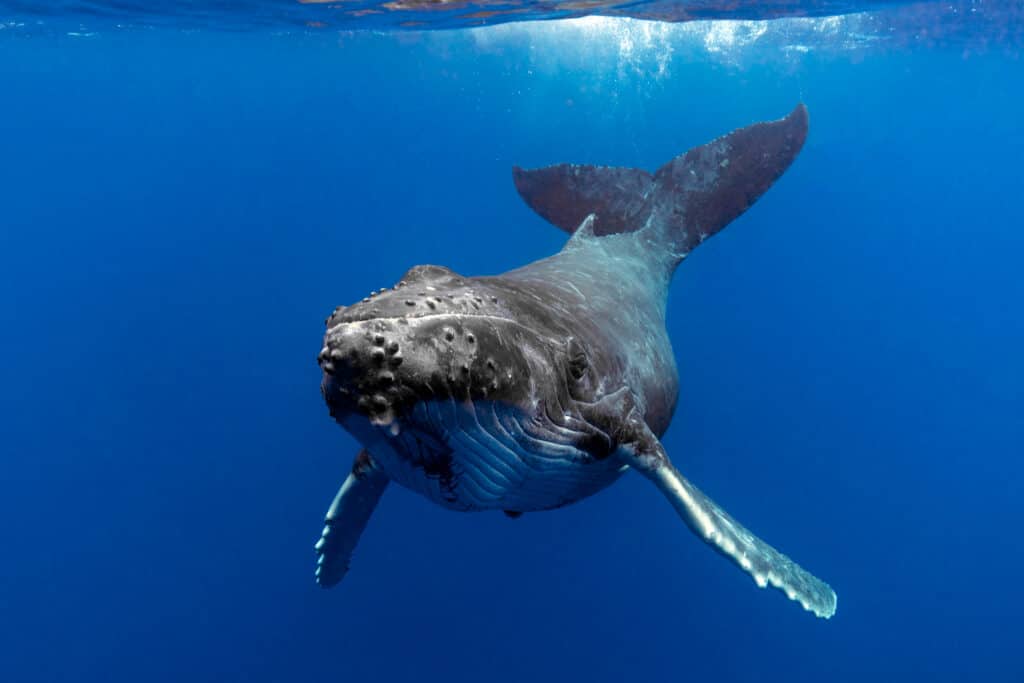
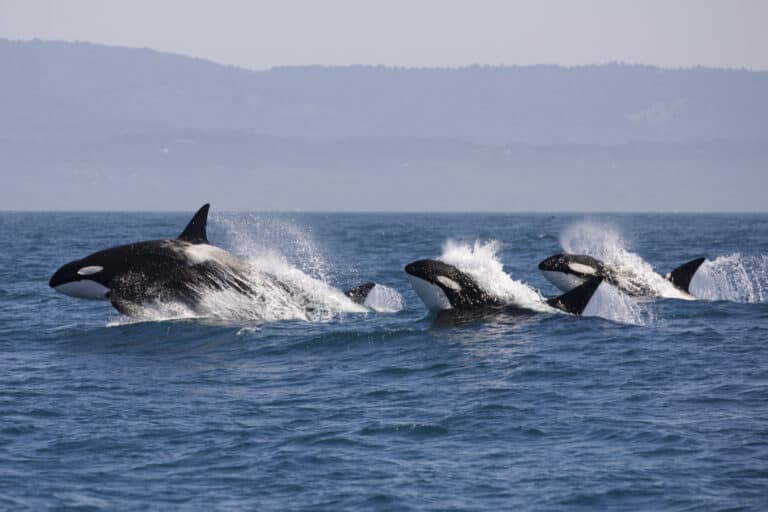
Humpback whales are often solitary by nature.
©Craig Lambert Photography/Shutterstock.com
However, solo humpback whales have also been observed using the bubble-netting technique. A 2024 study found that lone whales can control the size, depth, and number of bubble rings to adapt to different situations.
Why Do Humpback Whales Return to Alaska Every Summer?
The 3,000-mile journey that humpback whales undertake each spring is one of the longest migrations of any animal on earth. They don’t do it for Alaska’s stunning scenery. Each July, the icy-cold waters around Southeast Alaska are teeming with the whales’ favorite foods: herring and krill. Both species thrive in Alaska’s cold, nutrient-rich waters, where seasonal ocean mixing and freshwater inputs help support an abundant food web.
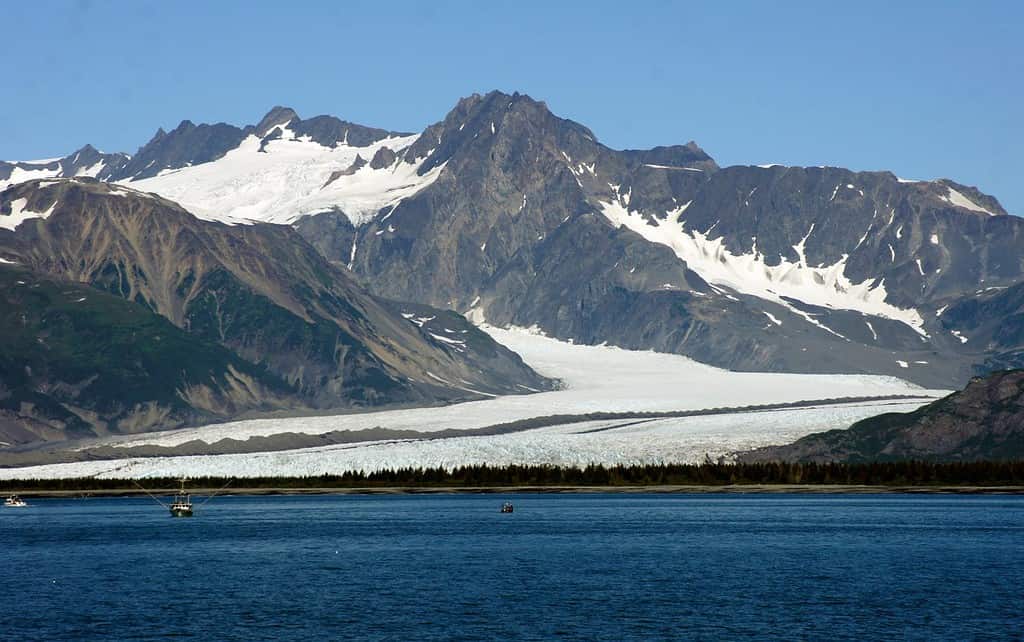
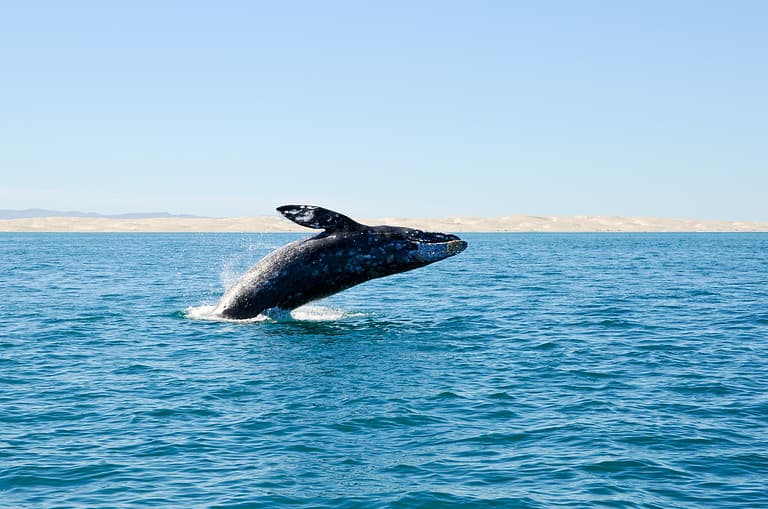
Alaska’s cold, nutrient-rich waters support the plankton that krill and herring depend on.
©Eduardo Cabanas/Shutterstock.com
The whales’ wintering grounds are too warm to support their preferred food sources. In fact, most whales eat very little while in the warmer waters around Hawai’i and Mexico, which is why they migrate north to Alaska each year.
It is in Alaska’s cold waters that humpback whales build up the fat reserves they will need to sustain themselves throughout the coming year. A single humpback can eat up to 1.5 tons of food a day, and Alaska provides enough krill and herring to sustain the local population.
When’s the Best Time to See Humpback Whales in Alaska?
Humpbacks arrive in Alaska’s waters around April each year and remain until about November, when they migrate to warmer waters to mate and give birth. However, not every month offers the same opportunities to see these spectacular creatures.
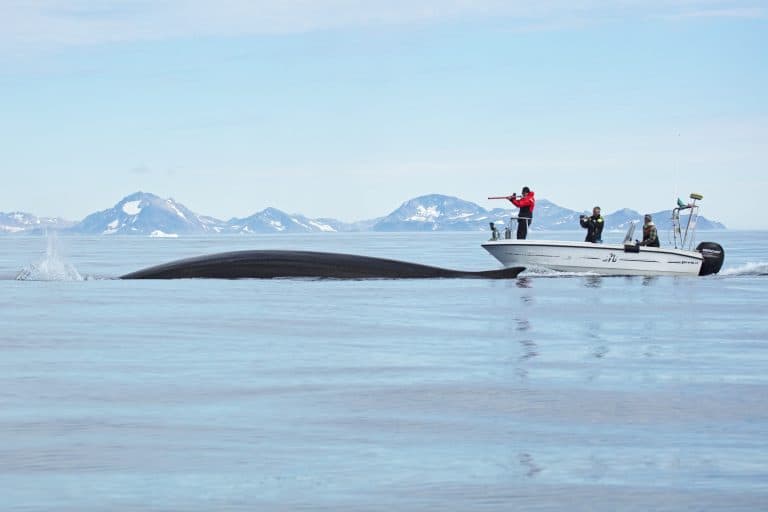
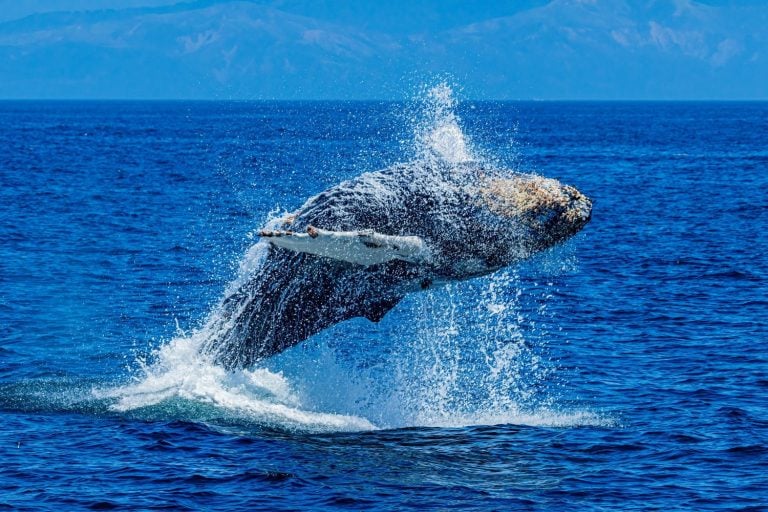
July is the best month to witness the bubble-netting spectacle, as well as groups of humpbacks breaching and playing at the water’s surface. Why July? There are two main reasons.
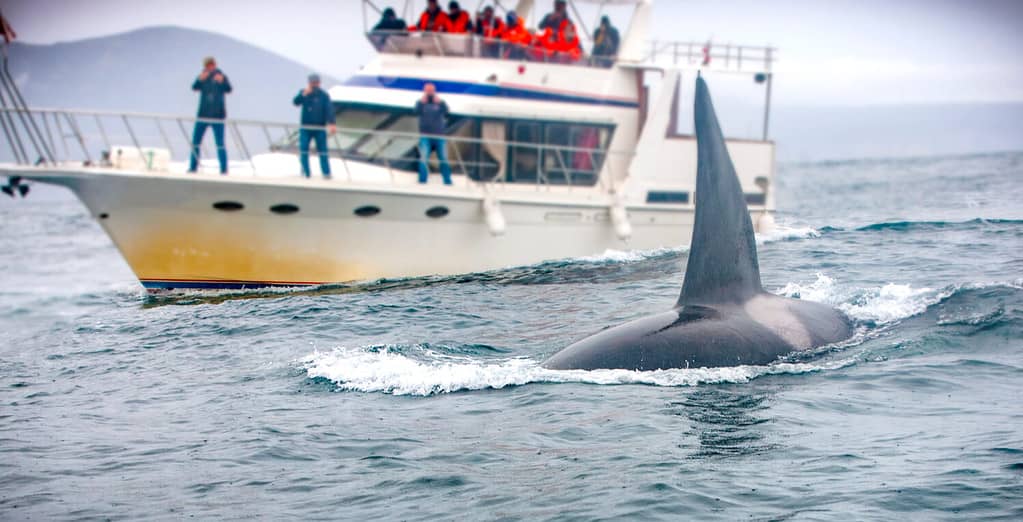
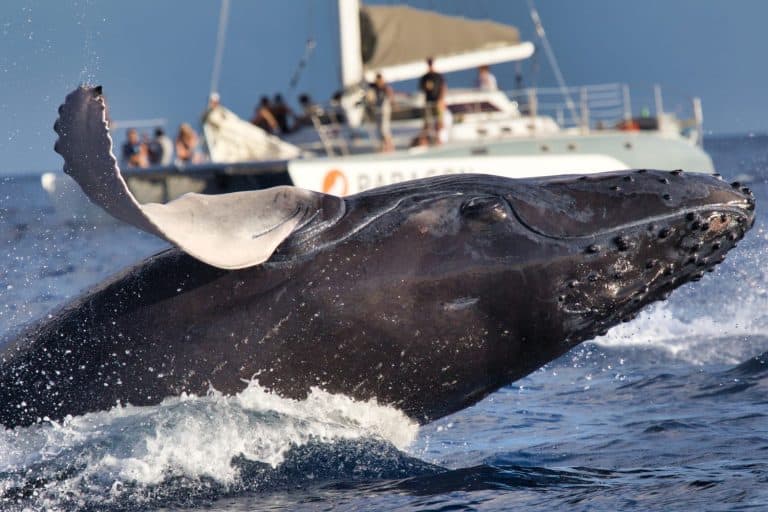
Whale watching tours are extremely popular in Alaska.
©Bborriss.67/Shutterstock.com
July offers the most daylight hours of any month, with some days stretching to 18 hours of sunlight, turning night into an extended period of brightness. July is also when the largest number of humpbacks gather in the same general areas of Southeast Alaska, all racing to fatten up before their long journey ahead.
Where Are Visitors Most Likely to See Humpback Whales?
The best places to go tend to be near Juneau, Alaska’s state capital. Juneau has the highest concentration of whale-watching tour boats in its port. Point Adolphus in Icy Strait often tops the list of the best spots to see humpbacks in Southeast Alaska. Frederick Sound and Stephens Passage are also excellent locations, offering nutrient-rich channels where bubble-net feeding is frequently observed.
Glacier Bay National Park, Kenai Fjords National Park, and Sitka on Baranof Island’s outer coast are also great places to see humpbacks. These destinations are a bit more off the beaten path compared to Juneau’s busy Inside Passage waters.