
Quick Take
- Almost every giant squid ever found at the ocean's surface was dying, and that is exactly what makes this new footage so unsettling to scientists.
- Giant squid evolved eyes the size of basketballs for one specific reason, and that reason has nothing to do with hunting in the dark. See the eye size facts →
- The Kraken wasn't pure myth, and the real animal behind the legend turns out to be stranger than the story itself. Explore the Kraken origins →
- Genetic testing on giant squid revealed something about their global population that researchers didn't expect.
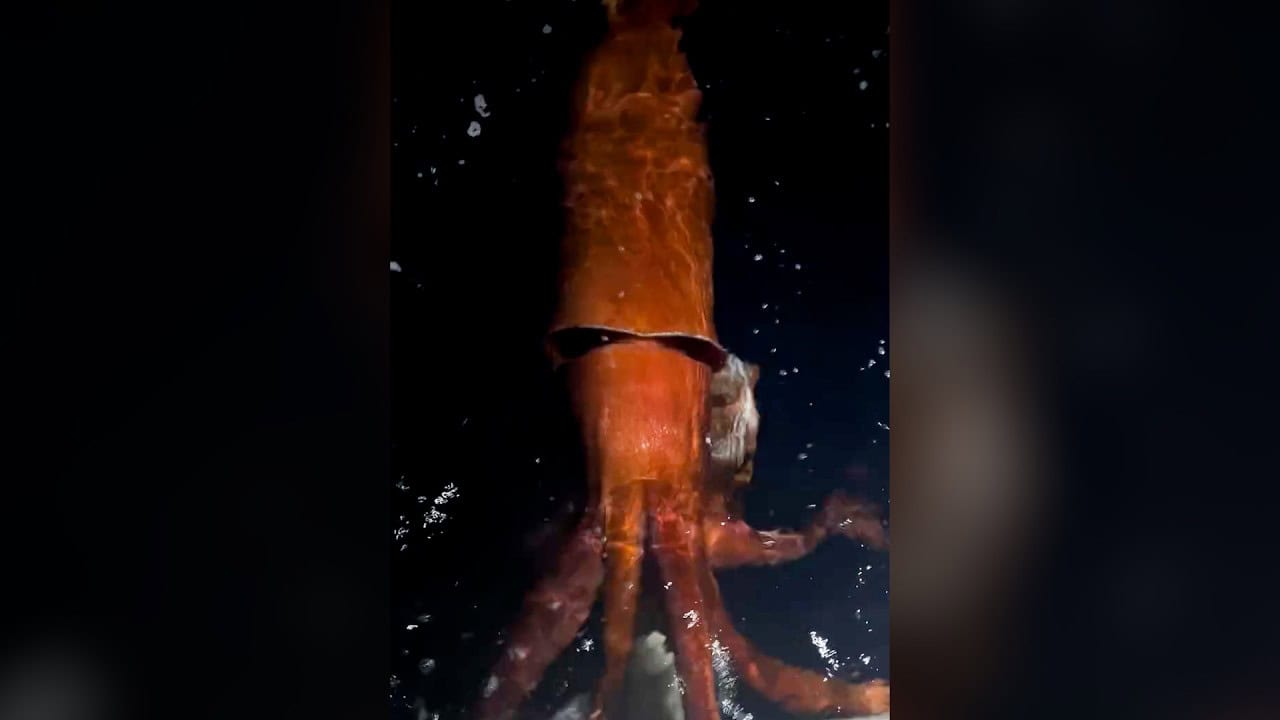
New footage from a Japanese fishing boat gives us a rare look at a living giant squid right at the water’s surface. The animal looks healthy and active, floating right next to a fishing lure in broad daylight. Seeing one alive like this is extremely rare, and every single video adds valuable evidence to what is still one of the ocean’s biggest mysteries.
Giant squid are among the largest animals without a backbone on Earth. Full-grown females can stretch up to 42 feet long including their long feeding tentacles, while males are slightly smaller. They live in the deep, dark ocean, typically between 1,000 and 3,300 feet down. Because they live so deep and move so quickly, no one managed to capture a photo of a live giant squid in its natural home until 2004, off the coast of Japan. The first deep-sea video followed in 2012, and researchers captured a rare sighting in U.S. waters in the Gulf of Mexico in 2019.
Seeing a healthy adult giant squid at the surface is even rarer. In the past, almost every giant squid found at the surface was sick, dying, dead, or pulled from the stomach of a sperm whale. A healthy, uninjured giant squid floating at the surface is so unusual that marine biologists pay close attention whenever it happens. Over the last few years, a small group of these surface sightings has popped up near Japan, including a famous 2015 encounter where a diver swam right next to one in Toyama Bay. Scientists think cold winter ocean currents pushing into shallower water might occasionally drag these deep-sea creatures upward, though they are still studying how and why this happens.
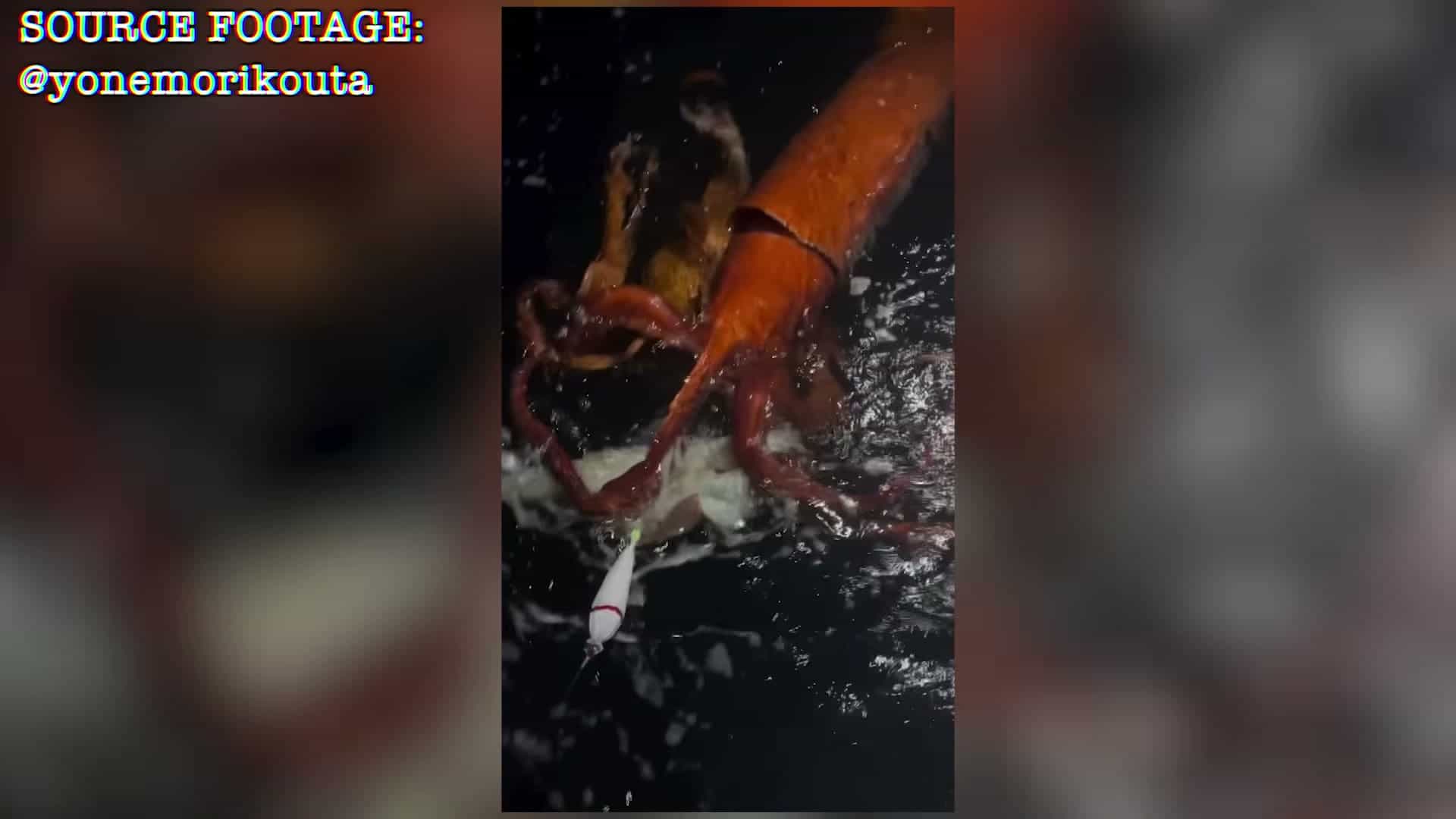
Giant squid are among the largest animals without a backbone on Earth.
©Deepsea Oddities via YouTube — used under fair use – Original / License
How Big Are They, Really?
- Length: Up to 42 feet long (females) — roughly the length of a full-sized city bus.
- Eyes: About 11 inches wide — roughly the size of a dinner plate or a basketball.
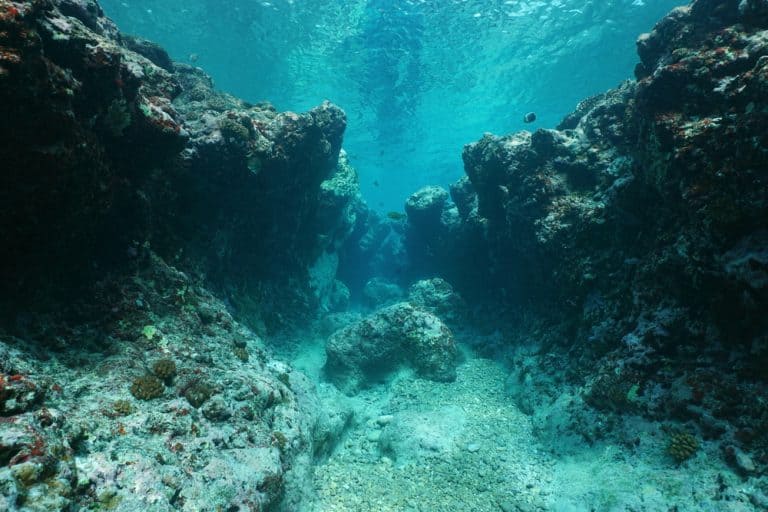
- Depth: 1,000 to 3,300 feet below the surface, where sunlight cannot reach.
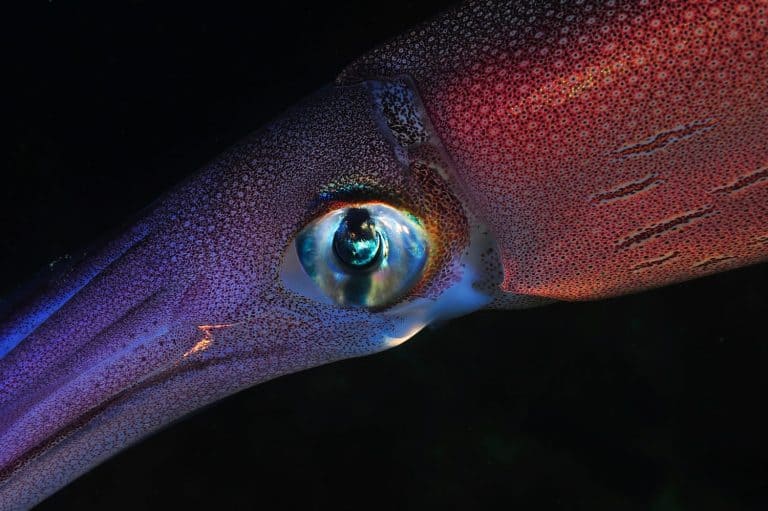
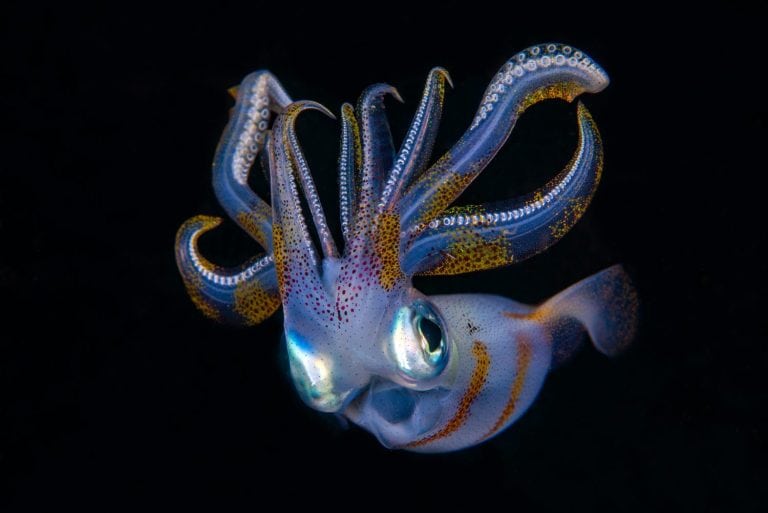
The squid in the video shows all the classic traits of a giant squid: eight arms, two much longer feeding tentacles with tooth-ringed suction cups at the ends, a sleek torpedo-shaped body, and massive eyes. Those eyes are the largest in the entire animal kingdom, about 10 inches across. Scientists believe these massive eyes evolved specifically to spot the faint glow created in the dark water when their main predator, the sperm whale, swims toward them.
Giant squid are sneaky hunters that wait to launch surprise attacks. By studying the contents of squid stomachs and testing their tissue, scientists know they eat deep-sea fish and other squid. They shoot out their long feeding tentacles to grab prey, then pull it back toward a sharp beak that looks just like a parrot’s beak. These hard beaks don’t break down easily inside a sperm whale’s stomach, making them one of the most common giant squid remains found by researchers.
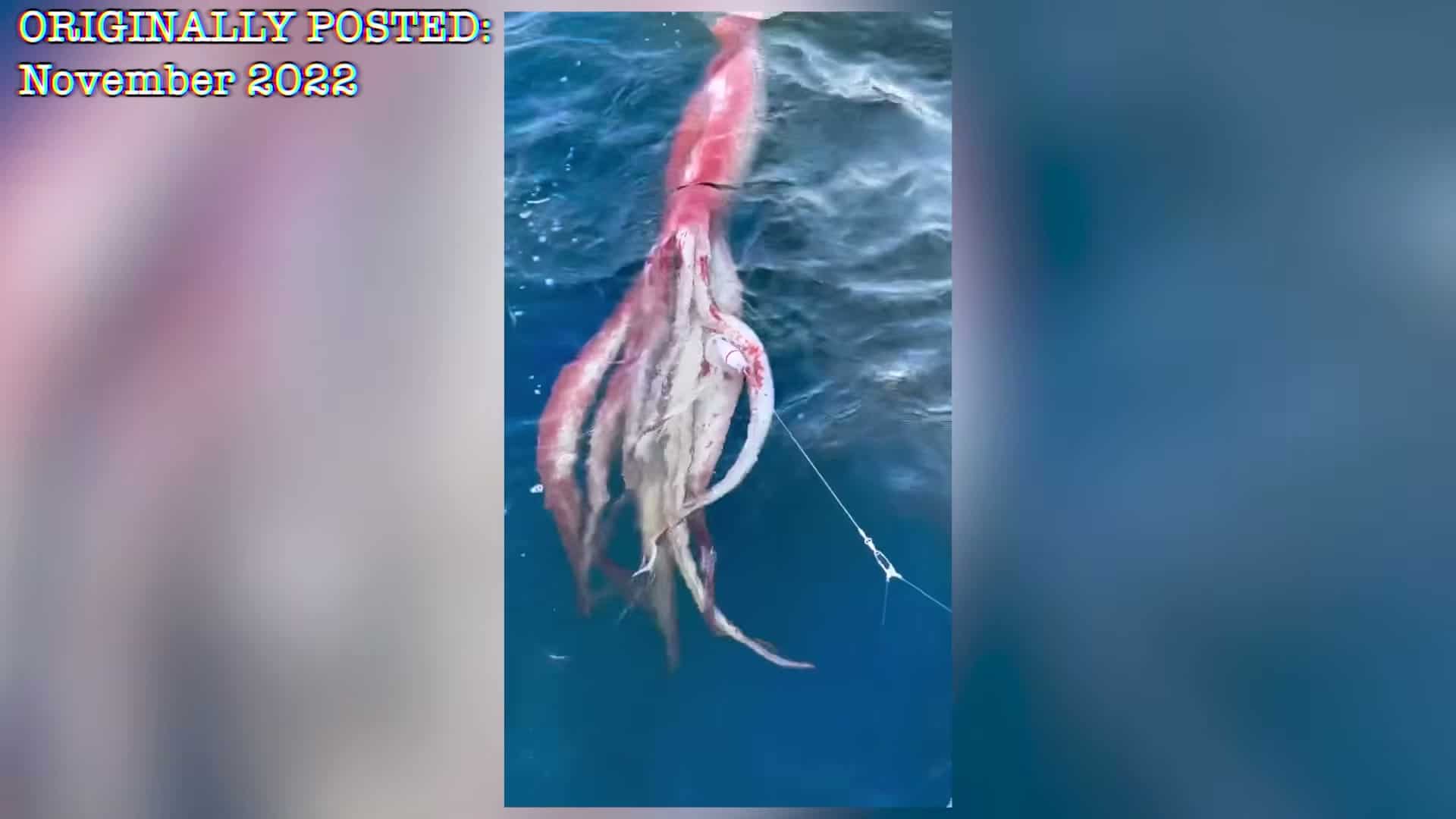
Giant squid are sneaky hunters that wait to launch surprise attacks.
©Deepsea Oddities via YouTube — used under fair use – Original / License
Fact vs. Myth
| Myths | Facts |
| Giant squid attack ships. | Reports of attacks don’t hold up under scrutiny. Giant squid have no reason to attack a boat. Historical stories were likely dying animals reacting defensively, or sailors exaggerating the truth. |
| They are aggressive monsters. | In the new video, the squid grabbed the fishing lure out of a fast reflex to strike at potential food, not because it was aggressive toward the boat or crew. |
| Sea monster legends like the Kraken were pure fiction. | Old legends about the Kraken almost certainly came from real-life sightings of giant squid or their massive deep-sea relatives, the colossal squid. |
Every confirmed sighting of a live squid helps scientists better understand where they live, how big they grow, how they act near the surface, and how they might react to changing ocean environments. Genetic testing shows that giant squid around the world have remarkably similar DNA, suggesting they all belong to a single, worldwide population. However, almost all the tissue samples used for that genetic research still come from washed-up bodies or accidental catches in fishing nets rather than live animals.
Catching a healthy giant squid on video off the coast of Japan offers a brief, fascinating glimpse at a creature that spends almost its entire life completely out of human reach.