
Quick Take
- Tracking whale sharks has baffled scientists for decades, since their migratory patterns differ from other sharks. See how they tracked them →
- Scientists discovered that a whale shark's age and sex determine not just where it migrates but also how deep it swims. Explore age and sex differences →
- Several environmental triggers push whale sharks from feeding to migration, but you might not guess what they are. See the environmental triggers →
- Whale sharks have lost more than half their population in 75 years, and this study pinpointed exactly why certain ocean areas are non-negotiable for their survival. Understand the conservation stakes →
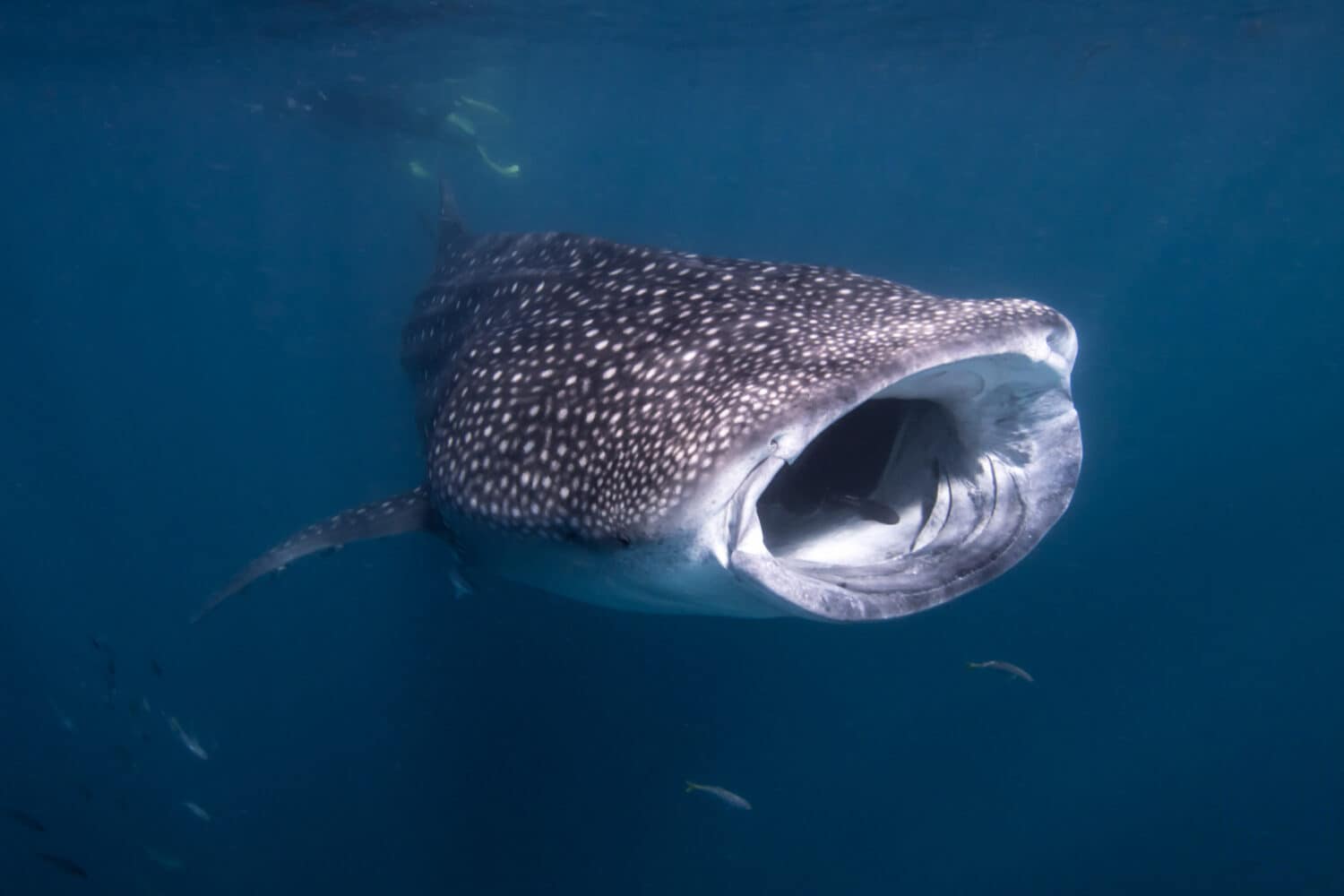
Whale sharks are undoubtedly the ocean’s gentle giants. These filter feeders usually reach lengths of 18 to 32.8 feet, with the longest whale shark ever recorded measuring over 61 feet. Although scientists know many facts about whale sharks, including their preferred habitats (warm waters) and swimming speeds (slow, around three miles per hour), at least one factor has flummoxed experts for decades: whale sharks’ migratory patterns.
During the year, whale sharks spend a significant amount of time in Saleh Bay and Cenderawasih Bay, both found in Indonesia. Yet these sharks also travel to feed and reproduce. Despite their immense size, scientists have had difficulty determining exactly where whale sharks migrate to fulfill these tasks. But a recent study published in Frontiers in Marine Science finally found some answers.
The Details Behind the Study
Certain shark species have structured and predictable migratory patterns. For example, blacktip sharks tend to migrate to Florida during the winter, while they swim north, even as far as New York and Massachusetts, during warmer months. Whale shark migration, on the other hand, has been harder to pin down. This is due, in part, to whale sharks being fairly solitary. Rather than moving in groups, which are easier to track, whale sharks often migrate alone.
Sixty percent of all whale sharks worldwide are found in the Indo-Pacific region. However, when they do migrate, they often travel long distances. This further complicates efforts to monitor their movements.
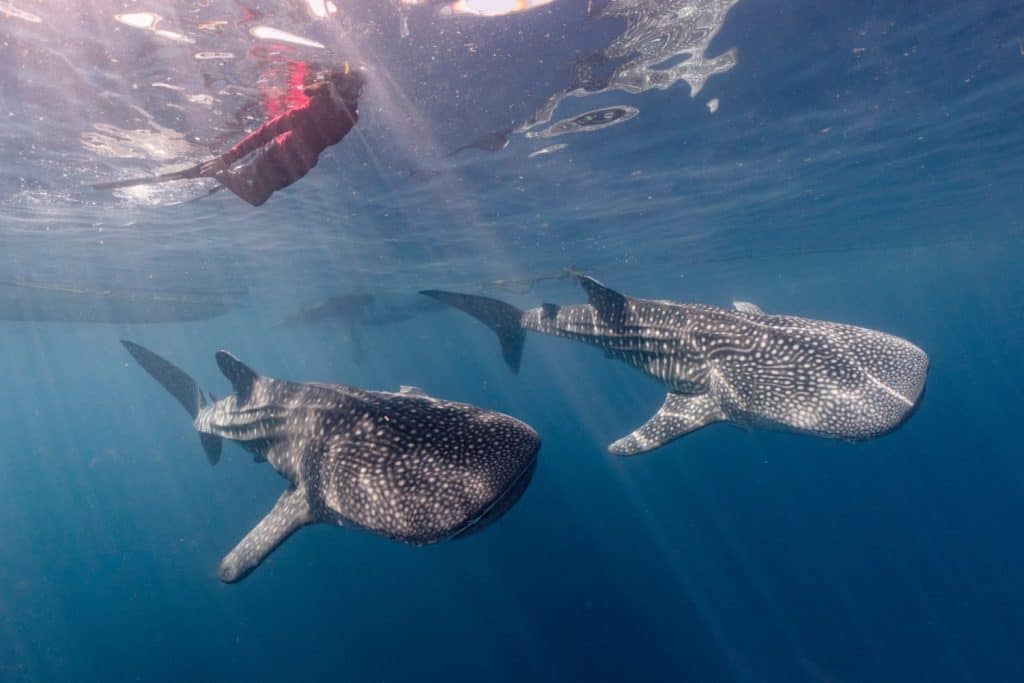
Even though whale sharks are more solitary, they sometimes aggregate in specific locations, like Indonesia, where tourists travel to snorkel with these incredible creatures.
©yubzukamoto/Shutterstock.com
Researchers wanted to understand where whale sharks were migrating and why they were choosing to do so. In 2015, the research team began tagging whale sharks with fin-mounted SPLASH satellite tags. The majority of the tracked whale sharks were juvenile males, with a smaller proportion of adult males and juvenile females.
The whale sharks were found in four specific aggregation areas:
- Cenderawasih Bay
- Saleh Bay
- Gulf of Tomini
- Kaimana – Raja Ampat
Between 2015 and 2025, the team monitored the whale sharks’ movements. Any time a whale shark surfaced, it would send data to the researchers.
After collecting the data, the researchers analyzed it further, focusing specifically on the speed at which whale sharks were moving. Slower speeds within smaller areas indicated feeding behavior, while faster, straighter movements indicated migration.
What Behavior Did the Study Show?
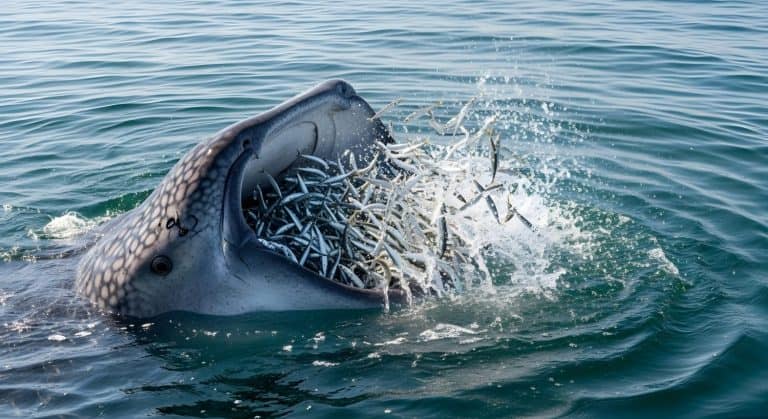
As mentioned earlier, the data showed that whale sharks tend to aggregate in certain areas, specifically Saleh Bay and Cenderawasih Bay. This behavior is highly food-driven. The whale sharks stay where they can find reliable sources of plankton, krill, and algae. However, the study found that food availability may vary depending on the time of year. In Saleh Bay, for example, food was more abundant during the monsoon season. Whale sharks in this area tended to feed at greater depths, while migratory individuals remained in shallower water. Alternatively, Kaimana offers warm, shallow waters year-round, making it an ideal spot for whale sharks to live and feed.
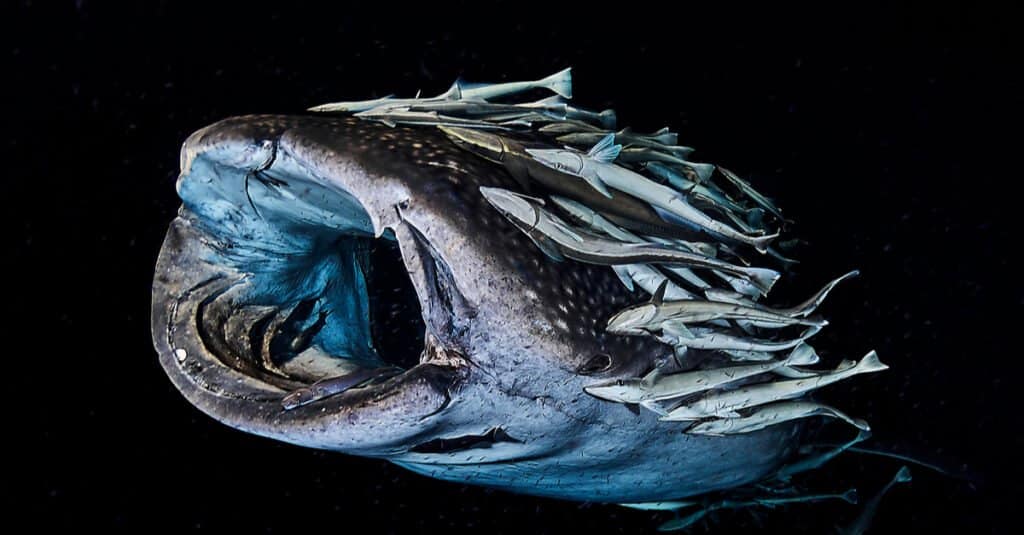
Whale sharks can consume up to 45 pounds of food each day.
©Alex Rush/Shutterstock.com
Beyond food availability, the research team discovered several other factors that influenced whether an area was a suitable habitat, including:
- The temperature of the ocean surface
- Chlorophyll levels in the water (which are associated with food availability)
- Ocean currents
- Sea floor slope
- How deep the water was
While feeding, whale sharks tended to stay in shallower waters with favorable conditions. When the weather was poor or food was scarce, they migrated, often swimming through deeper waters with stronger currents and more canyon systems.
Gender and Age Differences in Whale Shark Migration
One unexpected finding from the study was that whale sharks of different ages and sexes often displayed distinct migration and feeding patterns. For example, juvenile females migrating through the Arafura and Timor Seas often swam in deeper waters than juvenile males. In those same seas, juvenile females were also more likely than their male counterparts to swim near canyons or escarpments. However, in the North Pacific Ocean, juvenile males occupied extremely deep-sea areas.
According to the data, juvenile males also migrated significantly longer distances seasonally, while adult males largely migrated to the southeastern Indian Ocean. Juvenile females, on the other hand, preferred the Banda Sea. Adult males also appear more likely to spend time in the open ocean than females.
Protecting Whale Shark Habitat
The IUCN Red List currently lists whale sharks as endangered. Their population has declined by over 50% in the last 75 years due to threats such as bycatch, illegal fishing, and ship strikes. As the study showed, whale sharks predominantly aggregate in Saleh Bay and Cenderawasih Bay. The authors write that their findings underscore the importance of conserving and protecting these “irreplaceable” areas. They also highlight the need for conservation efforts in whale sharks’ migratory pathways and habitats. The authors argue that achieving this would require seasonal management and education of fisheries about whale shark habitats.