
Quick Take
- Snails are not insects or bugs, they are gastropods that belong in the phylum mollusca.
- There are over 60,000 snail species.
- Snails live on land, in freshwater, and in the ocean.
Snails are some of the most common creatures in our backyards, but they are one of those animals that are difficult to classify. Are snails insects, bugs, or something else? Fortunately, science has the answers. Read on to discover how snails are classified.
How Are Snails Classified?
Snails are gastropods that can live on land or in aquatic environments. Still, that doesn’t completely answer our question. Snails are not bugs or insects, even though they share some of the same traits and behaviors.
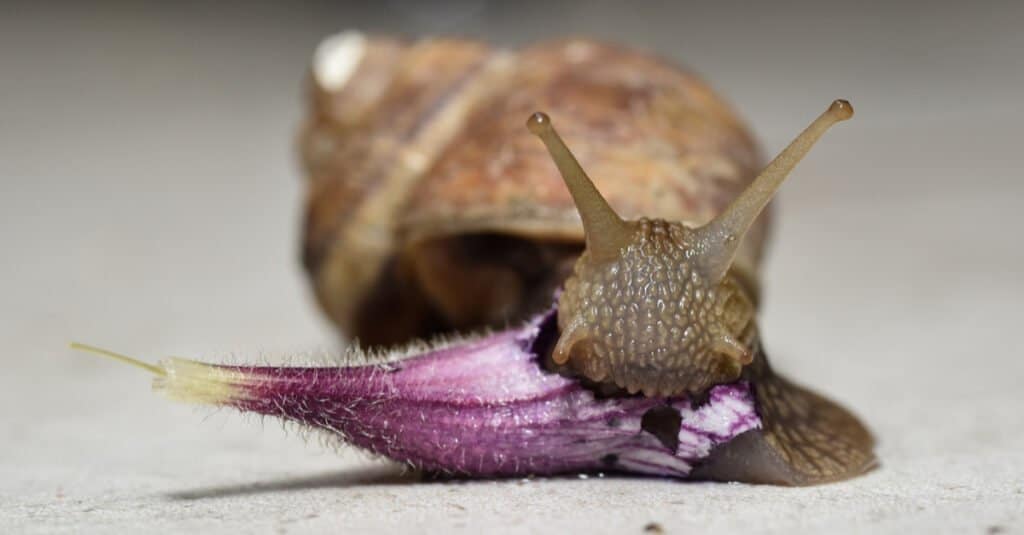
Snails are shelled gastropods, not insects.
©microcosmos/Shutterstock.com
Understanding the reasoning behind this requires a dive into taxonomical classification. Taxonomy is the branch of science that focuses on classifying groups of organisms based on shared characteristics. Gastropods are a group of invertebrates (animals that don’t have spines) that are separated into two groups: slugs and snails. All slugs and snails are considered gastropods, no matter where they are found.
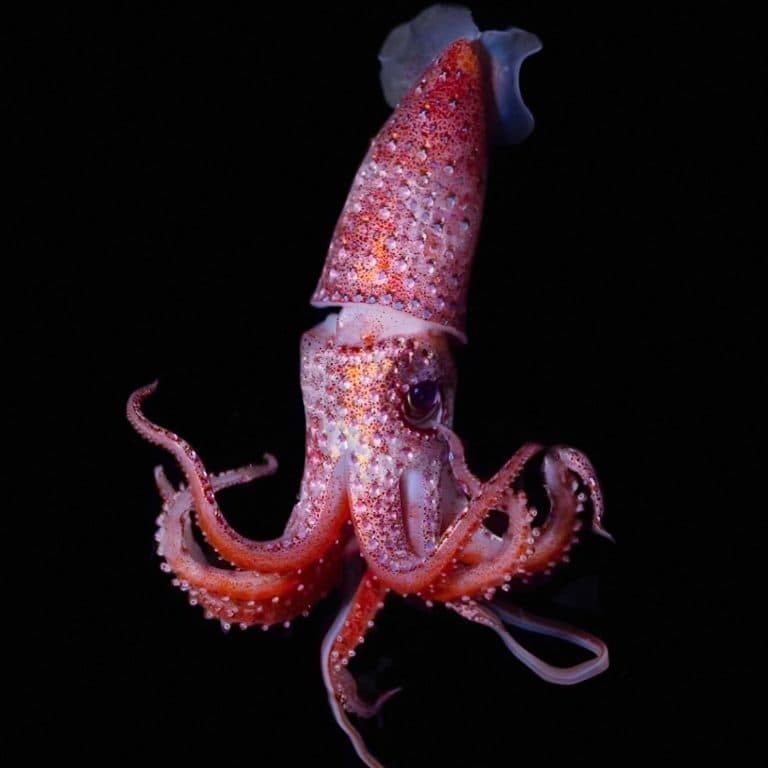
All gastropods belong in the phylum mollusca. Mollusks are the second most numerous phylum of invertebrates, with over 100,000 living species. Most mollusks share some similar traits, with one of the primary characteristics being that they have soft, unsegmented bodies. Other mollusks include octopus, squid, and clams.
Different Types of Snails
There are over 60,000 snail species. They range from tiny garden snails, which can be as small as a fingernail, to gigantic sea snails that can weigh up to 30 pounds. Snails live on land, in freshwater, and in the ocean.
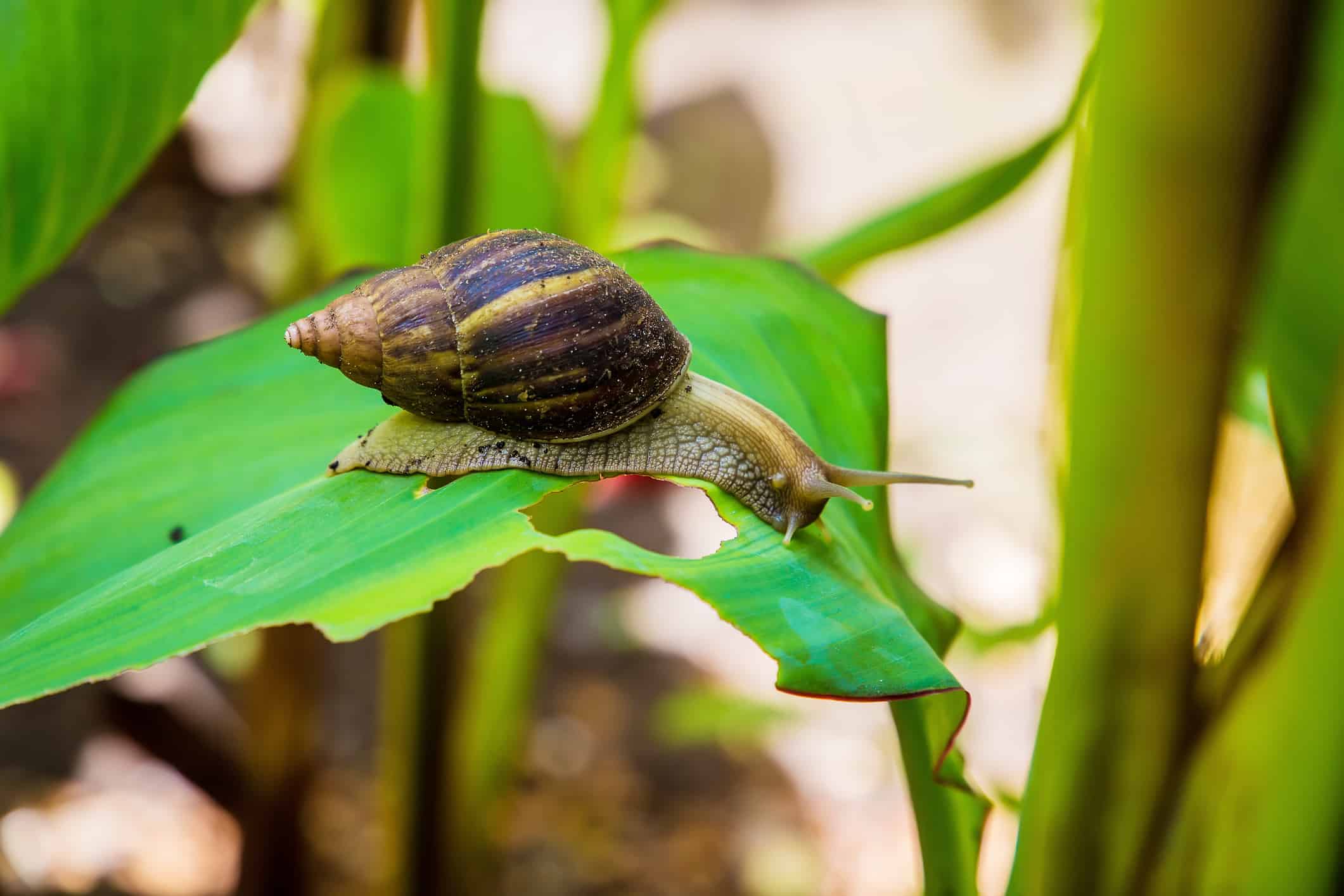
When people use the term snail, they are generally referring to the land snails that we find in gardens or in our backyards. They are incredibly common and can be found almost anywhere on earth. The largest land snail is the giant African land snail. The species Lissachatina fulica is often found in the pet trade. They grow up to 8 inches long and 5 inches in diameter — about the size of a human fist. Most people encounter brown garden snails in their backyards. They are about 1 inch in diameter when fully grown. These snails are often kept in terrariums as pets.
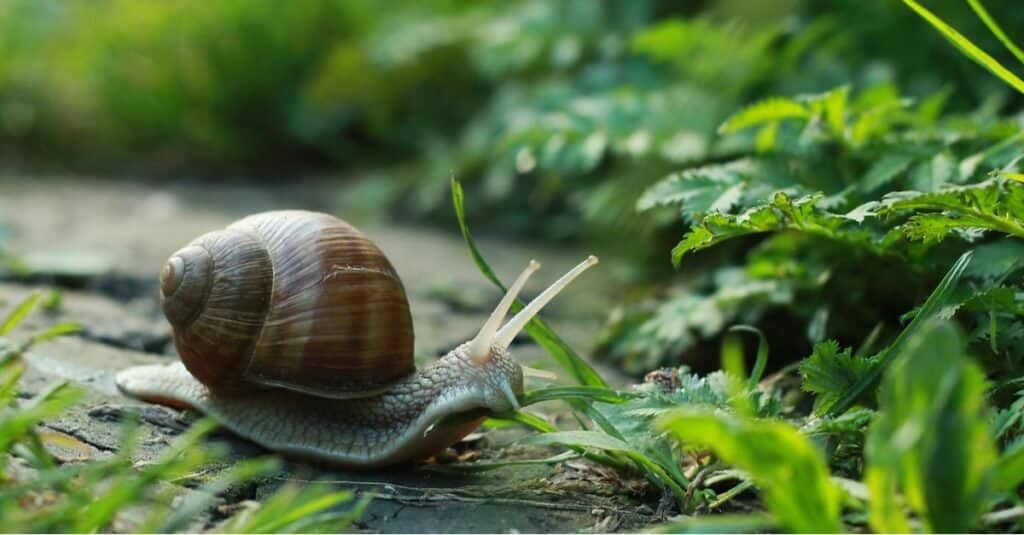
Common garden snails live in moist environments like forests, gardens, fields, and wetlands.
©Zuzha/Shutterstock.com
Freshwater snails are also common. These snails can be found in ponds, lakes, rivers, and streams. Often, people know of freshwater snails from their usage in fish tanks and aquariums. They are great cleaners and keep the glass tanks free of algae and debris. Some common freshwater snails are the apple snail and the red-rimmed melania.
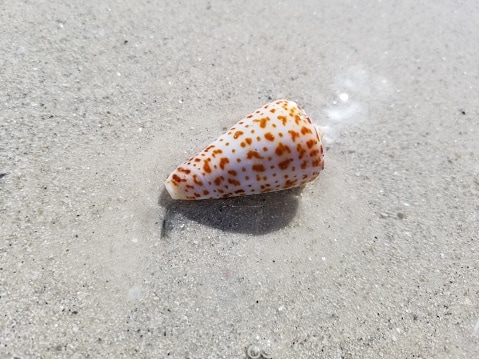
Sea snails live on the seafloor, coastal rocks, and vegetation. Common examples of sea snails are whelks, abalones, and cone snails. Cone snails are some of the deadliest animals on the planet, capable of shooting poisonous darts out of their modified radula. Many sea snails eat algae and vegetation, but others, like the cone snail, are predators.
Other Animals Related to Snails
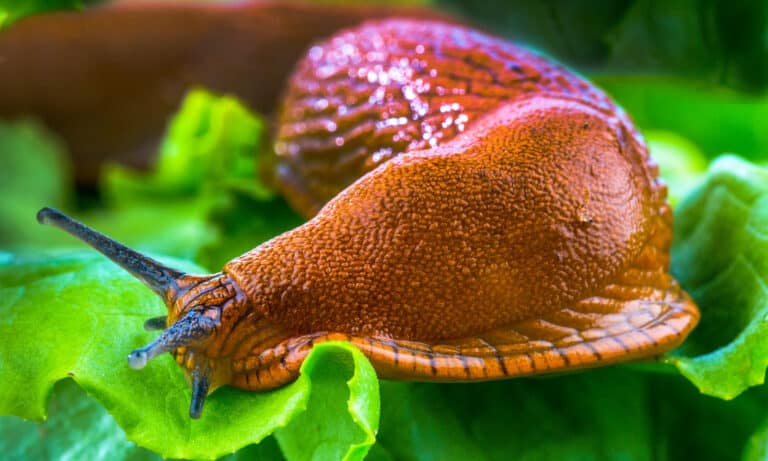
Slugs are the closest relative to snails. Although they are not the same animal, they have many of the same characteristics. However, snails aren’t just slugs with a shell. Slugs are gastropods without a shell, while snails are gastropods with a shell. This affects the environments they inhabit, as slugs can fit into places that snails cannot, while snails have portable protection from predators.
Snails are more closely related to other mollusks than insects. That means that slugs, snails, octopus, scallops, and squid all share taxonomical classification. It’s important to note, however, that classification doesn’t always indicate evolutionary relatedness. Some species evolve similar traits even though they are separated by great distances. A common example of this is the camera-type eye shared by giant squid and humans, even though our most recent common ancestor was around 750 million years ago and was probably a worm!