
Quick Take
- A calm, grazing elk in September might actually be the most dangerous one in the field, something most visitors never realize until it's too late. Why calm elk are dangerous →
- Some national parks go beyond warning you to keep your distance from elk in fall. They physically close entire areas of land to enforce it. See park area closures →
- Elk signal they're about to react at a specific moment, and most people miss it precisely because they're fixating on their camera. Spot the warning signs →
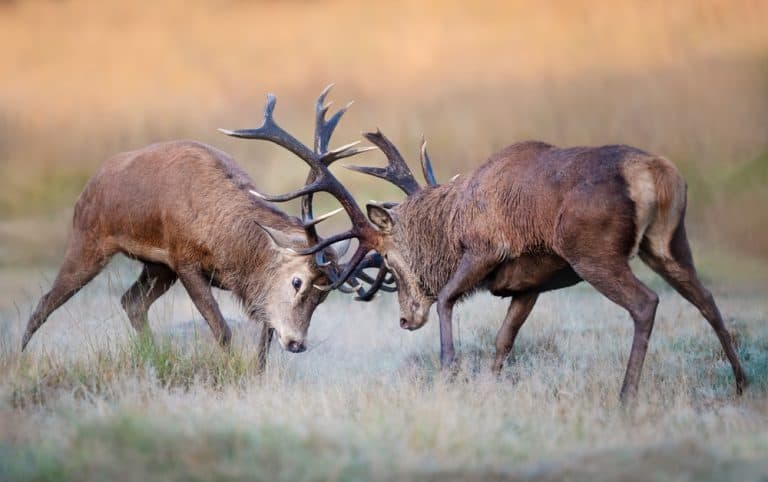
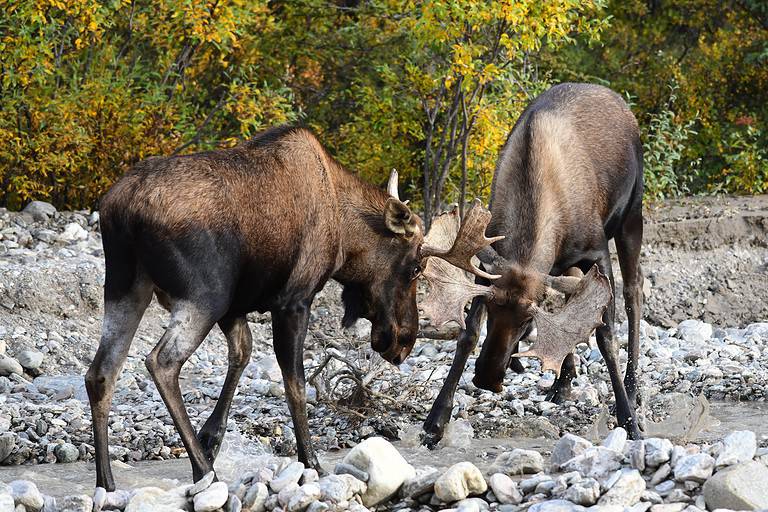
You may like the idea of visiting your favorite national park in September to see the elk feeding under autumn trees. From afar, it’s a nice view, but get too close, and you could find yourself in a predicament. As summer gives way to fall, elk across North America begin the annual breeding season known as the rut. It’s the mating season when male elk compete with each other, often crashing antlers in epic displays, to get the approval of their ideal mate.
It’s a fantastic scene, but for your safety, you don’t want to get in the middle of it. Luckily, national park managers have your wellbeing in mind. They create rules to ensure you keep your distance and enjoy the wildlife without issue. To give you more context, let’s dive deeper into this wild phenomenon.
What Happens During the Elk Rut?
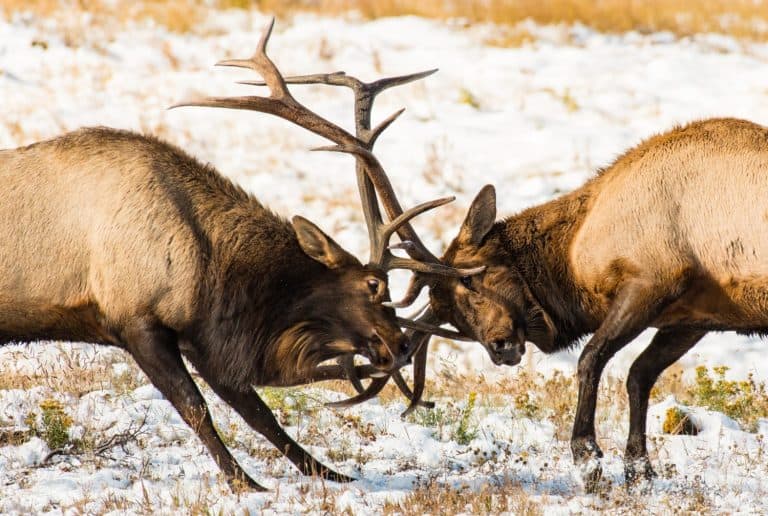
The rut period generally occurs in September and goes into October. During this time, bulls, which are male elk, will aggressively compete with one another to impress the females, which are called cows. These displays will involve establishing dominance, defending groups of females, and challenging rivals. In many cases, these contests can be physically dangerous as the animals chase each other, spar, and lock antlers.
In addition to seeing them in action, you may also hear elk in September when they make their distinct bugling sounds. Bulls use vocalizations to advertise themselves and communicate with other elk, and the intense noise can be hard to miss.
Be Cautious Around Elk in September
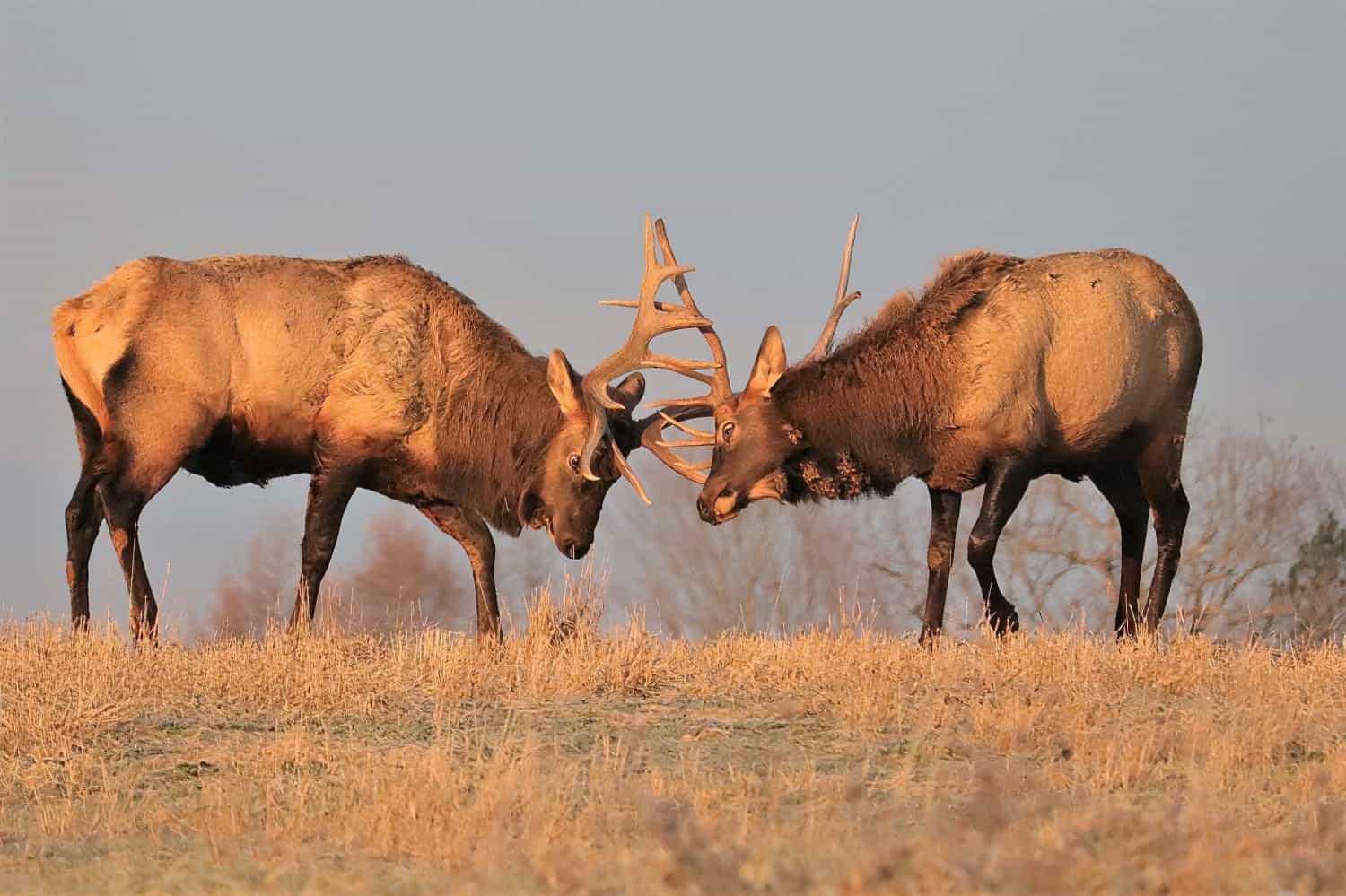
Elk will often get into intense standoffs during rut and you don’t want to be close by.
©onewildlifer/Shutterstock.com
Human spectators need to be cautious. If you approach during the rut, you may be entering the animal’s space at exactly the time when the elk is most likely to react defensively. National Park Service officials have repeatedly warned that elk can become aggressive and unpredictable during the rut. Great Smoky Mountains National Park specifically notes that bulls experience heightened testosterone levels during breeding season and may challenge or charge things they perceive as threats, including people and vehicles.
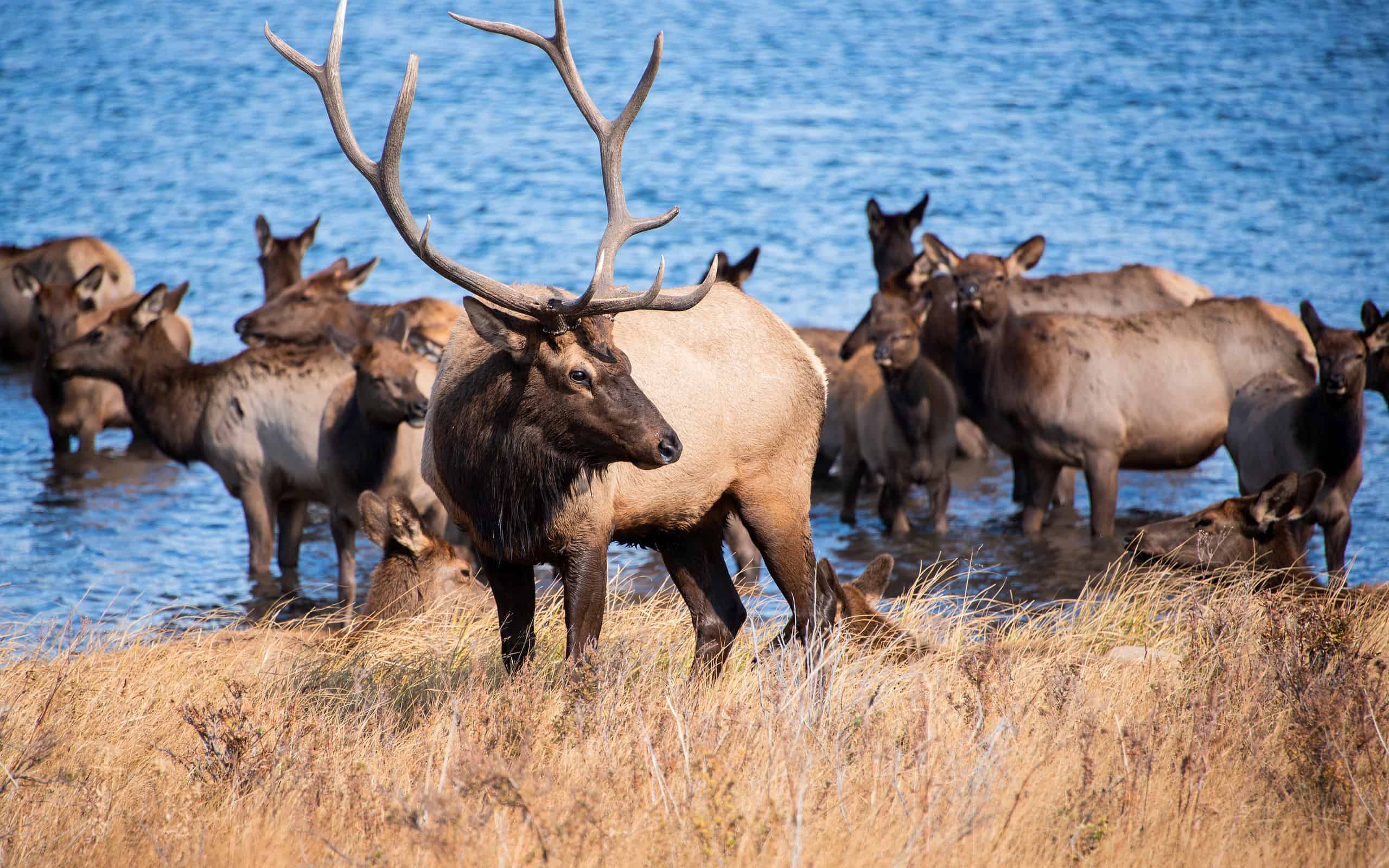
The main point is that September is not the month to become bold around elk, and that’s especially true when you realize that looks can often be deceiving. Many park visitors and nature photographers make the mistake of approaching elk during this time because the elk appears relaxed and grazing in a field. However, an elk doesn’t have to be running, charging, or displaying its antlers to be uncomfortable with your presence.
In fact, one of the most useful rules for wildlife viewing is to watch what the animal does when you spot it. Basically, if an elk stops feeding, changes direction, becomes unusually attentive to you, or otherwise changes its behavior because of your presence, you’re too close. This is an important concept because there isn’t always a magical distance at which every elk suddenly becomes comfortable. Two animals may react differently. If you’re visiting a park, pay attention to the guidelines on how far to stay from the animals, and consider staying even farther, especially during the rut.
How Parks Manage Safety During the Rut
Safety during elk rut season is so essential that most national parks with elk in the area have specific guidance on how visitors should behave during their stay. Here is how the wildlife managers at some of the most popular national parks handle the issue.
Great Smoky Mountains National Park
The managers at Great Smoky Mountains National Park echo the advice given by most animal experts. They say to be aware of the animal’s movements. If an elk stops feeding, changes its direction of travel, or otherwise alters its behavior, you have entered its personal space, and you should safely back away for your own safety.
On top of that, the park’s regulations prohibit visitors from willfully approaching elk within 25 yards (75 feet) or at any distance that disturbs or displaces them. Plus, certain fields are closed to pedestrians and horse traffic during the September and October rut. The areas include fields in Cataloochee Valley as well as designated fields around Oconaluftee and other locations. The closures are intended to reduce the likelihood that people enter areas where elk are concentrated and come into inadvertent contact with them.
Rocky Mountain National Park
The managers at Rocky Mountain National Park also understand the importance of being safe around elk in September. Many people head to this park specifically to witness the fall rut. The herds gather in lower-elevation areas during September and October, making places such as Horseshoe Park and Moraine Park particularly popular for wildlife watchers.
Still, while people want to see the elk, there are rules. Every year from September 1 through October 31, seasonal meadow closures are used to reduce disturbance and harassment of elk during the fall mating period. In designated areas, including Horseshoe Park, Moraine Park, Upper Beaver Meadows, Harbison Meadow, and Holzwarth Meadow, off-road and off-trail foot travel is restricted during specified morning and evening hours.
The current park regulations specify that foot travel off established roads and designated trails in these areas is prohibited from 5 p.m. to 10 a.m. during the seasonal closure period. Some fishing access is also restricted during portions of those hours. As far as distance, Rocky Mountain National Park recommends that visitors stay at least 75 feet, or about two school-bus lengths, from elk. The park emphasizes that approaching wildlife is illegal, even for photography.
Signs You’re Too Close to an Elk
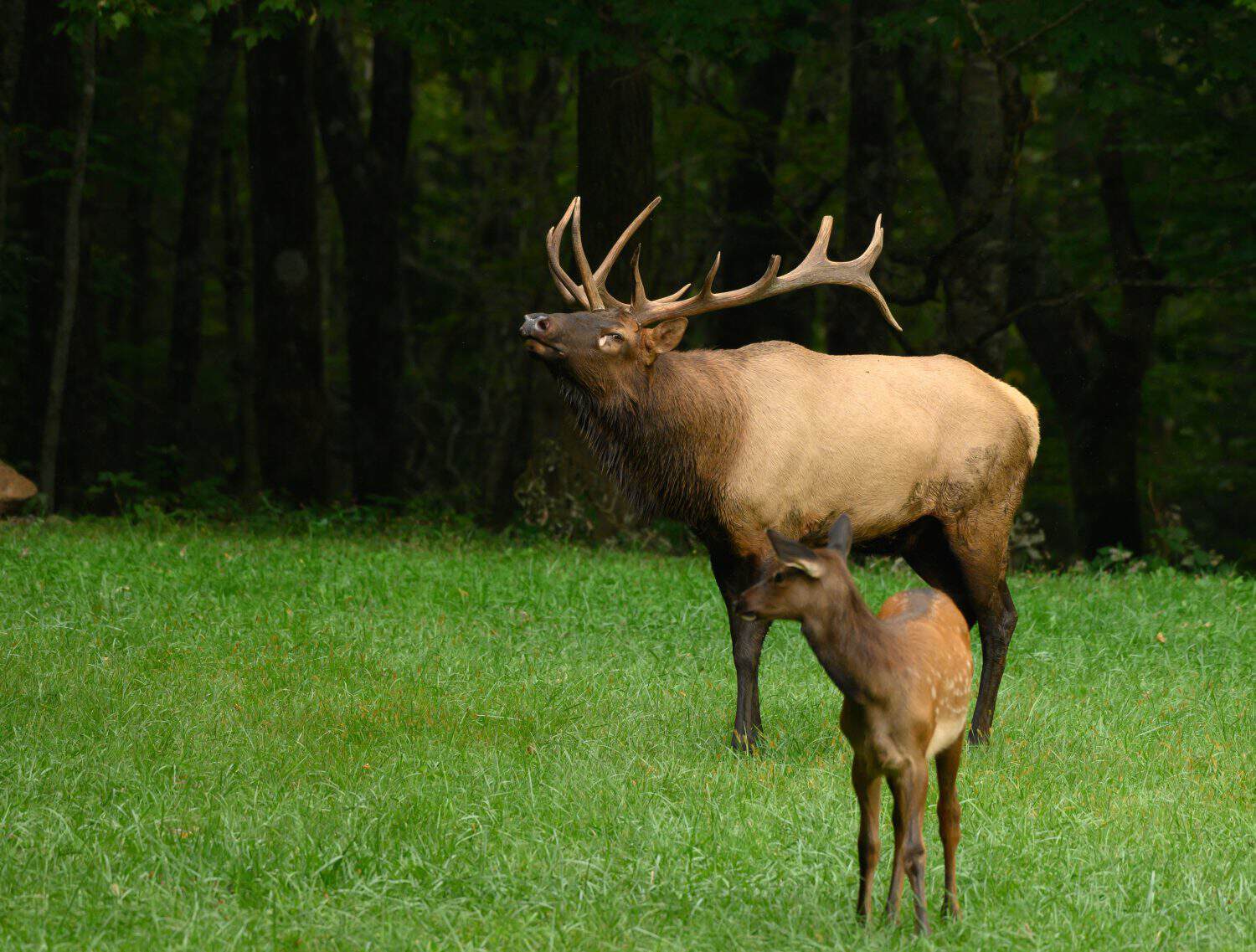
Elk are gorgeous creatures that you must enjoy at a distance.
©Kelly vanDellen/Shutterstock.com
Safety near elk includes watching for sudden movements, even when it seems the animal is peacefully grazing in a field. However, there are other warning signs to keep in mind. Be cautious of an elk that:
- Stops feeding when you approach
- Raises its head and focuses intently on you
- Changes direction because of your presence
- Moves away from you
- Becomes restless or agitated
- Positions itself toward you
- Reacts to your movement
- Begins following or confronting you
Everyone needs to be aware of what’s happening when they are near a wild animal. This is especially true for photographers. It’s easy to look at a viewfinder and miss what’s happening around you. Pay attention to the elk rather than becoming fixated on the camera.
If an elk happens to come toward you, it doesn’t necessarily mean you did something wrong. However, you must take the proper steps to stay safe. Slowly back away and create more space. Avoid sudden movements and avoid trying to touch the elk. Go on your way, and the elk will likely leave you alone.
Stay Safe and Responsible
The elk rut period is a wonderful season in the natural world, but it’s not to be taken lightly. Be cautious when approaching elk in September for your safety and to respect the animal. If you’re a photographer, remember that the goal is not to get as close as possible. Sometimes, the most memorable wildlife photograph is one you capture from afar, with the animal not even realizing you’re there.