
Quick Take
- A moth walks into a beehive surrounded by thousands of stinging defenders, and most of them never even notice it's there. See how it goes unnoticed →
- When chemical camouflage fails, the moth still has two backup defenses, neither of which bee stingers are essentially able to overcome. Discover its backup defenses →
- This moth only eats one thing as an adult, and that single obsession makes it an existential threat to entire honeybee colonies. See its honey obsession →
For centuries, the death’s-head moth has inspired legends and myths. It’s often an omen, symbolizing death and serving as a harbinger of doom in many European countries. As a moth, it has a short lifespan, symbolizing cyclical rebirth. And even its scientific genus name–Acherontia–is the river of the underworld in Greek culture.
Though the folklore isn’t backed by science, the death’s-head moth truly is an omen of death for one vulnerable species. The honeybee is often unaware that the well-camouflaged death’s-head moth is trespassing. Once it’s in the hive, it feeds on the honey that the bee colony worked so hard to create. And unfortunately, its intrusion isn’t realized until it’s often too late.
The Death’s-Head Moth’s Appetite for Sweets
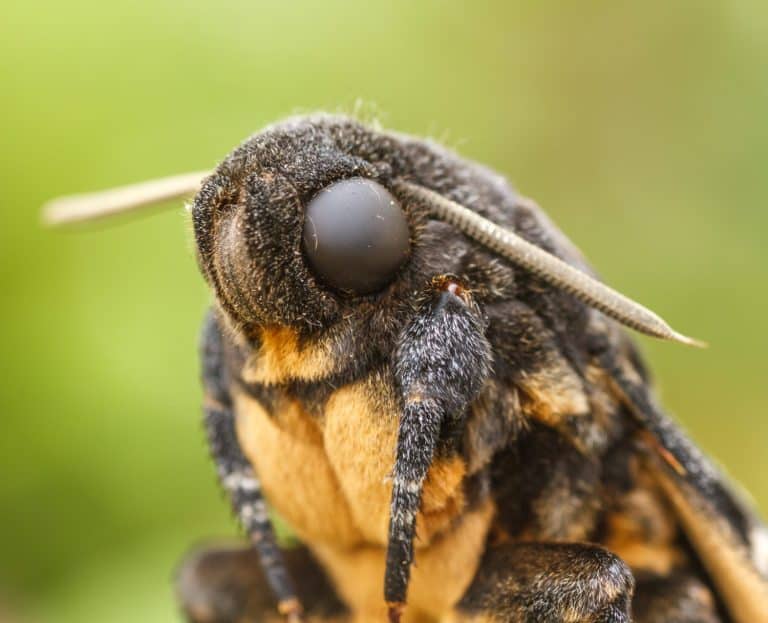
The death’s-head moth (Acherontia lachesis) gets its name from the skull-shaped marking on the back of its head. When lying against a flat surface, this species has a high intimidation factor that keeps most predators away. But for some insects, such as the honeybee, the death’s-head moth is the predator. These moths have a craving for sweets that only honey can satisfy.
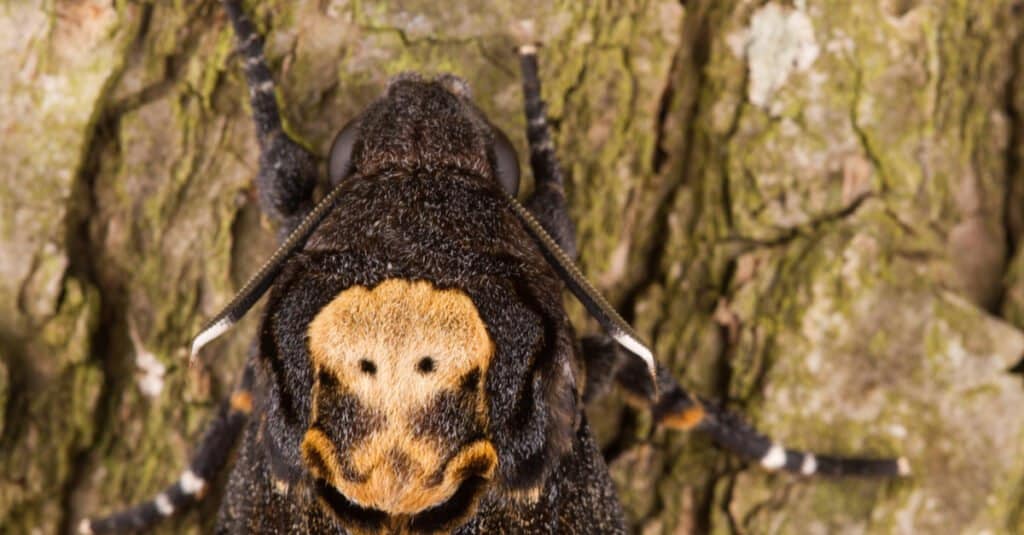
The death’s-head moth is a master of camouflage, both inside and outside of honeybee hives.
©Cosmin Manci/Shutterstock.com
During its short 3- to 6-week lifespan in the wild, the death’s-head moth will feed only on honey. As a caterpillar, these insects prefer the leaves of nightshade plants, which contain toxic alkaloids called calystegines. However, the caterpillars are considered harmless and are not known to sequester these toxins in a way that makes them poisonous. Once they mature into fully grown moths, they rely on their decorative wings to deter predators.
However, as this shift occurs, the death’s-head moth undergoes a change in diet. It must sustain itself with a steady supply of sugar and carbohydrates. Honey provides the perfect ratio and a much-needed energy boost for mating. Even their anatomy is perfect for honey consumption, with a strong proboscis used to puncture honeycomb. Eating honey means survival for the death’s-head moth, but it can also devastate entire honeybee colonies.
Death’s-Head Moths Remain Hidden Under a Chemical Cloak
Sneaking into a honeybee hive isn’t as easy as it seems. Most predators would be swarmed to death within seconds, long before they had a chance to reach the honey or the hive’s queen. But the death’s-head moth is only concerned with the former. To get it, the species uses a unique chemical camouflage that allows it to enter a hive virtually undetected.
Evolution has gifted the death’s-head moth with several tools for being invisible. The first is a chemical pheromone. When entering a hive, the moth emits pheromones that are eerily identical to the honeybees’ pheromones. This prevents alarm bells from sounding in the hive, and no workers are alerted to the moth’s presence. It allows the death’s-head moth to pass by guard bees without immediately being attacked. Despite its unusual appearance, the moth is perceived as belonging and the honeybees are fooled into thinking the moth is a friend rather than a foe.
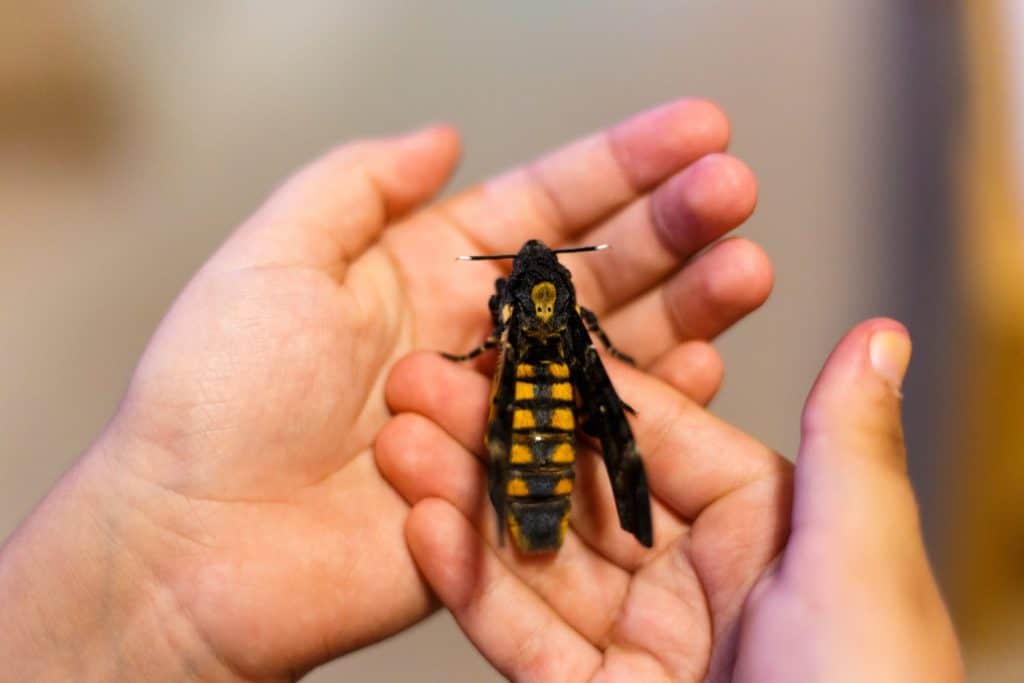
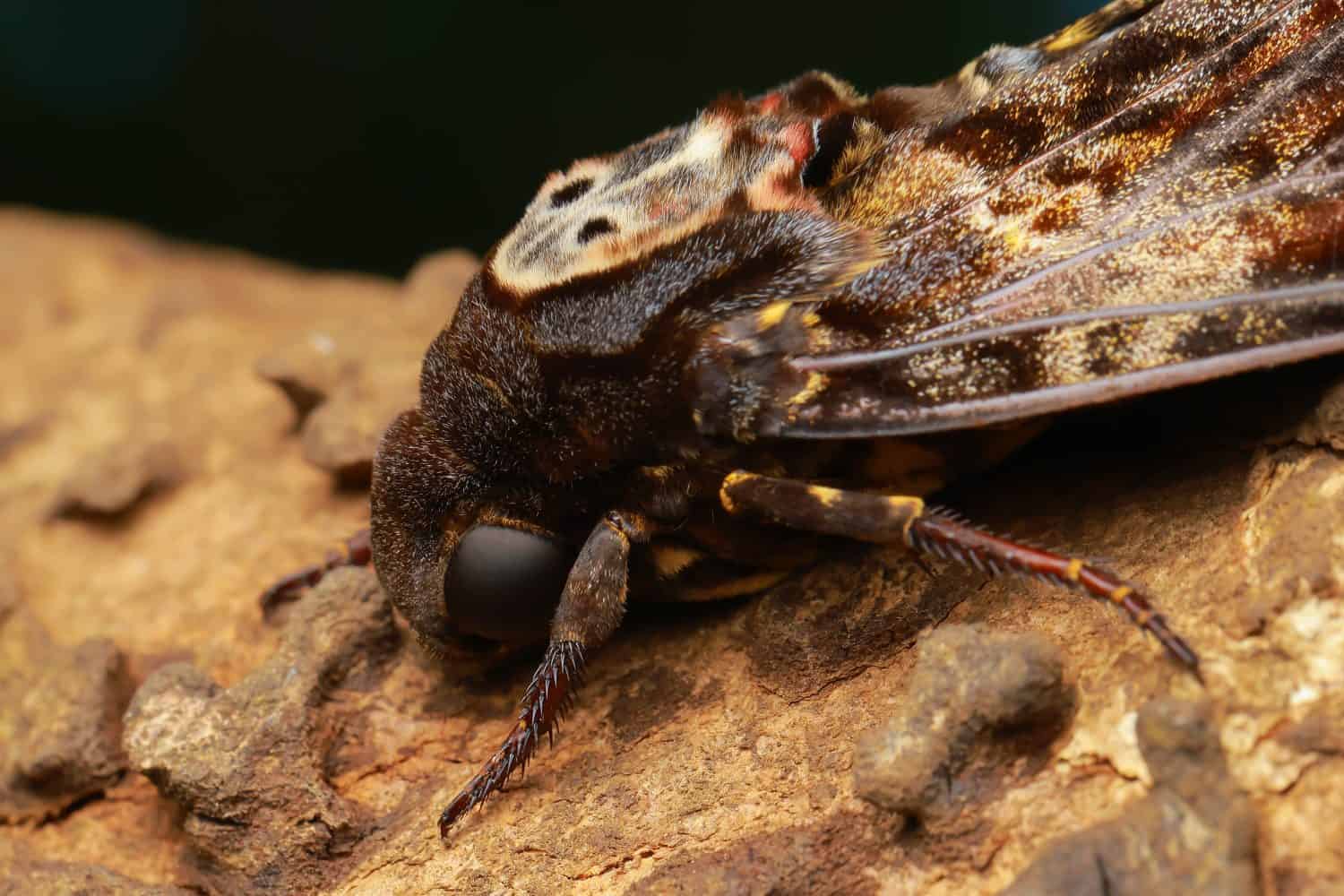
It can cause plenty of chaos in its short-lived lifespan.
©Rada No/Shutterstock.com
If a honeybee isn’t fooled, the death’s-head moth emits a series of squeaks. These are often heard during feeding, and some researchers have proposed that they may mimic the queen bee’s vocalizations. Its mimicry abilities are practically unparalleled; its pheromones and calls can potentially lull the hive into a false sense of security.
And if neither of these work, the death’s-head moth has two other backups. Defensive maneuvers C and D typically get the job done for a hungry moth.
Death’s-Head Moths Have a Thick Skin
Moths are often viewed as fragile due to their papery wings and soft bodies. The death’s-head moth is anything but fragile. It prefers to go on both offense and defense when it comes to securing a meal.
If its camouflage in the form of pheromones and vocalizations fails, it has two other options. The first is to flap its wings inside the hive, which creates chaos. Honeybees are excellent fliers with extraordinary agility, but even they are ineffective against a gust of wind. Given the size of the death’s-head moth, its wing-flapping generates enough airflow to keep most of the honeybees off its back. But that’s not all it has up its sleeve.
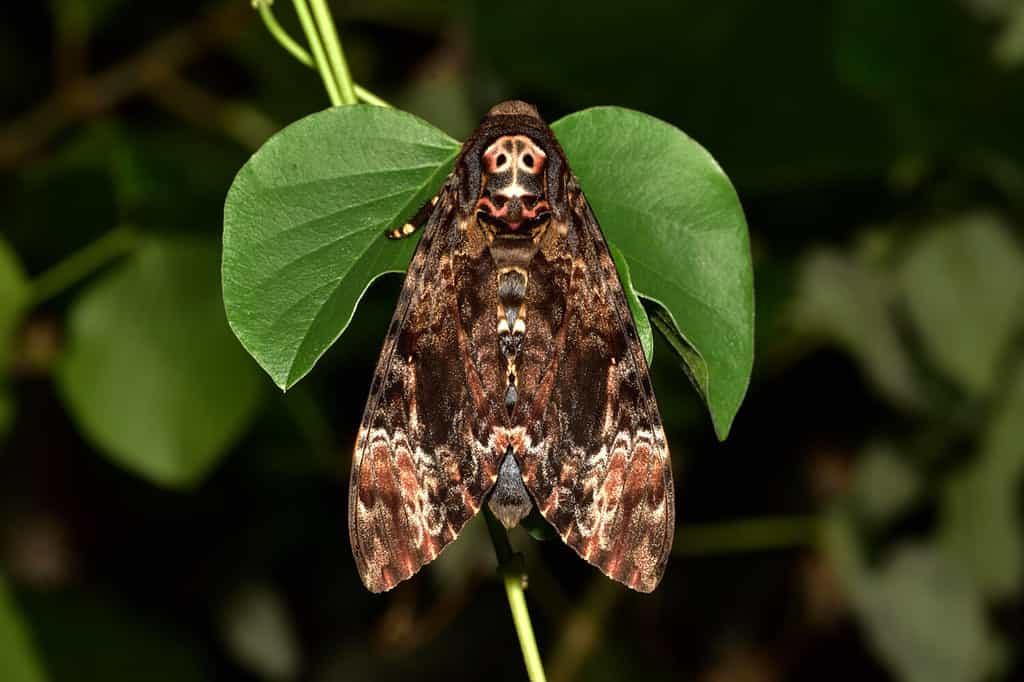
The death’s-head moth has a variety of defenses to deter honeybee colonies.
©Louis Hsu/Shutterstock.com
If some buzzing defenders manage to avoid being blown away, they will attack the moth. However, their stingers will not penetrate very far or, in most cases, at all. The death’s-head moth has a thick waxy cuticle that also doubles as light armor against predators. When a honeybee attempts to sting, this hard outer exoskeleton prevents the stinger from penetrating. This also makes the death’s-head moth partially immune to bee venom, allowing it to finish the job before the colony descends.