
Quick Take
- Male elephants periodically enter a hormonal state so extreme it makes them virtually unrecognizable in behavior, something females never experience anything like. Learn about musth →
- One elephant species breaks the rule that both sexes have tusks, and the exception is not the one most people guess. See the tusk differences →
- Female elephants consistently outlive males, but the reason has less to do with biology than with how radically different their daily lives are. Explore lifespan factors →
- Male and female elephants essentially live in two completely separate social worlds, a divide that begins the moment a male hits adolescence. Discover their separate social worlds →
Elephants are the world’s largest land mammals, with three recognized species: African savanna elephants (Loxodonta africana), African forest elephants (L. cyclotis), found throughout sub-Saharan Africa, and Asian elephants (Elephas maximus), found in Southeast Asia. Across all three species, male and female elephants exhibit significant differences in size, physical appearance, anatomy, behavior, and lifespan. Continue reading to learn everything you need to know about these five key differences between male and female elephants.
Male vs. Female Elephant: Size
Sexual dimorphism is the condition in which males and females of the same species exhibit different physical characteristics, including size. Bull (male) elephants are significantly larger than female elephants, which are called cows. African savanna bull elephants are typically between 10 and 13 feet tall at the shoulder, while females average 8 to 9 feet.
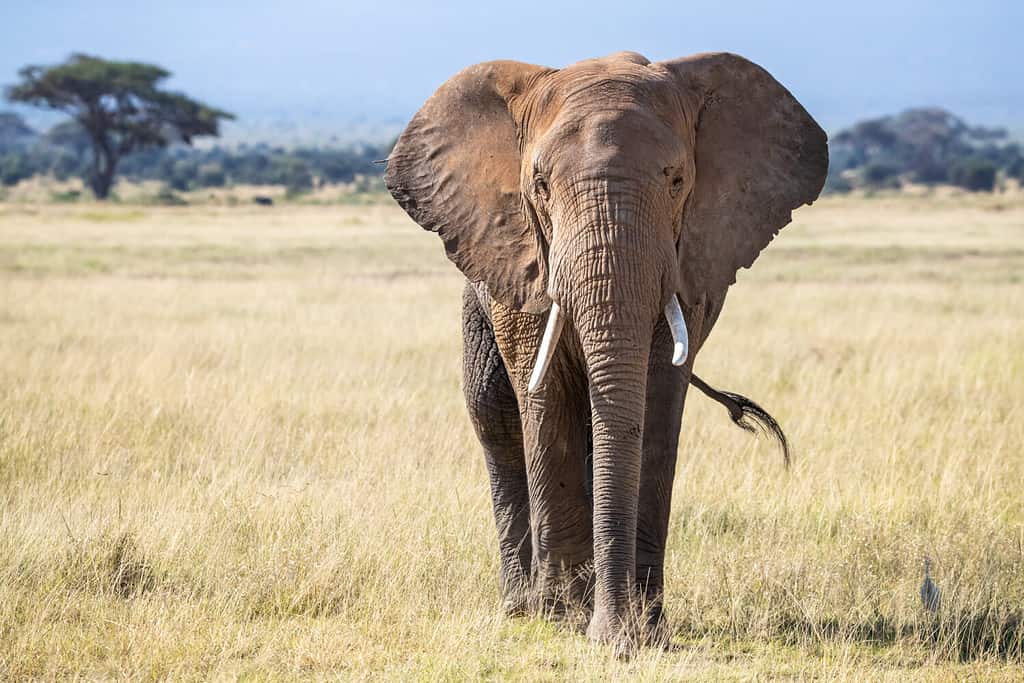
Male elephants are significantly larger than females, often weighing twice as much.
©Jane Rix/Shutterstock.com
Asian elephants are substantially smaller than African elephants, but the males are still much larger than the females. Asian bull elephants stand between 9 and 12 feet tall, while cows stand between 6 and 8 feet tall.
Forest elephants are the smallest of the three elephant species. Forest bulls stand between 7 and 8 feet tall, while forest cow elephants stand between 5 feet 9 inches and 6 feet 9 inches tall.
Male vs. Female Elephant: Physical Appearance
Another sex-linked trait in elephants is their tusks. An elephant’s tusks are continuously growing incisor teeth that help with digging, foraging, and fighting. Bull elephants tend to have large, impressive tusks, while cows have smaller, sometimes unseen tusks. African savanna bull elephant tusks can grow to impressive lengths, often exceeding 8 feet and weighing over 100 pounds.
Savanna cow elephants also have tusks, although they are smaller, at between 5 and 6.5 feet and weighing between 40 and 44 pounds. African forest elephants are similar, with males having much larger tusks than females.
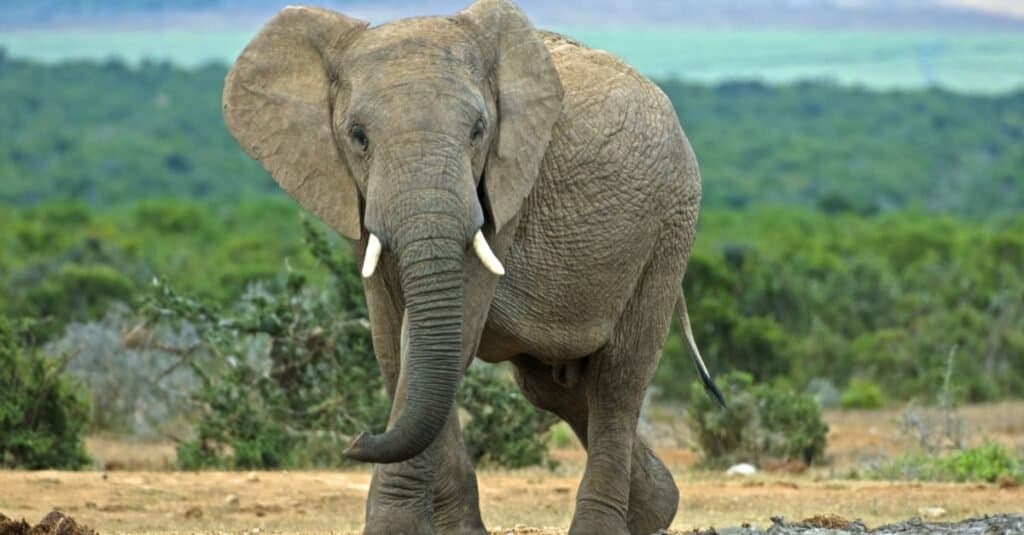
©Peter Betts/Shutterstock.com
While both sexes of African elephants have tusks, only male Asian elephants have noticeable tusks. Asian bull elephant tusks average between 3 and 5 feet long and weigh up to 50 pounds. Most female Asian elephants do not have tusks, but some have small tusk-like structures called tushes, which rarely extend beyond the mouth and are usually not visible.
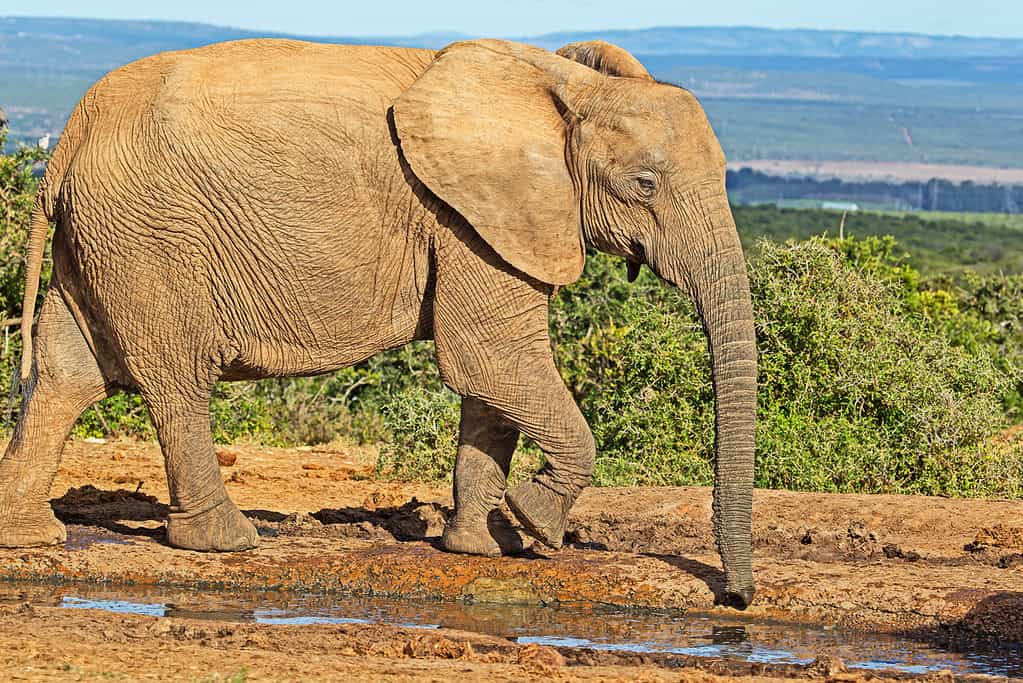
Males’ heads are broader between the forehead and eyes. While females have a steeper angle on their foreheads, making their foreheads look blockier.
©iStock.com/geoffsp
Another way to tell them apart is by the shape of their heads. Males’ heads are broader between the forehead and eyes, while females have a steeper angle on their foreheads, making their foreheads look blockier. However, this is true for fully grown elephants only, as juveniles have less pronounced differences, making it harder to tell them apart.
Male vs. Female Elephant: Anatomy
A key anatomical difference between male and female elephants is the age at which they reach sexual maturity. While females start breeding around age 14, males do not usually breed until their mid-to-late teens or later. Courtship involves a prolonged process in which females may avoid males, while males flap their ears to spread their scent.
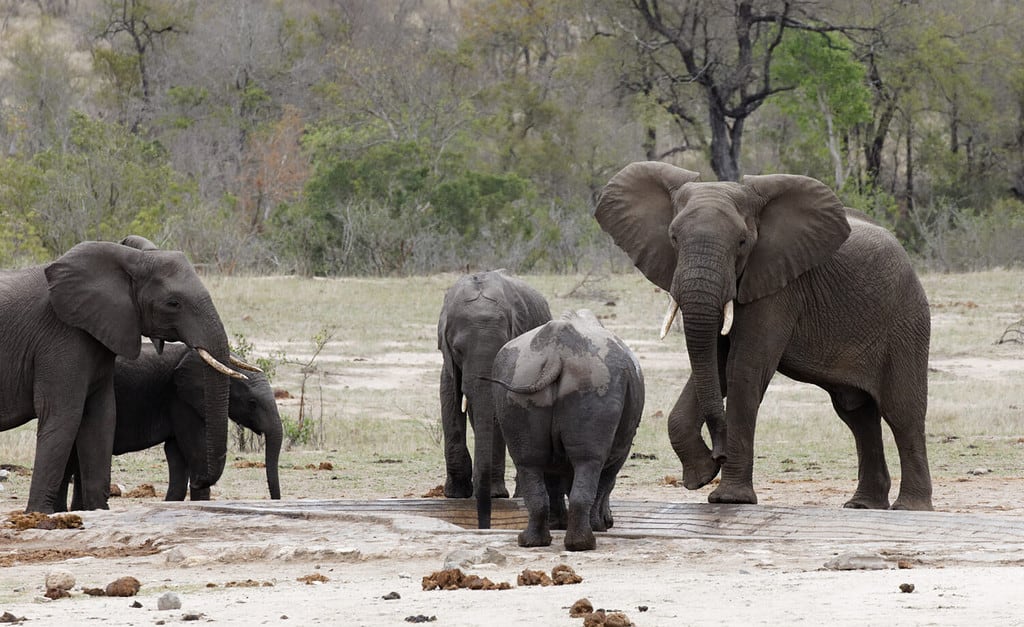
Their anatomy is another thing that separates male and female elephants.
©Beate Wolter/Shutterstock.com
Females prefer older, stronger bulls, leaving younger males with little chance. Males become highly aggressive when competing for mates due to a periodic hormonal state called musth, characterized by a massive surge in testosterone, up to 60 times higher than normal. During the musth period, bulls become exceptionally unpredictable and fight for dominance and mating rights. Female elephants do not experience a musth period.
Elephants have the longest gestation period of any living mammal. African elephants are pregnant for about 22 months, while Asian elephants gestate for 18 to 22 months. This nearly two-year pregnancy allows the calf, which weighs 170–260 pounds at birth, to develop its large body and complex brain, ensuring it can walk and survive shortly after birth. The length of time a calf stays with its mother depends primarily on its sex, although both males and females remain highly dependent during their first decade of life. Female calves tend to stay close to their mothers for life, whereas male calves tend to depart by the time they are 15 years old.
Male vs. Female Elephant: Behavior
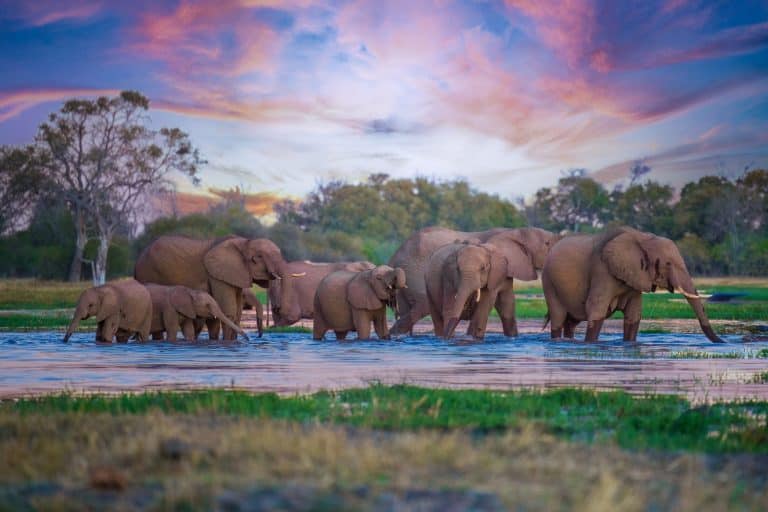
Female elephants exist in closely connected families led by a matriarch, a wise female who makes decisions for the group’s survival. These herds thrive on cooperation and shared care for the young. Male elephants follow a completely different path, leaving their mothers to lead a solitary existence, only mingling with others on rare occasions.
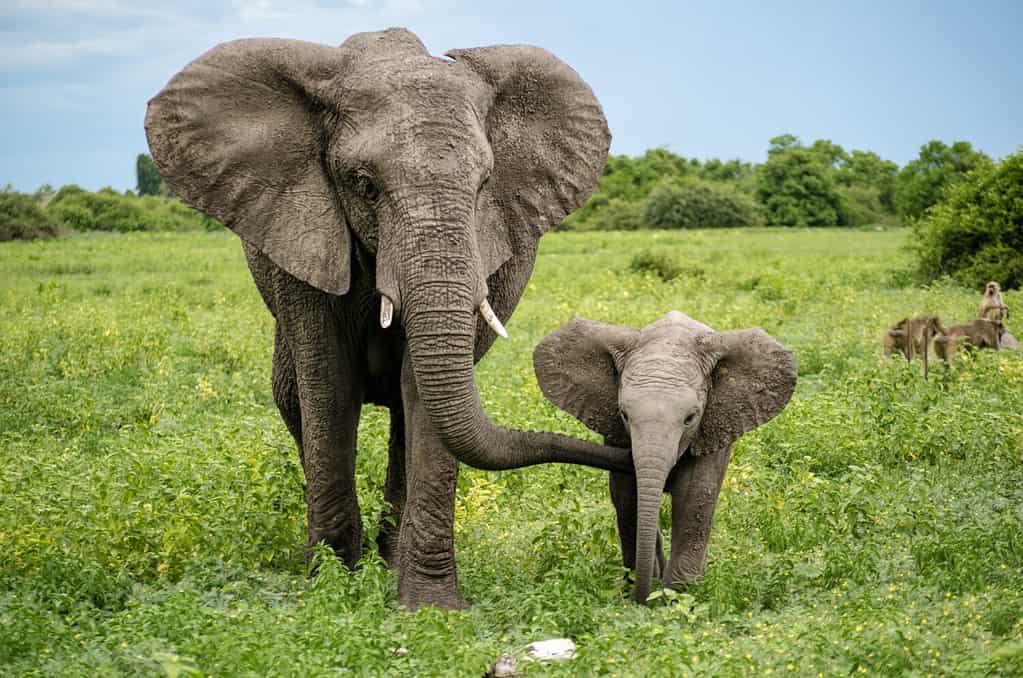
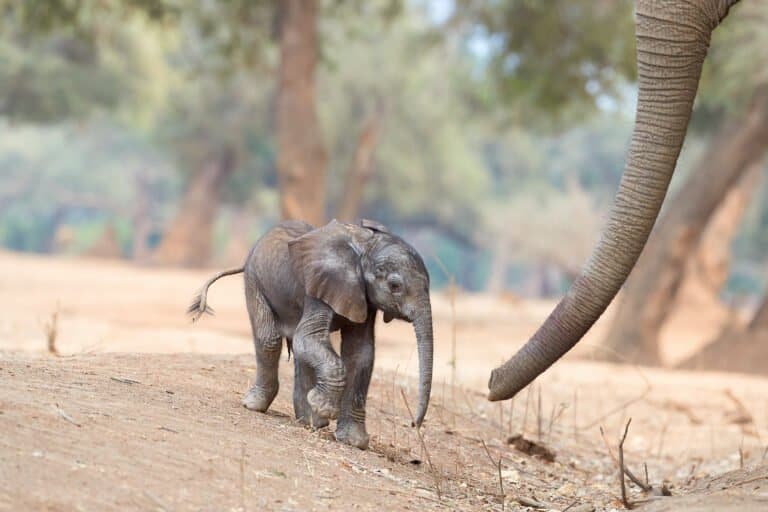
Regardless of sex, elephant calves stay with their mothers for 10 years or more.
©Aelice/Shutterstock.com
Upon reaching sexual maturity, male elephants begin to assert dominance, which is determined by their size and strength. In early adulthood, they establish hierarchies within their local group by evaluating one another through play fighting and sparring. By age 25, these males shift their focus to intense competition for mates and foraging.
Male vs. Female Elephant: Lifespan
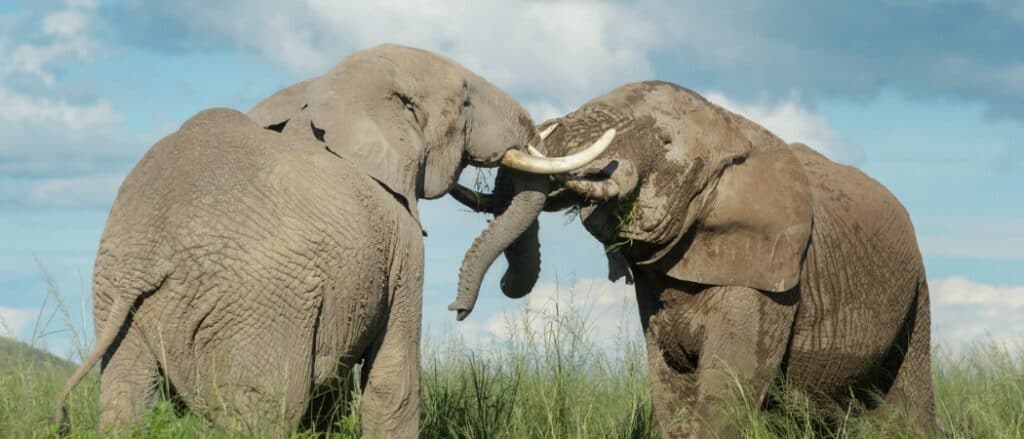
Bull elephants tend to lead riskier, less structured lives than females.
©iStock.com/AndreAnita
Female mammals typically live longer than males, and this is true of elephants. Female elephants generally live longer than males, with wild females often living 60–70 years and occasionally reaching up to 80 years. Males tend to have shorter, riskier lives, while females benefit from the social stability of matriarchal herds. Males live solitarily or in bachelor groups, often dying earlier due to high-risk behaviors and intense competition for standing and mating rights.
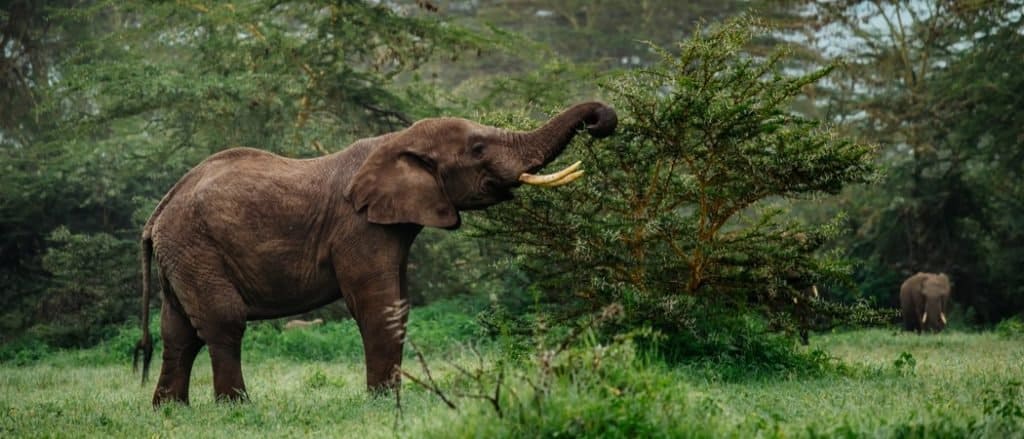
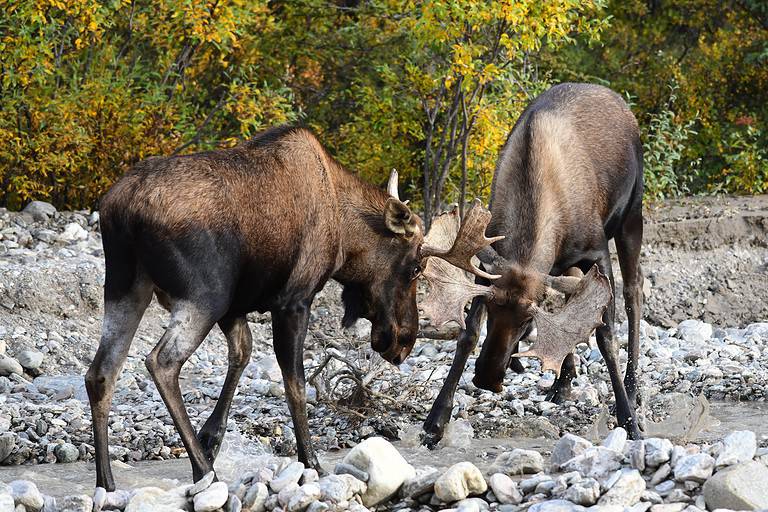
Bull elephants can be loud, unpredictable, and extremely competitive when they are looking for a mate.
©costas anton dumitrescu/Shutterstock.com