
Quick Take
- One of these ocean animals has cognitive abilities scientists compare to primates, and surprisingly, it is not the one you would expect. Shark's primate-level cognition →
- Some of these animals use tools, but one species steals them from other creatures entirely. Octopus tool-stealing behavior →
- At least one species on this list has been deployed in military operations, with its intelligence not just being impressive but actively put to work. Sea lions in military ops →
- Several of these animals can recognize individual faces, and not just those of their own kind. Otters recognizing human faces →
There’s no doubt that some species are highly intelligent, but intelligence in animals is measured differently. For example, different species demonstrate intelligence through their unique ability to communicate, use tools, or solve complex puzzles. Many of the intelligent animals are marine species, sea creatures that live in the world’s oceans. Continue reading to meet eight of the smartest and most intelligent ocean animals alive today.
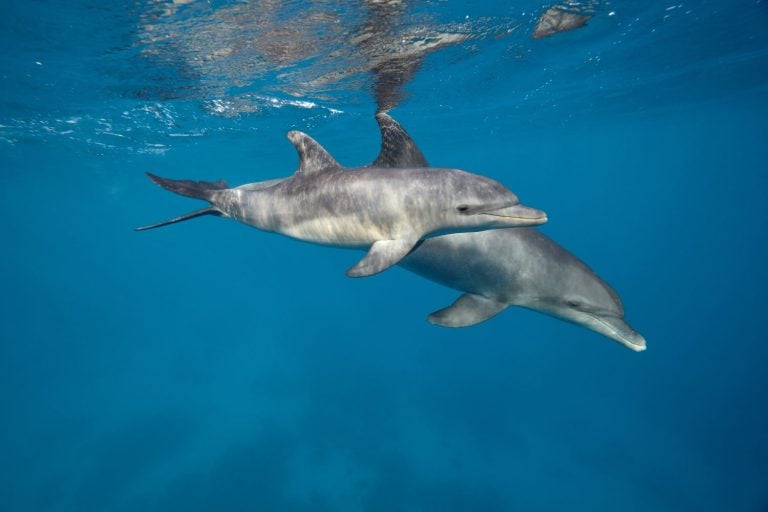
Bottlenose Dolphin
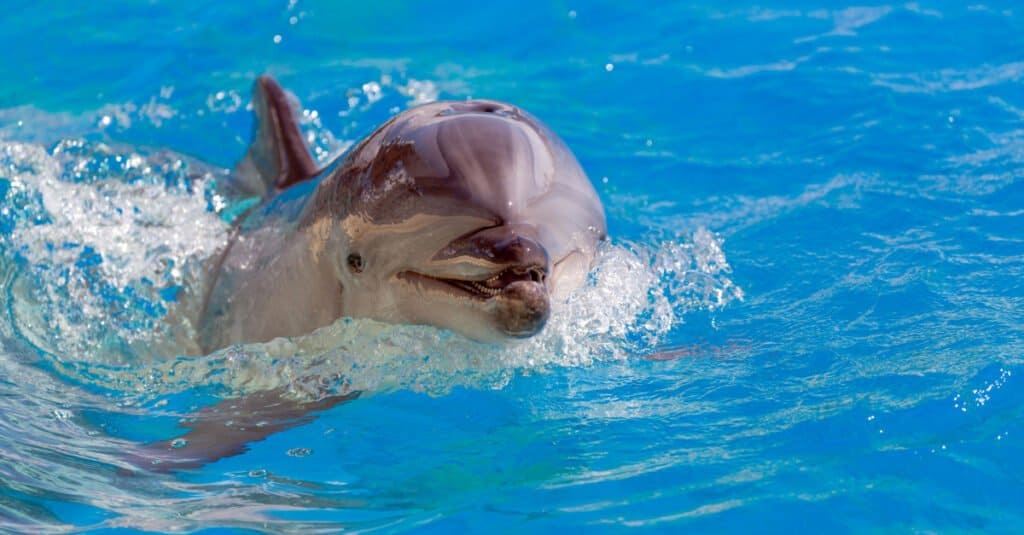
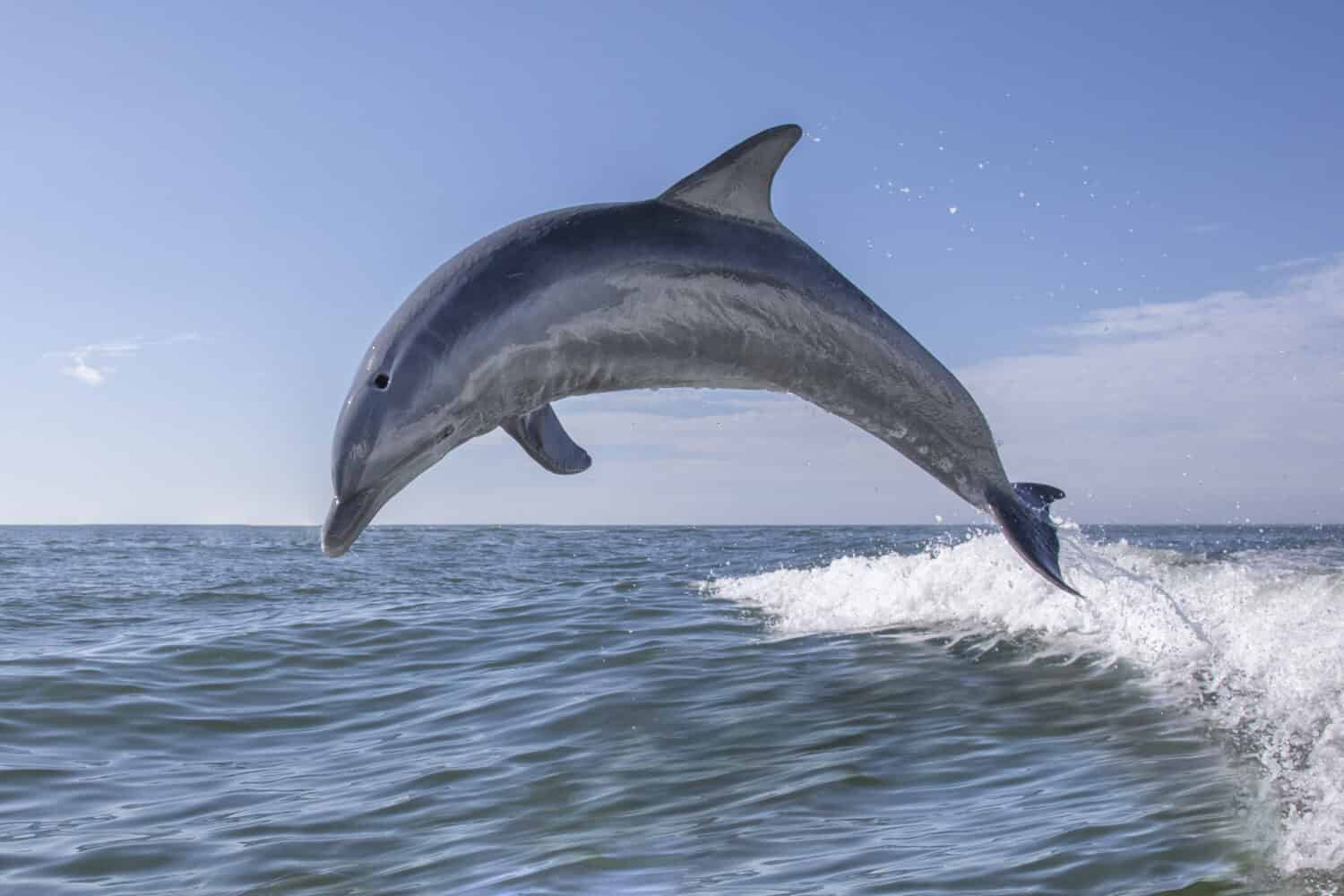
Bottlenose dolphins have incredible memories. They can remember the clicks and whistles of a dolphin they met over 10 years ago.
©Lefteris Papaulakis/Shutterstock.com
The bottlenose dolphin (Tursiops truncatus) is undoubtedly one of the most intelligent ocean animals alive today. While they may appear fun-loving and goofy, they are actually incredibly intelligent. In fact, their brains are larger and more complex than those of most other marine species, and they are considered among the most intelligent non-human animals.
Observation and research have determined that dolphins are capable problem-solvers, decision-makers, and are self-aware. Dolphins use a combination of whistles and clicks to communicate, which comes in handy for coordination during hunting.
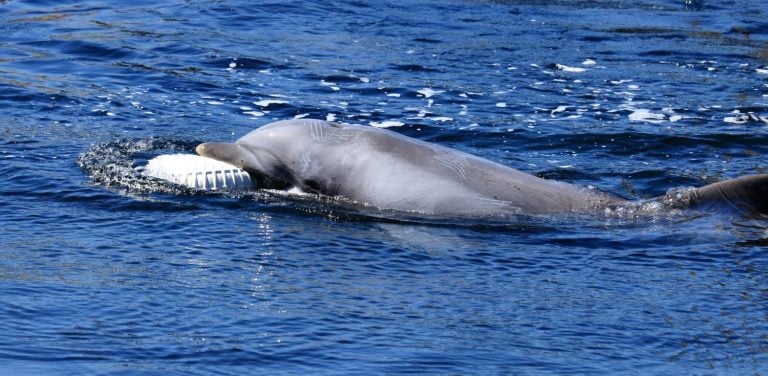
Bottlenose dolphins also have amazing memories. They remember where to find specific food sources and will travel long distances to find them. These clever animals are also capable of using tools, as illustrated by protecting their noses with sponges when foraging. Bottlenose dolphins show compassion by caring for their sick, injured, and elderly, and they mourn their dead.
Killer Whale
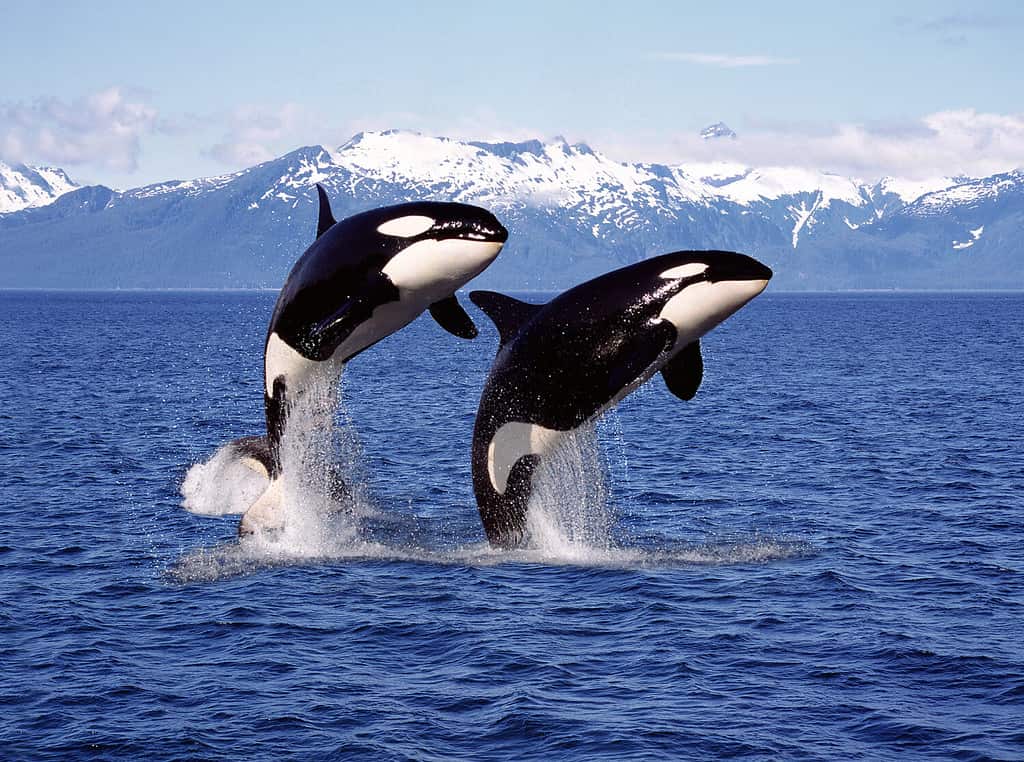
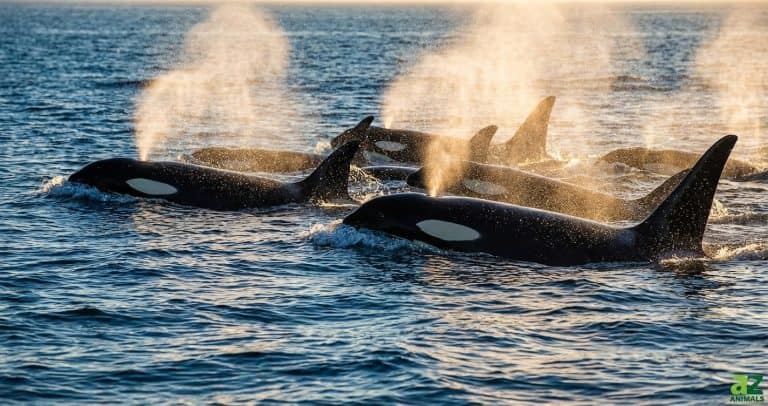
Killer whales have the second-largest brain of any marine mammal, after sperm whales.
©slowmotiongli/Shutterstock.com
Due to their large size, killer whales (Orcinus orca) have enormous brains. Also called orcas, these large marine mammals are found throughout the world’s oceans, from tropical waters to polar regions. These intelligent ocean animals create their own social systems and communicate through various vocalizations. They are also capable of interpreting nerve signals and storing memories.
Killer whales have complex social networks, forming alliances with other members and strong family bonds. Elders pass on their knowledge to the younger generations. Research has shown that killer whales have problem-solving abilities and use advanced hunting techniques, like beaching, to hunt prey.
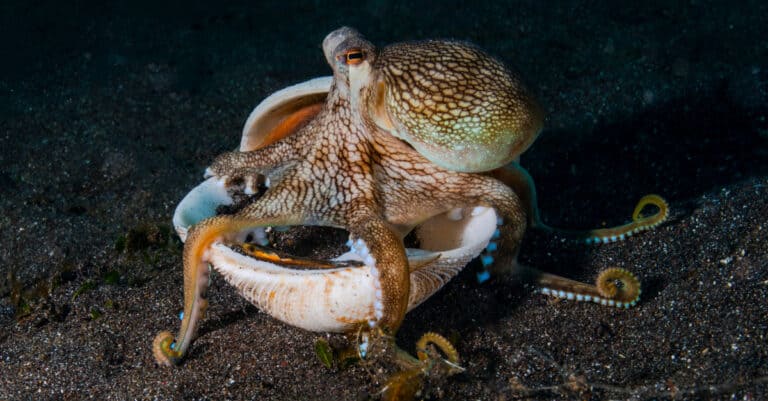
Octopus
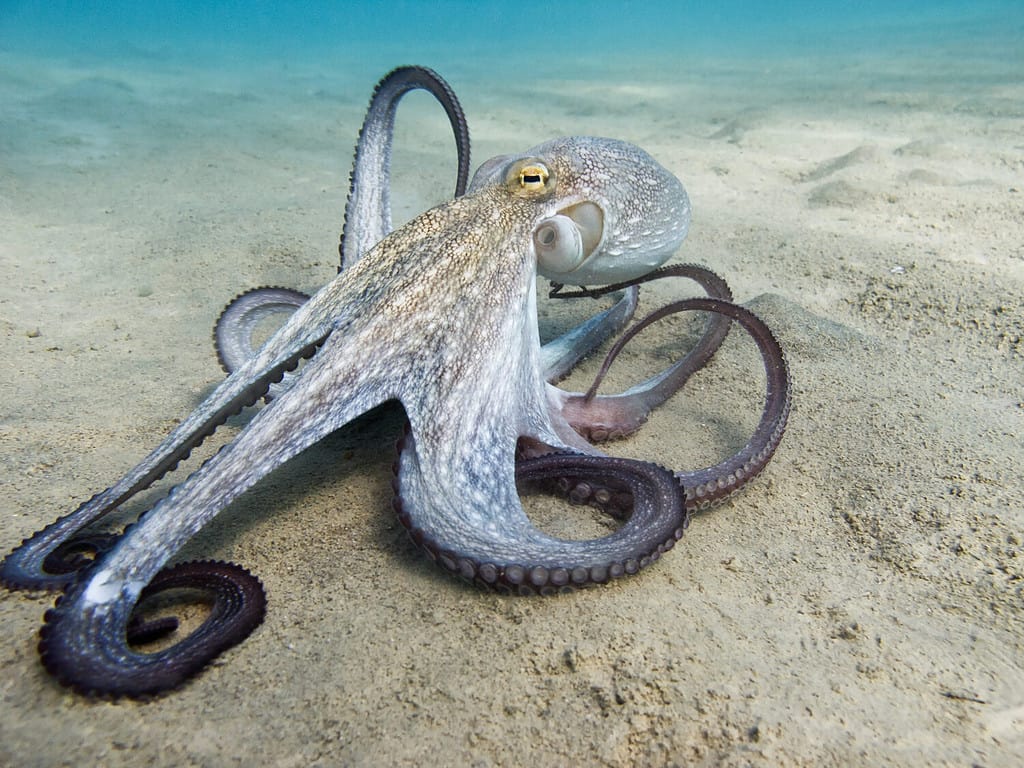
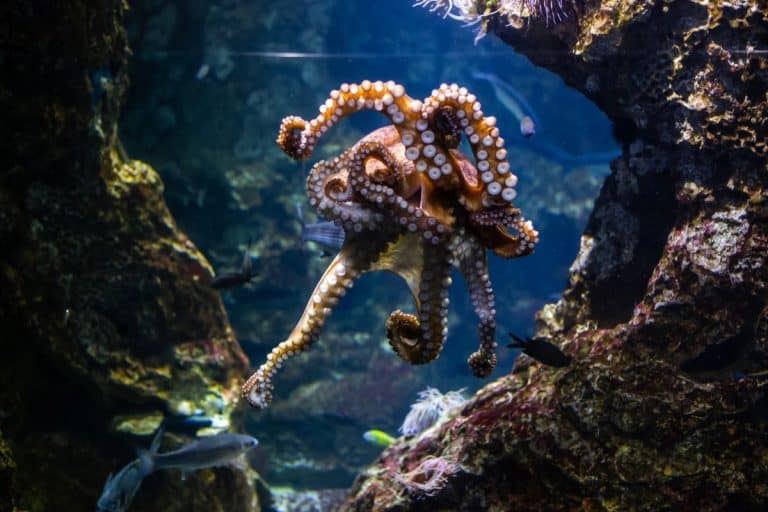
Octopuses are considered one of the most intelligent ocean animals because they can recognize individual people, solve mazes, and enjoy playing with toys.
©ennar0/Shutterstock.com
The octopus (order Octopoda) is found in warm tropical and sub-tropical waters throughout the world’s oceans. These eight-legged creatures, of which there are approximately 300 species, have the intelligence to open jars, solve puzzles, and display signs of self-awareness. Octopuses have extensive nervous systems and large brains, with neurons in each of their eight tentacles. They are considered among the most intelligent invertebrates, with astounding problem-solving skills. For example, researchers have observed octopuses in captivity using water jets to turn lights off that bother them. They also sneak into nearby tanks to steal food.
Octopuses use tools for problem-solving. Octopuses use tools for problem-solving. For example, they have been known to take tentacles from jellyfish to use for protection. Their use of camouflage demonstrates their intelligence as well.
Sea Otter
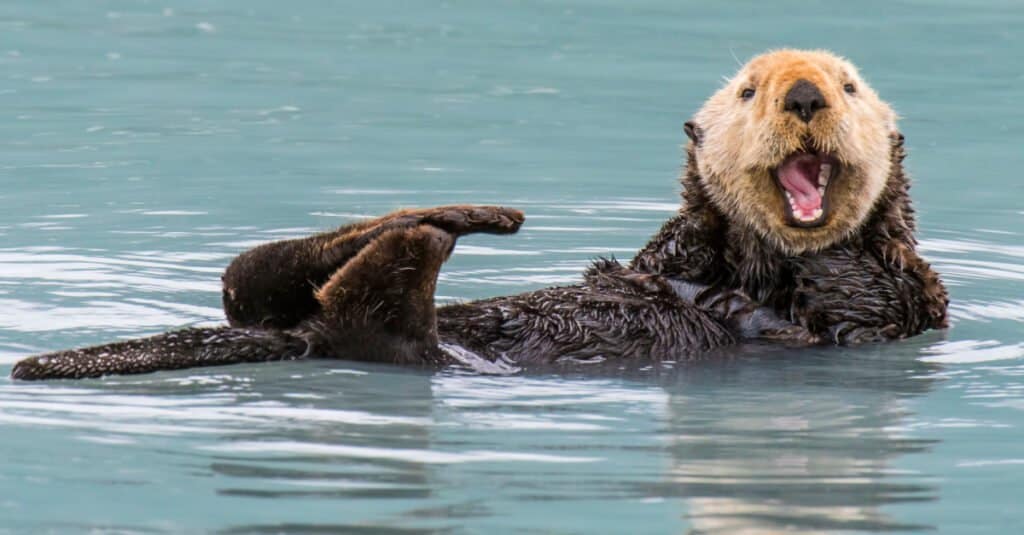
Sea otters usually occur in temperate waters, primarily inhabiting kelp forests and rocky shorelines. These adorable critters are notorious for using tools like rocks to open shellfish.
©iStock.com/David McGowen
Sea otters (Enhydra lutris) live in temperate waters, primarily inhabiting kelp forests and rocky shorelines. These adorable critters are notorious for using tools like rocks to open shellfish. Sea otters also display complex problem-solving and learning abilities. They can recognize specific humans and solve puzzles.
Manta Ray
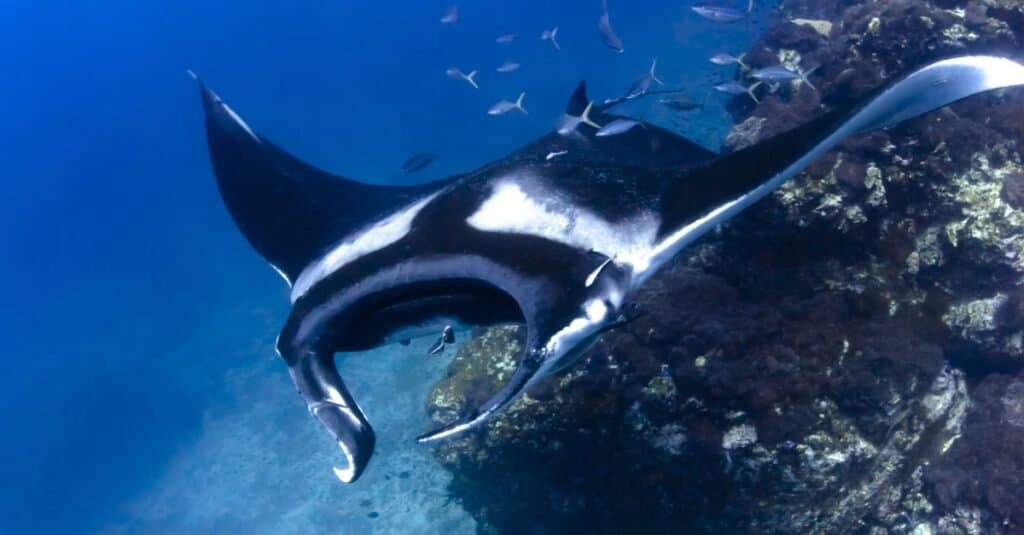
The manta ray’s intelligence is further demonstrated by their complex communication through body language, helping them collaborate during hunting.
©OutdoorWorks/Shutterstock.com
Manta rays (genus Mobula), of which there are three recognized species, inhabit temperate, tropical, and subtropical waters around the world. They have impressive memories and are remarkable learners. Manta rays also exhibit emotional intelligence and form special individual relationships with other members of their species.
The manta ray’s intelligence is further demonstrated by its complex communication through body language, helping it collaborate during hunting. They are also playful creatures and become inquisitive around humans. Some studies suggest manta rays may show signs of self-recognition in mirrors, but this remains a topic of scientific debate.
Penguin
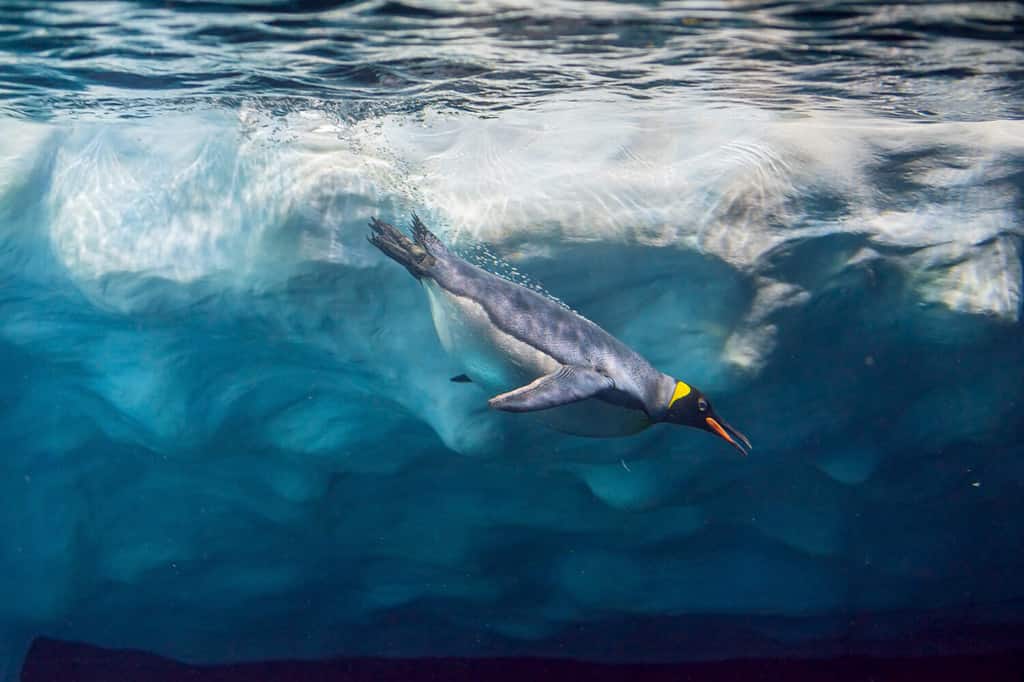
There are 18 extant species of penguins.
©David Herraez Calzada/Shutterstock.com
Except for the Galapagos Islands, penguins (family Spheniscidae) live in the Southern Hemisphere. Penguins are extremely good at creating mental maps, hunting as a team, and recognizing each other’s calls. After leaving a colony for extended periods of time, they are able to find their way back. This is due to their impeccable memories that store visual cues like rivers and hills for future travels.
Penguins hunt in groups and support each other to increase their chances of catching prey. Although they may look similar, penguins can recognize their offspring and mates in colonies with hundreds of penguins. They also use vocalizations, such as barking and other loud noises, to identify and communicate with each other.
Sea Lion
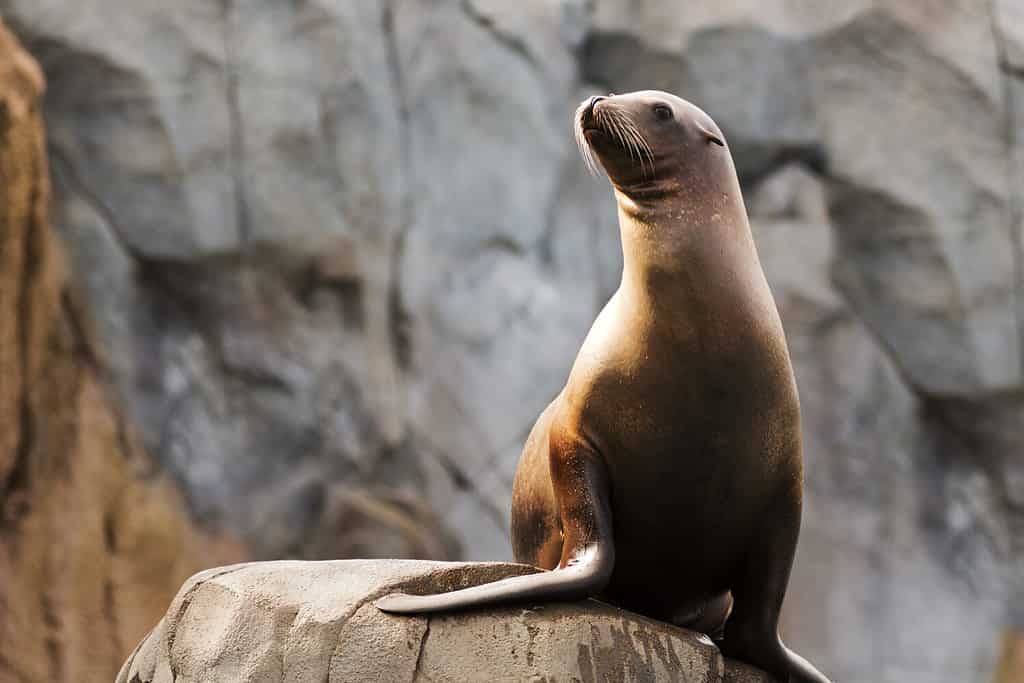
With about the same-sized brain as bottlenose dolphins, it’s no surprise sea lions are intelligent.
©Patrick Rolands/Shutterstock.com
Sea lions (Zalophus californianus) live in subpolar and shallow temperate waters throughout the world’s oceans, except the Northern Atlantic Ocean. Researchers consider sea lions intelligent because of their effective communication, impressive memory, and social learning and problem-solving abilities.
Sea lions can communicate effectively using barks and growls and learn from each other’s behavior. They also use sounds to organize group hunting, identify themselves, and care for their offspring. Some studies suggest sea lions may have advanced cognitive abilities, but mirror self-recognition and tool use are not well-established in this species. Interestingly, sea lions are trainable and often used in rescue services and military operations.
Great White Shark
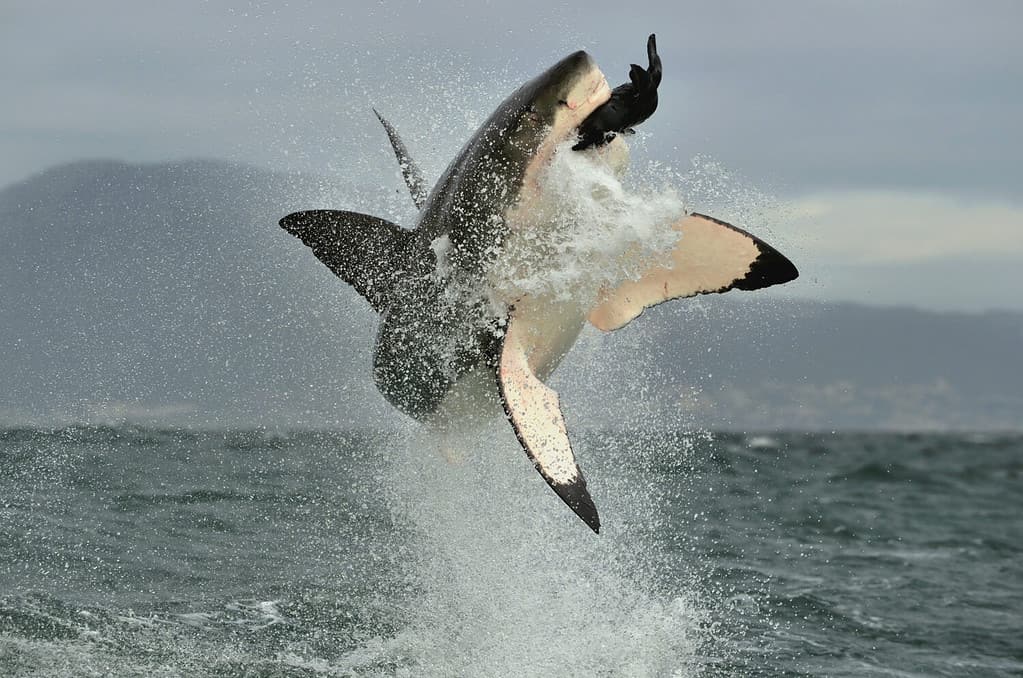
As apex predators, great white sharks are among the most feared animals in the ocean.
©Sergey Uryadnikov/Shutterstock.com
Great white sharks (Carcharodon carcharias) live in temperate coastal waters throughout the world’s oceans. They are opportunistic hunters capable of taking down intelligent prey like dolphins and seals, and have occasionally been observed feeding in groups, though true cooperative hunting is rare. Great white sharks have cognitive abilities comparable to primates, including impressive memories and a keen ability to learn.