
Quick Take
- The very animals redbone coonhounds were bred to hunt can actually trigger a paralytic neurological condition in them, and most owners never see it coming. See the raccoon connection →
- Despite being high-energy hunting dogs, redbones face a surprisingly serious weight problem, and the reason why is not what most owners expect. Understand the weight risk →
- One incurable eye condition can gradually steal a redbone's sight, but these dogs have an unexpected biological advantage that changes the outcome entirely. Learn about their adaptation →
- What you feed a redbone coonhound puppy could determine whether they develop a painful bone condition, and most people will be surprised by how simple the fix actually is. Discover the dietary fix →
The redbone coonhound is a resilient, American-born hunting breed, engineered in the late 18th century for versatility across steep mountains and dense swamps. Though famously used to trail raccoons, their striking, solid, deep-red coat sets them apart. Redbone coonhounds typically stand 21 to 27 inches tall at the shoulder and weigh between 45 and 70 pounds. Read on to discover the redbone coonhound’s lifespan and essential tips for keeping them happy and healthy.
How Long is a Redbone Coonhound’s Lifespan?
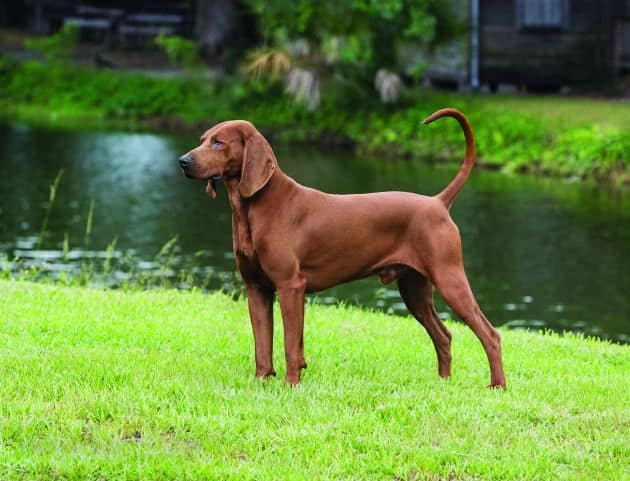
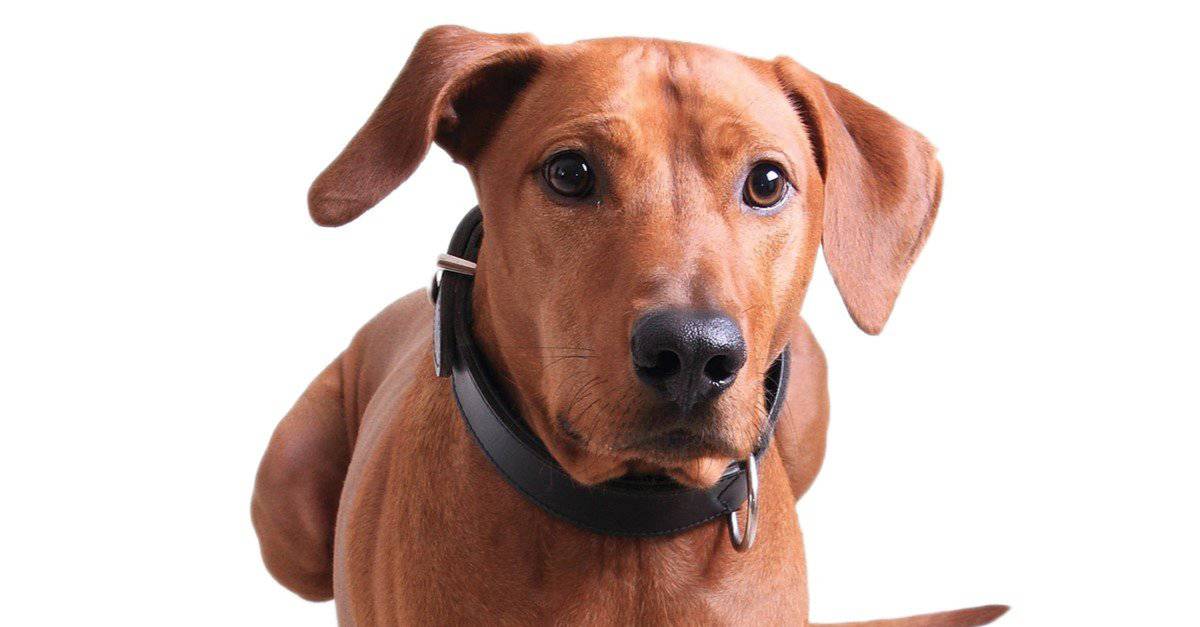
While redbone coonhounds have many appealing traits, it’s their stunning deep red coat that always grabs people’s attention.
The redbone coonhound’s lifespan ranges between 12 and 15 years. While they are typically healthy dogs, they are still susceptible to several health issues. Therefore, it’s essential for prospective pet parents to know about these health concerns. Although the redbone coonhound is prone to fewer health issues than many other breeds, they still suffer their share of maladies.
Panosteitis
Also called growing pains, redbone coonhound puppies are prone to panosteitis, a bone and joint condition that causes inflammation in the bones, which can be painful and cause lameness. To help prevent panosteitis, redbone coonhound puppies should be fed a large-breed puppy food. The condition can also be treated with anti-inflammatory medication.
Hip Dysplasia
Redbone coonhounds can be prone to hip dysplasia, a hereditary joint condition that can cause pain, limping, and reduced mobility. The disorder results from the hip joint not fitting properly into the socket, leading to arthritis, inflammation, and potential cartilage damage. The condition is managed through pain medication (NSAIDs), maintaining a healthy weight to reduce stress on joints, and, in severe cases, surgery.
Obesity
Obesity is a significant health concern for redbone coonhounds. Their lifestyle and high food drive make them highly susceptible to weight gain. Redbone coonhounds are high-energy hunting dogs, but they can become sedentary and lazy if kept primarily indoors, leading to rapid weight gain. Because redbone coonhounds tend to overeat, they must be fed a strict, measured diet with limited, infrequent treats.
Progressive Retinal Atrophy
Progressive retinal atrophy (PRA) slowly causes vision loss. One of the earliest symptoms of this condition is night blindness, and unfortunately, there is no cure. However, like most dogs, redbone coonhounds rely heavily on their senses of smell and hearing, which allows them to adapt remarkably well to vision loss.
Coonhound Paralysis
Coonhound paralysis, scientifically known as acute idiopathic polyradiculoneuritis, is a neurological condition that causes progressive weakness and paralysis. It is often triggered by an antigen in raccoon saliva, typically appearing 7 to 14 days after a dog is bitten or scratched. The raccoon’s saliva can inflame the dog’s nerves, causing an immune reaction, which requires veterinary care.
Healthy Activities for Redbone Coonhounds
Since the redbone coonhound is a highly active breed, they need plenty of physical exercise and mental stimulation. Here are several activities you can do with your dog to keep them healthy and happy.
Playing fetch is an excellent way to keep a redbone coonhound happy and healthy. A ball is not necessary, as redbone coonhounds will happily chase and retrieve ropes, sticks, frisbees, or stuffed toys.
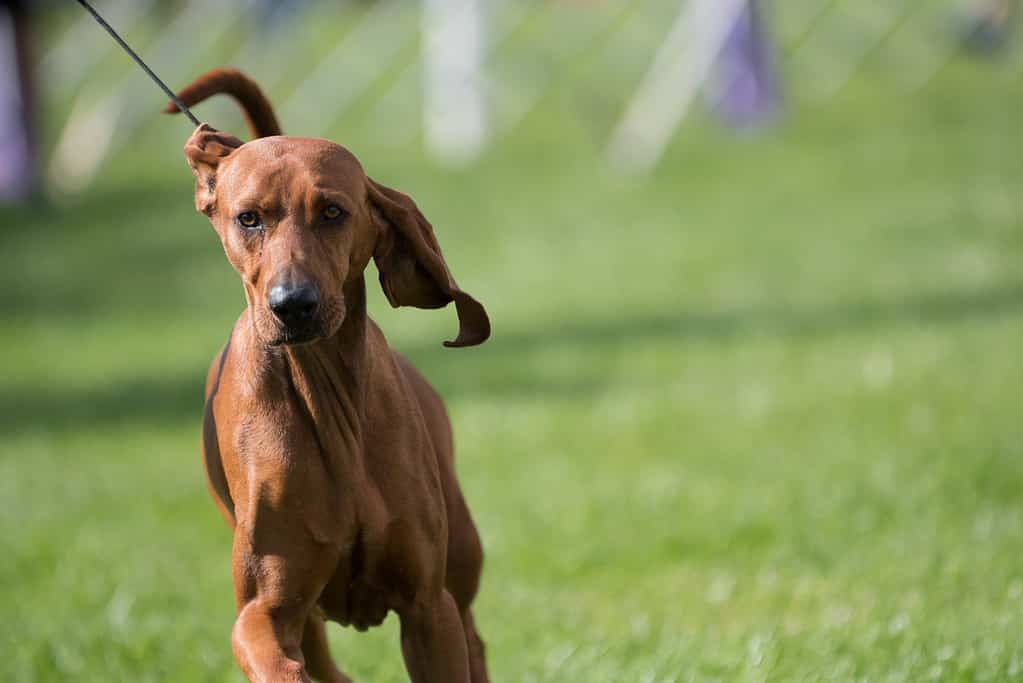
Making training fun will help a redbone coonhound associate it with playtime rather than punishment.
©Kyle Reynolds/iStock via Getty Images
Another healthy way to provide physical and mental stimulation for your redbone coonhound is obedience training. Redbone coonhounds respond best to positive reinforcement, so training sessions should be fun and encouraging, helping your dog associate them with playtime rather than punishment.
Bring out the water sprinkler! Most redbone coonhounds enjoy water, and playing in a sprinkler provides a fun way to encourage a coonhound to move. It’s also an excellent way for you and your dog to cool off on a hot summer day.
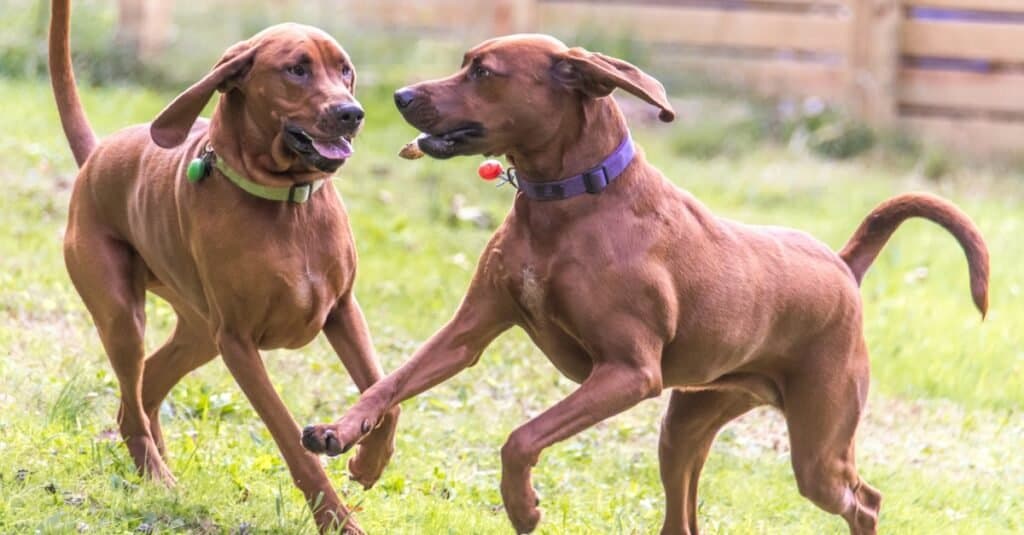
The dog park is an excellent place to socialize a redbone coonhound.
©Marcello Sgarlato/Shutterstock.com
Taking a redbone coonhound to a dog park provides them with plenty of stimulation. A dog park is also a great place to play fetch or engage in other fun activities with your pet. However, be mindful of the other dogs at the park.
Originally bred to track game for miles across rugged terrain, redbone coonhounds have a lot of stamina and can easily outlast most humans on a long walk or a hiking trail. Healthy adult Redbones can handle long hikes and make excellent jogging partners, often able to maintain a steady pace for 5 miles or more.