
Frozen lakes play an outsized role in the Northern Hemisphere during the winter, including in the United States. From ice hockey to ice skating, from ice fishing to snowmobiling, iced-over lakes are an important source of recreation when temperatures dip and the snow falls. Frozen lakes also benefit the environment in myriad ways. Because of climate change, however, lakes that used to freeze over during the winter are living on borrowed time, including those in Wisconsin.
Ice Capades
In 2019, scientists, including researchers at the University of Wisconsin-Madison, concluded that many lakes in the Northern Hemisphere will no longer freeze in the coming years. They reached their conclusion by looking at some 15,000 lakes that sit in an area where ice forms in some years, but not in others. These lakes, the researchers said, are like canaries in a coal mine. As Earth continues to warm, they believe, this so-called intermittent ice zone will push farther north, meaning lakes south of the zone will no longer freeze in the winter, including those in the Badger State.
Wisconsin is home to about 15,000 lakes. Many freeze during the winter, while some partially freeze. Once upon a time, a person could set their watch by when different lakes froze (ice-in) and then when the ice disappeared (ice-out). Most of these lakes once froze in mid-December and kept their ice until April.
Warming Up
Scientists have been keeping records on Wisconsin’s frozen lakes since 1852. Data shows, for example, that lakes near the state capital of Madison used to freeze around December 20 of each year— give or take a few days. But during the last 30 years or so, the median freeze dates have been pushed into the following January. By 2060, scientists say, Wisconsin’s winter temperatures will spike 6 degrees more than where they were in 1980.
How exactly does climate change impact whether your favorite lake freezes? When air is really cold it contains very little moisture. As such, it creates a perfect environment for a lakewater to freeze. However, when air temperature warms, Earth’s atmosphere soaks up moisture like a sponge. When that happens even a little, the cold temperatures that lakes need as a catalyst to freeze, lessen.
Still, for now, winter in Wisconsin is still winter in Wisconsin. Here are three lakes that completely freeze over (most of the time) in the winter.
Lake Monona
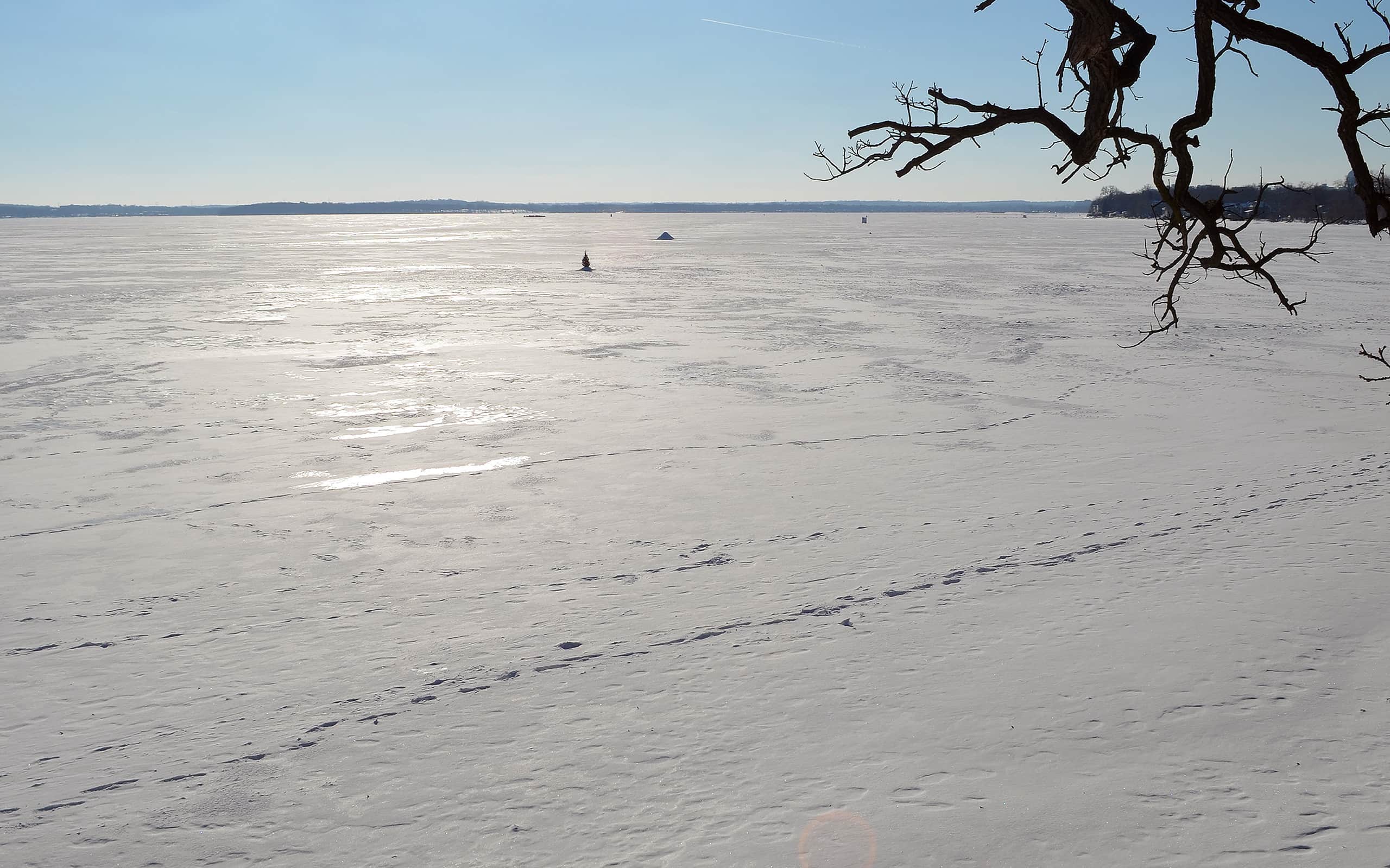
Lake Monona is particularly prone to freezing.
©Americanoid/iStock via Getty Images
Surrounded on three sides by the city of Madison, Lake Monona has 13 miles of shoreline and a maximum depth of 64 feet. According to the Wisconsin State Climatology Office at the University of Wisconsin-Madison, the earliest the lake froze over since records have been kept was in 1857 on November 25. The ice lingered until April 14, 1858. Since then, the lake has frozen only three other times in November.
With some notable differences, Lake Monona generally freezes in early-to-mid January. The shortest amount of time the lake remained frozen was in 2001-2002 when ice covered the lake for only 21 days. The longest was 161 days in 1880-1881. Over the last five years, the average duration for ice cover has been 83 days.
Lake Mendota
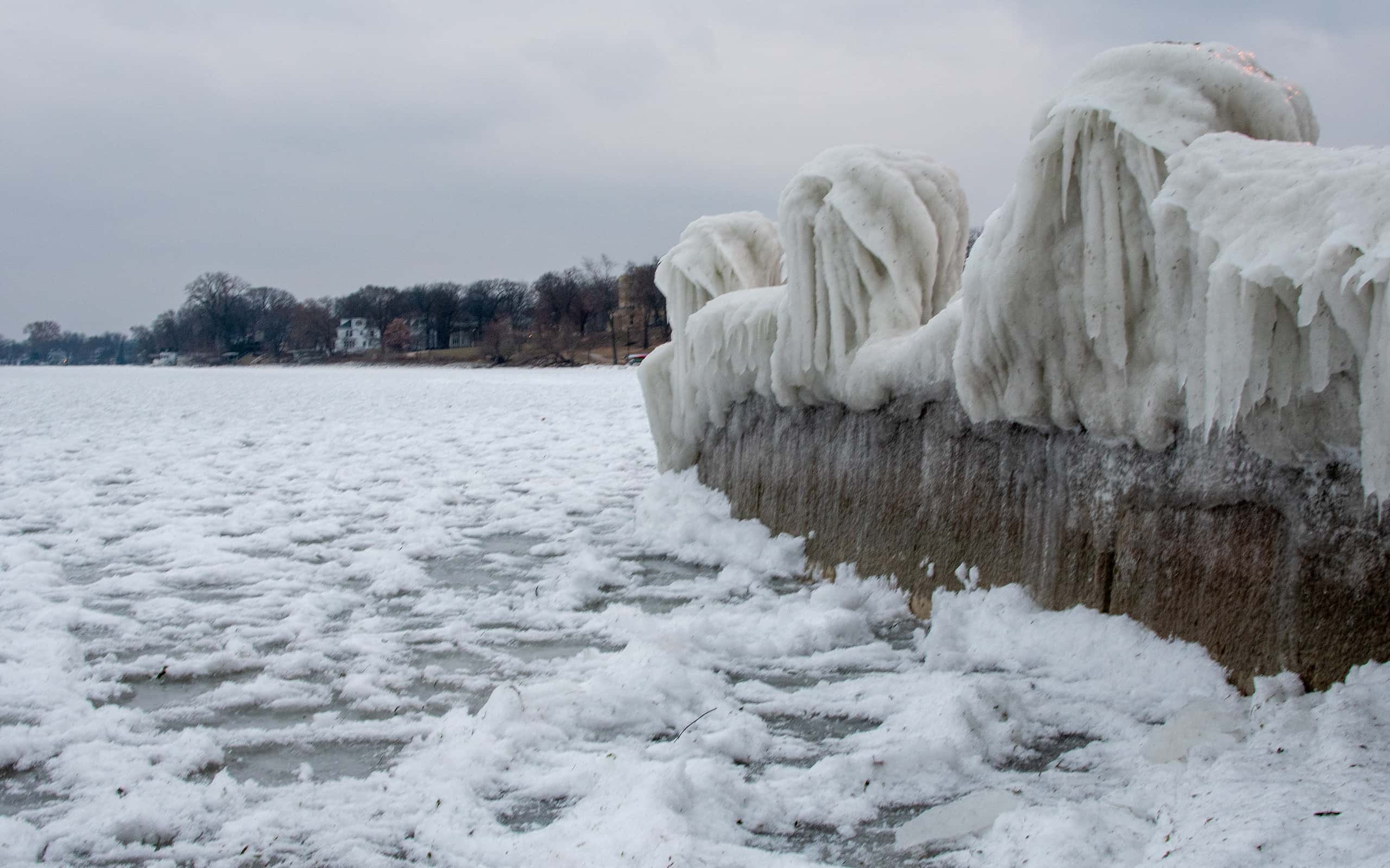
Lake Mendota is the largest of four lakes near Madison.
©Matthew Venker/iStock via Getty Images
Of the four lakes near Madison, Lake Mendota is the largest. Its watershed is more than 72,000 acres and its mean depth is 42 feet. In 2022-23, the lake froze on December 25, which was nearly two weeks earlier than the previous year. Lake Mendota’s ice-in and ice-out dates are nearly identical to Lake Monona. The duration of ice cover of the so-called Madison Lakes, in which Monona is grouped, has dwindled to 29-35 days since 1852 when recordkeeping began.
Reduced ice cover does not bode well for the environment around Lake Mendota or any other lake ecosystems. Ice regulates water temperature, dissolved oxygen levels, and other things that organisms need to survive. When there’s no ice, water evaporates more quickly, which decreases lake levels. Also, when there is a dearth of ice, the wind can whip across the water, causing problems for nesting fish. If there’s no ice on the lake, the sun’s light can penetrate deep into the water, upping its temperature.
Devil’s Lake
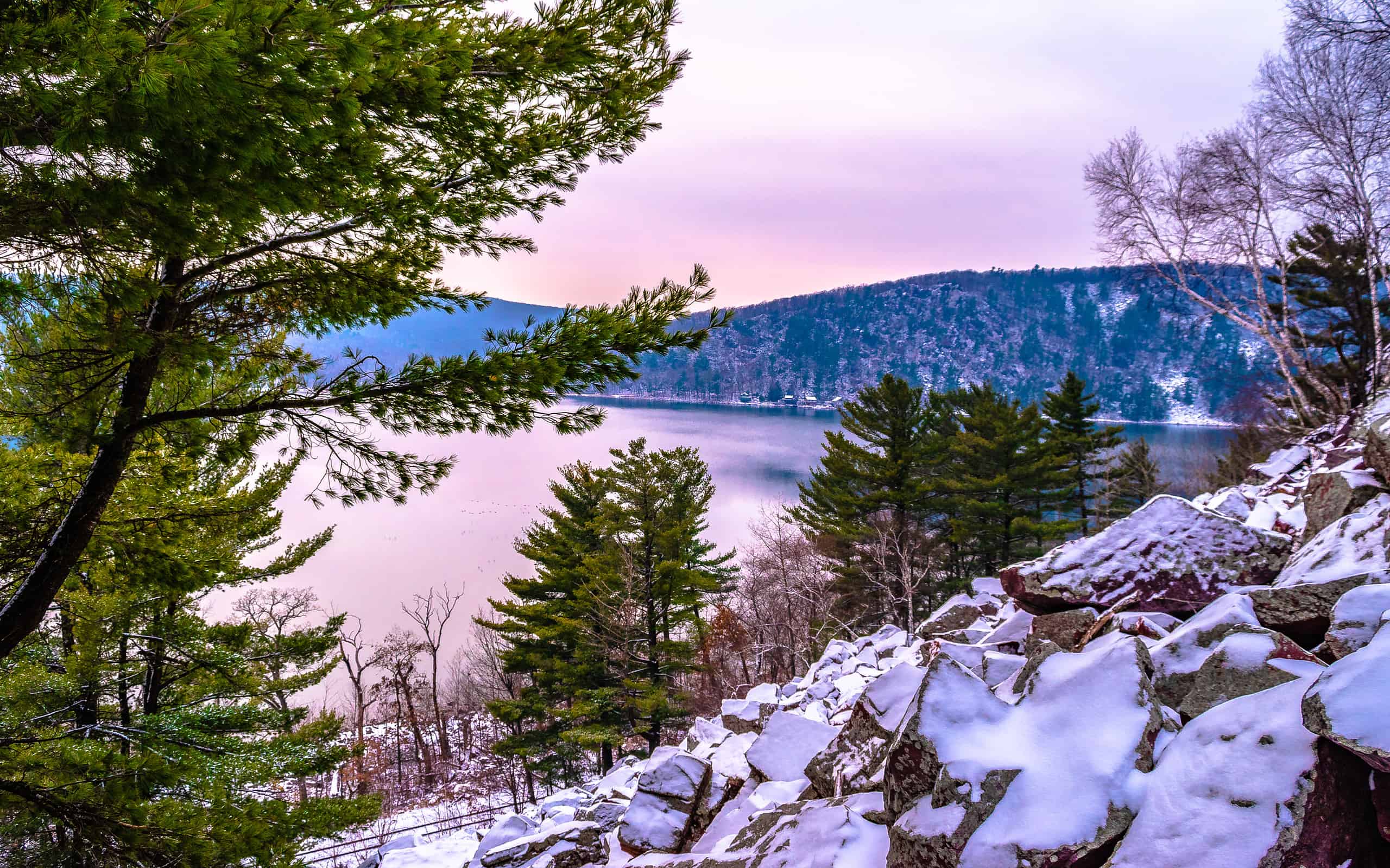
Devil’s Lake State Park has over 9,200 acres of land.
©Jeremy Janus/iStock via Getty Images
One of the most popular areas in Wisconsin is Devil’s Lake State Park. With about 9,200 acres, some 2.6 million people visit each year. Located in Sauk County, about 40 miles northwest of Madison, the lake is around 360 acres and ringed by bluffs of pink and gray quartzite.
When the lake freezes in the winter, it serves as a popular spot for ice anglers. They can pull all kinds of fish from the water, including brown trout and northern pike. Devil’s Lake in recent years has not completely frozen over until mid-January, although it mostly froze over in December 2019. The lake had a long history of freezing over in December and sometimes in November. Still, for 22 winters, beginning in 1980 and ending in 2020, there was still open water on the lake in January.