
Quick Take
- Blue-spotted salamanders in Ontario can actively move on ice at freezing temperatures.
- Of 21 salamanders observed aboveground, 11 were in direct contact with ice, defying their freeze-intolerance.
- Emerging in winter may let them reach breeding ponds earlier, gaining a head start on rivals and reducing predation risk.
- Still, evidence that they perish if their internal liquids freeze suggests that blue-spotted salamanders are surviving icy conditions with behavior, habitat selection, and supercooling.
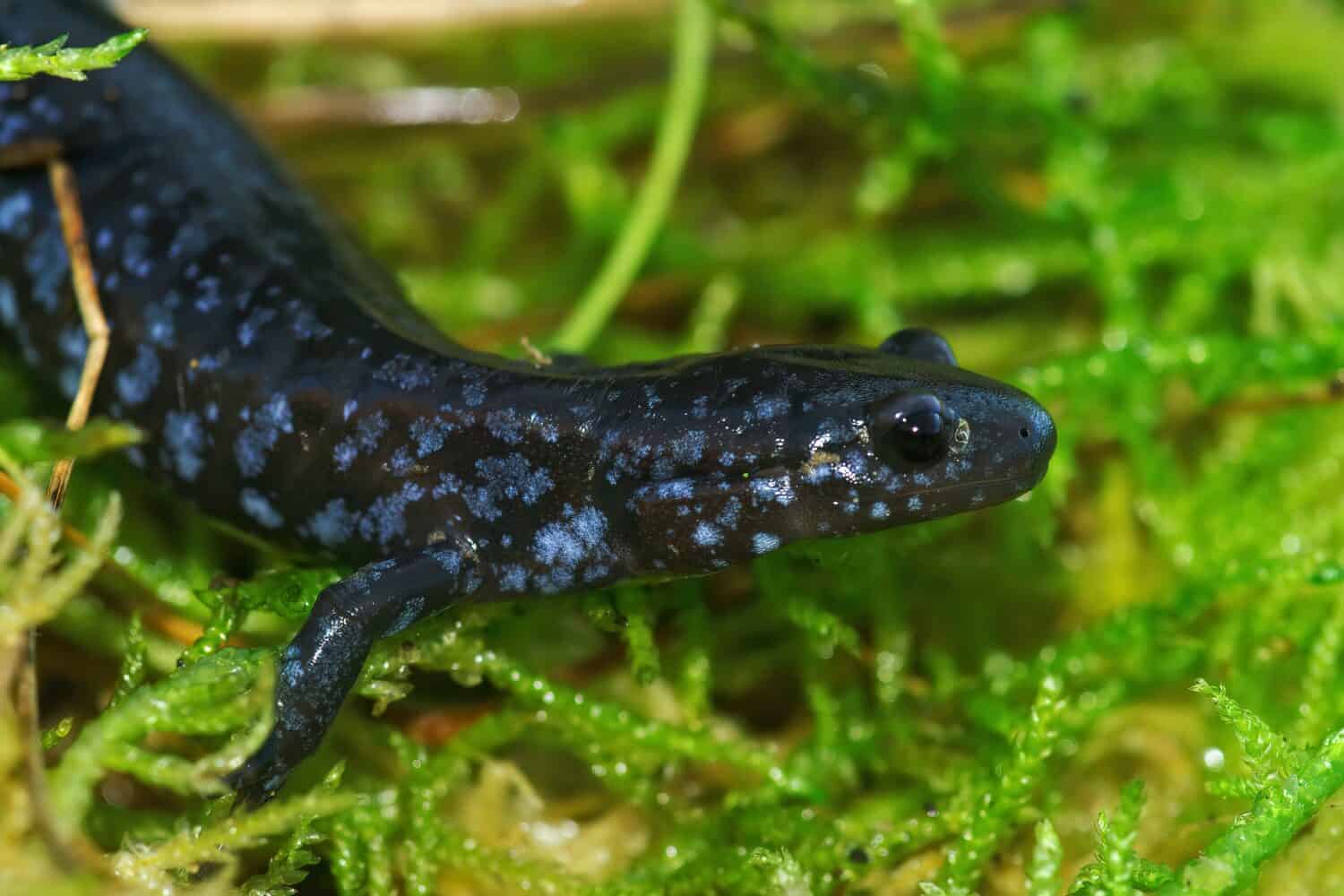
While tromping around chilly places in Ontario, Canada during the winter, the last creature you might expect to see is a salamander. Like other amphibians, salamanders’ body temperatures vary with environmental conditions, and a body temperature below the freezing point does not seem suitable for movement. Yet, biologists recently documented blue-spotted salamanders (Ambystoma laterale) walking over the ice in Algonquin Provincial Park.

In a recent paper, a team from Brock University and the University of Toronto explores the thermal biology of these salamanders that allows them to be active in sub-zero temperatures. “We noticed that okay, there’s still ice on the ground, the lake’s still frozen, but for some weird reason, there were blue-spotted salamanders on land,” says comparative physiologist Danilo Giacometti in an NPR story.
In general, when living cells encounter ice crystals, they rapidly freeze. Water expands inside the cells, breaking them open, which causes damage and may ultimately result in death. Shards of ice may puncture cell membranes or organs.
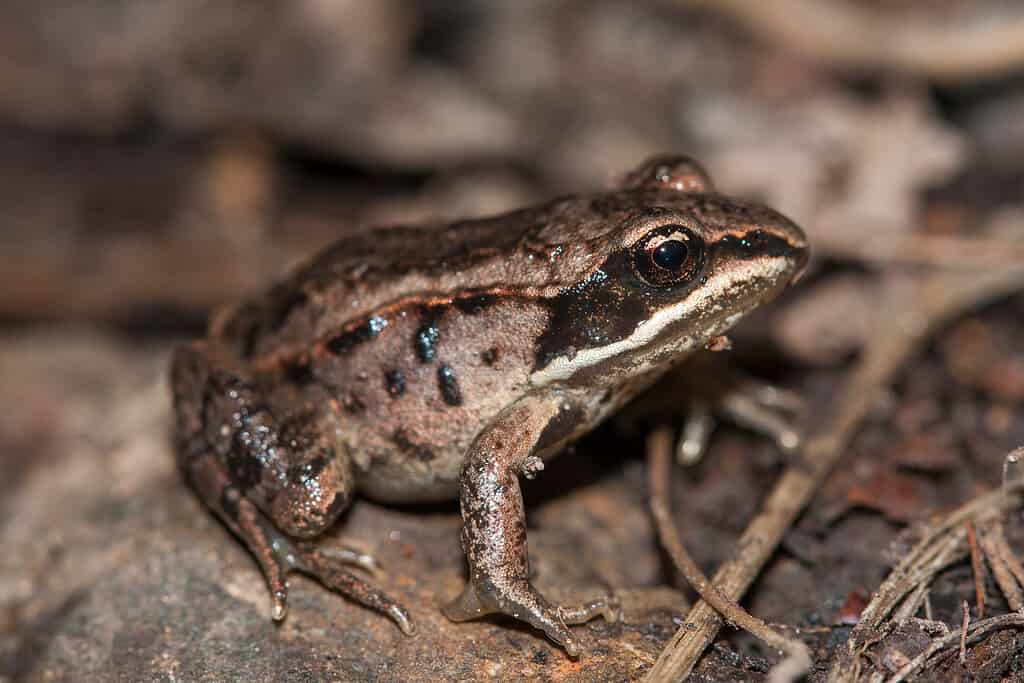
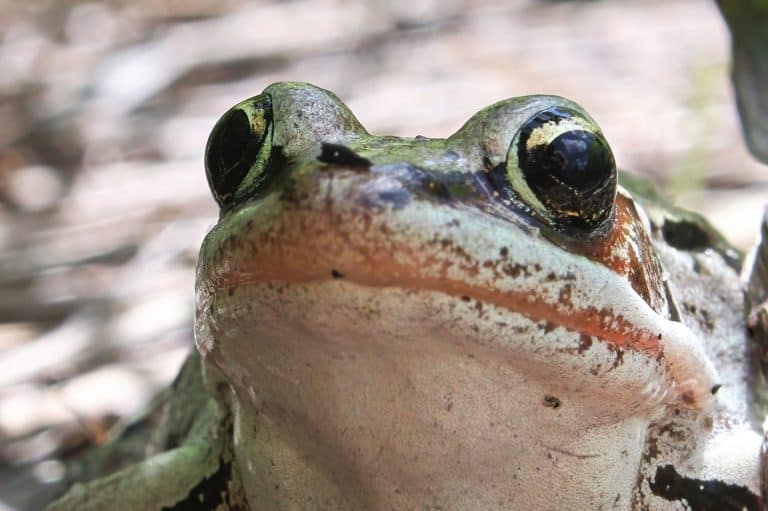
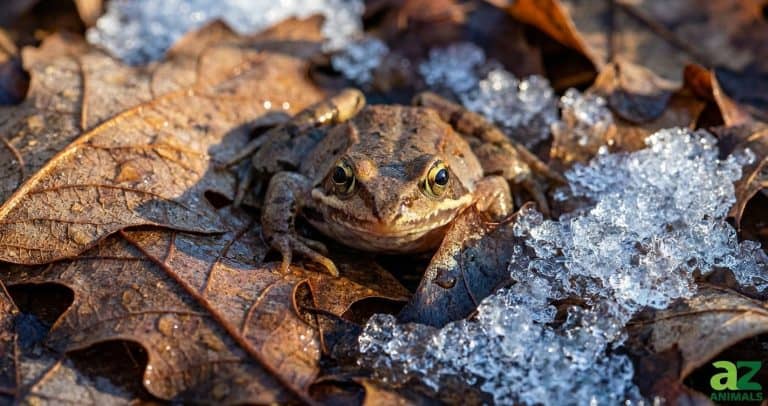
Wood frogs (Rana sylvatica) live further north than any other American amphibian, thanks to their freeze tolerance.
©Viktor Loki/Shutterstock.com
Some animals are known, therefore, to have evolved behavioral adaptations to freezing temperatures, in which they strive to avoid physical contact with ice crystals. Others, such as painted turtle hatchlings and wood frogs, load up their cells with natural antifreeze comprised of glucose (sugar) and other molecules, which lowers the temperature at which cell liquid freezes.
Until now, blue-spotted salamanders were thought to exercise freeze avoidance by passing cold winters below the frost layer. They find burrows or rock crevices, where they remain in an inactive state called brumation, during which their metabolisms plummet to nearly zero until conditions warm up. Getting below the frost line can require going as deep as five feet below the surface. But, as observed by Giacometti, in late winter, they may emerge from their shelters and become active on ice.
How do blue spotted salamanders avoid freezing while they’re literally in contact with ice crystals?
According to the study authors, the freezing point of most body tissues (in vertebrates, anyway) without natural antifreeze is about 32.9°F, similar to water. In laboratory conditions, blue-spotted salamanders have already demonstrated that they can be cooled to 34.7°F, but not for more than about a day at a time without succumbing to ice entering their bodies. So, naturally, in the wild, you’d expect blue-spotted salamanders to avoid below-freezing temperatures by finding warmer refuges.
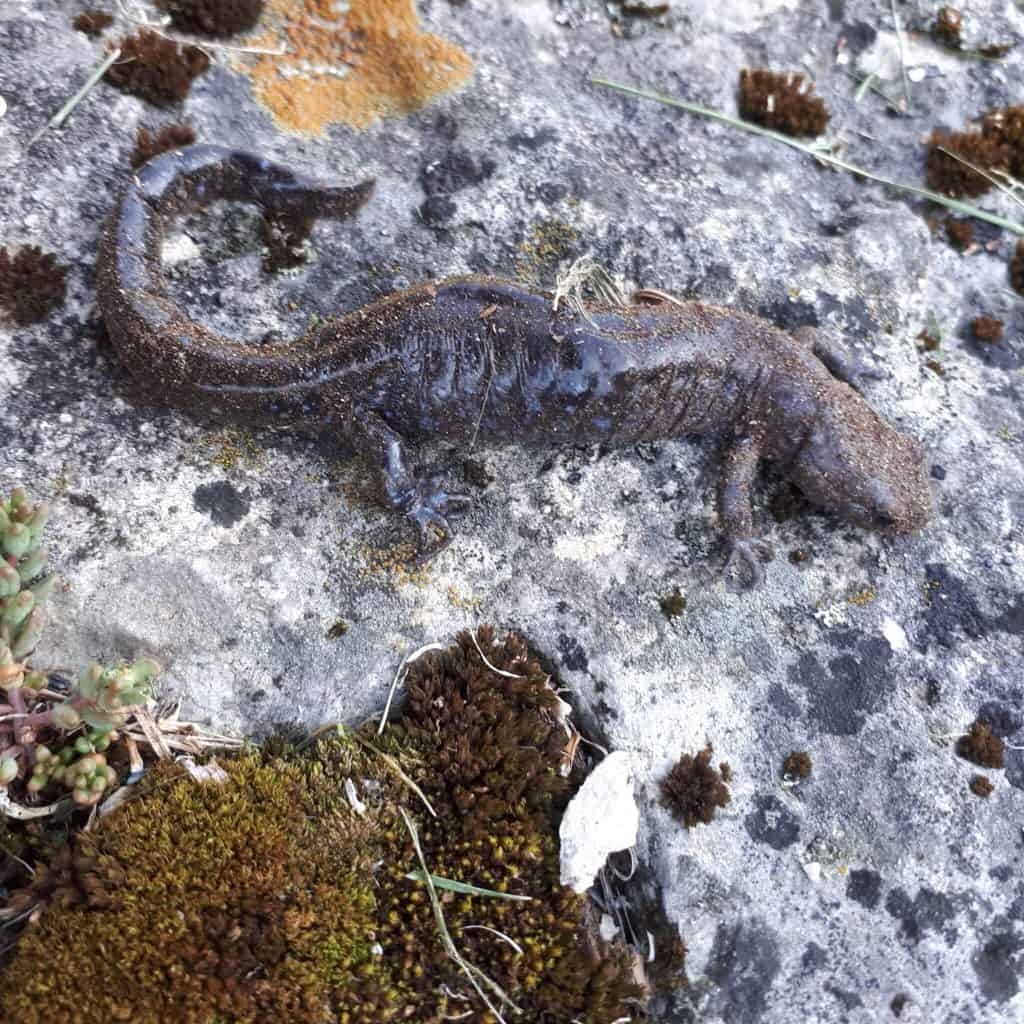
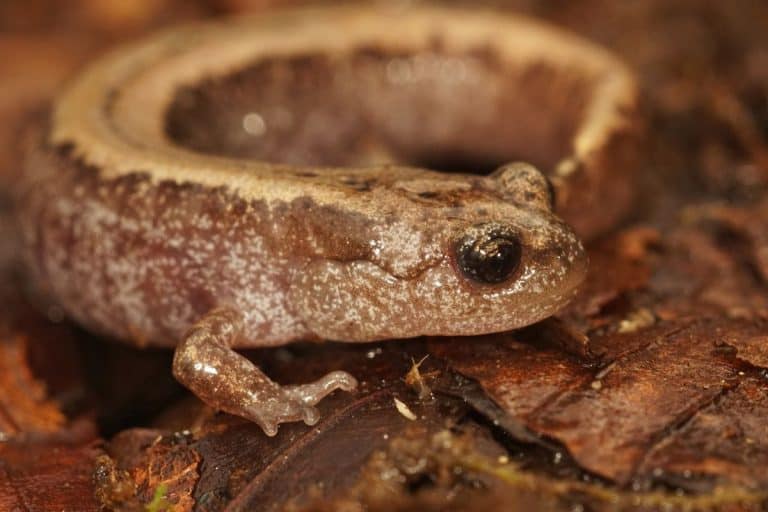
This blue-spotted salamander was seen in April when there was still ice on the ground in Ontario, Canada.
The researchers used a thermal camera to assess the body temperatures (both skin and core) of salamanders at Bat Lake in Algonquin Provincial Park. They captured images of 21 blue-spotted salamanders (13 males and seven females), six of which were spotted moving out in the open toward Bat Lake, where they breed every spring. Another five individuals were found wedged under logs with their bodies in direct contact with ice crystals. Overall, salamander body temperatures were found to match ground surface temperatures, as you’d expect for an ectotherm (“cold-blooded” animal whose body temperature tracks environmental temperatures).
Thus, more than half of the blue-spotted salamanders (11 of 21) were in some contact with ice. Their behavior indicates that they can withstand sub-zero temperatures in their body tissues. Their ability to “supercool” may stem from natural antifreezes, as evidenced by a 1986 study that found accumulations of glucose in their bloodstreams and liver. However, that study also found that blue-spotted salamanders died within 24 hours if kept at supercooled temperatures, leading researchers to deem them “freeze intolerant.” So, they can’t survive long-term icing of their tissues.
Explains Giacometti in an email exchange, “Previous studies suggested that this species may be able to accumulate some glucose in their blood and liver during cold exposure, but the reported levels were far lower than those seen in freeze-tolerant species. As such, in blue-spotted salamanders, glucose possibly plays a supporting role in helping to lower the freezing point of body fluids and reduce cellular stress, albeit without preventing freezing altogether nor allowing survival once ice forms.”
Further research could illuminate how much time blue-spotted salamanders spend at the surface under logs or migrating across the ice in sub-zero temperatures. The advantage of being active in bitterly cold spring temperatures is that they get a head start on reaching ponds where they’ll breed. Reaching ponds earlier might help beat the competition as well as benefit from a longer breeding season. These blue-spotted salamanders are the first amphibians to arrive at Bat Lake in late winter, on the cusp of spring. Migrating while it’s still cold might also reduce the danger from mammalian predators, which hibernate during the winter and are not yet active.
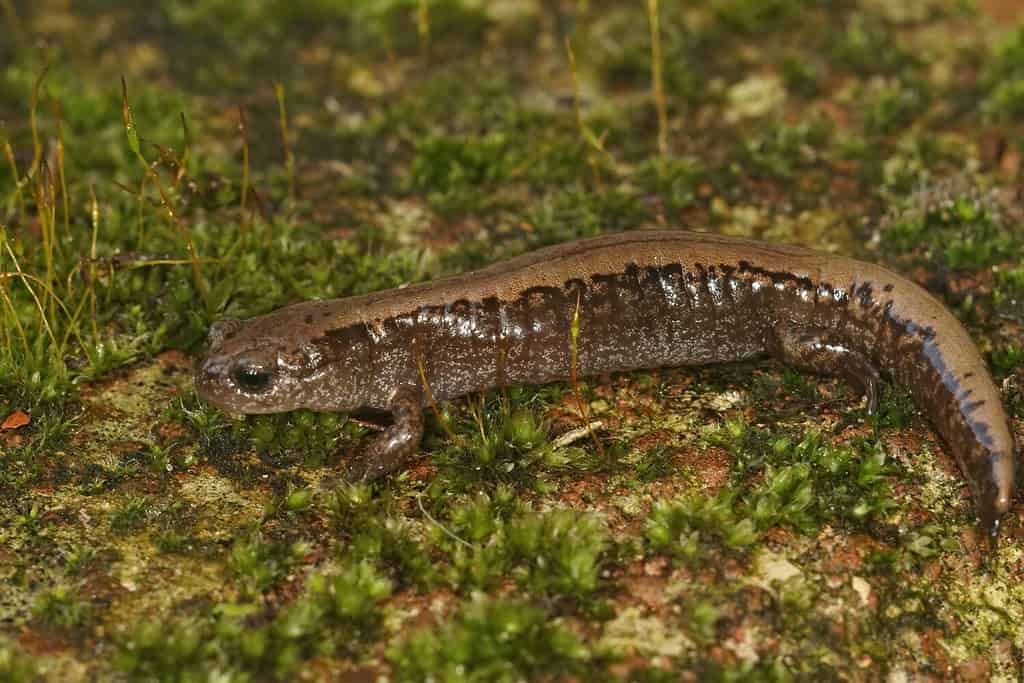
Siberian salamanders are exceptionally freeze-tolerant, thanks to natural glycogen antifreeze.
©HWall/Shutterstock.com
Previous studies suggested that this species may be able to accumulate some glucose in their blood and liver during cold exposure, but the reported levels were far lower than those seen in freeze-tolerant species.
Danilo Giacometti, comparative physiologist
Their cousins, mudpuppy salamanders (Necturus maculosus), are sometimes caught on lines by ice fishermen. And Siberian salamanders (Salamandrella keyserlingii) that live in even colder climates can survive while allowing most of the liquid in their bodies to freeze down to about -67°F. Like painted turtles and some frogs, they load their cellular liquids with glycogen (stored sugar) to keep the most critical liquids from freezing. Siberian salamanders can stay in a semi-frozen state for several months, then reanimate when temperatures warm up.
So, it’s fair to say that blue-spotted salamanders have joined the ranks of salamanders with supercooling superpowers, though they face some stiff competition! Data from the recent study show that they can remain active and migrate to breeding ponds with skin temperatures as low as 25.5°F, sometimes while in direct contact with ice-covered ground. But their cold survival strategy seems to depend primarily on behavior, habitat selection, and supercooling, rather than a true antifreeze system.
Giacometti summarizes that “Blue-spotted salamanders are not freeze-tolerant, but they are among the most cold-active salamanders we are aware of,” adding that “Compared to most salamanders, which either remain underground until the ground has thawed or time their breeding migration later in spring, blue-spotted salamanders stand out for their ability to be active at very low temperatures without freezing.”