
Quick Take
- Leopard seals use uniquely shaped molars to capture krill, while sharp canines pierce prey.
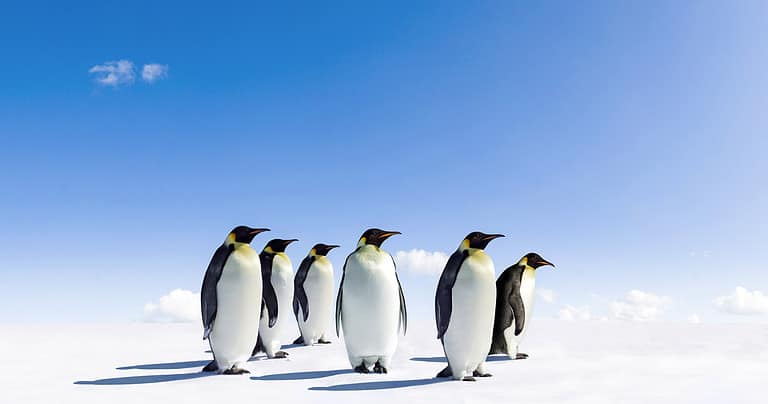
- Leopard seals are top predators in Antarctica, eating fish, penguins, krill, and other seals.
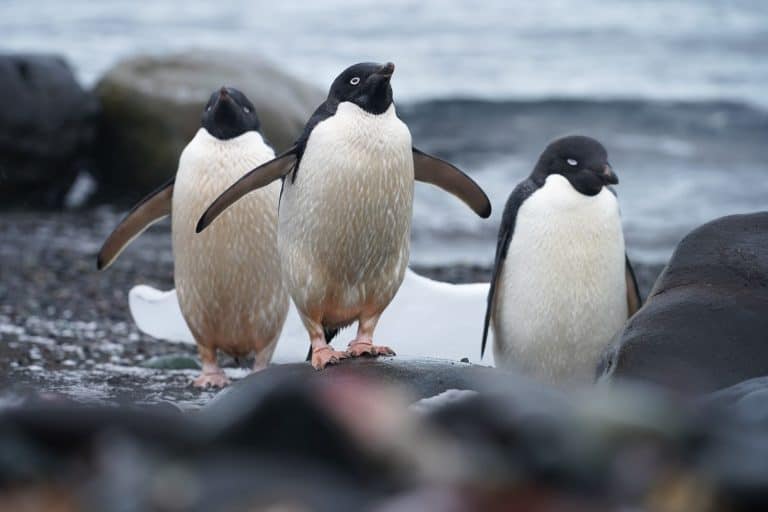
- Leopard seals swing penguins to tear them apart before consuming them.
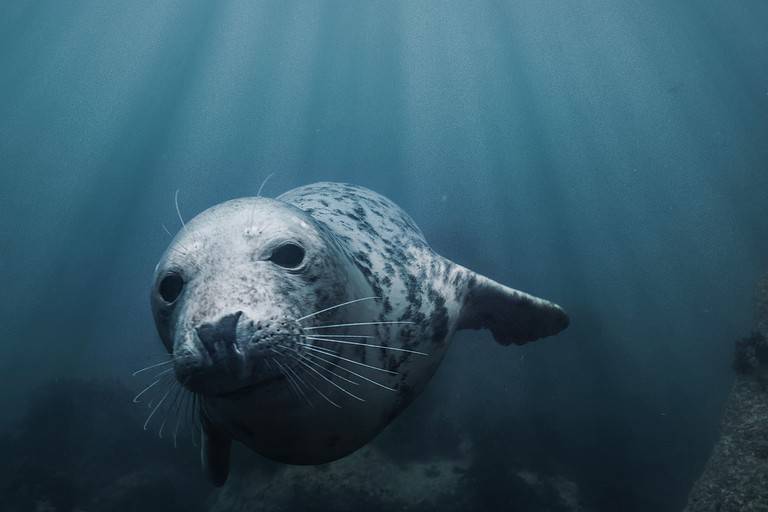
The leopard seal (Hydrurga leptonyx) is a solitary Antarctic predator that inhabits areas around Antarctic pack ice and subantarctic islands, with a distribution that extends to the southern coasts of Australia. Leopard seals are large, muscular marine mammals averaging 7.9 to 11.5 feet long and weighing from 440 to 1,320 pounds. Females of the species are generally larger than males. They are considered apex predators, preying on penguins, fish, and krill. To aid their formidable hunting skills, the leopard seal’s teeth are uniquely adapted for a dual purpose: their sharp canine and incisor teeth are designed for capturing and tearing large prey, such as penguins and other seals. At the same time, their interlocking back molars act as a sieve for filter-feeding on tiny krill. Continue reading to learn everything you need to know about leopard seal teeth.
What Do Leopard Seal Teeth Look Like?
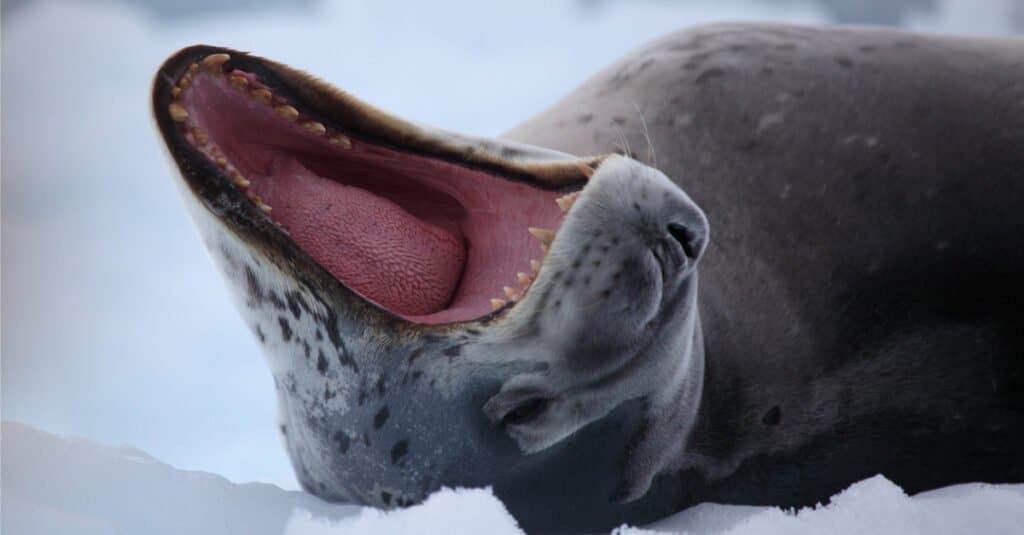
Leopard seals have sieve-like molars that extract krill from the water.
©iStock.com/MogensTrolle
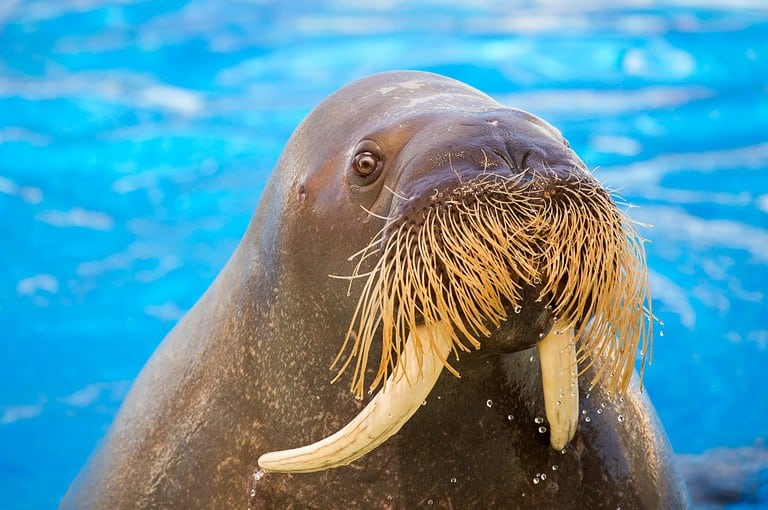
As carnivores, leopard seals have sharp canines that they use to capture and secure their prey. While their sharp canine teeth handle large prey like penguins, their trident-shaped molars interlock like a sieve, allowing them to filter small prey like krill from the water, similar to baleen whales.
Like most mammals, leopard seals have two sets of teeth: deciduous (milk) teeth and permanent teeth. Leopard seal pups usually shed (or reabsorb) their milk teeth shortly after birth, allowing their permanent teeth to erupt quickly. This rapid transition ensures that pups have a full set of functional, permanent teeth by the time they are weaned and begin to hunt and eat solid food, often within a few weeks.
Most leopard seals have a total of 30 to 32 teeth, equally divided between their upper and lower jaws in a single row.
The dental formula, which shows the number of each type of tooth on one side of the upper jaw (top number) and lower jaw (bottom number), is as follows: Incisors: 2/2, Canines: 1/1, Post-Canines (including premolars and molars): 5/5. This totals (2 + 1 + 5) x 2 (for both sides) x 2 (for upper and lower jaws) = 32 teeth.
How Large Are Leopard Seal Teeth?
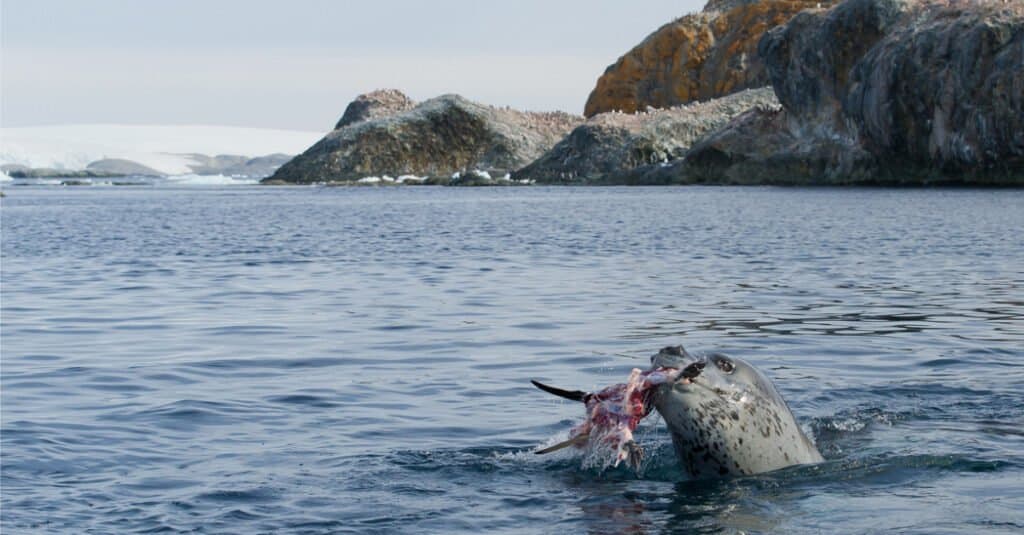
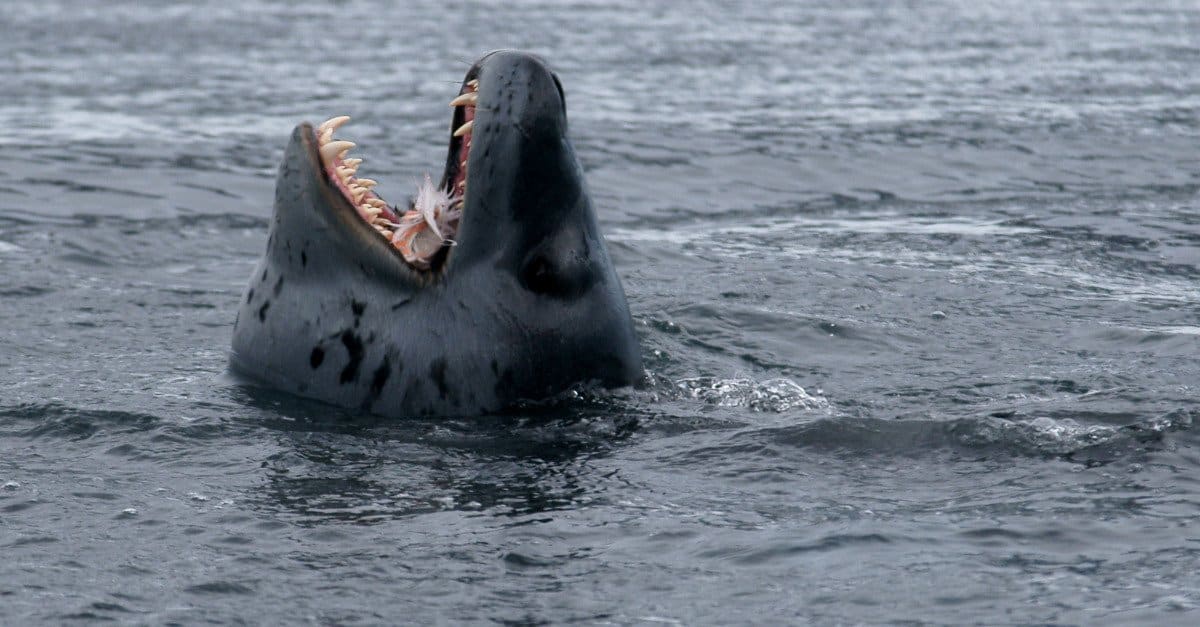
Leopard seals, the top predators in Antarctica, eat fish, penguins, and other seals.
©iStock.com/mzphoto11
Leopard seals have large, sharp incisors and long, fang-like canine teeth that can measure up to 1 inch in length. These long, serrated canines and incisors are adapted for capturing prey, piercing and cutting through meat, and killing their prey. Their trident-shaped molars, which are roughly 1 inch long, have three cusps (points) that help them sieve krill and other small prey, which can comprise anywhere from 45% to over 80% of their diet, depending on prey availability and location.
How Do Leopard Seal Teeth Work?
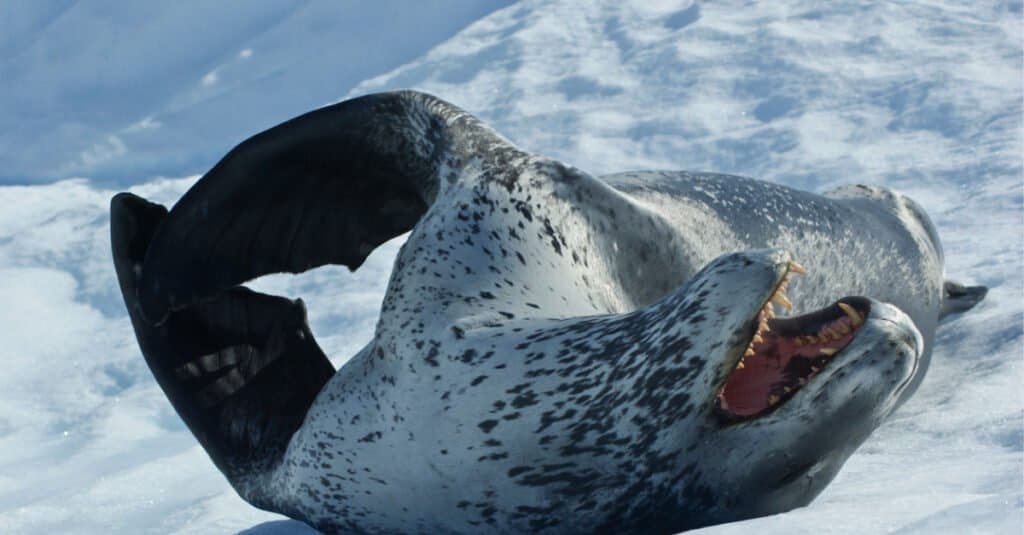
Unlike most seals, leopard seals use their molars to capture krill.
©iStock.com/Bkamprath
The molars of leopard seals differ from those of other seal species. Most other seals swallow their food whole and use their back molars for crushing. Leopard seals, on the other hand, use their molars to filter krill. They suck in a mouthful of krill-laden water and then push the water out through the gaps in their teeth using their thick lips, trapping the krill inside to be swallowed.
When leopard seals eat penguins, they forcefully swing and slam the penguin against the water’s surface repeatedly until it is torn into pieces, which the leopard seal then swallows.
The leopard seal’s powerful fore-flippers can propel them through the water at speeds of up to 25 miles per hour; however, compared to other seal species, leopard seals are not adept divers. Although they are capable of diving to depths well over 1,000 feet, they typically hunt in shallower waters between 33 and 164 feet deep.