
Quick Take
- King penguin breeding success has increased by about 40% despite climate change in the sub-Antarctic.
- The survival rate for king penguin chicks increased from 44% in 2000 to 62% in 2023.
- King penguins have a varied diet that allows them to travel shorter distances for food than other penguins.
- Scientists warn it is too early to tell whether the population boom in king penguins will continue or whether they will eventually no longer be able to adapt to climate change.
Climate change has caused massive problems for animals living in the Antarctic and sub-Antarctic. With ice sheets melting at unprecedented rates and food sources shifting farther south, the majority of the animals that call these regions home are suffering.
One species has bucked the trend and is thriving thanks to climate change. Instead of the population decreasing, like so many others, there has been a massive increase. King penguins are one of the rare climate “winners” in the sub-Antarctic. However, experts wonder whether this is a long-term trend or whether climate change will eventually lead to the demise of the world’s second-largest penguin, as it has with others in the region.
How King Penguins Have Been Able to Adapt to Climate Change
Unlike so many species that are struggling to survive in the Antarctic and sub-Antarctic thanks to climate change, king penguins have flipped the script. They are embracing the changes that warmer temperatures have brought and are thriving.
According to a March 2026 study published in Science Advances, king penguins have an adaptability in the sub-Antarctic that other penguin species do not possess. King penguins have shifted their breeding schedule to follow weather patterns and food availability. Doing so has meant earlier breeding times for the species, leading to healthier chicks and adult penguins.
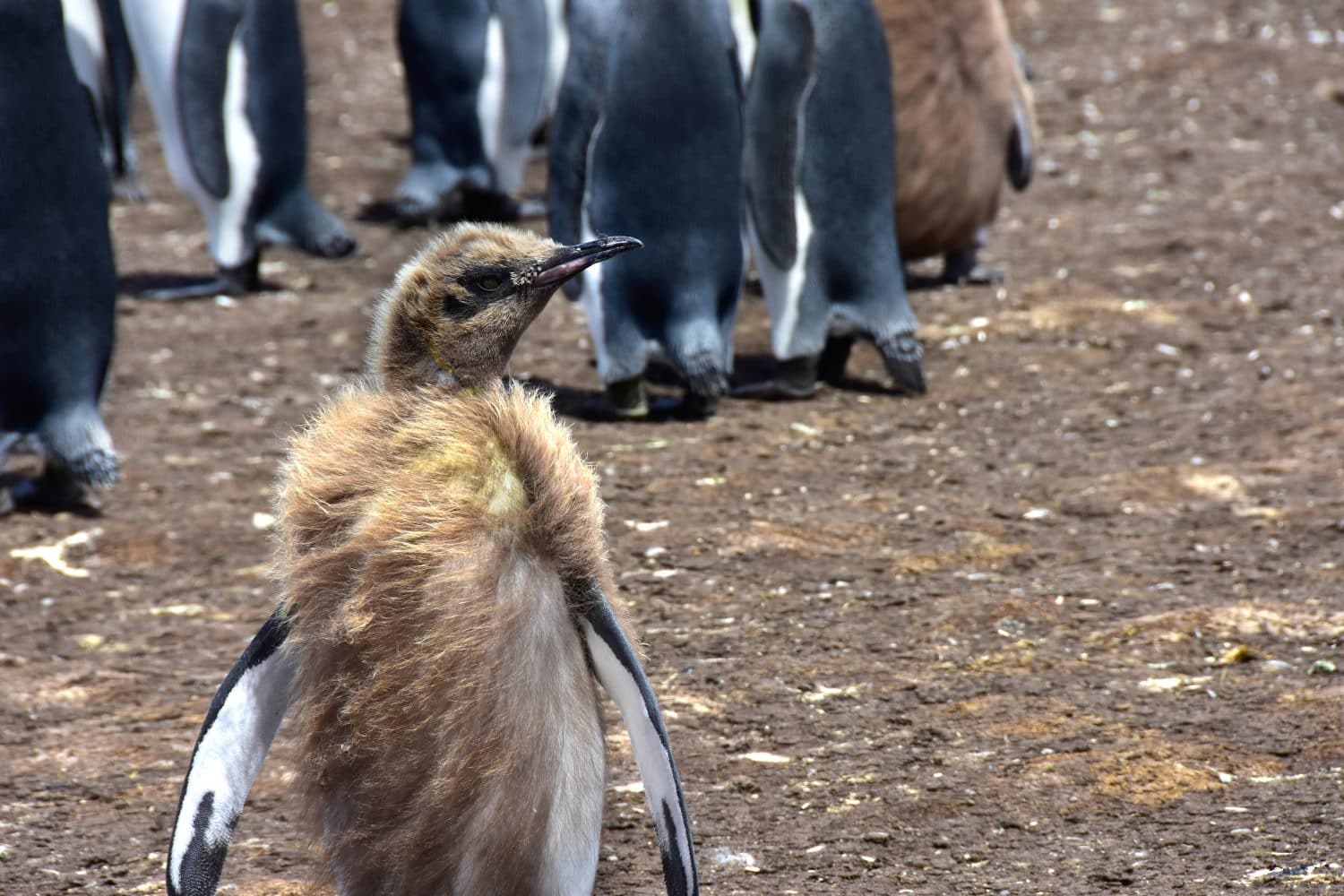
Unlike other penguins that live in the Antarctic and sub-Antarctic, king penguins have a large breeding window. The breeding season runs from late October to March. In recent years, the breeding window has shifted earlier in the season for many king penguins. The flexibility has allowed the chicks more time to gain weight and survive when they enter the frigid water. Consequently, survival rates for chicks have gone from 44% in 2000 to 62% in 2023.
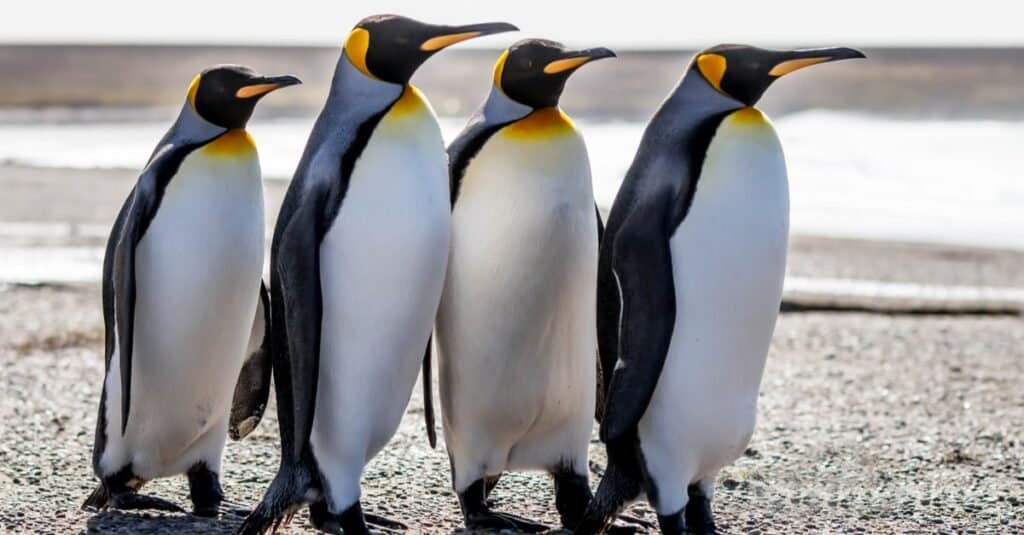
King penguins have enjoyed a population boom thanks to their ability to adapt to climate change.
©fieldwork/Shutterstock.com
Additionally, king penguins are showing more adaptability in their hunting. According to the study’s lead author Gaël Bardon, a seabird ecologist at the Scientific Centre of Monaco, the ability to shift so quickly to a changing environment has allowed king penguins to thrive.
“They can adjust really well their foraging behavior,” Bardon explained to the Associated Press (AP). “We know that some birds are going directly to the south, to the polar front. Some are going to the north. Some are staying around the colony, and so they can adjust their behavior, and that’s what makes king penguins cope really well with such changes for the moment.”
The unfortunate truth is that it is unclear whether king penguins will be able to continue their population growth trend if global temperatures rise further. This is something the study’s co-author, Celine Le Bohec, a seabird ecologist at CNRS, is quite concerned about.
“So that’s why for the moment the species is able to cope with this change, but till when?” Le Bohec told the AP. “This, we don’t know, because it’s going very, very fast.”
With climate change altering the landscape every year, there is guarded optimism regarding the king penguin study. It will only be time that will tell whether the birds have the ability to adapt further to their shifting habitat or if climate change will eventually lead to their demise.
Why King Penguins Are Not Reliant on Just One Food Source
King penguins’ primary food source is lanternfish. But as climate change has caused the Antarctic Polar Front to move farther south, it has increased the distance king penguins must travel to find food. This has proven devastating for other penguin species and Antarctic species in general, which face the same problem. But with king penguins enjoying a variety of food sources, long-distance travel is not always necessary.
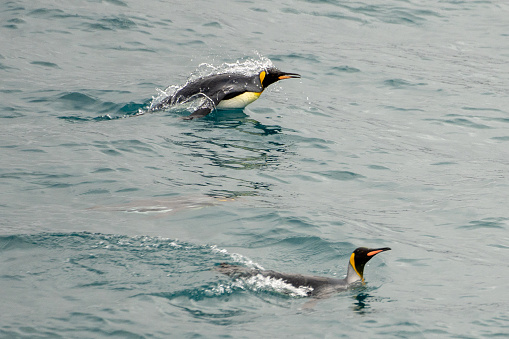
King penguins enjoy a varied diet, which allows them to swim shorter distances to find food.
©Frank Günther/iStock via Getty Images
In addition to eating lanternfish, king penguins enjoy a diet of krill, squid, and other small fish. While all of these species have declined in abundance in the Antarctic due to climate change, the fact that king penguins feed on all of them has kept the birds from facing massive food shortages. Instead, adult penguins spend less time away from their nests, keeping eggs better protected, chicks receive food from their parents in a more timely manner, and the overall population of king penguins increases, thanks to the adaptability of the diet the birds enjoy.
King Penguins Are a Species of Least Concern, But Will They Always Be?
King penguins are considered a “species of least concern” by the IUCN. While many penguin species are declining, king penguins are increasing in number, thanks to their ability to adapt to a changing climate. This has led to a population of 3.2 million to 4.4 million individual birds and 2.23 million breeding pairs, indicating that king penguins are thriving in their sub-Antarctic habitat.
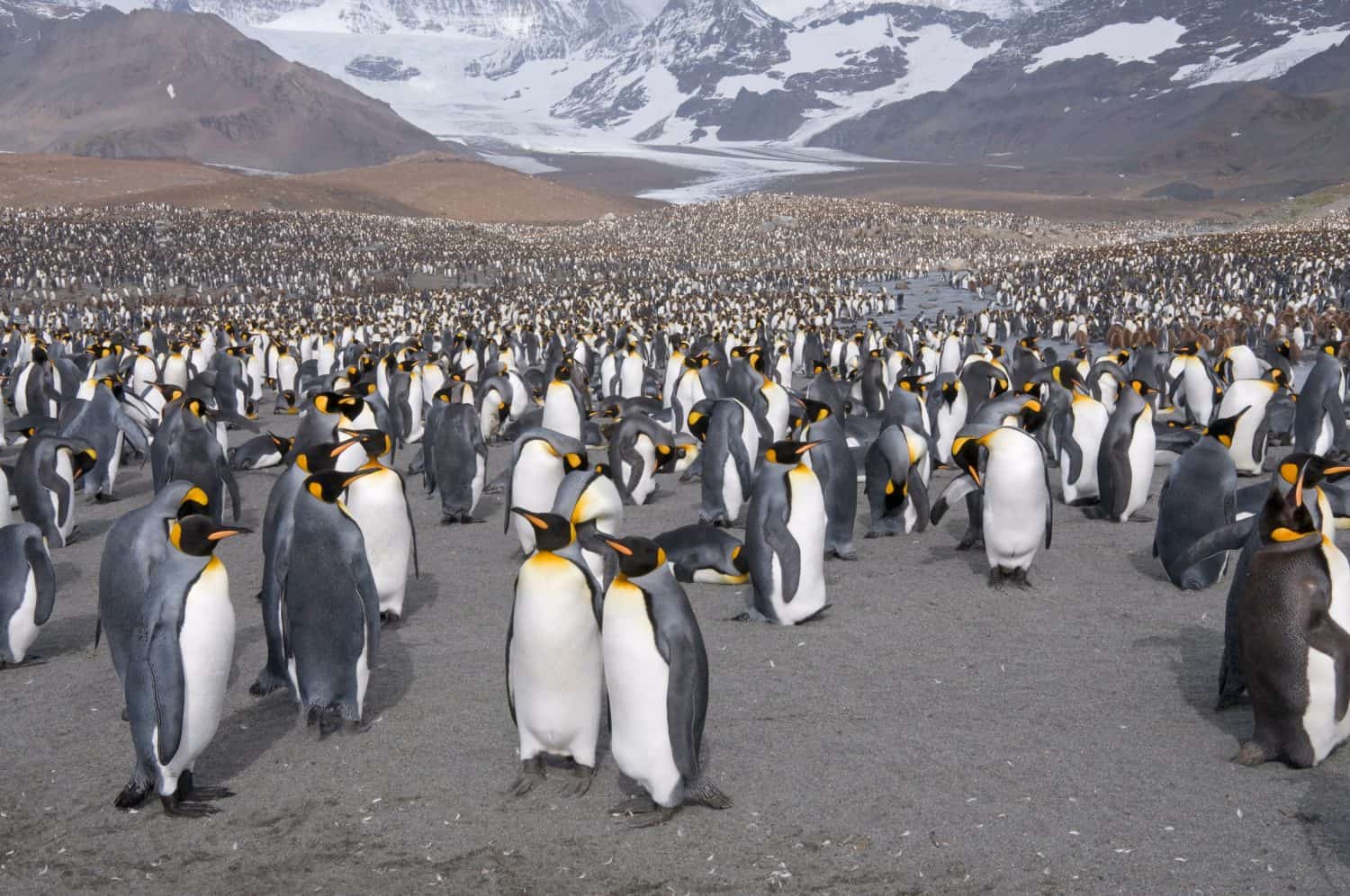
King penguins are a species of least concern, thanks to the existence of 2.23 million breeding pairs.
©Robert Harding Video/Shutterstock.com
Their survival depends largely on their ability to breed from late October to March. The timing is influenced by the amount of food available, the weather, and the season. Consequently, the study reports a 40% increase in breeding success in recent years, as chicks have had more time to gain weight and fat before winter weather arrives. When more chicks survive to adulthood, the population goes up exponentially.
The increase in population is nothing but good news. However, scientists are unsure whether the population can sustain itself as climate change further alters the landscape of king penguins’ habitat. The only way experts will know the long-term effects of climate change in the Antarctic and sub-Antarctic is to continue monitoring the king penguin population. With the changes coming so rapidly, it won’t take long to know if king penguins can further adapt or if the adaptation they have enjoyed to date is short-lived.
Threats to King Penguins
King penguins may be in a better position than other penguin species to combat climate change, but that does not mean these birds do not face threats to their survival. Like other penguins, king penguins have a number of predators. This happens from incubation in the egg through adulthood. Therefore, the fact that there are so many healthy breeding pairs despite the odds is something to be celebrated.
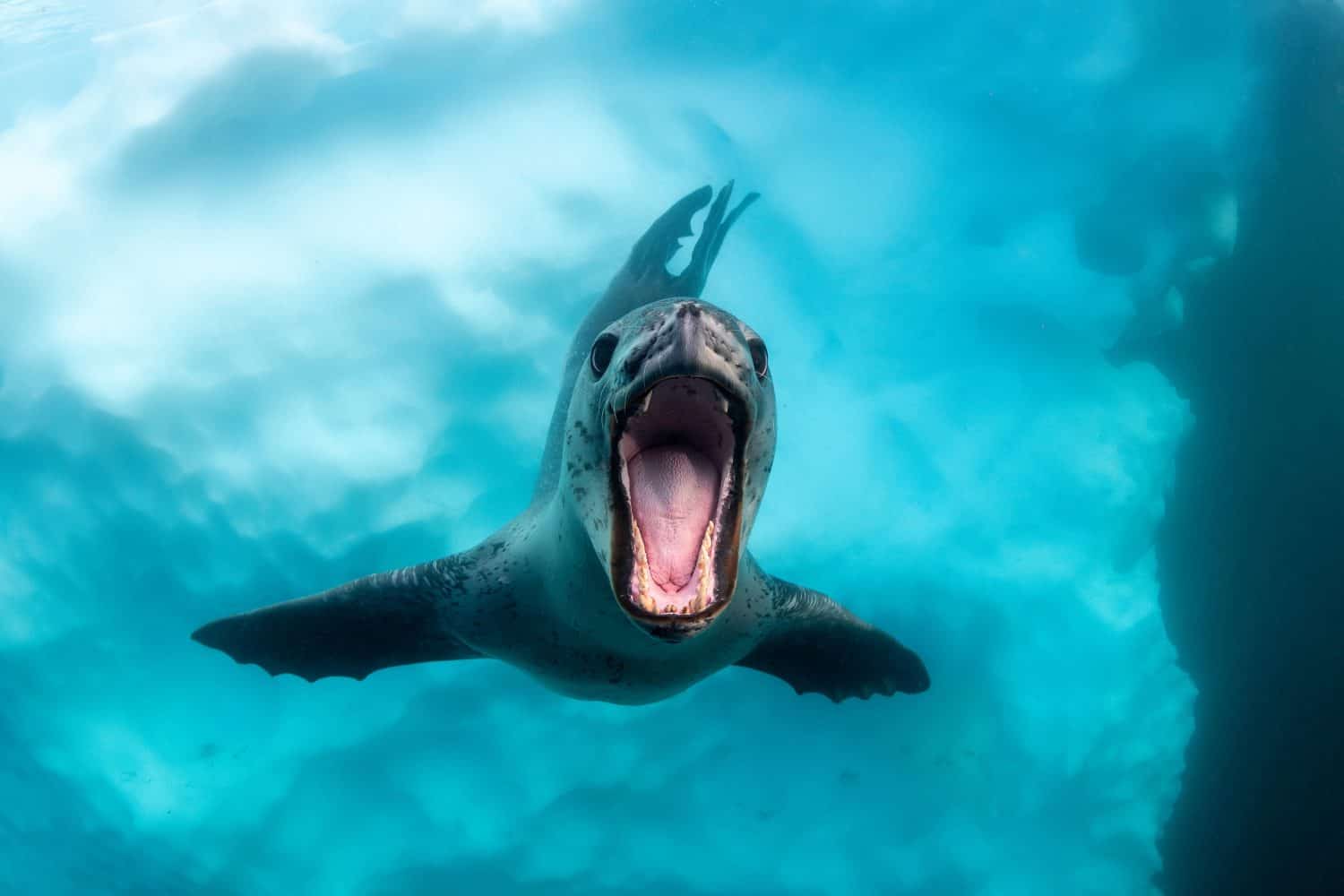
Leopard seals are a very real threat to king penguins.
©wildestanimal/Shutterstock.com
The threats that king penguins face include:
- Giant Petrels
- Skuas
- Kelp Gulls
- Leopard Seals
- Antarctic Fur Seals
- Orcas
In addition to these predators, the southern elephant seal has been known to wreak havoc with king penguin colonies. While the southern elephant seal is not a predator of king penguins, its massive size has caused the deaths of some king penguins. The seals do not realize they are on top of the king penguins, which crushes them. Therefore, older king penguins steer clear of the massive southern elephant seals to avoid accidents.
If King Penguins Survive Climate Change, Do Other Species Lose?
The fact that king penguins have not only adapted to climate change but also thrived as a result is something worth celebrating. However, experts warn that there may be a cost to this survival, and it may be other species that pay the price.
According to Casey Youngflesh, a Clemson University biological sciences professor who did not participate in the newest study on the penguins, there is the very real possibility that the survival of king penguins will mean the demise of another penguin species.
“Winning for this species might mean losing for another species if they are competing for resources,” Youngflesh told the AP.
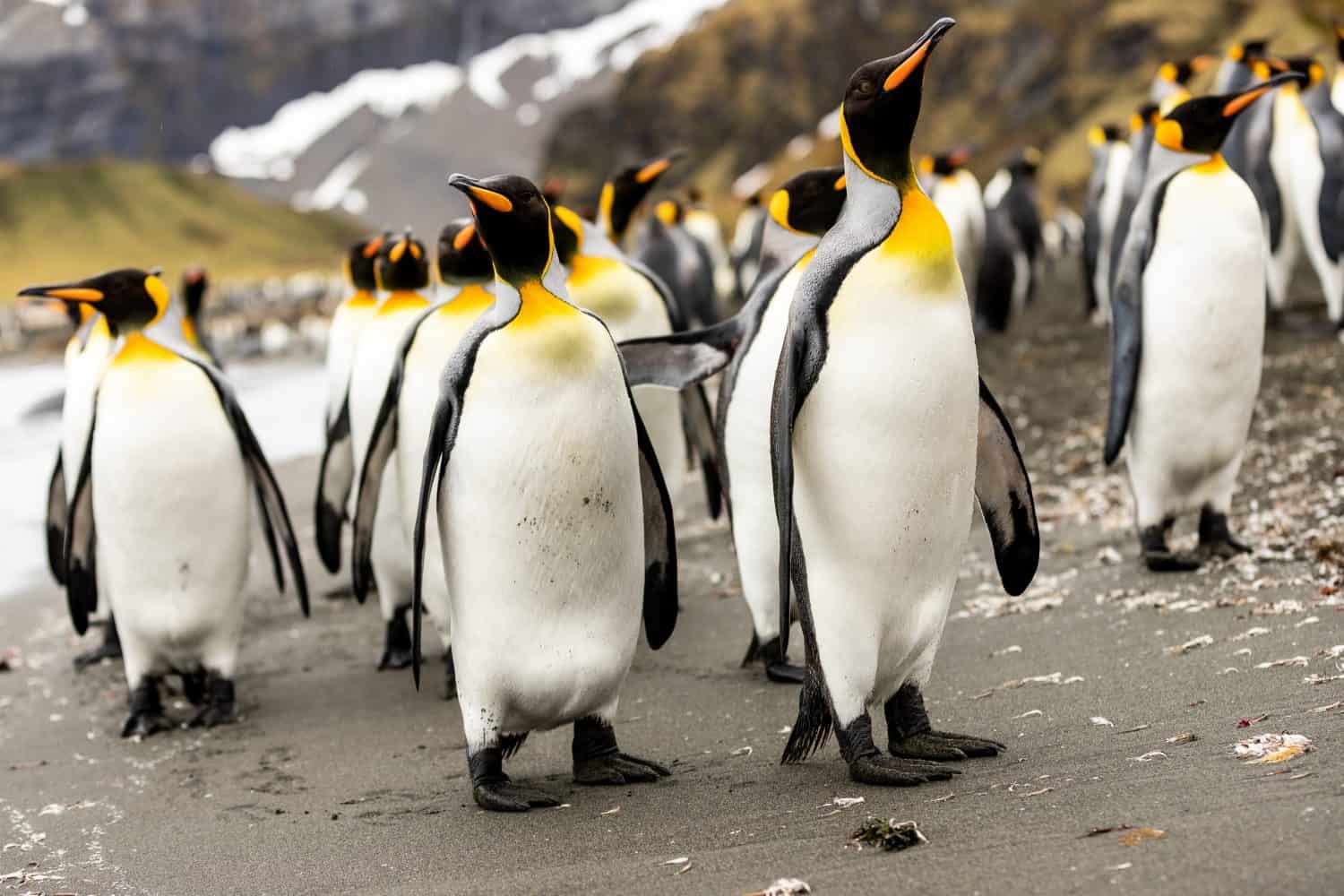
The fact that king penguins are thriving may be to the detriment of other penguin species.
©Vitalii Panok/Shutterstock.com
King penguins share a habitat with both emperor penguins and gentoo penguins. While king penguins prefer a diet of lanternfish, they have proven unbothered by changes to their diet. These changes include the same aquatic species that emperor and gentoo penguins consume.
While the ocean has provided enough sustenance for all three species so far, there is concern that, with king penguins being so adaptable to dietary changes, they will create a prey shortage that the gentoo and emperor penguins rely on. This would be especially detrimental to the emperor penguin, whose population has decreased by 22% from 2009 to 2024, according to a June 2025 study published in Nature.
What the future holds for king penguins is unclear. There is not enough data to predict whether these now-hearty penguins will be able to adapt further as sea ice continues to melt. King penguins may not yet be pushed to the brink. But with climate change rapidly reshaping the Antarctic and sub-Antarctic landscapes, it may be just a matter of time before these once-adaptable birds are no longer capable of change.