
Quick Take
- A lion built to dominate rivals can still get completely blindsided by his own family, and his reaction is priceless.
- Female lions don't have a queen, and the way they actually run a pride is more complex than most people expect. See how prides are run →
- Male lions average surprisingly little time before they're dethroned, a fact that comes down to a brutal pride takeover tactic. See the brutal tenure stats →
- Despite looking like loners, resident males serve a role in the pride that most people completely overlook. Explore the male lion's role →
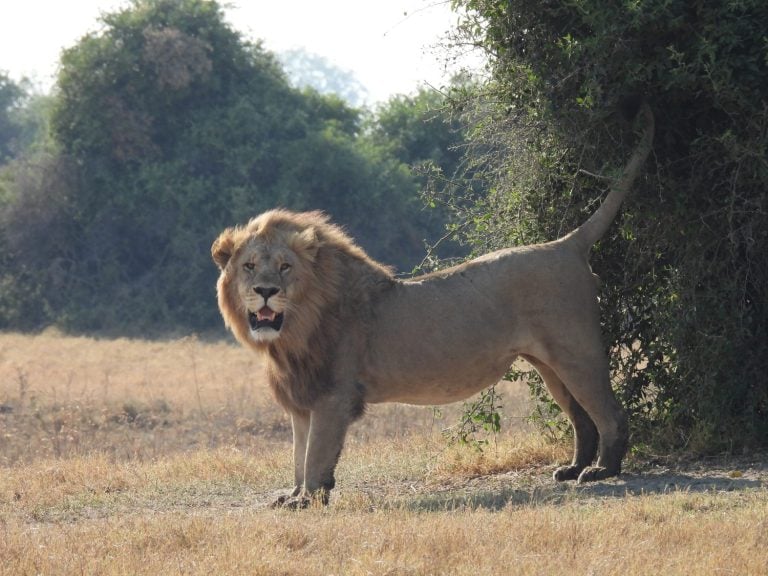
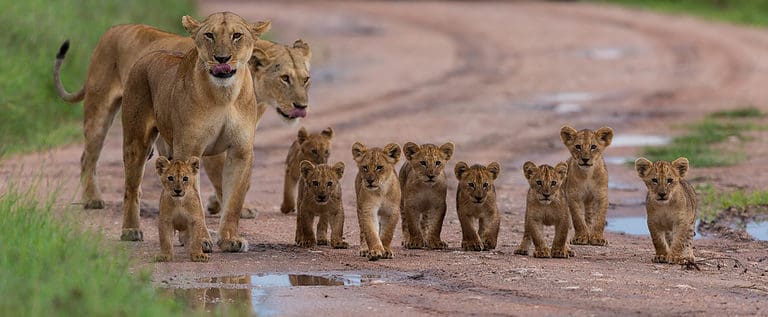
Male lions are formidable animals, but even a male built to defend a pride can look a little overwhelmed when the whole group shows up at once. In this clip, a male is resting peacefully when what appears to be at least four females and 10 cubs of different ages come jogging toward him. He gets to his feet and kicks at the ground with his hind legs as the pride closes in. Within seconds, he is surrounded, with lions sniffing and greeting him from several directions. By the end of the clip, his quiet nap is very much over.
How Do Female Lions Normally Behave?
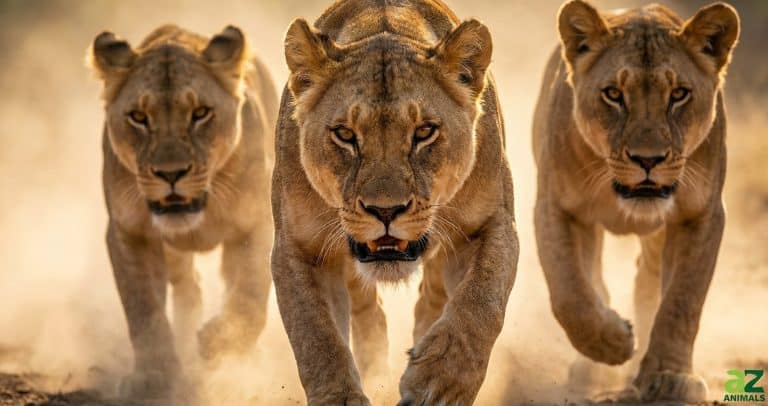
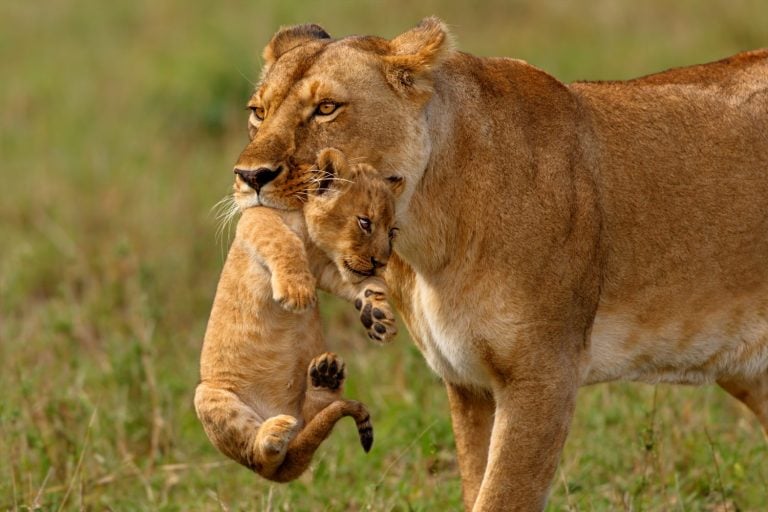
Female lions are highly social and form the core of groups called prides. A pride usually contains several related adult females along with their cubs and juveniles, although its size can vary considerably depending on habitat, prey availability, and other conditions. Females commonly remain with their birth pride for life. They may hunt alone or in groups, and group hunting can be especially useful when tackling large or dangerous prey. Pride members also cooperate in defending territory and protecting cubs from threats, including rival lions.
Female membership in a pride is generally stable, and closely related lionesses may give birth around the same time. Their cubs can then be raised together in a crèche, and lactating females sometimes nurse one another’s young. Unlike many other social mammals, lion prides do not have a rigid female dominance hierarchy with one lioness consistently ruling the others. Cooperation among related females is a major part of what makes the pride work.
How Do Male Lions Normally Behave?
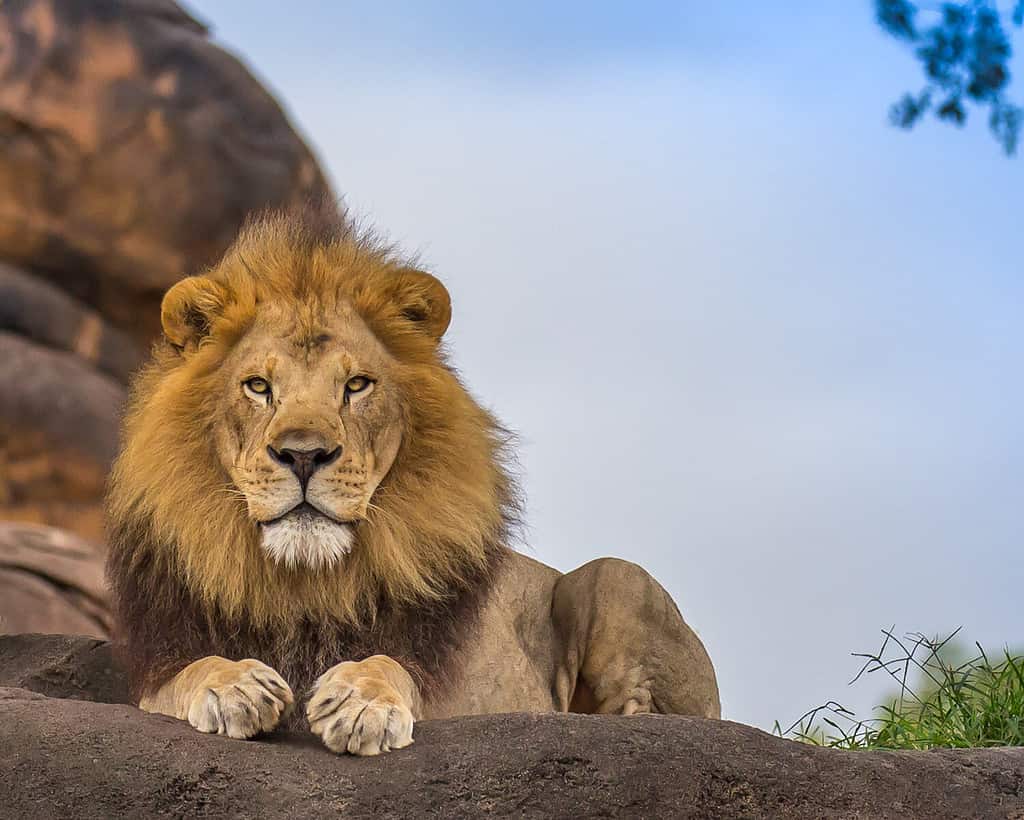
Males usually remain aloof from the rest of the pride.
©Jrossphoto/Shutterstock.com
Male membership in a pride is much more temporary. Young males typically leave or are forced from their birth pride when they are roughly two to four years old. They often form coalitions, commonly with brothers or other relatives, although unrelated males can team up as well. These coalitions roam until they are strong enough to challenge resident males for access to a pride. A pride may be associated with a single male or a coalition of several males, and larger coalitions can be particularly effective at taking over and defending access to females.
Resident males help defend the pride’s territory and breeding access from rival males. A stronger male or coalition may eventually challenge and drive out the current residents. During a takeover, incoming males may kill dependent cubs sired by the previous males, which can cause females to return to reproductive condition sooner. Male tenure is often fairly short. Smithsonian’s National Zoo notes that adult males average about two years as residents of a pride, although successful coalitions can sometimes maintain control for several years before they are displaced.
Males may remain aloof from the females and cubs for stretches of time, but they are not simply detached visitors. Resident males defend the pride and its territory, interact socially with other members, and sometimes participate in hunts. They also spend plenty of time resting, which helps explain why the male in this clip looks less than thrilled when a crowd of cubs suddenly turns up during his downtime.