Quick Take
- A cub standing on an adult lion while he bares his teeth sounds dangerous, though that snarl means something very different than you'd expect. See what that snarl means →
- Playful as it looks, cubs climbing on adults isn't just goofing around. There's actually a survival reason behind the behavior. Discover the survival reason →
- Two adult male lions resting side by side might look odd, but their relationship reveals a surprising social strategy. Explore their coalition strategy →
- Male lions aren't the doting fathers here, but their role in cub survival is more critical and more brutal than most people realize. Learn their protective role →
Apparently, even the king of the jungle has trouble getting a decent nap. In this entertaining wildlife footage, two male lions are trying to relax when a group of energetic cubs decides they’re the perfect climbing equipment. The little lions scramble over the adults, paw at them, and seem completely unconcerned that neither male is particularly interested in playing. But why do these powerful predators put up with so much pestering?
Watch Lion Cubs Climb All Over Two Resting Males
The cubs certainly don’t appear to be taking the hint. As the two males lie resting, the youngsters climb across their bodies and repeatedly attempt to get their attention. At one point, a cub stands on an adult lion while the larger animal exposes his teeth. Even that doesn’t seem to discourage the little troublemaker.
It’s an amusing scene, particularly considering the size difference between the animals. An adult male lion can weigh hundreds of pounds, while a young cub is still learning how to coordinate its paws. Yet the cubs are remarkably persistent, and the males appear more interested in resting than getting involved in their games.
Although it’s tempting to describe the adults as two exhausted fathers, the footage alone doesn’t establish whether either male actually sired the cubs. What it does illustrate is an interesting part of lion social behavior: young lions are playful, and adults don’t always welcome their enthusiasm.
Why Do Lion Cubs Climb on Adult Lions?
Lion cubs spend a considerable amount of their early lives playing. They’ll chase one another, wrestle, pounce, swat at moving tails, and occasionally treat a resting adult like a jungle gym. This behavior isn’t simply entertainment. Play gives young lions opportunities to develop coordination, strength, and some of the movements they’ll eventually use while hunting.
According to the San Diego Zoo’s lion behavior research resources, cubs frequently attempt to engage adult lions by climbing on them, grabbing at their legs, and jumping against their bodies. Adults may ignore the youngsters, move away, or respond with a growl or snarl when they’ve had enough.
That helps explain the behavior seen in the video. An adult showing its teeth isn’t necessarily preparing to attack. Depending on the circumstances, it may be communicating that the cub should back off. Young lions, much like young domestic cats, don’t always seem particularly interested in respecting those boundaries.
Do Male Lions Help Raise Cubs?
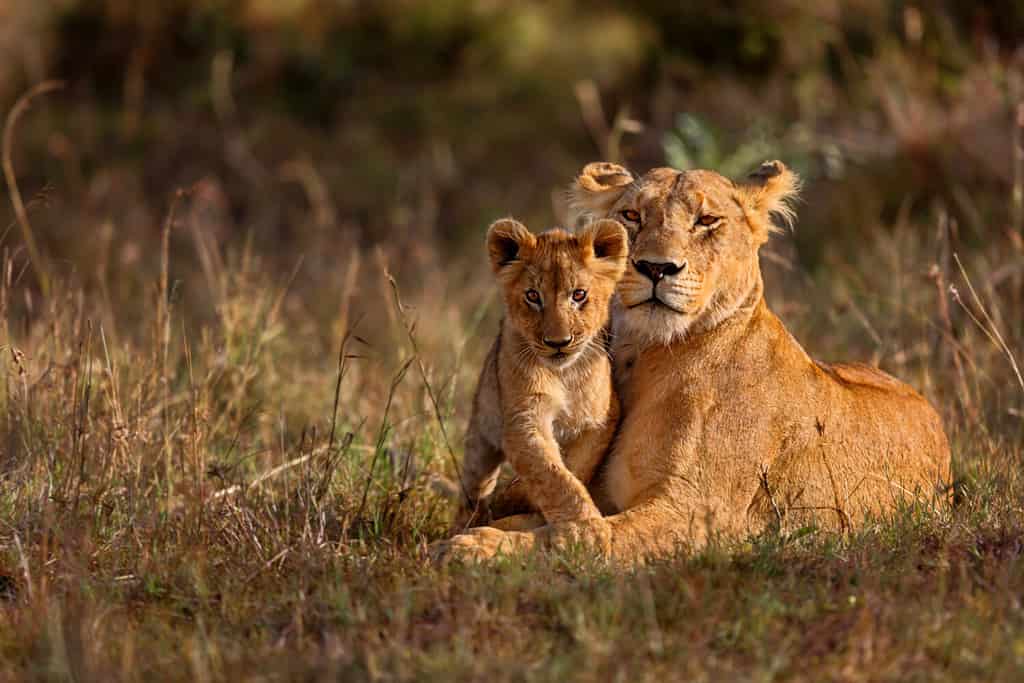
Lionesses take the lead in raising cubs, often caring for youngsters together.
©Maggy Meyer/Shutterstock.com
Male lions generally aren’t responsible for most of the day-to-day childcare. That job falls primarily to the lionesses, which may nurse, groom, and protect cubs together. Related females often remain in the same pride for much of their lives, creating a social group in which youngsters grow up alongside siblings and other cubs.
Adult males have a different but important role. Resident males help defend the pride and its territory against rival lions, particularly other males attempting to take over. That protection can be critical for cub survival because incoming males sometimes kill young cubs after displacing the previous residents.
Male lions can also show tolerance toward cubs and occasionally interact with them, although their behavior varies. Some will allow youngsters to climb over them or play nearby, while others make it clear they’d rather be left alone. The two males in this footage appear to be leaning toward the second option.
Why Are Two Male Lions Together?
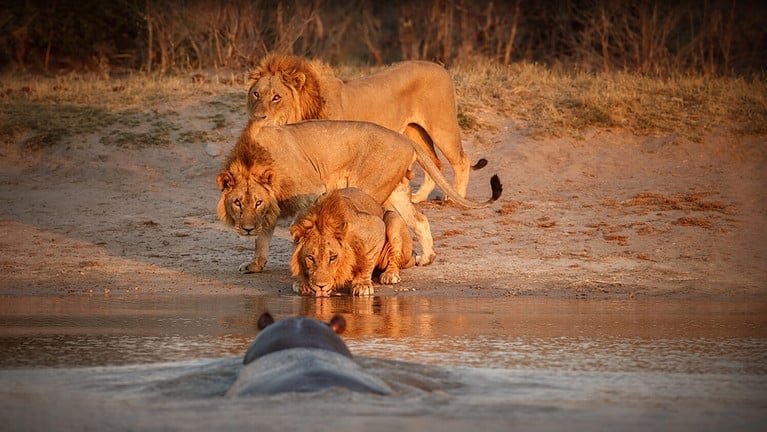
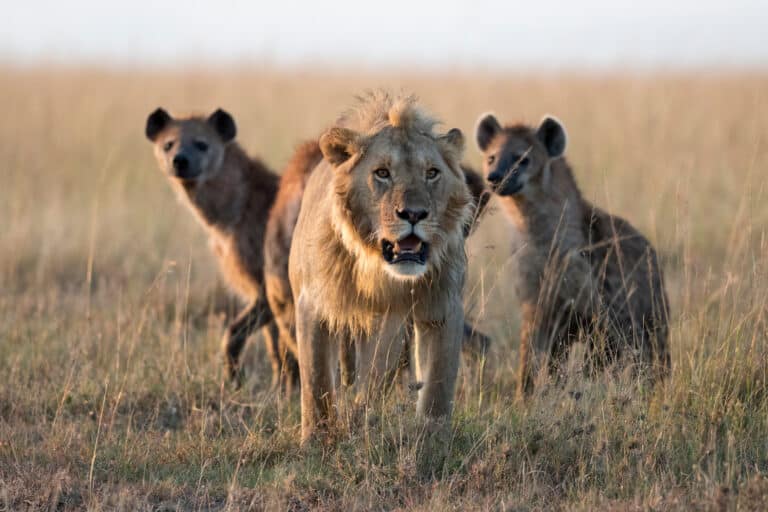
Seeing two adult males resting together might seem unusual if you’re accustomed to thinking of lions as solitary kings ruling over their territories. In reality, male lions often form partnerships called coalitions.
Coalitions may consist of brothers, other relatives, or unrelated males that cooperate to defend territory and compete for access to prides. Working together can give males an advantage over rivals, allowing them to maintain their position with a pride longer than they might on their own.
These arrangements generally aren’t permanent. Other coalitions may eventually challenge and displace the resident males, and younger lions often leave their birth prides as they approach adulthood.
We can’t determine the relationship between the two males in the video simply by watching them rest together. However, their apparent comfort around one another is consistent with the social relationships male lions can develop.
And for the cubs, none of those complicated pride dynamics seem especially important at the moment. They’ve found two enormous lions that make excellent climbing frames, and they’re apparently determined to enjoy the opportunity while it lasts.