
Quick Take
- A yellowjacket nest hidden inside a home can grow far larger than most people imagine, and the video reveals exactly how alarming the scale gets. See how nests grow →
- Not every yellowjacket is yellow and black, with one common species breaking the rule entirely. Explore yellowjacket species →
- A single queen builds the entire nest alone before a single worker exists, and the way she pulls it off is more complex than it sounds. See how queens start colonies →
- Finding a yellowjacket nest in your wall isn't just a nuisance. The timing of when you discover it dramatically changes how serious the problem is. Understand nest timing →
In another wild video from The Hornet King, we watch the removal of a huge yellowjacket nest that had been built inside a home. Once the covering above a doorway is removed, the full scale of the nest comes into view. Wearing protective gear, the remover uses a vacuum to collect large numbers of adult yellowjackets before tackling the layered paper nest itself. Large colonies can contain thousands of individuals by late summer, which makes finding one inside your house a considerably bigger problem than spotting a stray wasp at the window.
What Exactly Are Yellowjackets?
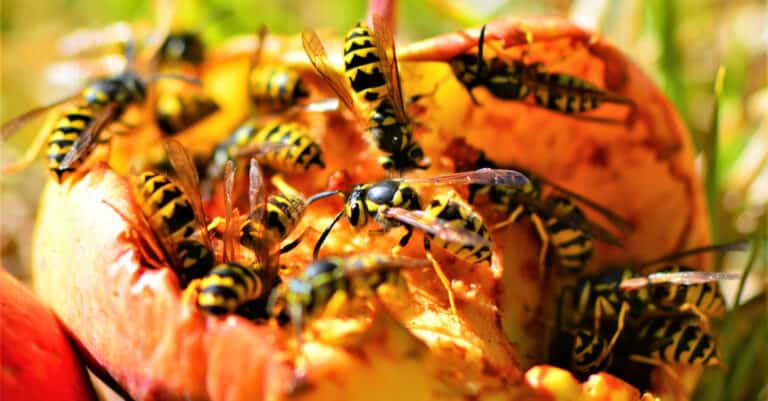
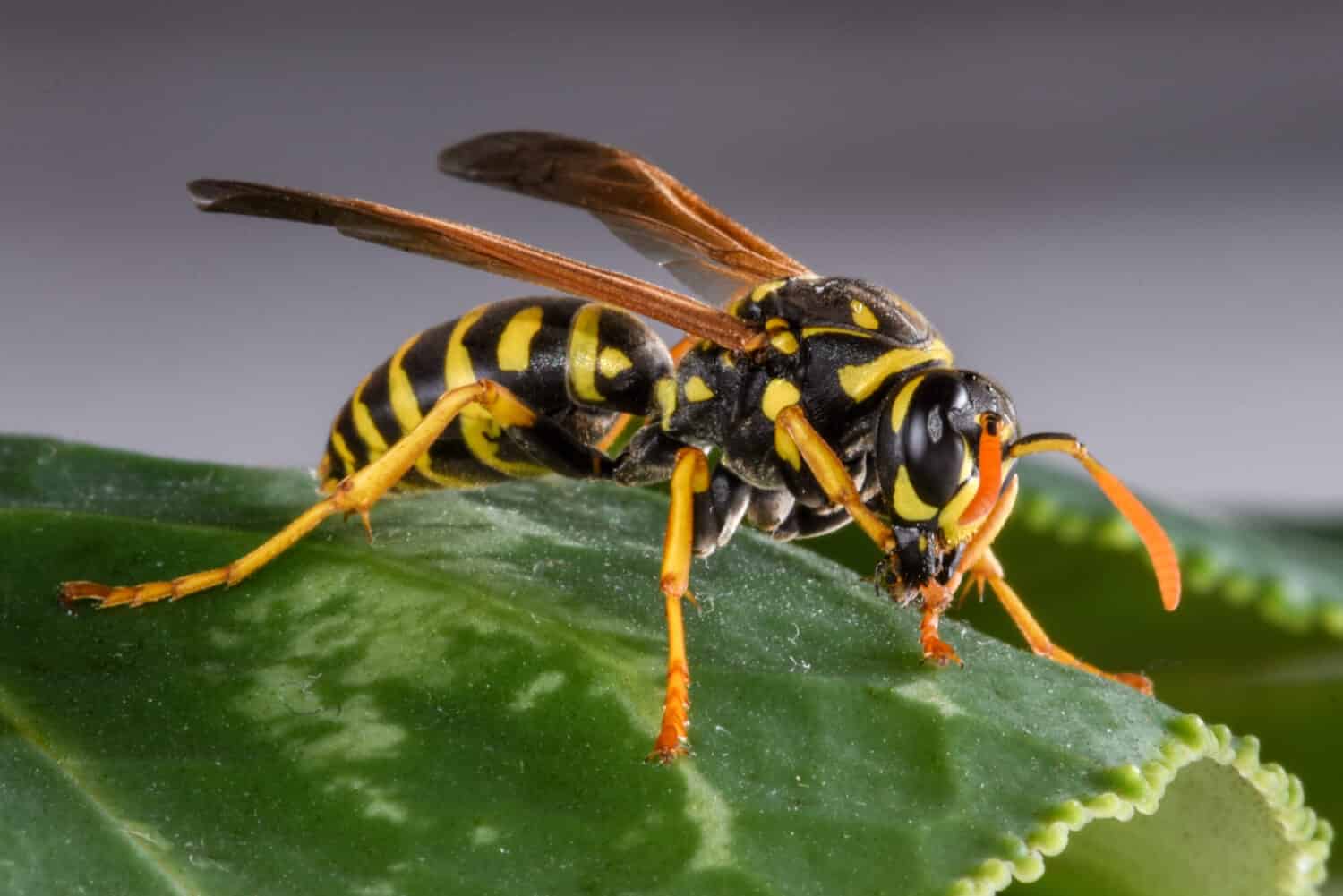
Yellowjackets are not a single species of wasp. In North America, the name generally refers to social wasps in the Vespula and Dolichovespula genera, which belong to the family Vespidae. They are part of the insect order Hymenoptera, the same order that includes bees and ants.
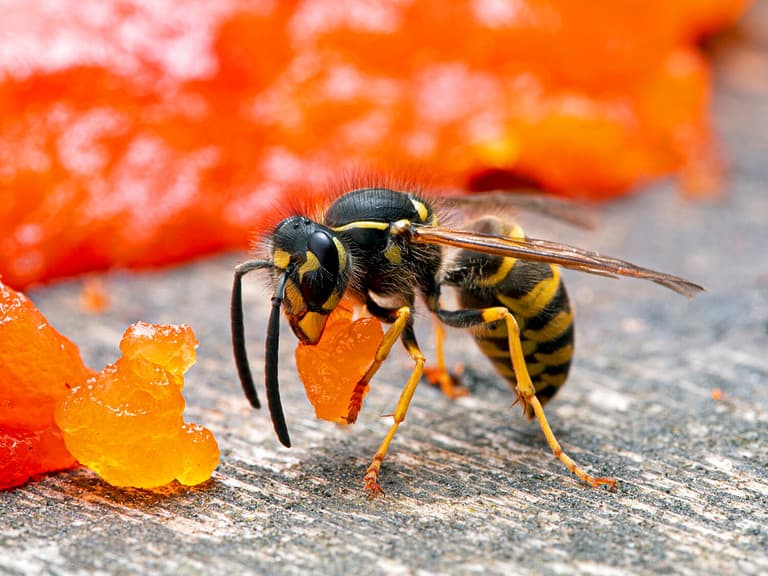
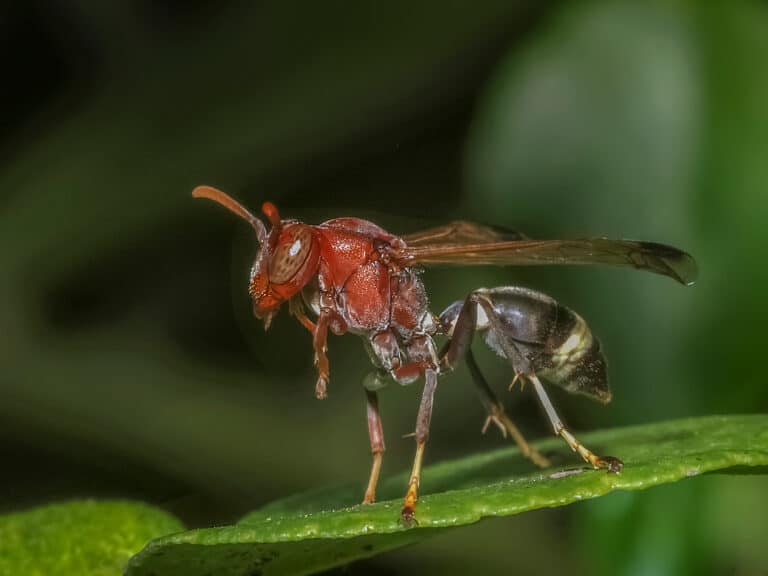
“Yellowjacket” is primarily a North American common name. In other English-speaking parts of the world, these insects are often simply called wasps. Among the better-known North American species are the Western yellowjacket (Vespula pensylvanica) and Eastern yellowjacket (Vespula maculifrons). Despite the name, not every member of this group is yellow and black. The bald-faced hornet (Dolichovespula maculata), for example, is actually a type of yellowjacket wasp with mostly black-and-white markings.
How Do Yellowjackets Normally Behave?
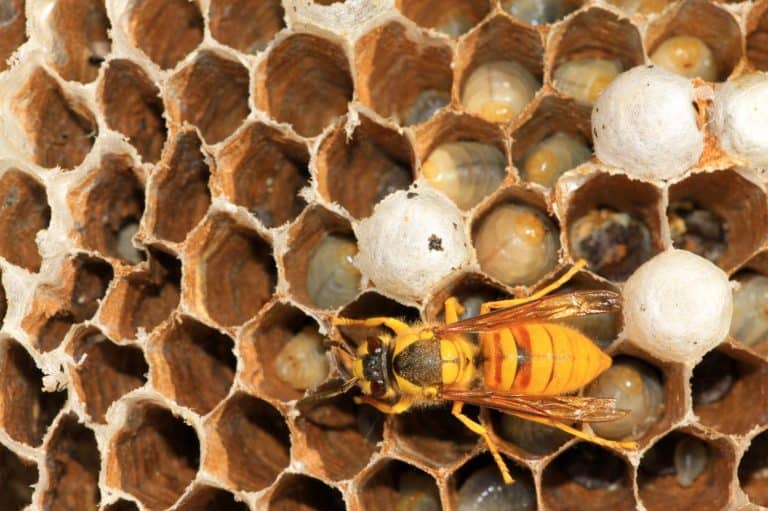
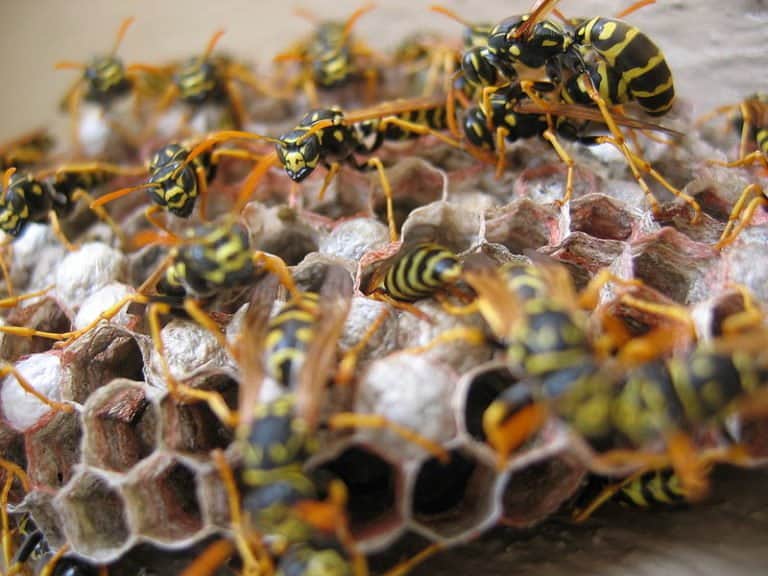
Yellowjackets are social wasps that live in colonies. In spring, a mated queen that survived the winter starts a new nest on her own. She builds the first cells, lays eggs, gathers food, and raises the first generation of sterile female workers. Once those workers mature, they take over jobs such as expanding the nest, gathering food, feeding larvae, and defending the colony while the queen concentrates on laying eggs. Workers can switch jobs as the colony’s needs change. Later in the season, the colony begins producing males and new queens. Those reproductive adults leave the nest and mate, while the newly mated queens eventually find sheltered places to overwinter. Colony size varies widely by species and conditions. Some contain hundreds of workers, while large Eastern yellowjacket colonies can reach several thousand individuals.
What Do Yellowjacket Nests Normally Look Like?
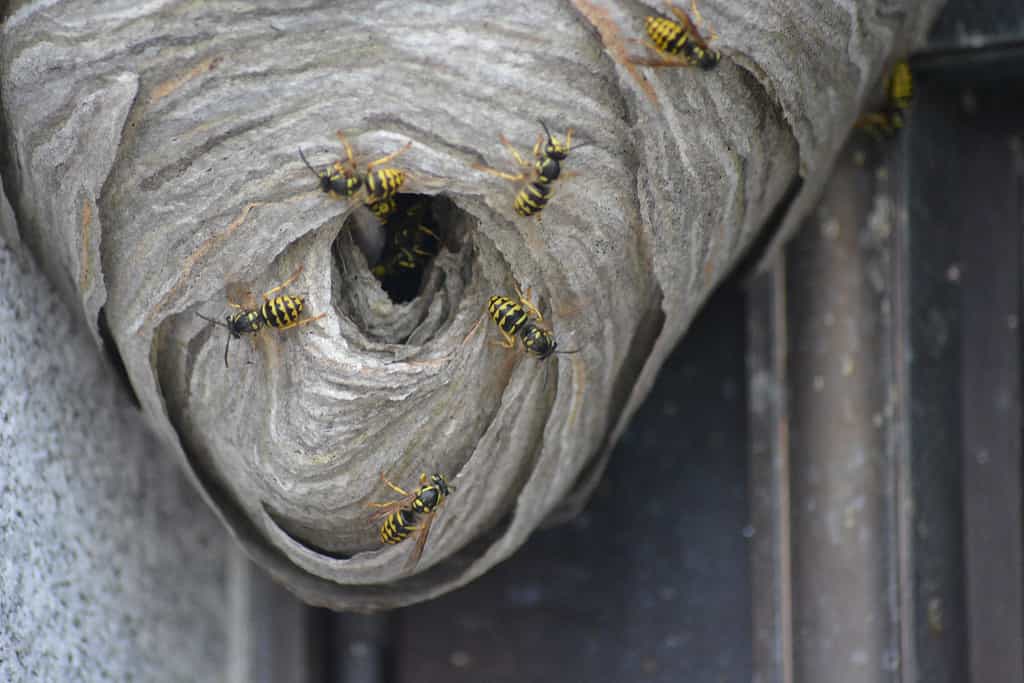
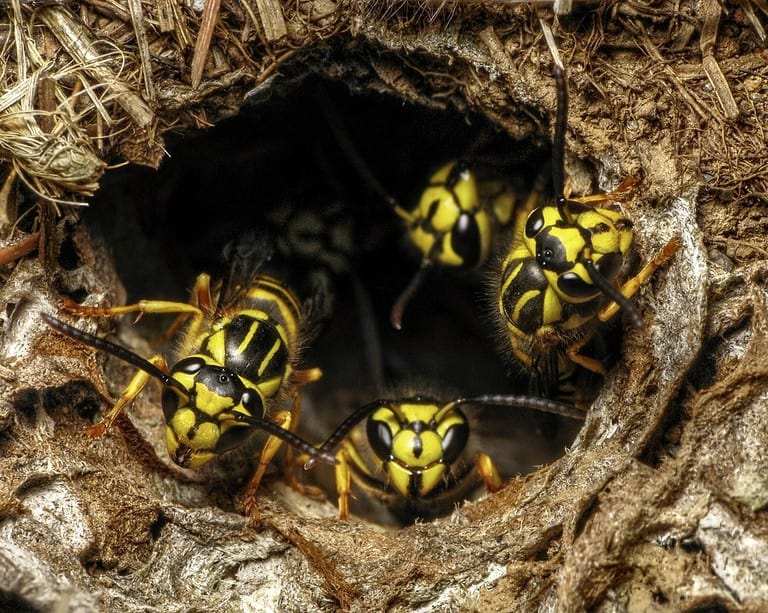
Yellowjackets will aggressively defend their nest.
©Daniel Loya/Shutterstock.com
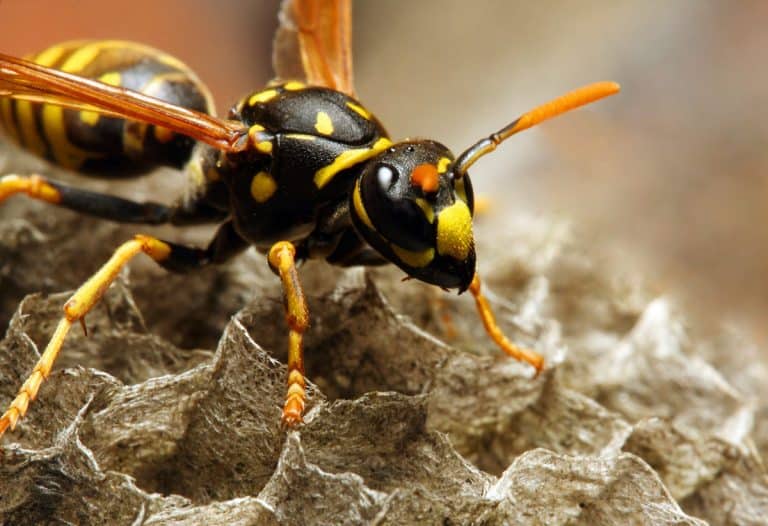
Yellowjackets can build nests in several different places, depending on the species. Many Vespula species use underground cavities such as abandoned animal burrows, but they can also move into hollow logs, attics, ceilings, and wall voids. Some Dolichovespula species build enclosed aerial nests in trees or beneath structures. Inside, the nest contains stacked layers of paper comb made up of hexagonal cells. The wasps produce that paper by chewing wood and other plant fibers and mixing the material with saliva. In temperate climates, yellowjacket colonies are generally annual. The workers, males, and old queen die as the season ends, while newly mated queens overwinter elsewhere and start fresh colonies the following spring. The abandoned nest itself is normally not reused.