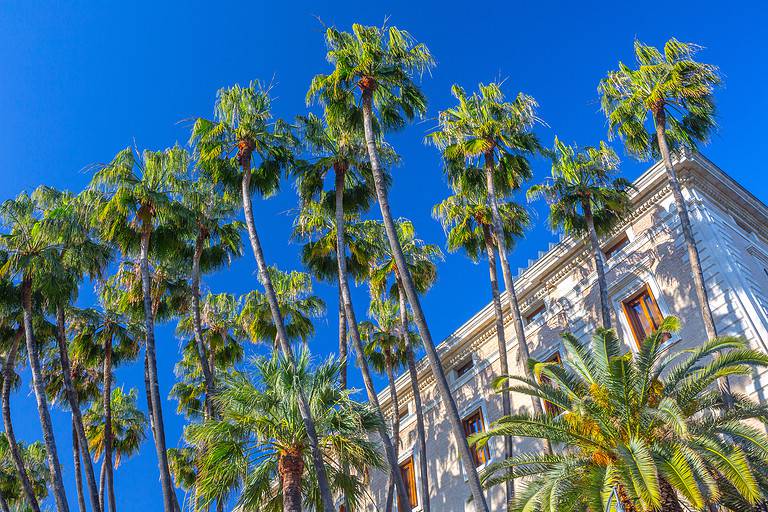
Picture a tropical getaway. Warm sunshine, waves, and palm trees swaying in the breeze. No other tree signals “tropics” quite like the palm tree, with its leafy fronds and thick trunk. Not only are palms beautiful and iconic, but they also serve as important fixtures in their ecosystems. They provide shade, shelter, and food for both humans and animals. Humans have been relying on palms for nearly 4,000 years.
However, did you know you don’t have to be in some tropical paradise to enjoy these trees? True, most of the 2,500 varieties of palm prefer warm climates and thrive in areas of the country that don’t experience harsh winter conditions. That’s zones eight to 13 based on the USDA Hardiness Zones Map, which categorizes the United States based on their lowest average temperatures. Freezing temperatures occur around zone 10; zone 8 averages 10 degrees F. However, freezing temperatures aren’t as big a deal for the hardest of palms. Some have been successfully grown as far north as zone four, which can hit below -30 degrees!
Palm trees make great additions for Oregonians looking to add a little bit of paradise to their landscaping. Oregon’s hardiness zones range from 5a (lows of -20 degrees) in the mountains to 9b (lows of 25 degrees) along the southern coast. Several varieties of palm trees are hardy enough to survive Oregon’s winters and will thrive for many years. Some plant nurseries specialize in palms specifically chosen for Oregon’s climate! So, let’s look at the six palm varieties that are hardy enough to thrive in the Beaver State.
California Fan Palm Tree
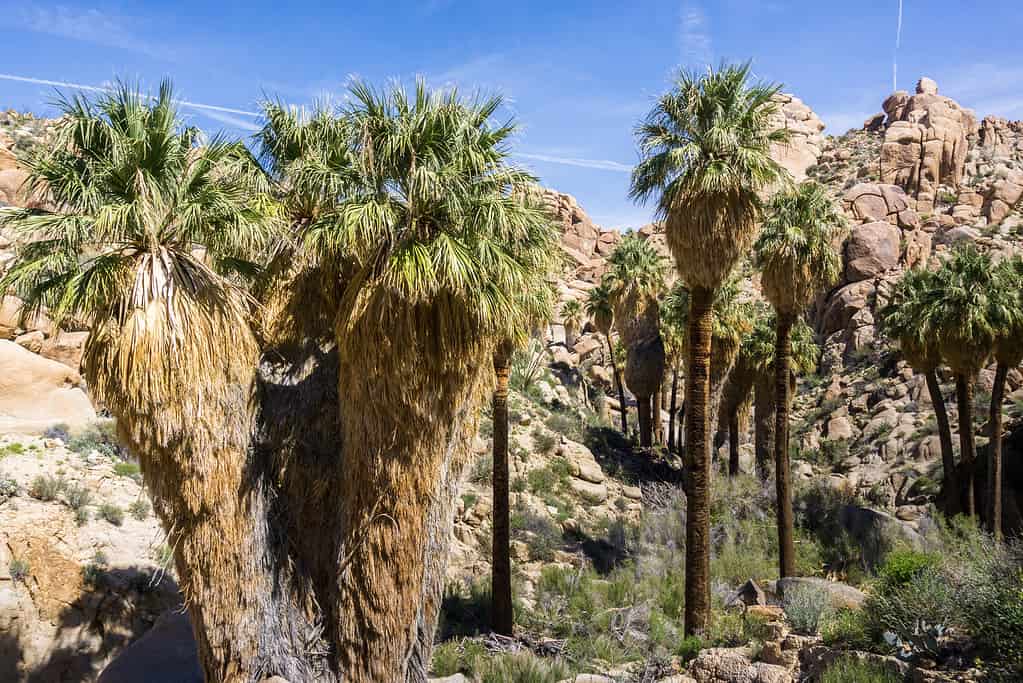
Though common in warmer climates like California, the California fan palm can survive Oregon’s winters.
©iStock.com/Sundry Photography
Washintonia filifera
These palm trees line the streets in Los Angeles, CA, and are the largest palm native to North America. If you’re looking for height, you’ve found it. The California fan palm can reach up to 60 feet tall! Its leaves stay green all year round and, as they die, continue to hang from the trunk as a shelter for birds and insects. In the spring, the palm blooms with huge clusters of white, funnel-shaped flowers that eventually turn into berries. Though not dates, these berries are edible and have long been a dietary staple of the Cahuilla people.
Though native to southern California, southwest Arizona, and northern Mexico, the California fan can survive temperatures as low as 15 degrees. Those in warmer parts of Oregon can enjoy these palm trees.
Waggie Palm Tree
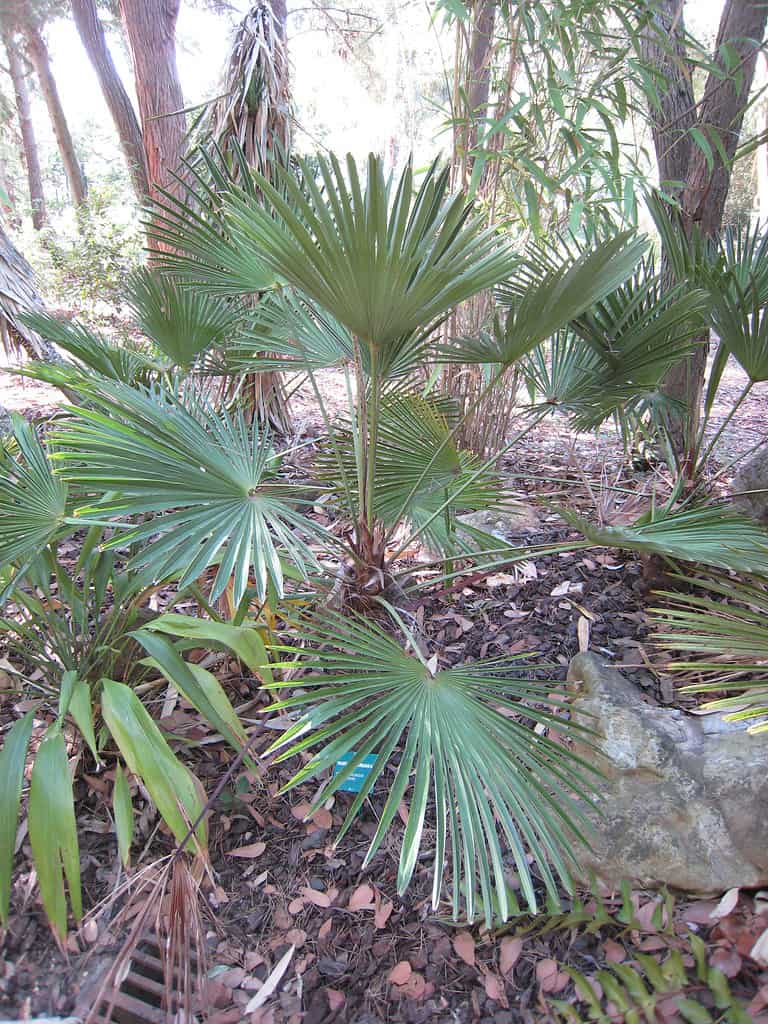
Waggie palms make a great addition to landscapes without worrying about too much height.
Trachycarpus wagnerianus
A cousin of the Chinese windmill palm, the waggie palm offers a more compact and robust option for landscaping. Gardeners consider it a dwarf palm since it will only reach about 10 feet tall. However, the waggie’s compact, stout stature makes it so versatile. They can adapt to drought, cold temperatures as low as five degrees, and coastal salt spray. The waggie’s leaves are broad and stiff, with a deep green color and silver undertones. Due to their dwarf status, young waggie palms have a charming bonsai look, which they maintain even in maturity.
Waggie palm trees originated in Japan and must still be imported from there. They may be hard to find at local nurseries due to their scarcity, but they are worth the wait! In Oregon, waggie palm trees will likely thrive west of the Cascade mountains and in the north along the Columbia River.
Chinese Windmill Palm Tree
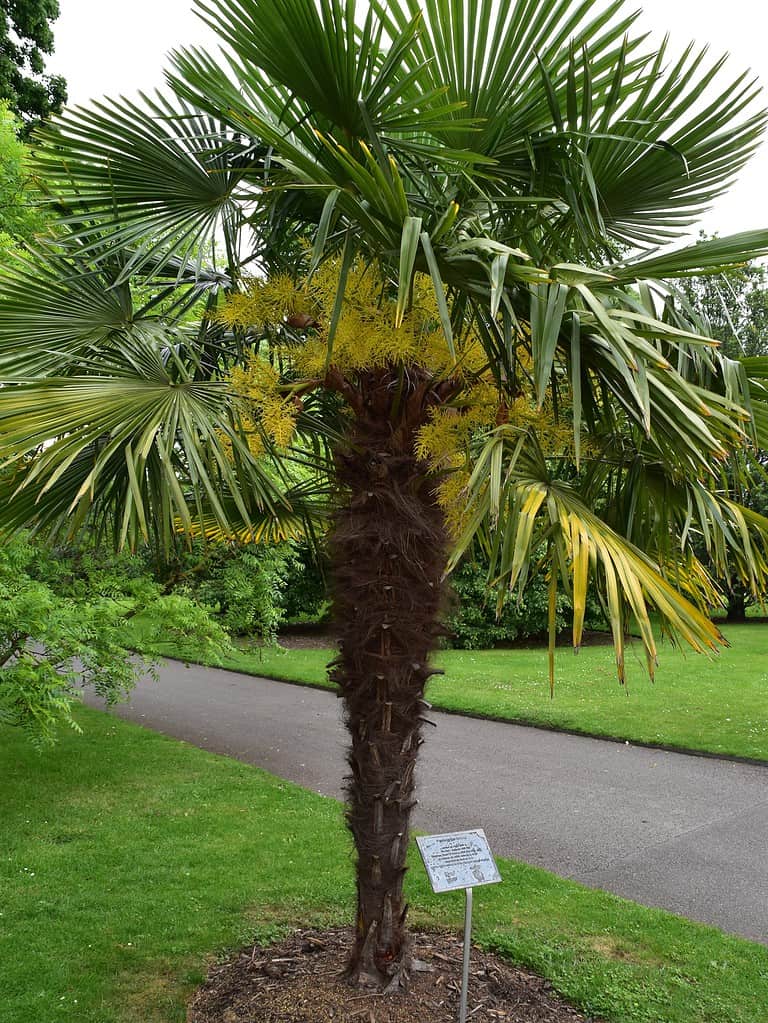
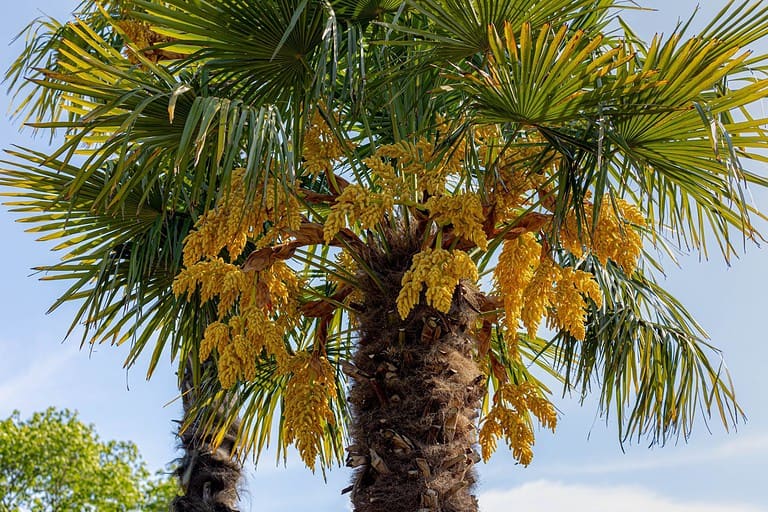
Its fuzzy trunk and cold hardiness make the Chinese windmill palm an eye-catching addition to any landscape.
Trachycarpus fortunei
The Chinese windmill palm goes by many names: the Chinese fan palm, the Chusan palm, the fortunes palm, and the windmill palm. Native to the subtropical and temperate forests of China, this palm can reach heights of 10 to 40 feet with the right conditions. Its shaggy, almost hairy-looking trunk sets it apart from other palms — this fiber and dried leaves have long been used in weaving projects. The Chinese windmill palm tree is so named for its wide, bright green leaves that spiral out from the top of the trunk in all directions, evoking the spokes of a windmill.
A common feature in the Himalayan mountains, the Chinese windmill palm is no stranger to cold temperatures and snow. This palm can survive temperatures as low as five degrees, though it will benefit from some shelter if your area has tough winds. Its fronds tend to tear if unprotected. These palm trees will thrive in many areas of Oregon.
Chilean Wine Palm Tree
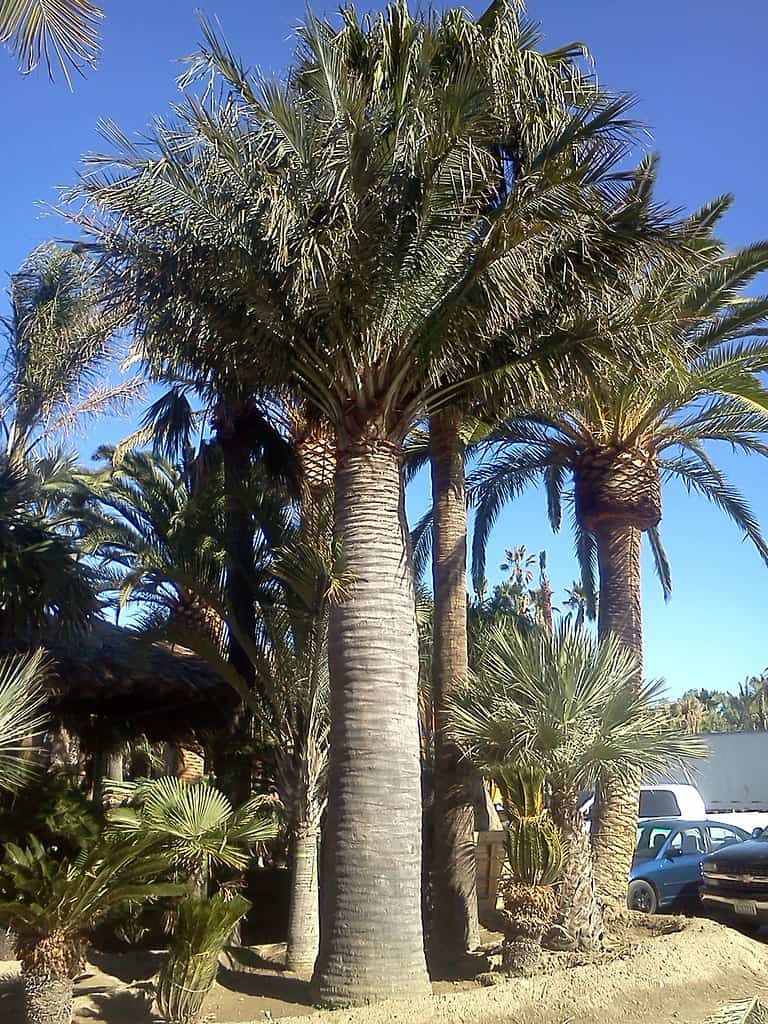
The thick trunk of the Chilean wine palm tree helps it withstand colder temperatures in Oregon.
Jubaea chilensis
The Chilean wine palm is the only species in the Jubaea genus with unique characteristics! Its trunk grows thicker than any other palm species, measuring up to four feet in diameter. Despite its leaves growing as large as 15 feet, they sometimes look disproportionate to the huge trunk — which can reach 80 feet tall! Chilean wine palm trees develop slowly and live for a long time, often several hundred years. After about 50 years of maturing, these palms begin to bloom with clusters of small purple flowers that produce small fruits that, once cracked, taste like coconut.
The Chilean wine palm can survive most things once established in your yard. Cold, drought, frost, and constant moisture won’t faze this palm. It’s hardy down to seven degrees, so it will do well in western Oregon.
Mediterranean Fan Palm Tree
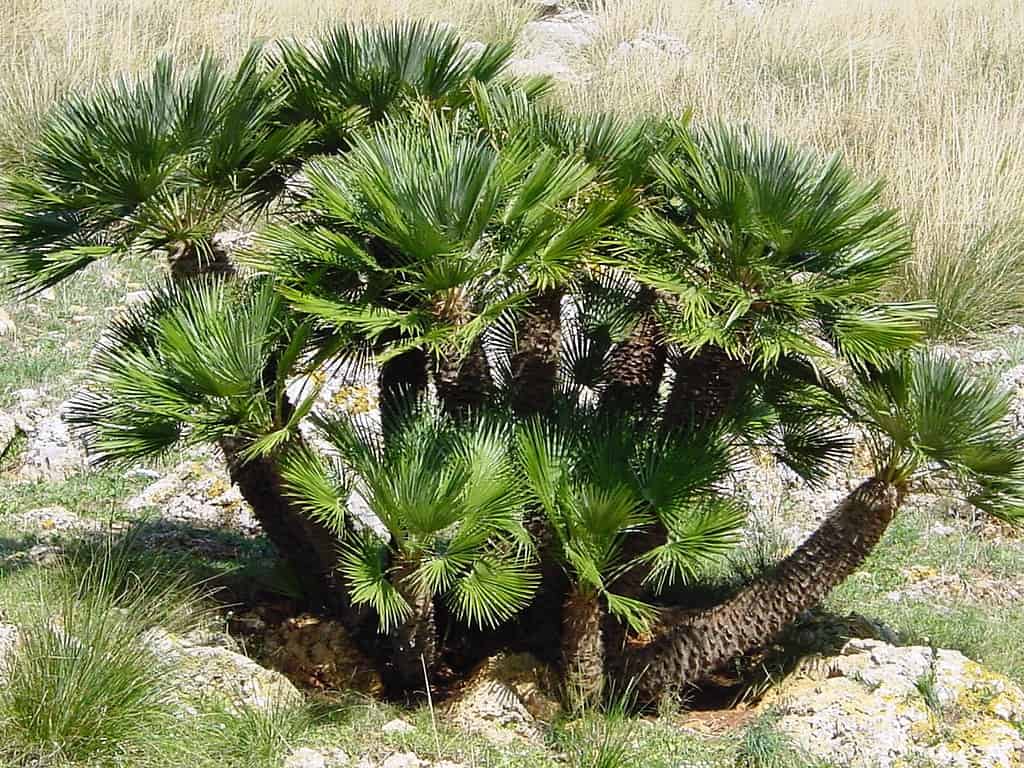
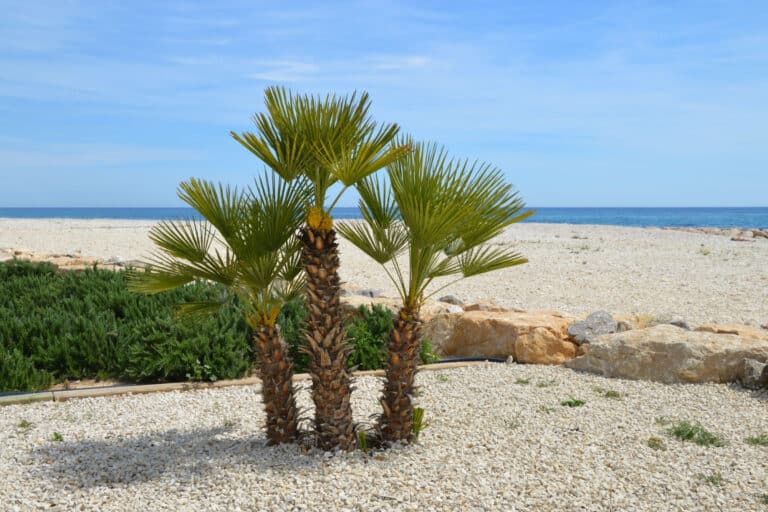
Unlike other palm trees, Mediterranean fan palms grow multiple trunks that look scaled.
Chamaerops humilis
Super tough and durable, the Mediterranean fan palm ranks as one of the most hardy palms in cultivation. It even looks tough — its trunk looks scaled, like a pinecone, rather than smooth like other types of palms. Also, unlike other palms, the Mediterranean fan palm will branch off with multiple trunks instead of standing solitary and tall. This palm only reaches about 15 feet tall and can offer dappled shade with its triangular fan-like leaves. Fun fact: the Mediterranean fan palm is the only palm native to Europe and is sometimes called the European fan palm. It’s also native to North Africa and areas surrounding the Mediterranean, and each varietal has a slightly different coloration. Its color range includes blue-green, gray-green, and yellow-green.
Hardy to temperatures down to five degrees, Mediterranean fan palm trees can easily survive droughts once established by storing water in their fibrous trunks. Yards throughout western Oregon will rejoice with this palm in residence. Even gardeners in colder areas can plant this palm in deep containers — perhaps equipped with wheels — and split its time both indoors for the winter and outside during the summer.
Pindo Palm Tree
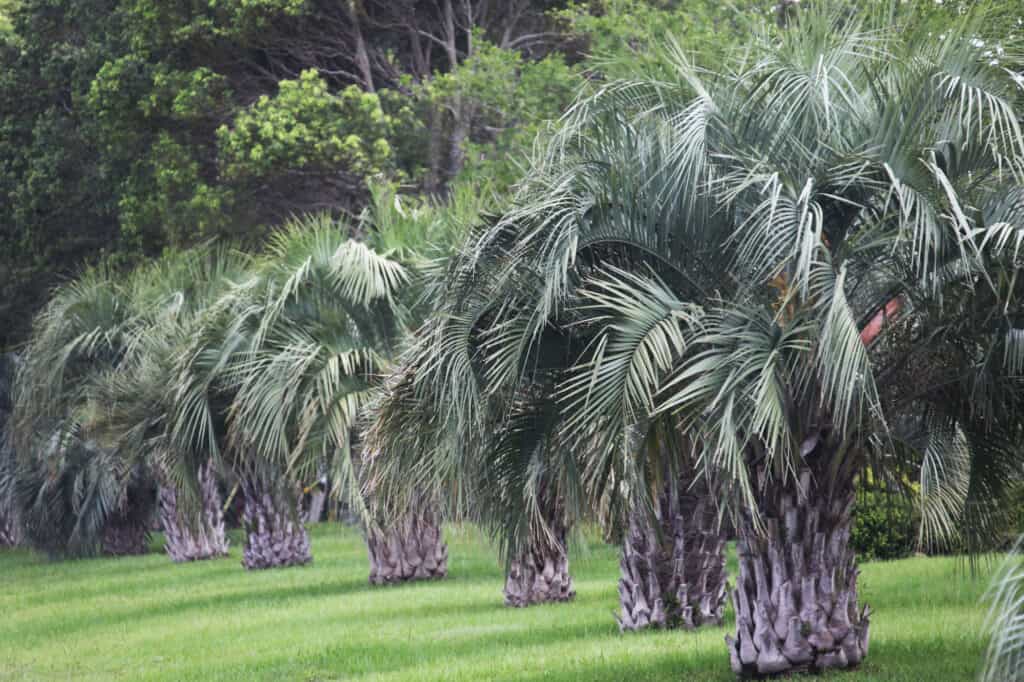
Pindo palm trees are the hardiest of the feather palms and have distinctive foliage.
©Natalya Chernyavskaya/Shutterstock.com
Butia capitata
Also known as jelly palms for their fruit, pindo palms are called “feather palms” for their long leaves resembling feathers. Pindo palm trees are the hardiest of the feather palms! Pindo palms can grow to reach 20 feet tall with thick, sturdy trunks and deep roots. In the spring, long spikes of flowers trail down to produce cherry-sized fruits that range from red to yellow. These fruits can be eaten fresh (spit out the fibrous seed), fermented into wine, or made into jelly, as its other name suggests. Most people claim the fruit tastes like a sweeter version of fresh pineapple.
These palms originated in Brazil, Uruguay, and Argentina, so they aren’t as hardy as others on our list. However, they still survive temperatures as low as 15 degrees, so gardens in southwest Oregon are perfect candidates for these palm trees! When planting your pindo palm, position it away from porches or walkways — the fruits can make a sticky, staining mess when they fall.
Still Too Cold? Try Indoor Palms!
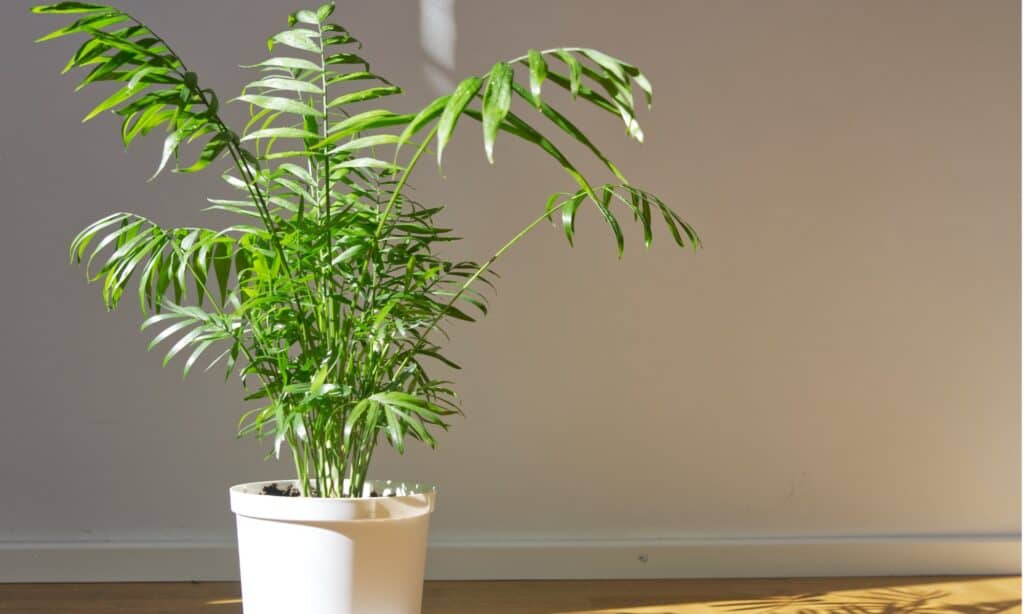
Like this parlor palm, an indoor palm tree can bring tropical vibes to your living room.
©iStock.com/Wheatfield
Even if you live in the colder parts of Oregon, you don’t have to go without a palm or two in your life! Several varieties of palm trees thrive in containers when correctly cared for. As mentioned above, Mediterranean fan palms work great in containers as fully indoor plants or as hybrids who spend the winter indoors. Many other varieties would do well in a similar hybrid situation, which protects them from the harsh winter conditions they can’t withstand by sheltering them inside.
For fully indoor palm options, look at the following varieties, which thrive indoors with the proper light, temperatures, and care.
- Sago palm
- Kentia palm
- Parlor palm
- Ponytail palm
- Christmas/Manilla palm
- Areca/bamboo palm