
Quick Take
- Forests are growing back, but the cicadas are still disappearing. What explains this? Why recovery isn't enough →
- Scientists tried relocating 20,000 cicadas to save a brood. Something unexpected went wrong almost immediately. See the failed relocation →
- When cicadas vanish, the damage ripples through the forest in a way most people would never predict. Explore the ecological fallout →
- Their greatest survival trick may be the very thing sealing their fate. How numbers become a weakness →
They may only make an appearance every 13 or 17 years, but when they do, periodical cicadas are hard to miss. Millions of insects suddenly swarm to life, creating an ear-splitting chorus of cicada song.
But biologists at the University of Iowa warn that some periodical cicada broods could be at risk of extinction. They explain their reasons in new findings just published in the journal Ecology.
Continue reading
Why Could These Cicadas Go Extinct?
The researchers say the greatest threat to periodical cicadas is the loss of the old-growth forest habitat they need to survive.
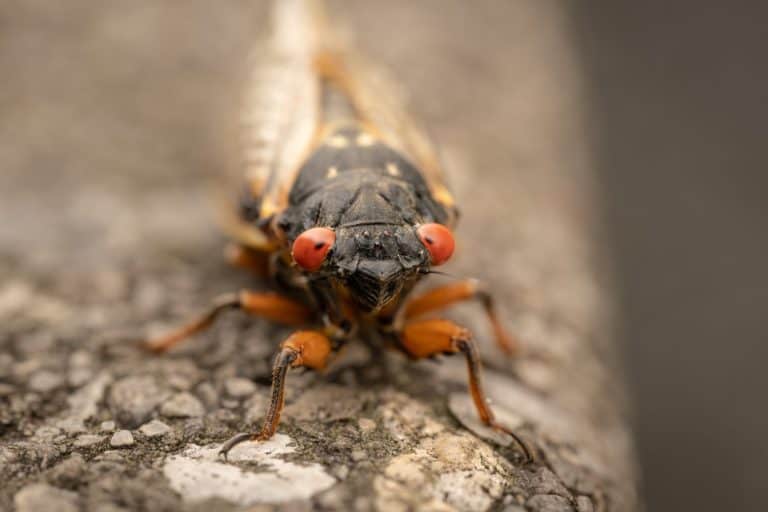
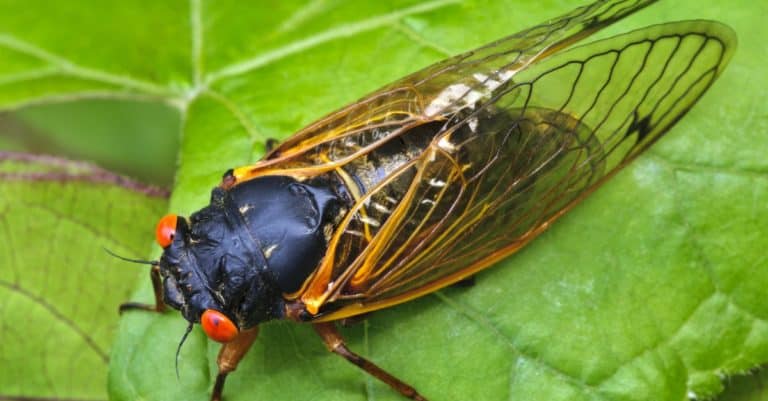
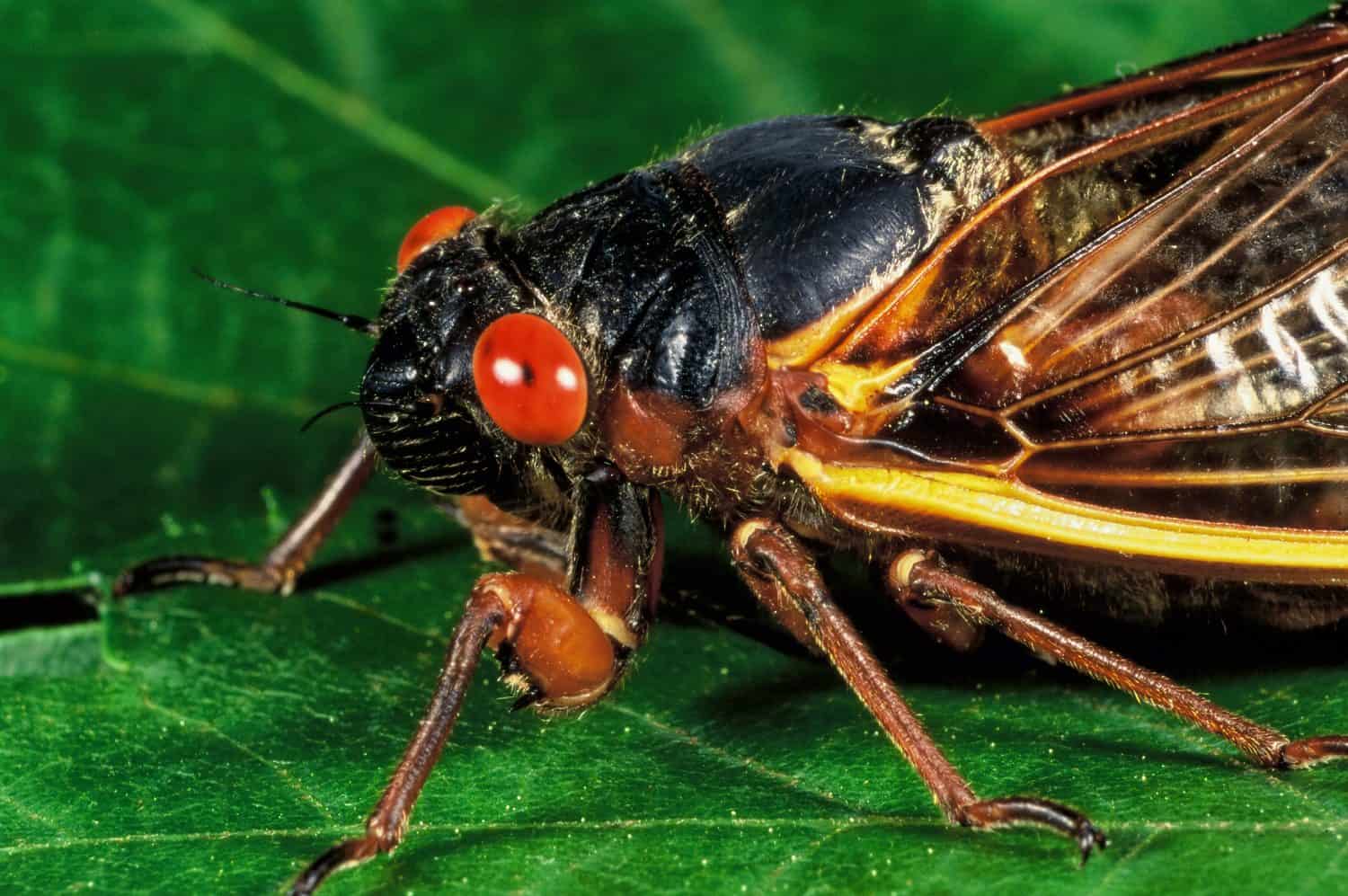
Periodical cicadas, Magicicada, spend long periods of time underground before emerging. There are two timeframes for this cycle. Some cicadas reappear after 13 years, while others wait a full 17 years before leaving their underground nests. The period spent underground makes up almost the entire lifespan of the cicadas.
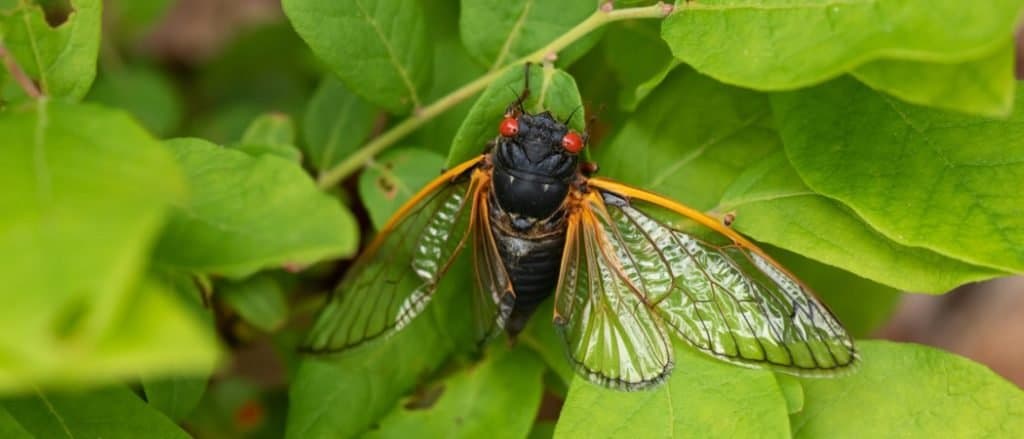
Periodical cicadas live exclusively in North America.
©Shot Stalker/Shutterstock.com
While they’re nestled underground, the insects remain in nymph form the entire time. They feed exclusively on liquid nutrients drawn from nearby tree roots. If the tree they rely on dies, their food source disappears. Then, the cicada nymphs perish as well.
There are actually seven different periodical cicada species, and they all live in North America. Four species emerge every 13 years. The other three emerge every 17 years. All face the same risk.
Why Old Growth Forest Loss Is So Devastating
The researchers targeted a single area in Johnson County, Iowa, where Brood XIII cicadas have lived for over two centuries. A survey from the mid-1800s revealed that nearly 29 percent of the county was covered in old-growth forest suitable for cicadas.
Old newspaper accounts also reported mass cicada emergences in the late 1800s and early 1900s. But by about 1930, farming and development across what is now Iowa City had reduced the tree cover to only around 11 percent of the county. After 1905 — the year of the last newspaper report of mass cicadas arriving — no new emergences were reported. It seemed that the Iowa City brood had disappeared entirely.
“I think that cicadas are really cool because they have this amazing biology. But that interesting biology also has doomed them,” Andrew Forbes, a professor in the Department of Biology at the University of Iowa, told Iowa Now. “Their viability is connected with human land use. Forests get cut down, and they regrow, but these animals are living underground for 17 years, and when you cut down the old trees, the cicadas lose their food source, they die out, and it might take them hundreds of years to get back.”
Why Regrown Forests Don’t Attract Cicadas
By 2023, tree cover in Johnson County increased to just under 13 percent, up from the 11 percent recorded in the 1930s. Researchers hoped the periodical cicadas would return to the area with regrown trees. However, that didn’t happen.
Researchers found that the remaining forest cover from the 1930s was a better predictor of where any remaining cicadas lived than the 2023 forest cover. And the reason was obvious to scientists.
Cicadas don’t like to travel. Research has shown that within any particular brood, the population edge shifts about 100 yards (the length of a football field) every 17-year generation, which is less than 20 feet per year. Therefore, even if new trees are growing, if they are too far from the brood’s current habitat, it is unlikely that cicadas will be found there waiting to emerge.
To compare forest regrowth with cicada dispersal rates, researchers created a model of average forest turnover. They found that, under normal conditions, cicada-occupied habitats continued to shrink even when total forest cover increased.
“A new finding is that we used that distance to model cicada movement and found that it will take many centuries for them to recolonize restored forest even under the very best of conditions,” Forbes told Iowa Now.
A Failed Experiment
The researchers then conducted an experiment to determine if human intervention could help cicadas adapt to new habitats. The scientists collected just over 20,000 adult Brood XIII cicadas in June 2024 and released them at a restored forest preserve a few miles from the nearest known wild cicada population. This represented a distance that would take the species many centuries to cross without assistance.
Unfortunately, the transplanted cicadas did not chorus together, mate, or lay any eggs. Within about a week, almost all of them were eaten by birds and small mammals. The experiment had not produced the hoped-for results.
They believe the reason has to do with sheer numbers. In a natural cicada emergence, there are millions of cicadas together in a relatively small area. The sheer number of them overwhelms predators, a behavior called “predator satiation.” Their overwhelming numbers are their primary defense against predators. The much smaller group that researchers relocated did not have sufficient numbers to overwhelm predators and protect themselves from their natural enemies.
“The buffet was open, and everyone knew about it,” Forbes told Iowa Now. “I thought if we got big enough numbers, it would work. I was wrong.”
What Happens If Periodical Cicadas Disappear?
Most people consider the periodic emergence of these cicadas to be an annoyance. However, their presence, even if only every 13 or 17 years, has a significant ecological impact. The cicadas are a sudden food source for birds and small mammals. However, this does not necessarily benefit the forest ecosystem.
One 2023 study found that more than 80 bird species switched to eating cicadas, rather than their usual diet of caterpillars. That freed up the caterpillars to do more damage to leaves in oak trees, the caterpillars’ preferred food source.
The researchers in that study pointed out that their results demonstrated just how interconnected the food web is in forests.
So far, researchers know that two other periodical cicada broods (Brood XI and Brood XXI) have already become extinct. Time will tell whether more broods meet the same fate.