
Quick Take
- Rain is only part of the story. Scientists believe there are many triggers driving millipedes to swarm in the thousands. Beyond rain as a trigger →
- Those swirling, circular patterns happen when hundreds to thousands of millipedes migrate together. Why swarms swirl →
- Despite looking terrifying, a millipede invasion in your home ends in a surprisingly anticlimactic way. What happens indoors →
- Scientists still can't agree on where migrating millipedes are actually headed. See the leading theories →
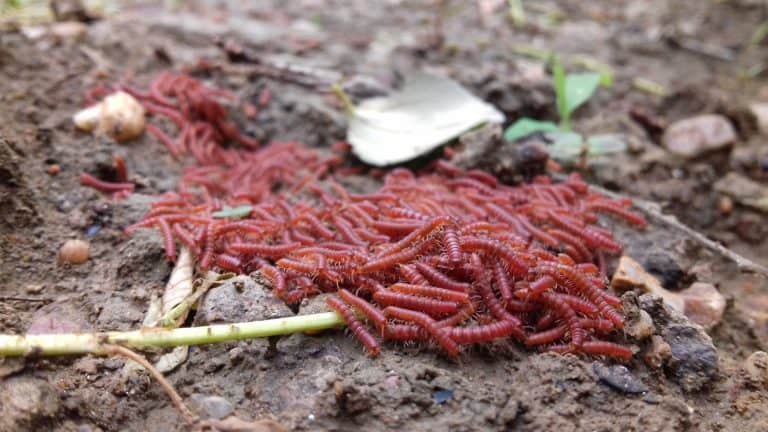
Thousands of tiny, pale millipedes swarm across a road in Pennsylvania, as seen in the Instagram Reel above. It’s an unusual sight to find so many of these normally shy arthropods out in the open. According to the poster, this strange phenomenon occurred in the morning after a rain. The road is teeming with the little creatures. In some areas, dense swirls of crawling millipedes even form. What is causing this behavior? Did thousands of millipedes hatch at once? Why are they moving together, and where are they going?
Continue reading
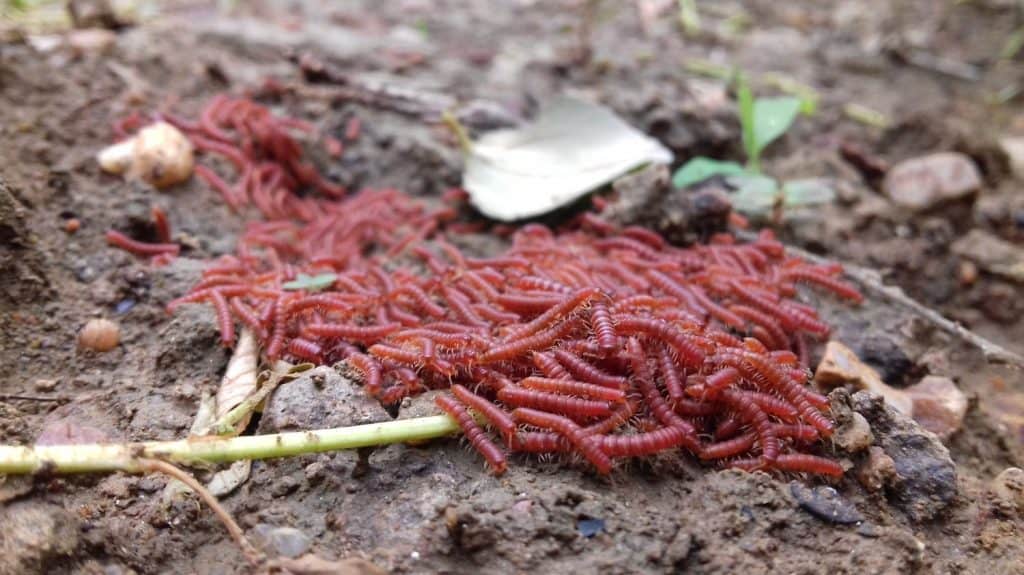
Millipedes are sometimes seen swarming together in massive numbers.
©VINEET BHASKAR/Shutterstock.com
These Appear to Be Juvenile Flat-Backed Millipedes
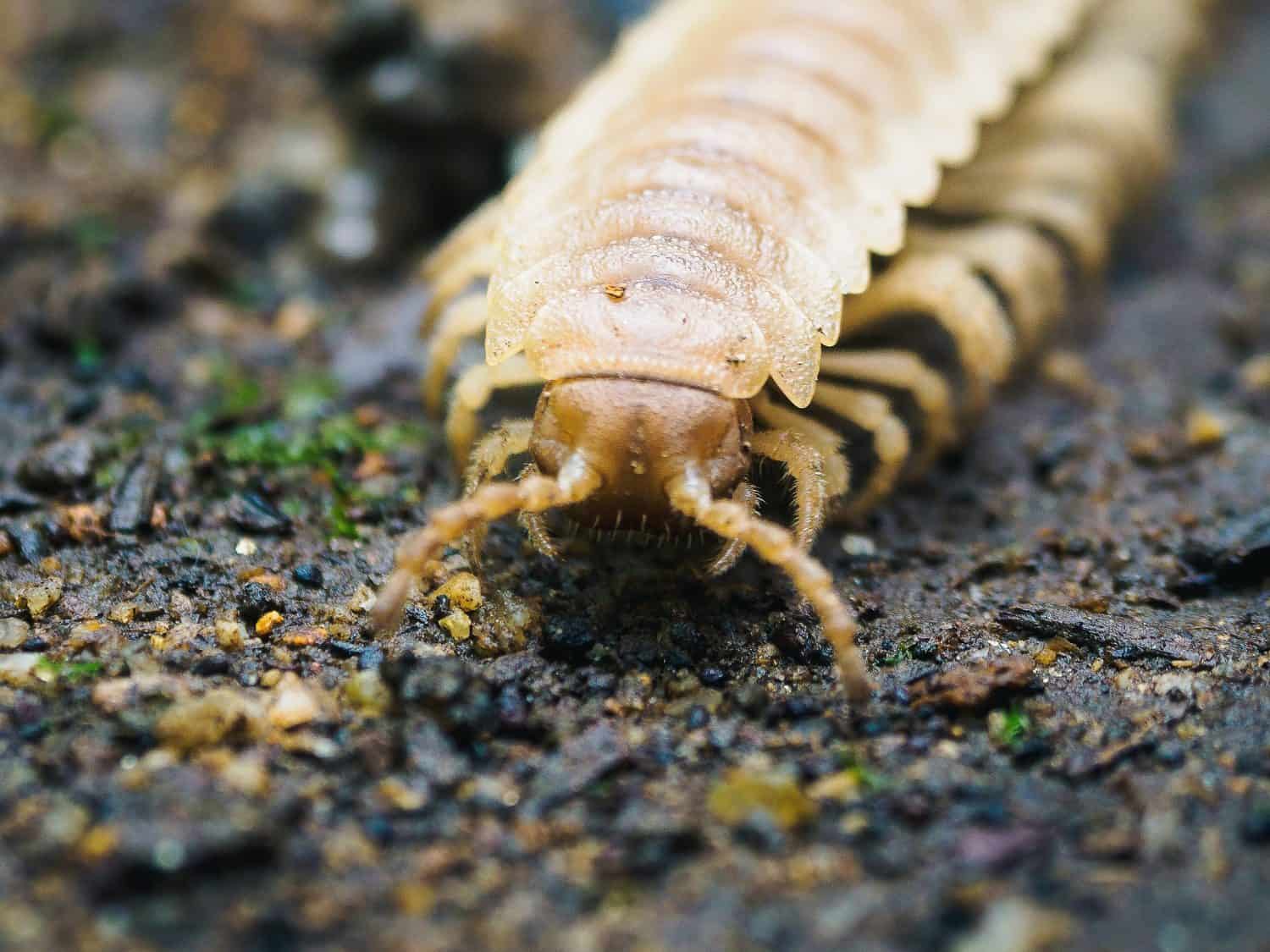
Flat-backed millipedes are native to North America, and many different species live in the Appalachian region of the eastern U.S. Although we don’t have confirmation, the millipedes in the video appear to be juveniles belonging to the Xystodesmidae family of flat-backed millipedes.
This large family contains many species. They are typically pale in color until they mature into adults. As adults, they develop distinct colors that warn predators they are poisonous. Juveniles in this family can be incredibly difficult to differentiate. Researchers report needing to wait until juvenile specimens reach adulthood before making a positive identification.
We can likely confirm that these millipedes are not newly hatched. When a millipede hatches, it has only a few body segments and three pairs of legs. Each time it molts, it grows body segments and legs. Eventually, millipedes in the Xystodesmidae family grow to have around 30 to 60 pairs of legs and about 20 body segments.
Did the Rain Bring Them Out?
The Instagram poster said that the millipedes were spotted in the morning after a rainfall. According to Pennsylvania State University Extension, millipedes usually hide in damp places such as underneath leaves, stones, wood, or other locations where they remain out of sight. However, during cooler weather or after a heavy rain, they sometimes migrate in large numbers.
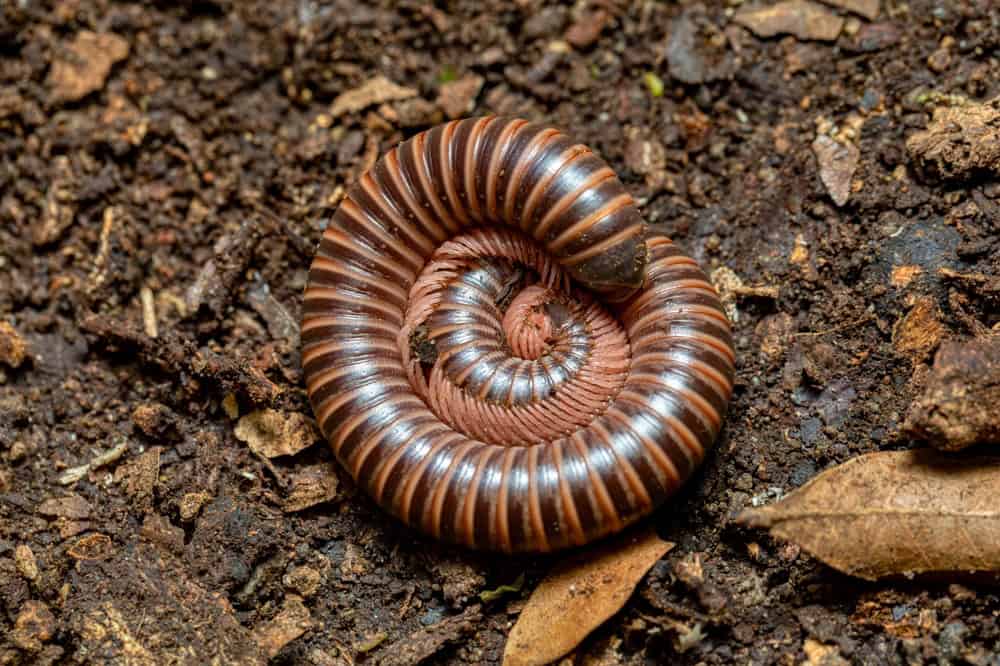
Millipedes curl into a ball when they feel threatened.
©Artush/Shutterstock.com
Although rain seems to be a common factor, scientists don’t fully understand why millipedes sometimes migrate in massive hordes. The millipedes in the video are in Pennsylvania. Other hordes of millipedes have been sighted in both North and South America.
According to researchers who discussed millipede mass migrations in a paper published in 2015, there is no single cause of the phenomenon. Instead, many different factors likely play a part depending on the environment and the species. These may include overpopulation, reproductive needs, weather patterns, light sensitivity, and parasite infestations.
Other scientists have suggested that millipedes find safety in numbers. While a millipede traveling alone is vulnerable, sticking close together helps them reduce the risk of being preyed upon. According to National Geographic, millipedes travel together as hatchlings and tend to stay together as they continue to grow.
The Science Behind the Swirling Millipede Hordes
While the Instagram Reel shows possibly thousands of millipedes, researchers have documented swarms that grow even larger on the Izu Islands, an archipelago off Honshu, Japan. The millipedes in the video are crawling everywhere, but some groups seem to form swirls and move in a circular direction. Clusters of millipedes traveling together can become so large that they climb over each other.
Nature photographer Noah Elhardt told National Geographic, “While migrating, the swarms often become two or three millipedes deep, so that the individuals on top are propelled along as if walking on a moving sidewalk at an airport.” Millipede swirls may occur when individual paths overlap, resulting in swirling clusters of crawling arthropods.
Where Are All These Millipedes Going?
Researchers haven’t been able to determine exactly where millipedes are headed when they are migrating en masse. We can’t tell from the video where these juvenile millipedes may be traveling. They could simply be fleeing underground homes that became flooded from the previous rain.
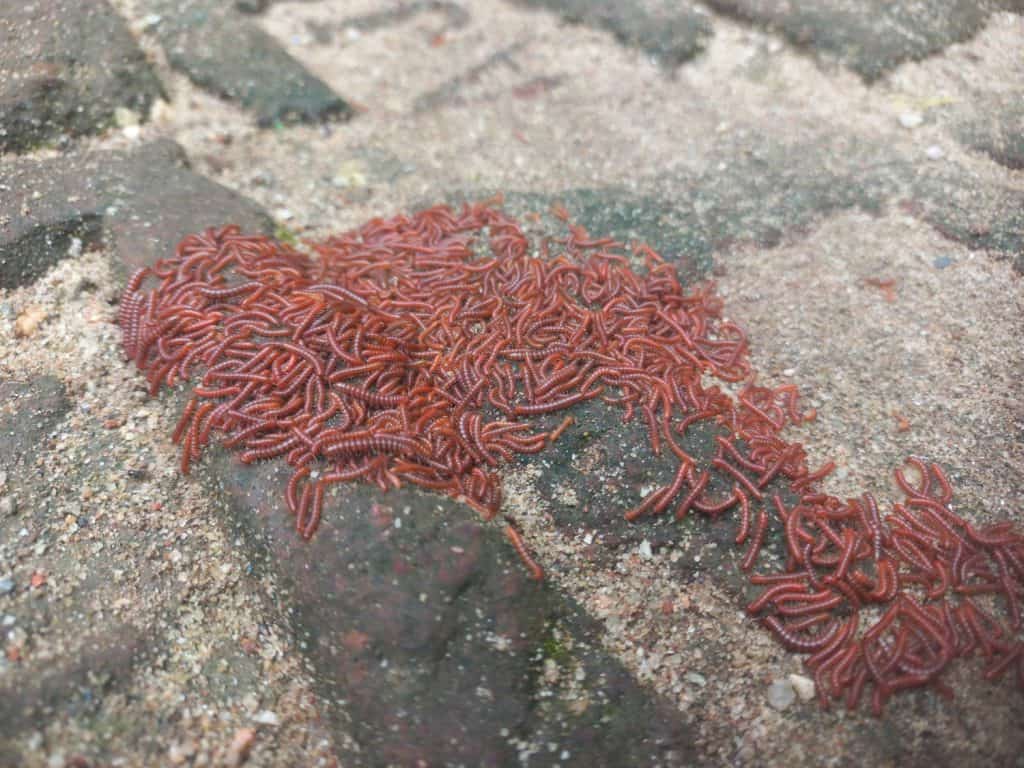
Scientists still don’t fully understand the reasons why millipedes swarm in great numbers.
©LAKHAN RAKSHIT/Shutterstock.com
Mass migrations may also occur when millipedes leave an area in search of food, mates, or overwintering sites. Although in the Instagram Reel it looks as if they are traveling down the road, the road likely just happens to intersect their habitat.
Should You Fear a Millipede Mass Migration?
While thousands of crawling, worm-like arthropods with many legs may strike fear in some people, these little creatures are almost entirely harmless. They can, however, secrete a smelly defensive fluid that may cause mild skin irritation or blisters when handled.
Millipedes don’t bite or sting. They don’t transmit disease, and they don’t damage buildings. They do play an important role in the environment by helping to break down dead and decaying matter. Millipedes help gardens by improving the soil and promoting plant growth. Even if millipedes make their way into homes or buildings, they can’t reproduce inside dry spaces. They also will not survive long in dry air and will dehydrate within a few days.