
The Potomac River is the fourth-largest river in the Mid-Atlantic region of the Eastern United States. The river runs 405 miles from the Allegheny Plateau in West Virginia and flows into the Chesapeake Bay at Point Lookout in Maryland. The river provides power, transportation, and other resources to the 6 million people within its watershed. The Potomac River is home to 118 species of fish; continue reading to learn about the four largest species found in the river.
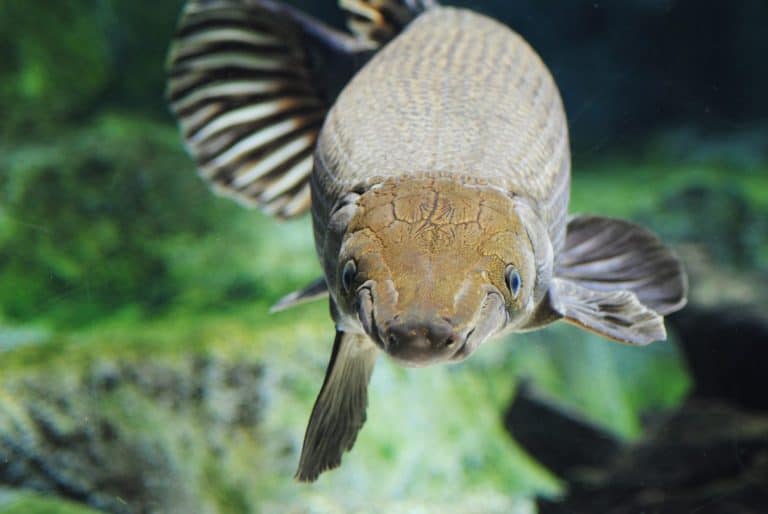
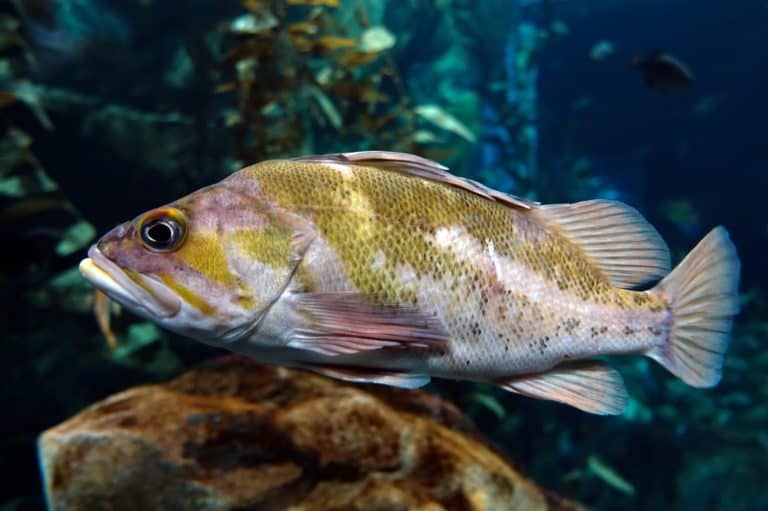
4. Muskellunge
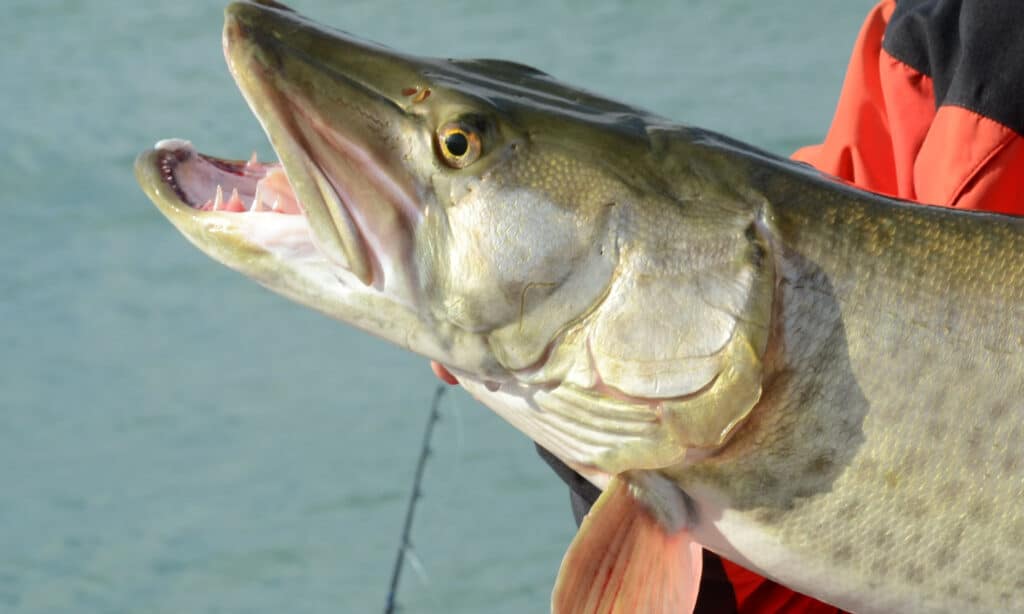
The muskie is a large predatory fish that resembles a pike.
©M Huston/Shutterstock.com
Muskellunge (Esox masquinongy), commonly known as muskies, are predatory fish found throughout North America. They resemble Northern pike (Esox lucius) in their appearance and behavior; however, they are different species. Muskies measure 28 to 48 inches long and weigh up to 36 pounds. The largest individuals ever caught have measured up to 54.33 inches long and weighed up to 69 pounds 11 ounces. They are ambush predators that prey on various fish species in their local ecosystem, including other muskies.
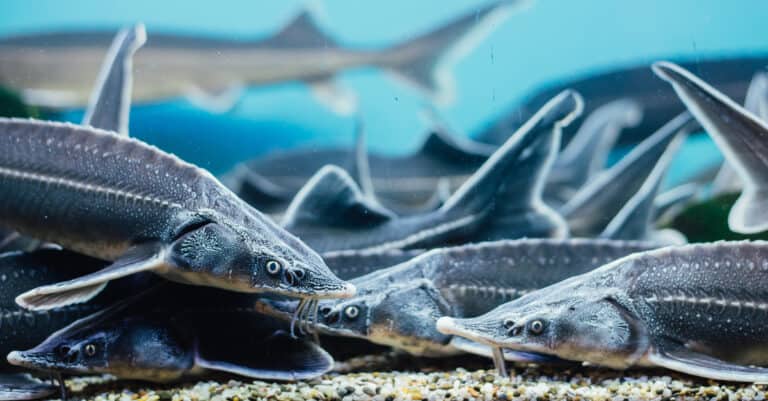
3. Shortnose Sturgeon
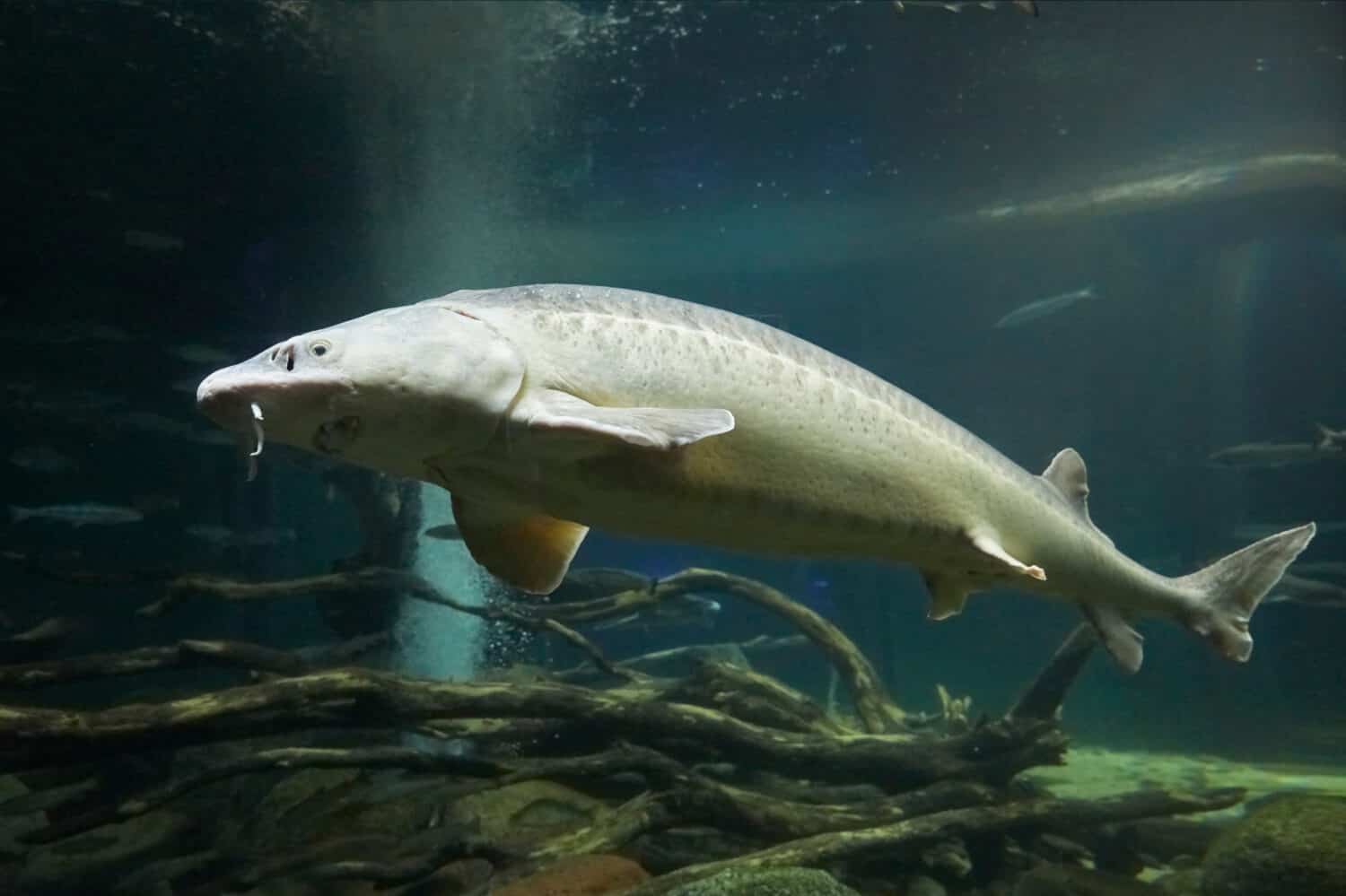
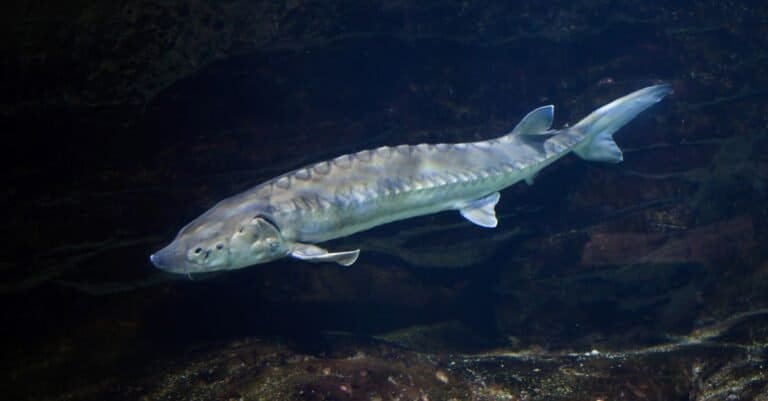
Today, shortnose sturgeon are primarily found in the Carolinas and Florida.
©pixel creator/Shutterstock.com
The shortnose sturgeon (Acipenser brevirostrum) is often mistaken for a juvenile Atlantic sturgeon (Acipenser oxyrinchus). They measure up to 4.5 feet long and weigh up to 60 pounds. Like the Atlantic sturgeon, the shortnose sturgeon was overfished in the Potomac and the surrounding region. Now, both species are listed as Vulnerable by the IUCN. They prey on bivalves, gastropods, small fish, and polychaetes.
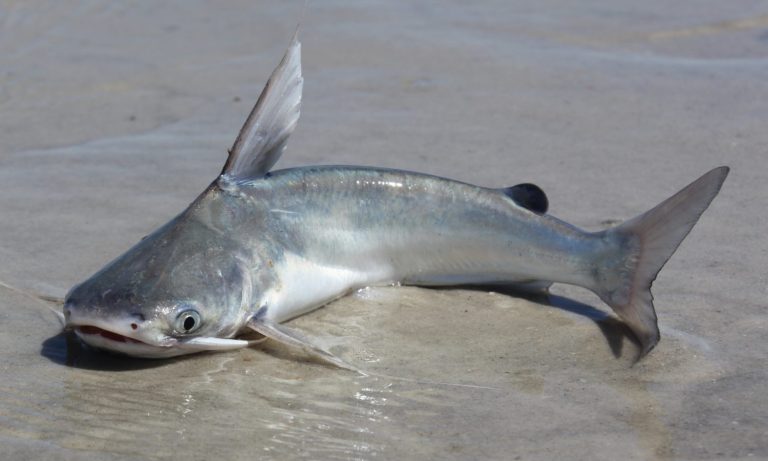
2. Blue Catfish
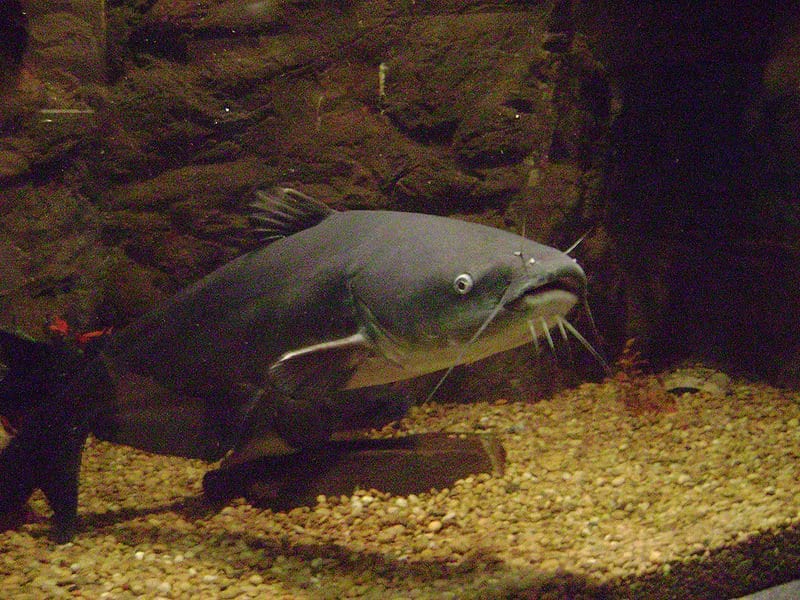
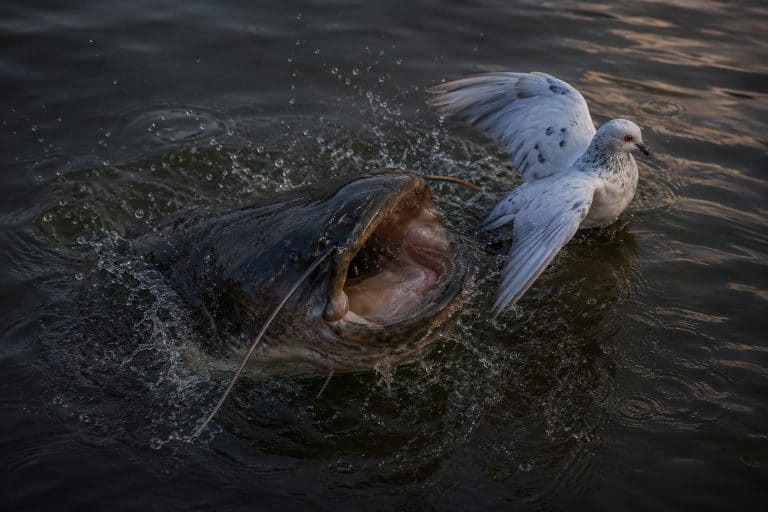
The blue catfish is a common giant fish in the Potomac.
The most common giant fish in the Potomac is easily the blue catfish (Ictalurus furcatus). These massive fish are the largest catfish species in the United States. On average, blue catfish measure 25 to 46 inches long and weigh 30 to 70 pounds, but they can grow much larger. The largest blue catfish ever caught was 57 inches long and weighed 143 pounds. They are opportunistic predators that prey on all fish in their range, including other blue catfish. Blue catfish also prey on insects, crawfish, crabs, freshwater mussels, clams, worms, and frogs.
Although blue catfish are native to North America, they are not native to the Potomac. They were first introduced in the 1970s, when fisheries began stocking tributaries in Virginia to create recreational areas for tourists. Since then, these invasive fish have spread throughout the entire Chesapeake system and are now considered pests.
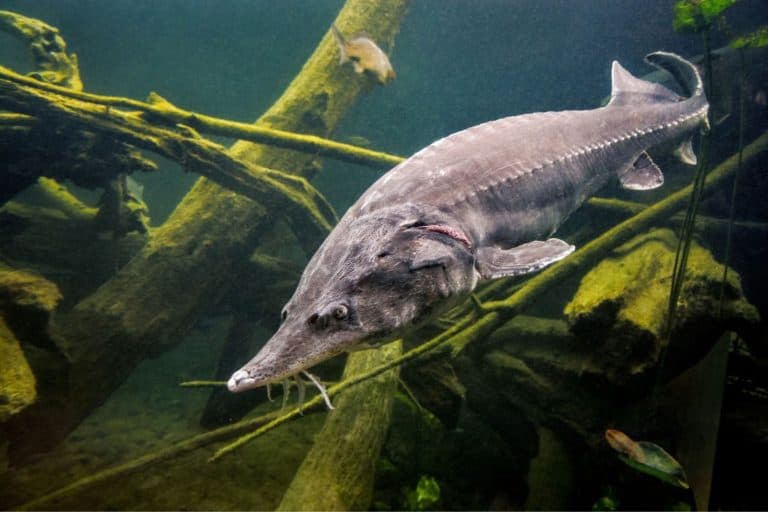
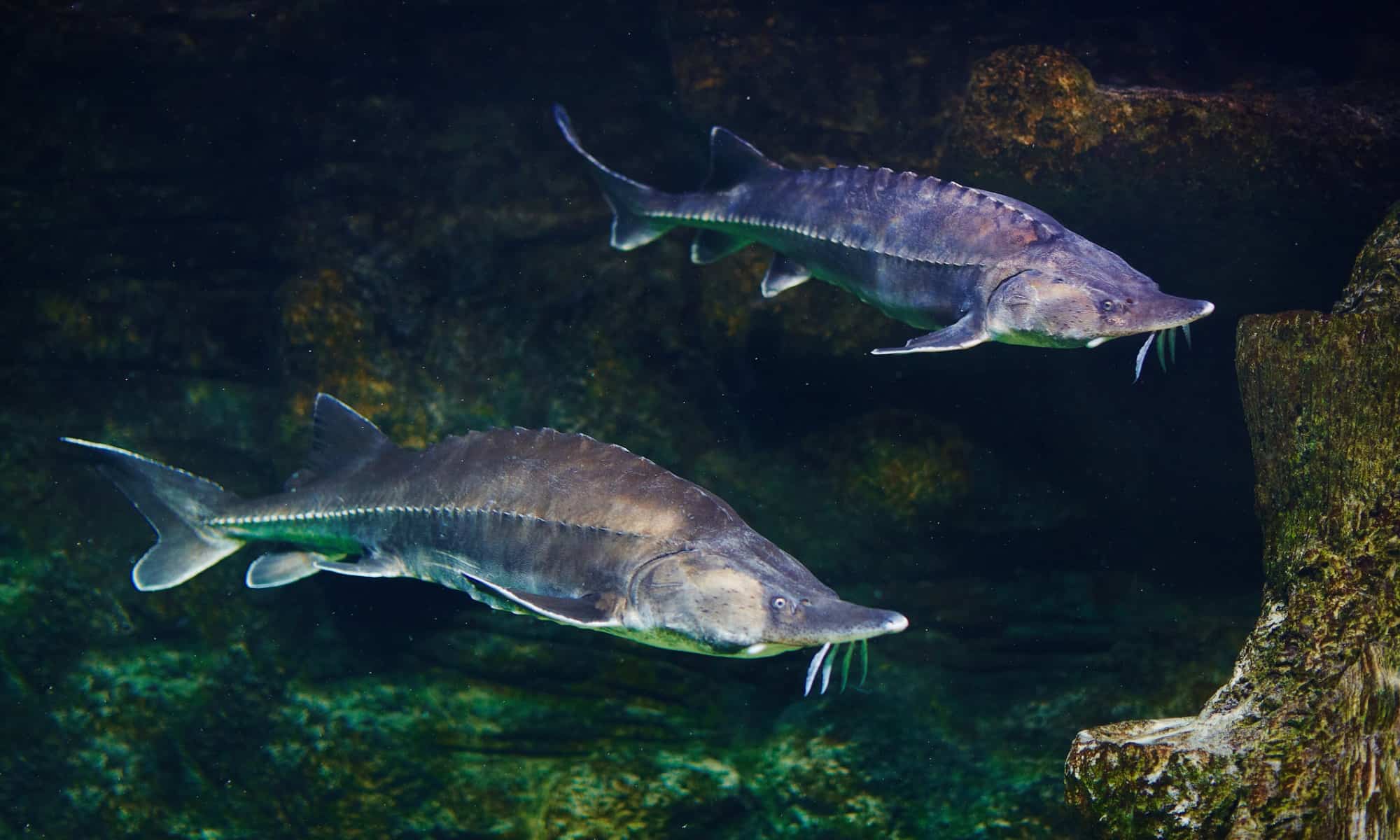
1. Atlantic Sturgeon
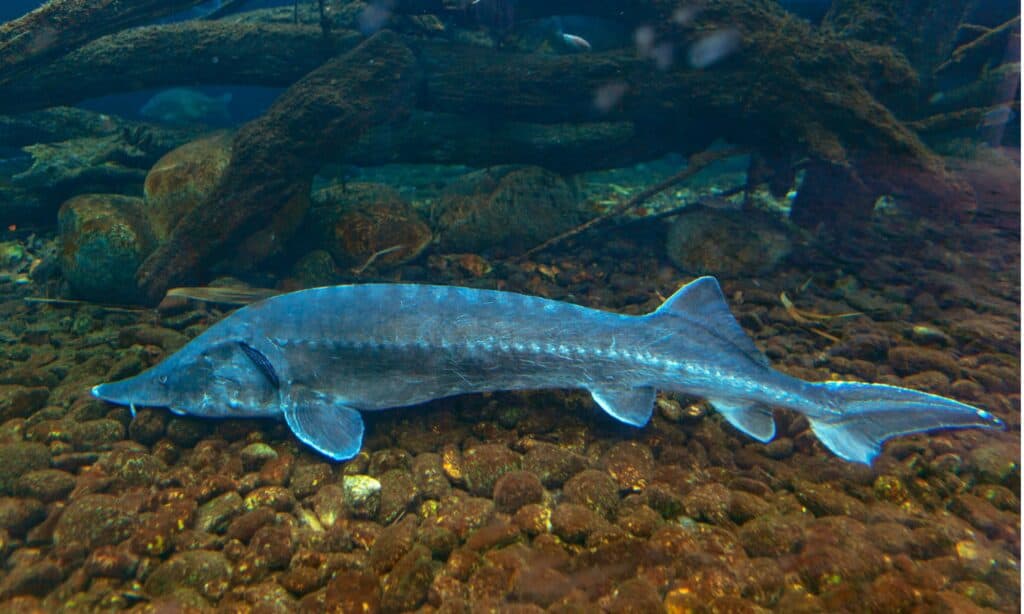
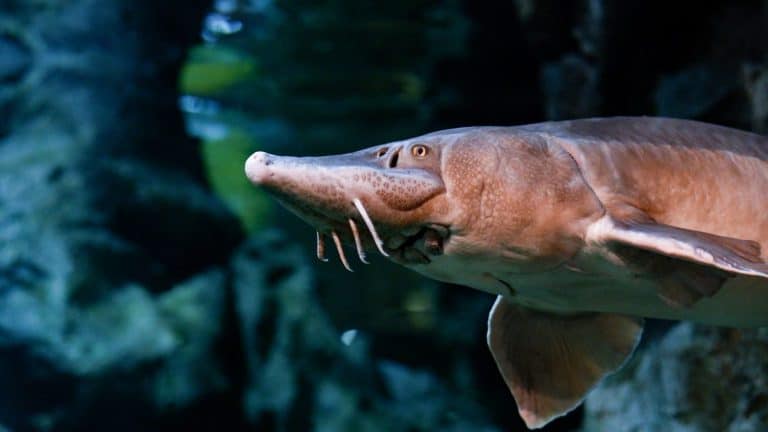
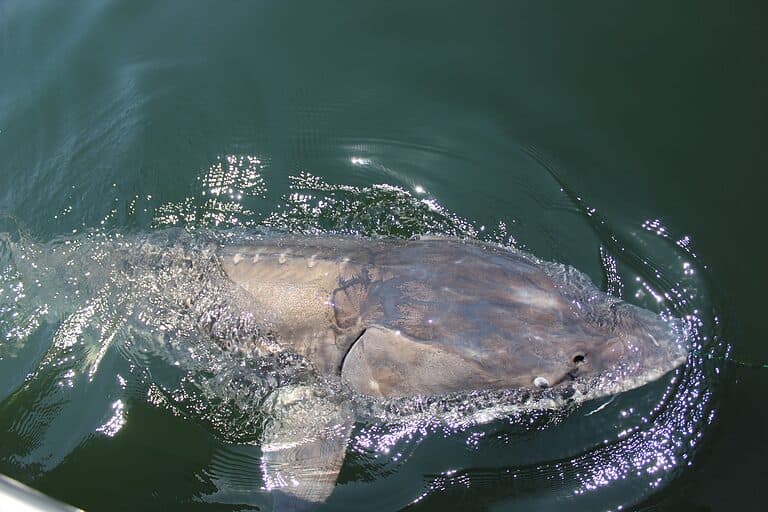
The Atlantic sturgeon is one of the largest fish found in the Potomac River.
©iStock.com/RussieseO
Although the blue catfish is the most common river monster in the Potomac, the Atlantic sturgeon is significantly larger. They can measure up to 14 feet long and weigh over 800 pounds. However, Atlantic sturgeon were nearly fished to extinction in most rivers and are now rarely found in the Potomac. In the 1890s, 7 million pounds of sturgeon were exported from the United States annually, which decimated the population. By 1928, Atlantic sturgeon were extremely rare in the Potomac. Repopulation efforts for the species are currently underway, and fishing for the species is restricted. They prey on crustaceans, worms, and mollusks.